
Meet the Johnson County moms leading the push to make a sprawling suburb walkable
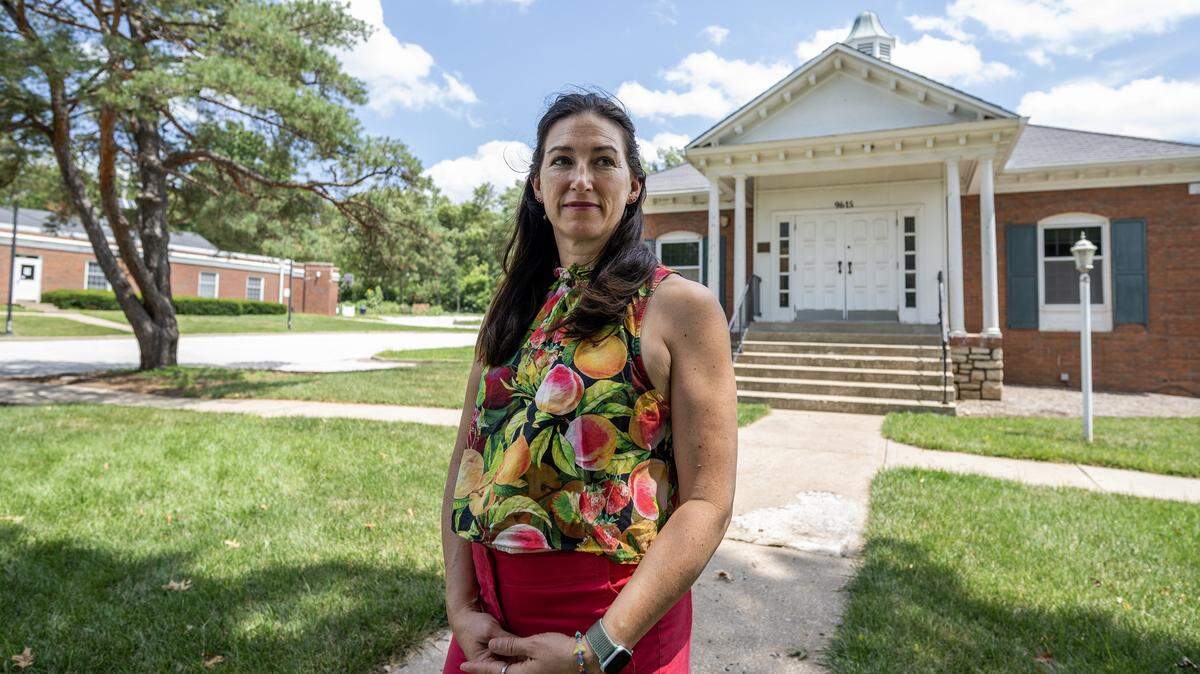
When Kylee Markey lived in Brookside, she said she practically raised her young kids on the sidewalks.
“I actually don’t know that our kids rode in the car to any neighborhood places for years because we just biked and walked everywhere,” Markey said.
But when she hopped the state line to Leawood five years ago, Markey said she was surprised by how difficult it was to continue to use her preferred modes of transportation in the wealthy suburban city.
Her family still bikes, she says, but it’s different now. Recently, Markey and her family biked to a restaurant on West 95th Street. She said the spot is a one-and-a-half-mile drive from her house, but it took them three miles by bike. They took another route because Markey said she was concerned about safety for her 4- and 7-year-old biking on West 95th Street.
Markey is not alone in this feeling. She’s among a cohort of Leawood residents — mostly mothers of young children — who are advocating for better connectability in the northern part of the city. They want community spaces reachable by safe biking or walking routes where they can interact with neighbors.
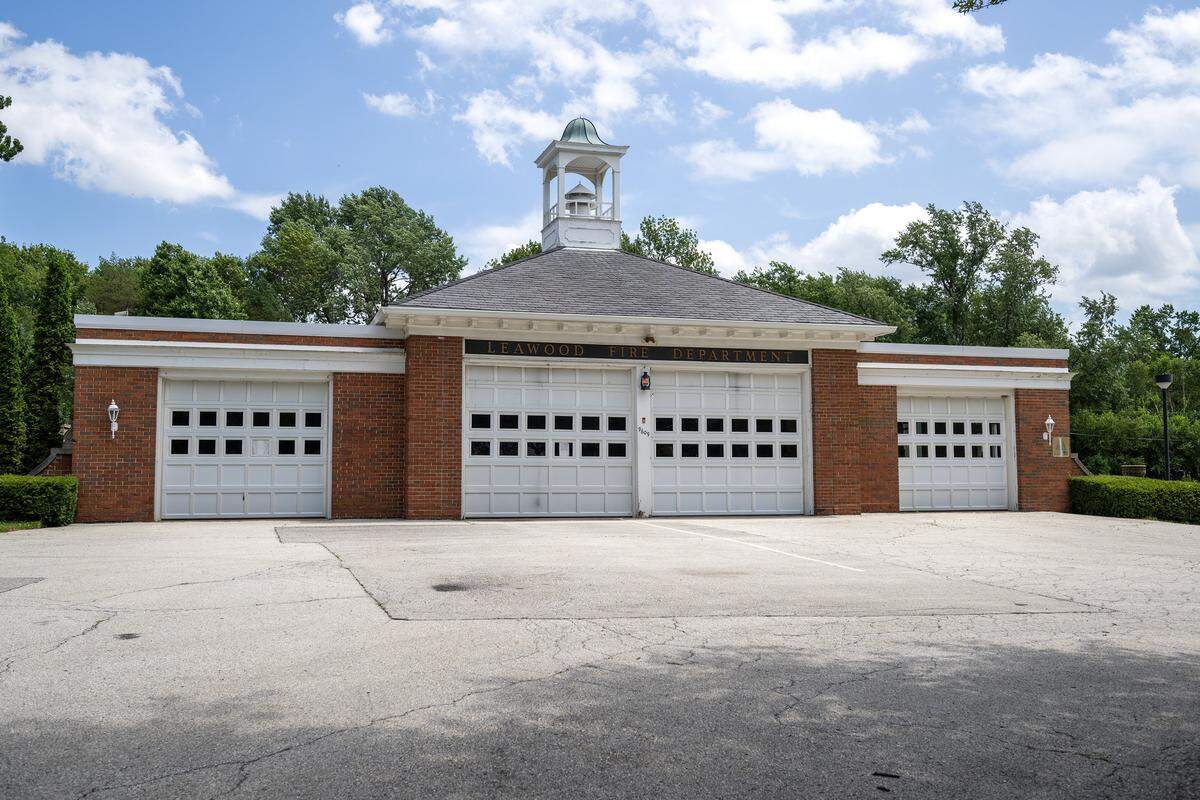
And they’ve set their sights on one place in particular to start making this transformation: the old City Hall and fire station buildings, which they hope to make into a gathering place.
Safety concerns for kids on bikes
Leah Maugans, another Leawood resident involved with efforts to improve biking and walking infrastructure both locally and statewide, said she found it difficult to get around with a stroller or a toddler on a bike.
“A lot of people in my situation raising young kids are really wanting to get our kids outside and exploring their independence,” Maugans said. “However, in conversation, we all kind of run into the same challenge.”
Main roads can be hazardous for kids to bike on due to fast traffic, she said.
Markey agreed and said she also worries about her three kids biking in Leawood because although main roads have sidewalks, few neighborhood roads do.
“Wherever you live, you can probably hear me yelling, ‘Get to the side of the road!’” Markey said.
Density and walkability
Brookside’s population density and geographic boundaries lend themselves to connectivity. According to 2020 census data on the 64113 zip code, which covers the majority of Brookside, around 12,040 people live in the 2-and-a-half square mile area. That means about 4,760 people per square mile.
In comparison to Brookside, Leawood is more sprawling. About 33,900 people live within the city’s about 15 square miles — according to the 2020 census — for a population density of around 2,250 people per square mile, under half that of Brookside.
Census data also estimates Leawood has around 13,480 housing units. Thus, the city’s housing density of around 890 homes per square mile results in a population much further spread than in Brookside, where the housing density is more than doubled at nearly 1,960 units per square mile.
Despite these potential logistical challenges, Leawood city officials have had walkability on their radars for the nearly 22 years Debra Filla has served on City Council, she said. The city has reconstructed streets to accommodate bike lanes and considers its bike and walk committee an “integral part of what Public Works does.”
Filla said that over the years, she’s seen Leawood residents’ support for pedestrian-friendly infrastructure increase.
“We as a culture, I think, are getting more interested in walkability,” Filla said.
Lack of community spaces in northern Leawood
Jaclyn Penn has lived in her current house in Leawood for 10 years. She and her husband lead Girl Scouts and Boy Scouts troops, and they found it difficult to find free spaces for the groups to meet, Penn said.
Free room reservations in nearby libraries are usually booked up, especially in the evenings. Community center room reservations are typically charged, and one of the rooms she looked to reserve in the city’s community center would have cost $60, according to Penn.
Southern Leawood has more options to use for community gatherings than northern Leawood, Penn said. For her, it’s a 20 minute drive to take her 8-year-old to a Leawood park. Closer parks and community spaces exist in Prairie Village, but — as Penn pointed out — she doesn’t live there.
“I do think it’s Leawood’s time to maximize the space we do have to hit all the amenities that we need in north Leawood,” Penn said.
Northern Leawood was not always so disconnected, Penn said. She remembers going to art classes in the back of Foo’s Fabulous Cafe, a coffee and ice cream shop that opened its back room to residents for hosting free meetings.
Its closure “really emphasized the lack of community gathering spaces,” Penn said.
Old City Hall is face of new push
To help fill the hole in easily accessible community spaces, Penn and her husband came up with a plan to create a place that north Leawood residents could safely walk and bike to and host free events in.
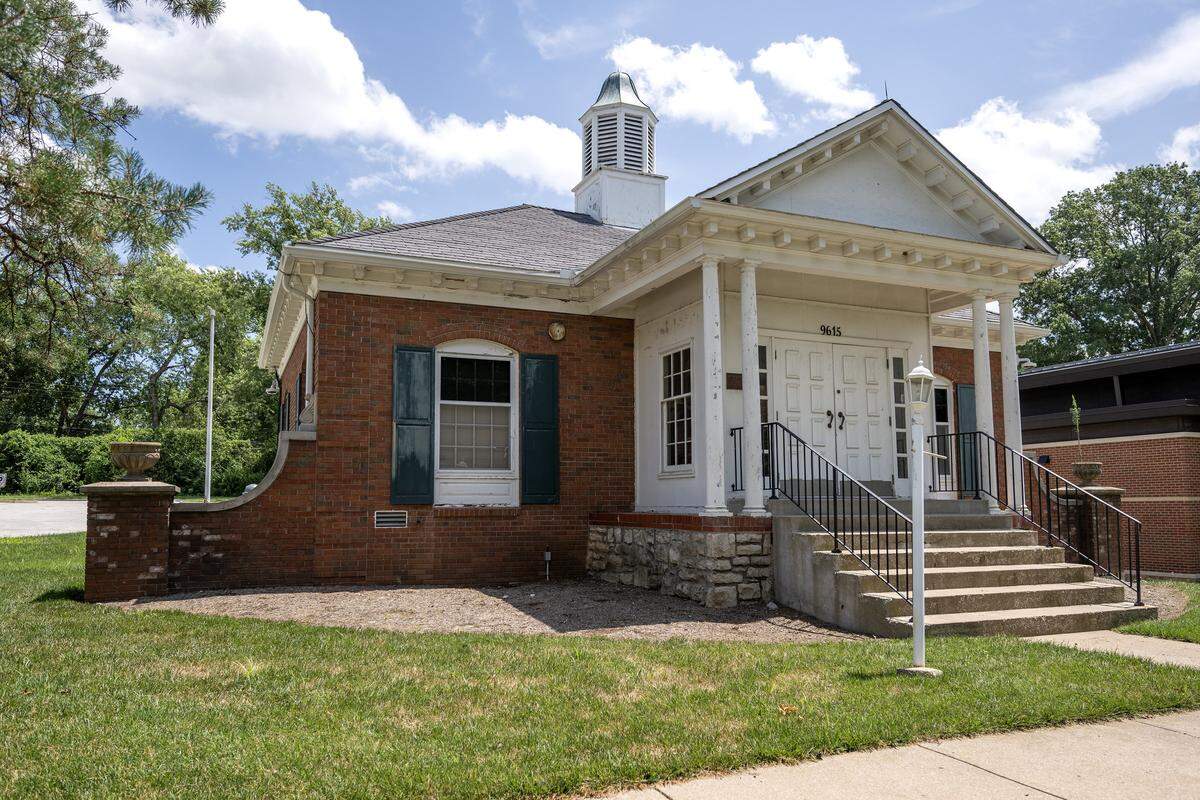
They proposed repurposing Leawood’s old City Hall and fire station buildings at West 96th Street and Lee Boulevard into a coffee shop, ice cream shop and free gathering space with playground structures outside.
Markey and Maugans support Penn’s proposal, and other Leawood residents do as well. A petition started by Penn to urge the city to renovate the old City Hall in this way currently has over 900 signatures.
She and her husband would run the coffee and ice cream shops, Penn said, adding that she hopes the place will “gain that community sense.”
“There’s just so much that comes from it,” Penn said. “It’s the sense of belonging. It’s the mental break in your day. So that’s kind of where this is all stemming from — physical activity to emotional health to social connection.”
The space is also important for youth, Penn said, giving them a “safe environment” to meet with friends.
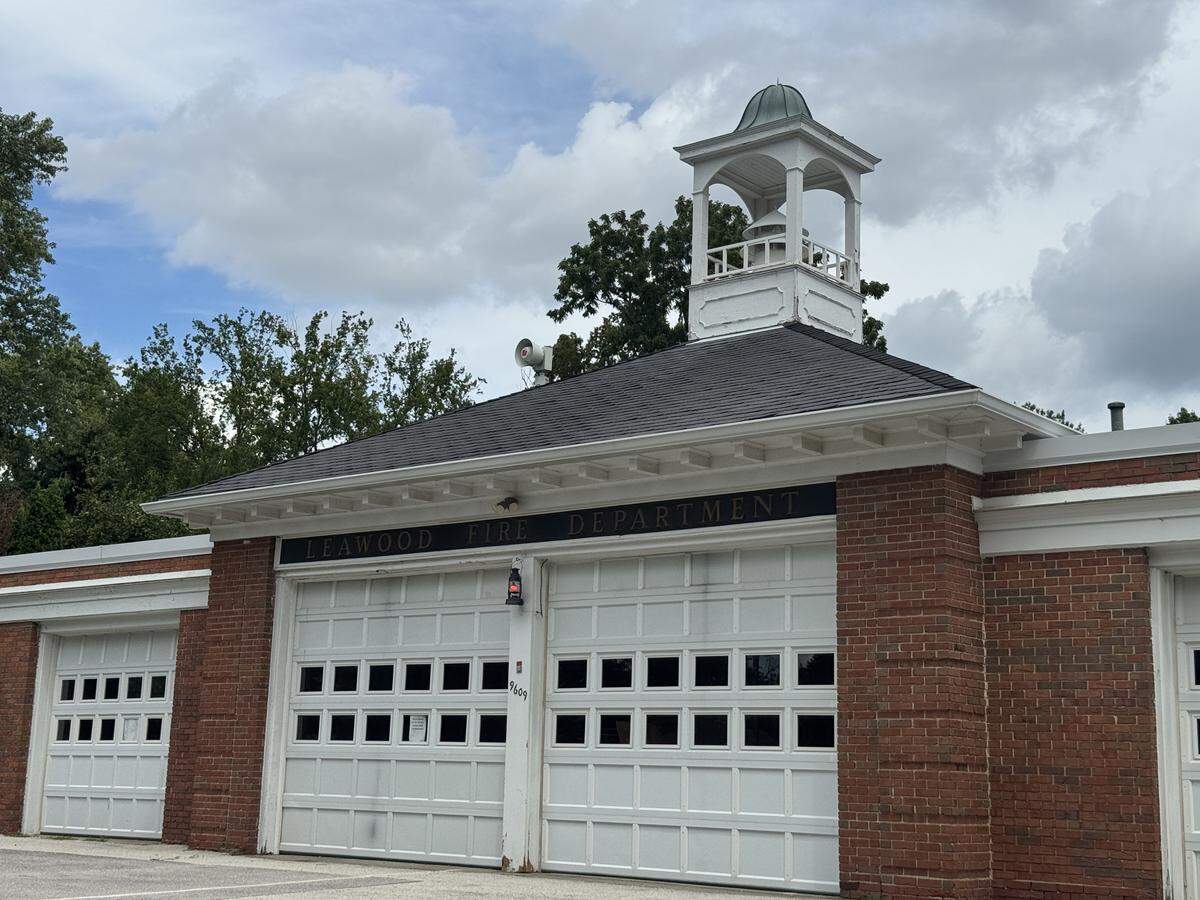
Like Penn and her supporters, Filla said she wants to see a thriving community space surrounding the two buildings.
Her support stems not only from the rich history of the site — the structures were built in the 1950s and housed the early government of Leawood — but also from the hope that the new space would address residents’ concerns about a lack of programming for certain age groups, like seniors.
“When I think about what I would like, I’d love to be able to hop over here for a yoga class,” Filla said.
Filla and other Leawood officials are engaging with the public to discuss ways to use the buildings. On July 8, the city hosted an open house to present potential plans and get feedback from residents. None of the presented plans preserve the two historic buildings in their entirety as Penn and her supporters hope.
As of now, the city has not decided on what to do with the old buildings. The next meeting to discuss plans will occur on Sept. 29.
According to Beth Breitenstein, the city’s strategic communications director, Mayor Marc Elkins hopes the City Council will reach a decision on the concept by the end of the year.
“We only have little space,” Penn said. “Let’s make the most of it, and let’s see what the citizens really need.”
This story was originally published August 13, 2025 at 5:41 AM.