
When will Jackson County vote on Frank White recall? Judge prepares to weigh in
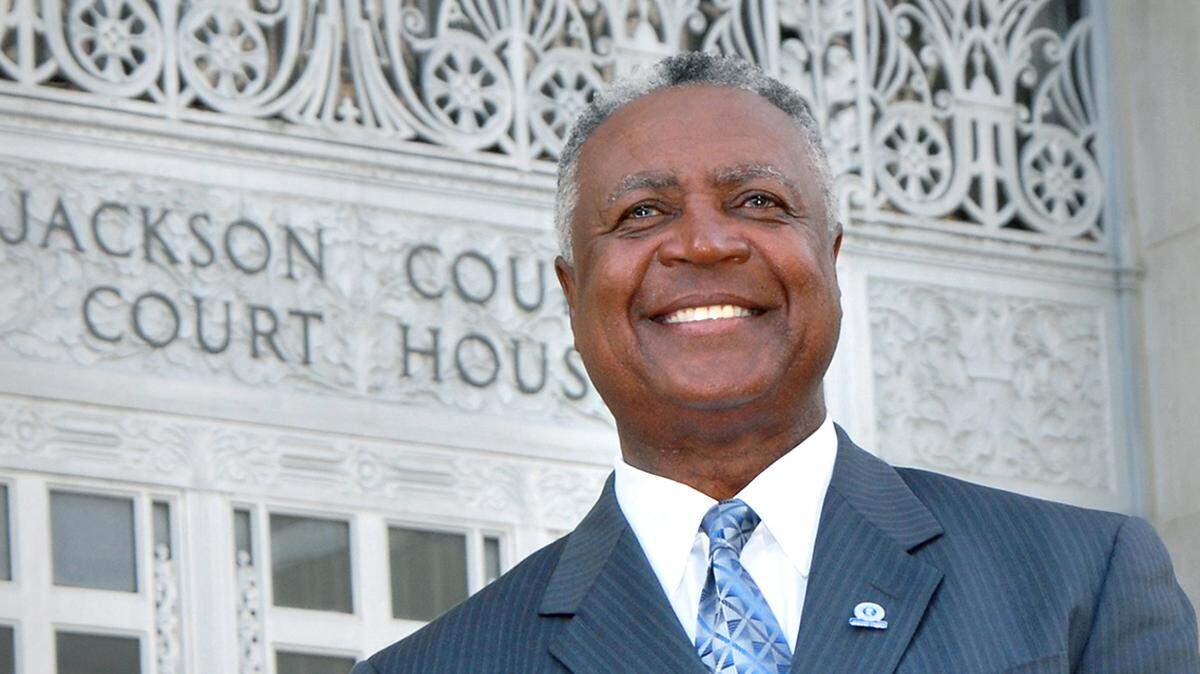
A Jackson County judge is set to make a final ruling early next week on the fate of the proposed election to recall County Executive Frank White Jr.
White, a Democrat and former second baseman for the Kansas City Royals, has served as county executive since 2016. Residents began collecting signatures to recall him in 2023, citing frustration with his handling of Jackson County’s property tax assessments.
In recent years, some residents have also spoken out against White’s eleventh-hour veto of the county’s proposed 2025 budget, as well as his opposition to the 2024 tax question that would have funded a new Royals stadium in the Crossroads and upgrades to Arrowhead.
But soon after voters submitted enough signatures to prompt a recall election, legal challenges mounted that raised questions about when – and if – the vote would take place.
In a hearing on Friday, no party seemed to contest the eventuality of a recall vote, but those involved in the case had different ideas of exactly when the election should take place. Attorneys suggested four potential different election days.
Preparing for a recall
The recall effort was centered in eastern Jackson County, with significant assistance from a dark money political action group. Supporters submitted signatures to the Kansas City and Jackson County election boards, which certified 43,011 valid signatures on June 30, breaking the required signature threshold by 109 names.
On July 7, the Jackson County Legislature previously passed an ordinance setting an Aug. 26 election, overturning an attempted veto by White. The vote was followed by a pair of dueling lawsuits asking a county judge to set a date for the election based on different legal grounds.
A July 9 lawsuit by four residents, including Phil LeVota and Mark Anthony Jones – former chairs of both the Democratic and Republican parties of Jackson County – asked the court to mandate an Aug. 26 election based on the county charter, regardless of any action from either White or the legislature.
The next day, the Jackson County and Kansas City election boards filed their own lawsuit, arguing that the proposed Aug. 26 date violated state law by not leaving enough time for overseas ballots and other election administration steps.
Both lawsuits were condensed and heard by Judge Marty Wayne Seaton Friday afternoon, with Seaton announcing he planned to issue a ruling by Tuesday.
White’s chief of staff Caleb Clifford declined to comment on Friday’s hearing.
At Friday’s hearing, LeVota argued that the county charter still supports an Aug. 26 vote. An attorney for county clerk Mary Jo Spino pushed for a new special election day in late September or early October.
And attorneys for the county and city election boards argued for a Nov. 4 date, when a county election is already scheduled to take place, asking voters whether the county assessor should be elected rather than appointed.
An intermediate date in late September or early October would give the legislature eight to 10 weeks to administer an election in line with state statutes, attorneys said.
Election timing issues
The Jackson County and Kansas City election boards have been vocal about the barriers they would face if conducting an Aug. 26 election, suggesting they wouldn’t have enough time to pull it off and be in compliance with all related state laws.
Democratic and Republican directors Sara Zorich and Tammy Brown, along with multiple county legislators, have said that fulfilling state requirements for election administration requires at least 10 weeks’ notice.
Brown, who has been involved with the Jackson County Election Board for 25 years and has been a director since 2009, said that the proposed recall will be the first election in her memory to be based on something other than a direct request from a public entity.
She said that while the Jackson County Election Board finds an Aug. 26 election date to violate state statute, a late September or early October election would pose additional logistical challenges.
Fifty of the county’s 103 polling places are hosted in schools, and the election board has generally worked far in advance with school administrators to make sure that students have the day off when voters will be on site, Brown said.
“We rely heavily on our schools,” Brown said.
Most school polling places have long-standing contracts with the county and city election boards for recurring April and October election dates, with initial contracts for 2025 polling places going out in December 2024, Brown said.
Before a recall vote, the election board would also need to locate available volunteers from a pool of 1,000 to 1,200 election judges, as well as test and set up voting machines, Brown said. Election machines need to be untouched for three weeks before an election - one week for programming and two weeks for testing - plus one month after, Brown said.
Brown testified that an unrelated Aug. 5 special election would not leave enough machines ready for an Aug. 26 election, and that a late September or early October date would not leave enough turnaround time to prepare the machines for the existing Nov. 4 election.
However, when pressed by LeVota, Brown described the late September date as difficult but not impossible, at least from a personnel standpoint.
“The election boards, both of these boards, have moved mountains in the past to make safe and legal elections,” LeVota said during his cross-examination of Brown. “...You put them to the task of having an election, tomorrow or next April, they’re going to get it done because they’re professionals, right?”
“Well, not tomorrow,” Brown answered.
At Friday’s hearing, Brown also reiterated that hosting a recall election would cost Jackson County taxpayers about $2 million, with about $800,000 of the cost administered by the Kansas City Election Board. A November election will also cost about $2 million, but some of the costs would be shared by other municipalities planning to run ballot measures, including the city of Grandview and the Independence School Board, Brown said.
Scheduling an election
Since the section of the Jackson County charter about recall elections wasn’t added until 2022, Friday’s case doesn’t have a strong legal precedent in the county. At Friday’s hearing, attorneys on multiple sides of the issue reminded Seaton that he was weighing in on a new kind of legal challenge, but hoped to convince him of different solutions.
LeVota argued that the Jackson County charter should take precedence, criticizing the election board for categorizing an Aug. 26 date as unlawful.
“The extreme position of making citizens wait over four months when the charter clearly calls for 60 days in a recall election is against public policy, and an unconscionable act against the citizens of Jackson County,” LeVota said. “...There is irreparable harm to the people of Jackson County in not having a timely recall election.”
David Raymond, an attorney representing the county and city election boards, maintained that Nov. 4 is the soonest possible day for a recall election under state law and hinted at further legal action otherwise.
Raymond asked the judge to reject the idea that recall votes in Jackson County are fundamentally unique, saying that state law does not distinguish them from other scheduled or special elections. He also argued that the county legislature should have a clearer role in setting or approving the date.
“Missouri laws trump the charter,” Raymond said. “If the court sets the election on any day other than Nov. 4, that election is subject to legal challenge… it’s a generally set election date, and it preserves the integrity of the Missouri voting system.”
Patrick McInerney, who represented county clerk Mary Jo Spino, said that running an election as quickly as possible — which he argued would be on Sept. 30 or Oct. 7.
“If it is inconvenient, if it is costly, that doesn’t matter,” McInerney said. “Courts have to find a way to effectuate the will of the people. And here, the will of the people is 43,000 people and the duly elected Jackson County Legislature who found that this should happen.”
Meanwhile, Jean Paul Bradshaw, an attorney for White, cautioned against a hasty election that could spark further legal challenges. Representing the will of voters also meant factoring in those who did not sign the recall petition but will vote in a recall election, Bradshaw said.
“Maybe they’re going to vote one way, maybe they’re going to vote another, but these processes and procedures exist to ensure that we have a fair election,” Bradshaw said.