
KC pushes ahead to build temporary jail before World Cup as costs, scope balloon
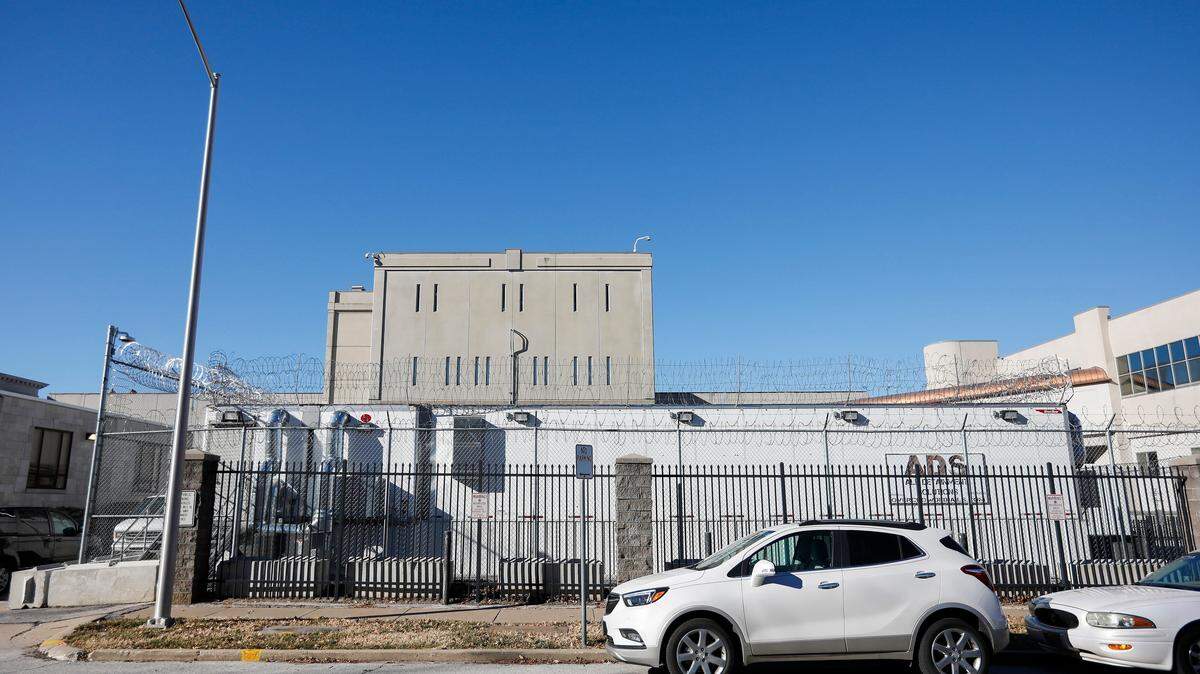
Kansas City’s plan to build a temporary municipal “trailer” jail ahead of the World Cup is getting complicated as the full scope emerges, and questions remain about the final price tag, where the jail would be built and what the city would do with it in a few years after the permanent jail is constructed.
The Kansas City Council voted last week to put out a call for proposals from companies who could build a “modular” jail that would use prefabricated structures, similar to classroom trailers, with up to 130 beds for holding detainees on city-level offenses and providing them with services. People charged with felonies wouldn’t use the municipal jail, as they would be detained at the Jackson, Platte and Clay county jails.
The city manager’s office has about a month to present a plan for the facility, which could cost upwards of $30 million.
City officials have spent months looking into the idea of building the temporary jail facility for people charged with municipal offenses in a city that does not currently have its own jail. The city contracts with Johnson and Vernon counties, which are miles away, to house those charged with lower level crimes.
That arrangement has been costly and inconvenient, city officials say, and due to a lack of space, many people arrested on city charges are soon released to await trial after being booked. City officials say the situation has contributed to concerns over crime like vandalism and theft.
Voters approved a public safety sales tax extension in November that will be used to construct a permanent jail and rehabilitation facility for the city, which closed its last jail in 2009. The temporary modular facility would serve as a bridge until the permanent jail is built, which will take up to three years.
But if officials want the temporary site built by the FIFA World Cup in summer 2026, Deputy City Manager Kimiko Gilmore made clear last week that they need to move — now.
The city needs to pick a final site, consider staffing needs and operations costs, find a contractor to build it and engage the public. The temporary jail will need to include infrastructure and services: intake, health care, food service and commissary, visitation, exercise space, laundry and staff areas.
The request for proposals also asks contractors to suggest ways to repurpose the temporary jail facility after it’s no longer needed in a few years.
More complicated than Springfield
The City Council first approved moving forward with the modular jail concept in May. One inspiration for the idea was Greene County, Missouri — where Springfield is — using modular facilities while the county rebuilt a permanent site.
But city staff emphasized this month that the Greene County project was simpler and cheaper than Kansas City’s proposal, because that county already had a prepared site and facilities at its old jail. Kansas City is instead doing everything from scratch.
“Even I was thinking at one point, some guys drive up some modular units from Springfield, we find some land, they put them there, we have a jail,” Mayor Quinton Lucas said during a committee meeting July 12. “I’m understanding it’s not quite as easy as that.”
Lucas took his concerns a step further.
“If the whole reason we’re evaluating this increasingly challenging concept is because it was to be cheaper and it was to be faster, and I am not necessarily seeing that it is either,” then it would be worth the City Council having a discussion about why they’re doing it at all.
Ultimately, after a closed session that included discussion of detention and rehabilitation initiatives, the City Council voted on July 17 to shift funding from the creation of a downtown booking facility to pursue the temporary modular jail.
“The World Cup’s coming whether we are ready for it or not, so we’ve got to get this built,” council member Wes Rogers of the Second District said during the City Council meeting. “The repurposing part is a huge piece of this if we want to get it right. There’s some really neat things we can do, but right now, the conversation’s got to be, how are we going to have this open so we’re prepared for a safe and successful World Cup.”
One possibility for repurposing the facility that the council is considering is if the police department used the temporary jail as a dedicated space for booking after the permanent jail opens.
The city manager’s office will present a report for operations of the temporary facility, and the council will continue to discuss details.
Where will Kansas City’s temporary jail go?
It’s still not clear.
The initial recommended site was 7750 E. Front St., by a city tow lot and a water services facility in the East Bottoms.
But complications on the site have since emerged, particularly the need for the water services department to expand and upgrade its treatment facility there to comply with federal mandates over removing phosphorus from wastewater at the plant.
Some other possible sites presented their own various logistical issues.
The city is now eyeing an alternative location near Hawthorne Road in a more industrial area in the down Interstate 435, according to information presented last week.
But that site, too, has its own challenges, like:
Power lines that limit usable space
No public transit access
The need to move a stormwater line
The possibility that excavated material on the former ash lagoon would need environmental handling
Billboards adjacent to the site
Other locations are possible, and the city review that’s underway is expected to provide clarity on just where the temporary jail will go.
Proposals are also expected to include information about what the modular structures could be used for once the permanent jail is finished.
What will the temporary jail cost?
There are no firm totals yet, but early estimates have rung in at up to $30 million.
Last week, the City Council approved redirecting $14 million of funds that had been approved for a downtown police booking facility to the modular jail’s construction.
The proposed downtown booking site, which would be on the eighth floor of the existing downtown police headquarters, could cost up to $18 million and have construction run through 2026. That plan moved forward in fall 2024 but has been paused.
Meanwhile, the modular jail will include 25 beds for short-term booking while also housing longer-term detainees and include necessary services and facilities.
Does it need to be done by the World Cup?
Officials say the move to have the city’s own temporary jail is important for public safety and dignity, and they want something done before the World Cup comes to town.
That starts in June 2026 and presents a tight timeline. Officials have said the burst of visitors to Kansas City for the major event could put a strain on limited detention and rehabilitation resources, and the city needs a place to address violations by visitors.
But Lucas wondered during the committee meeting last week if there could be a more efficient solution to address World Cup concerns while the city could accelerate construction of the permanent jail.
The city manager’s office will present a report for operations of the temporary facility, and the council will continue to discuss details.
Some local business leaders made clear their support for the temporary jail in May in the face of concerns over crime and public safety in the city core. Opponents say the money could be better used to more directly provide housing and services to people in need and worry about the humanity of using the trailer units.
Jackson County is also working on building a new detention center that would be used to detain those charged with violations by the county.
This story was originally published July 25, 2025 at 6:00 AM.