A student walks past a study area at Gloria Willis Middle School on Tuesday, April 16, 2024, in Kansas City, Kansas.
Emily Curiel
ecuriel@kcstar.com
It’s been a rough few years for Kyra Martiny, and she said she feels like things are only getting worse.
The speech pathologist at Stony Point North Elementary told her local school board in May that her family is begging her to get a new job. She said her workload is unsustainable, and she’s not sure whether the long hours she puts in are ultimately helping students.
Martiny was one of five special education staff members within Kansas City, Kansas, Public Schools that told board members during an end-of-school-year meeting that they’re exhausted, overwhelmed by hefty caseloads and worried about falling into noncompliance with state and federal standards.
They said their programs are understaffed and that the district’s temporary supports in place aren’t enough.
Special education programs in Kansas public schools have been historically underfunded for years. Rising expenses have outpaced state aid as the demand for evaluations and student services has only continued to grow. The number of students receiving special education services in Kansas increased by more than 10,000 in the past 10 school years, the Beacon reported.
This, complicated by the aftermath of the COVID-19 pandemic and a long-term national teacher shortage felt in districts across the map, has remaining teachers of all subject matters exhausted and taking on more work and longer hours.
To try to keep special education staff above water, at least three of the four school districts in Wyandotte County said they’re strengthening recruitment efforts and introducing new training and development options.
KCKPS, Turner Unified School District and Piper Unified District — all of which serve KCK students and families — weighed in on the work they’re putting in to help. Bonner Springs-Edwardsville Unified School District as of publication time did not respond to previous phone calls or voicemails seeking input.
The library is seen at Gloria Willis Middle School on Tuesday, April 16, 2024, in Kansas City, Kansas. Emily Curiel ecuriel@kcstar.com
Increased demand, staff vacancies
Not everyone understands the work that goes into being a special education teacher, local districts said.
Special education staff members manage case loads for each individual student. They have to keep the district in compliance with federal law — by meeting deadlines and providing a certain quality of service — and they work closely with families and staff to support students day-to-day.
Two school districts reported increases in the number of students receiving special education services in their schools. Both said they’re struggling to staff that demand. And one said it’s an exception to national trends.
The number of KCKPS students with individualized education plans (IEPs), which outline the specialized services districts need to provide each student with disabilities based on their educational needs, increased by three hundred over the past four school years, according to the district. Needs on students’ IEPs can vary from getting extra time to take tests to speech-language therapy.
JaKyta Lawrie, the program’s executive director, said KCKPS served roughly 4,000 special education students in the 2024-25 year.
Among those students, Lawrie said, KCKPS is seeing increasingly more that require complex behavioral and academic supports, like more intensive counseling. And although the district is implementing “aggressive” recruiting strategies, it doesn’t have enough staff to keep up with the higher demand for services and evaluations. “Unfortunately, staffing growth has not kept pace with student need,” Lawrie said.
Turner USD has seen similar challenges in recent years. It saw a 50-student increase in the number of students receiving special education services, but is struggling to keep consistent staff counts, according to a district spokesperson. About 13%, or about 500, of the district’s roughly 3,906 students received special education services, according to the state department of education.
Piper USD, a rural but growing school district in western Wyandotte County, told The Star last month that both student enrollment and staffing have remained consistent in recent years. About 13%, or roughly 350, of the district’s 2,760 students receive services, according to state data.
“We believe this stability is a reflection of the proactive practices we have in place and the expertise of our entire staff, general and special education alike, who are equipped to identify needs early and implement supports effectively across all settings.”
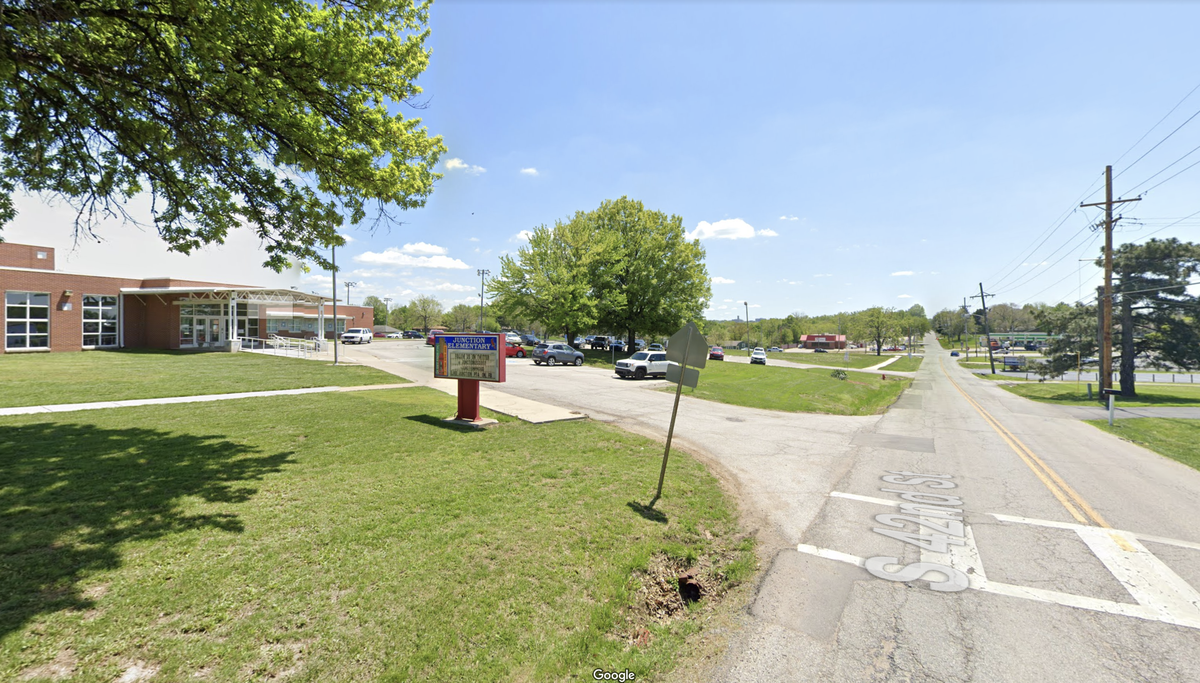
Junction Elementary School at 2570 S 42nd St. Google Maps
Recruitment and training
KCKPS partners with area universities to encourage nearby college students to get their certifications and join the district “to grow a strong pipeline of highly qualified special education teachers.”
The district said it offers a competitive base salary and added stipends for candidates in hard-to-fill roles. Beyond encouraging new employees to come to KCKPS, the district is trying to find ways to provide more support and opportunities to grow for existing staff who stay in the district, Lawrie said.
Nearby, Turner is trying a strategy to do just that.
To address staffing constraints, the district is partnering with Pittsburg State University and helping their current employees get special education certifications.
The district pays for the majority of the tuition cost and their summertime practicum hours. If staff want to go to a different school to get certified, Turner will pay $300 per course to do so.
“This allows us to incentivize current USD 202 teachers who are interested in special education to obtain their certification while teaching full time and then move into those roles in the district,” according to Turner USD.
The staff who go through this training end up with higher salaries, too.
“The salary schedule allows for staff with advanced degrees and additional college hours to earn more, so the staff who go through this program will then earn more based on those additional qualifications on the salary schedule.”
Supporting teachers
Each school district said it’s offering development opportunities to uplift staff.
KCKPS said it offers mentorship and onboarding support for new staff and offers recognition events throughout the year to boost morale during difficult times. It also told The Star that campuses have learning cohorts that facilitate support and collaboration. All employees have access to mental health resources through the district’s free employee assistance program, according to the district. Staff and their families get six free counseling sessions, per issue that needs to be addressed, per year, according to the district website.
“In addition, we’ve made efforts to reduce non-instructional workload through centralized data systems and clerical support,” according to the district, adding it was part of a three-year special education support plan.
Lawrie said, in response to the audit, that the district is implementing a new formula to make caseloads more manageable starting next fall, that the district is trying to let staff air their concerns in roundtables and that collaboration among special education staff has improved.
“Rountable participants have shared that their concerns are finally being acknowledged and addressed — albeit slowly — which reflects forward momentum,” Lawrie said.
Turner USD said it’s proud of its ability to offer lower case loads for teachers, adding it’s among the supports it offers for special education staff. The district has a system that makes it easier for staff to transition into the program from other roles; it also has training and other professional development opportunities.
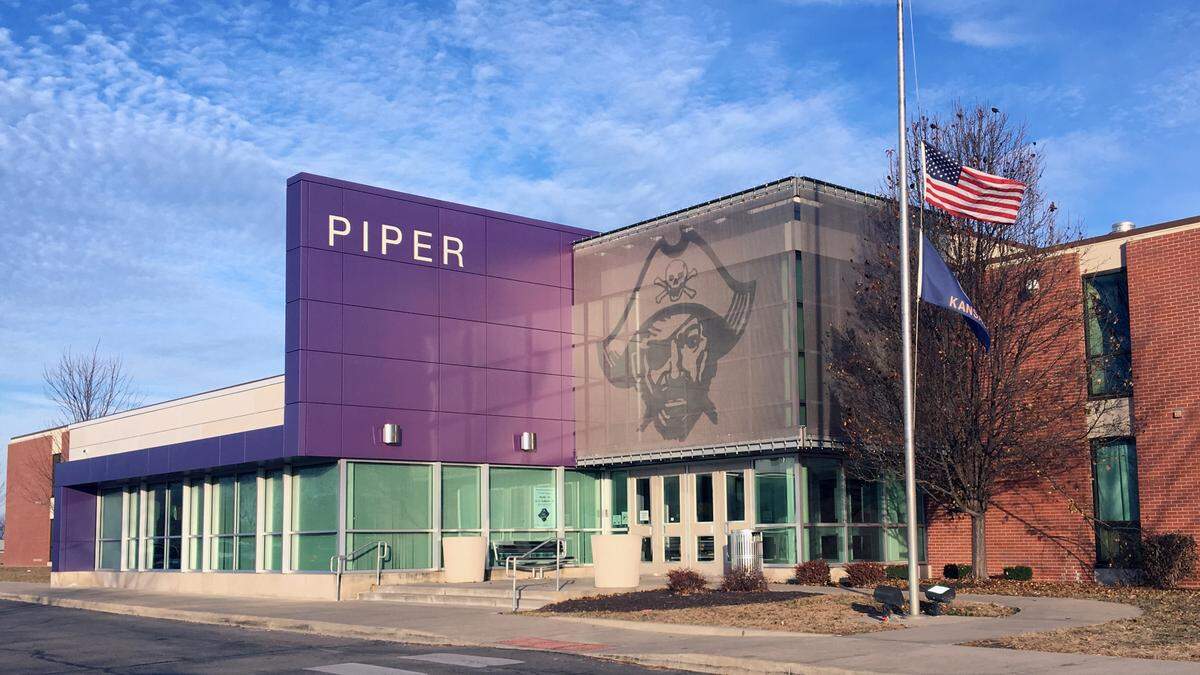
Piper High School is pictured in a 2018 file photo. The Unified Government Public Health Department announced in a news release that a COVID-19 outbreak originated at the school on Sept. 18, 2021 Tammy Ljungblad - The Kansas City Star
Piper breaking out
This year, Piper Unified School District will move out of a multi-district cooperative that KCKPS offers to support area special education services, meaning Piper will offer all of its own services as an individual district. It recently hired its own special education director and is planning to find new training for teachers and design the program in a way that best suits Piper students’ and teachers’ needs.
The district said that this move will allow the district to offer its own teaching support strategies, “including direct access to leadership, expanded professional development, and increased input in program design.”
“This transition empowers us to be more responsive to our students’ and staffs’ unique needs, streamline decision-making, and strengthen collaboration within our schools,” according to the district.
The district said it wants to roll out a program based on clear communication, a sense of ownership and a strong culture that has educators feeling “supported, valued, and equipped to succeed.”
Not fully funded
Kansas reimburses school districts for a portion of their special education expenses not covered by federal or state assistance. Although the state is supposed to finance 92% of extra costs, that percentage has recently fallen in the 75% range.
Gov. Laura Kelly in May signed a bipartisan bill that increased state funding for special education by $10 million in the year ahead. Ahead of signing the bill, she told legislators the increase fell $62 million behind what the state needed to move it in the direction of someday fully funding the program.
“Kansas kids deserve better,” Kelly wrote in a statement.
The Kansas Association of Special Education Administrators reported in 2024 that the last time the state fully funded special education was in 2010; it estimated at the time that school districts across the state were underfunded by a combined $173 million.
School districts are required by law to provide special education services, even when funding is a concern. This means they often use general fund or reserve revenues to finance services, and it’s not always guaranteed that that money will be reimbursed.
KCKPS is feeling the effects of historically incomplete state funding, Lawrie said.
“Over the past few years, KCKPS has had to absorb a significant portion of these costs locally,” Lawrie said. “While we are advocating at the legislative level for full funding, we continue to prioritize equitable resource allocation within our district to support the most vulnerable learners.”
Jessica Dain, superintendent of Piper USD, told The Star that although staffing and enrollment are stable, lacking state and federal funding has been an issue. About $1.6 million of the district’s local dollars go toward making sure Piper stays on top of offering full services to students with disabilities.
“One of our primary challenges is ensuring we have the curricular resources necessary to meet the increasingly diverse needs of our students with disabilities,” Dain wrote in an email. She later said that although the district is grateful for what state and federal assistance it does receive, student need is growing and the district is financing that growth with local funds due to gaps created by incomplete funding.
This story was originally published July 22, 2025 at 6:00 AM.
Sofi Zeman covers Wyandotte County for The Kansas City Star. Zeman joined The Star in April 2025. She graduated with a degree in journalism at the University of Missouri at Columbia in 2023 and most recently reported on education and law enforcement in Uvalde, Texas.

 "KCM_KCKPSBond_041624_EJC_06 (4)")