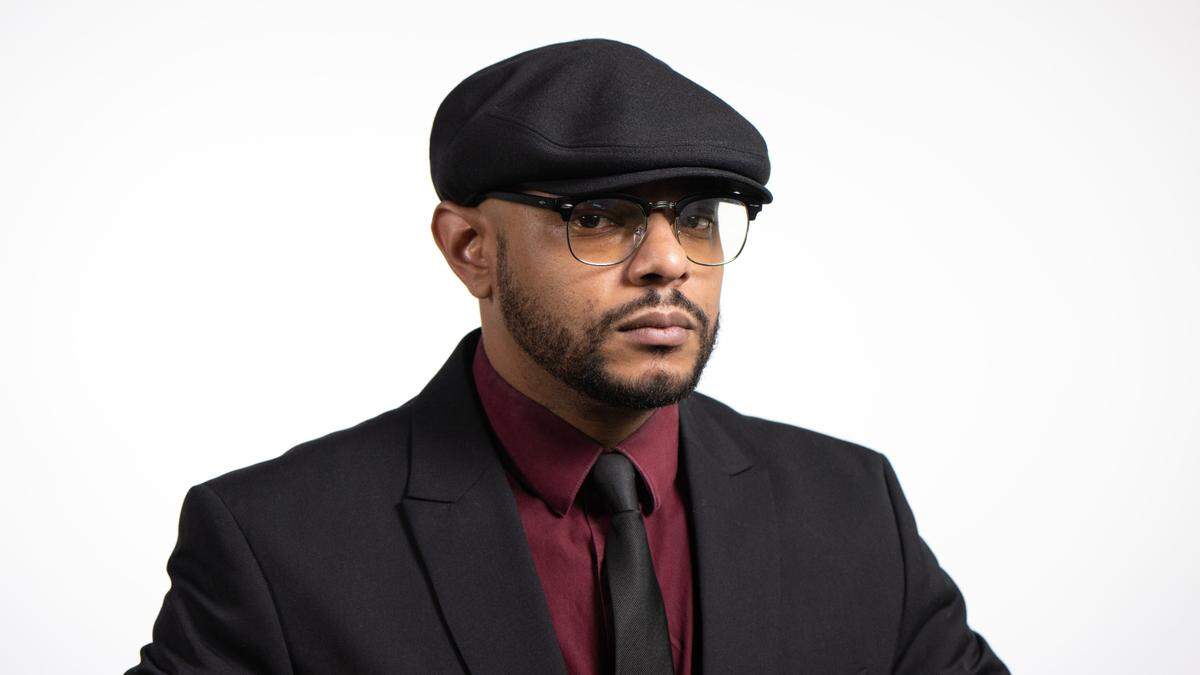
The return of the KC Black Rodeo has local cowboys ready to put on a show
At Daniel Bey’s ranch house, in the heart of Kansas City, Kansas, the 41-year-old cowboy and horseman readies his nylon and polyester rope with practiced ease.
Surrounded by a barn, a workstation where he crafts and fits horseshoes, and enclosures housing several horses, Bey begins twirling the rope in smooth, controlled motions. The lasso spins above his head, forming a wide circle around his cowboy hat, before he aims it precisely at a silicone steer dummy. With a swift flick, the rope shoots forward, wrapping around the dummy’s horns like a viper striking its prey.
The motion looks effortless, but it comes from decades of practice and experience gained through years of competing in rodeos.
As he trains for the upcoming KC Black Rodeo, Bey knows that the real challenge lies ahead.
On rodeo day, the target won’t be stationary. He’ll have to rope a live animal running at full speed while giving chase on horseback, relying on instinct, timing, and muscle memory honed over a lifetime.
The Kansas City Invitational Black Rodeo, hosted by Black Rodeo USA, will take place on July 26 at the Hale Arena in the American Royal Center.
The last time a Black rodeo came to town it was 2019 when the Bill Pickett Rodeo, named after a famous Black cowboy, rolled into Kansas City. Many participants and members of the Black cowboy community hope Black rodeo popularity will inspire city leaders to make it an annual tradition.
Bey, a lifelong horseman and Black cowboy, will compete in the roping competition. Bey, who travels across the country to participate in multiple rodeos each year, is often one of the few Black competitors at rodeos where the vast majority of the participants are white. Although he attends a few Black rodeos each year, they are rare.
“We used to have Black rodeos here all the time,” Bey said. “I’m excited we’re finally having one back in town. People don’t understand the history of Kansas City or the cowboy way of life.”
Bey remembers a time during his youth when Black rodeos regularly passed through Kansas City. Over the years, interest began to fade. He believes that with Kansas City’s deep cowboy heritage, rodeos should be more common, especially in a place so central to the Western tradition.
“Kansas City was a major hub for the cattle industry. That’s why it’s called a cow town. All those buildings down in the West Bottoms used to be stockyards,” he said.
Bey believes many people in the metro area would be surprised to learn just how many Black cowboys, horsemen and ranchers live in the region, Their numbers continue to grow as more Black residents discover a passion for Western culture.
Bey will be competing in two events: team roping and tie-down roping. In the tie-down event, a calf is released into the arena at full speed. The rider then chases it down, lassos it, dismounts, flips the calf and ties its legs. In the team roping event, two riders work together to rope a full-grown steer, one targeting the head, the other the legs.
In addition to the two roping categories, there will also be bull riding, steer wrestling, ranch bronc riding, ladies steer undecorating, and ladies barrel racing.
Ranching became sport
Bey’s father was also a horseman who took him to rodeos as a young child and taught him how to ride. He learned the art of cattle roping from different mentors who he met through his father’s various associations as a horseman.
By his early teenage years Bey was competing, and according to him he got a late start. In the rodeo world many start competing as young as five or six years old. He remembers those first few years being a lot of hard work to close the gap between him and the other competitors.
Bey’s dedication and training — almost every day — has paid off with him winning first place prizes around the country and receiving not only cash prizes but also belt buckles, that signify a riders prestige as a champion. Bey doesn’t care much about the trophies, for him it is about bringing home the cash prize.
As for his entries in Saturday’s rodeo, Bey said he’s feeling pretty confident about his odds of walking away with the $1,650 awarded to the winner of each category.
Many of the today’s rodeo events are rooted in traditional ranch work. Tasks like herding cattle, racing horses, roping and breaking wild animals have evolved into challenges that test a cowboy’s skill, speed, and control.
Dewayne Smith, vice president of the Black saddle club Kountry City Boyz in Kansas City, Kansas, had planned to attend the upcoming rodeo with members of his club. However, many waited too long to buy tickets and were surprised by how quickly they sold out.
“This shows just how much Black cowboy culture is growing,” said Smith. “A lot of Black rodeos I’ve been to, you can just walk up and buy a ticket. To see it sell out this fast says a lot.”
Smith has been riding horses since he was a teenager and grew up in Kansas City, Kansas, surrounded by Black cowboys. Over time, he began to see fewer of them and eventually joined the Kountry City Boyz saddle club to help bring back the visibility and pride he felt as a child.
“I remember seeing them ride up and down the streets when I was a kid. I told myself that when I grew up, I was going to have my own horses,” he said.
Since then, Smith has owned and sold five horses. For him, Black rodeos and saddle clubs offer more than just entertainment, they create much-needed spaces for connection, community, and cultural celebration.
A new-found fan club
Though he won’t be attending with as many club members as he had hoped, Smith is excited to share the event with first-time attendees. He believes mainstream music has played a major role in introducing new fans to the cowboy lifestyle. With Black artists like Beyoncé releasing her country album Cowboy Carter and emerging acts like Shaboozey gaining popularity, Black cowboy culture is reaching new audiences.
Some may view the trend as a passing fad, but many Black horsemen are excited to welcome newcomers into their world. For those who’ll step into their first Black rodeo, Smith says, expect a memorable experience.
Food, music and fierce competition are staples at any rodeo. But for DeMarcus Ford, who will compete in the bucking event, the riding is what truly keeps people coming back.
Ford, 30, a Kansas City native, has been riding horses since childhood. He rode his first bucking horse at age 11 and has been hooked ever since.
He can remember that first experience being filled with fear and excitement. Though he only rode the horse for a few seconds, the moment created a passion for riding wild horses. While he loves competing, he acknowledges that being Black in the rodeo scene still comes with its challenges.
“Back then, it was different being Black,” Ford said. “I will say the playing field has leveled a lot, but it used to be extremely difficult. It takes a toll not just mentally, but financially too.”
In his early days, Ford struggled to find the sponsorships necessary to advance in the sport. Without sponsors, riders like him must cover entry fees, transportation, equipment and other expenses out of pocket, all for a performance that lasts just seconds.
With the registration fee being $100 per category, riders like Bey who will be competing in two categories and transporting his horse estimates he will be coming out of pocket with $500 in expenses to perform this year with no guarantee that he’ll win and leave with a pay out.
He believes Black rodeos offer a platform to not only gather and celebrate culture but also show sponsors and brands that Black riders deserve recognition and investment.
Ford says many Black competitors feel discouraged by not just the lack of support, but also biased judging found at predominantly white rodeos.
“I can remember times at all-white rodeos where I out-rode the other guy and they still gave him the better score. It got tough,” he said.
For Ford, staying mentally clear is essential, especially in an event as dangerous as bucking. In this event, the rider mounts an untamed horse with no saddle and must stay on for eight seconds. Judges score them based on their control, form and the horse’s movements.
According to many horsemen, the event is the ultimate test of horsemanship. It demands full-body strength, focus and the ability to move in sync with an animal trying to throw you off.
Daniel Bey believes the KC Black Rodeo is exactly what the city needs, something new, exciting, and rooted in community.
“It’s kind of funny to see more Black folks getting involved now,” Bey said. “I remember not too long ago, people used to make fun of us for wearing cowboy hats and boots.”
“They thought we were just dressing up. But this isn’t just clothing to us, it’s a way of life and part of our heritage. We want the Black community to understand that this is your history too.”
This story was originally published July 23, 2025 at 5:00 AM.