She’s got a PhD. But KC dean knows higher education isn’t one-size-fits-all
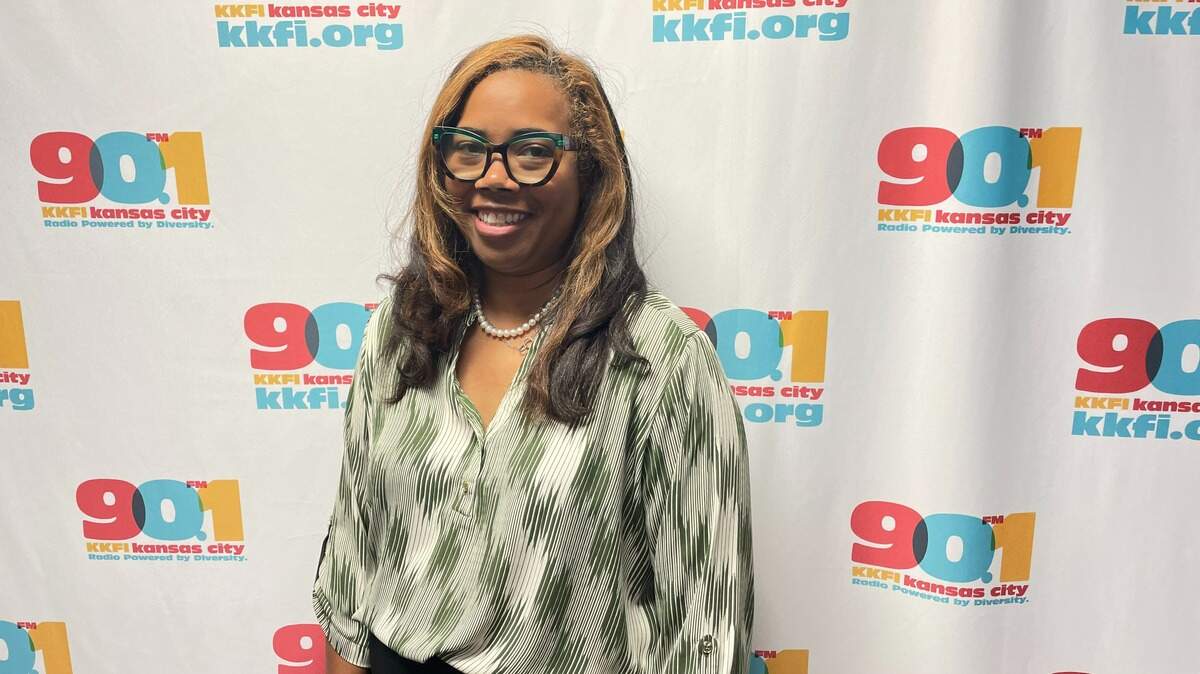
For Samaiyah Jones Scott, education wasn’t a neatly planned destination; it was a path revealed through mentorship, opportunity, and a deeply rooted sense of service. From her early days as a standout student, to being selected for the prestigious Mellon Fellowship, Scott’s journey toward higher education was set in motion by those who believed in her.
Today, as dean of student development and enrollment management at Metropolitan Community College–Penn Valley, Scott brings that same spirit of belief and empowerment to every student she serves.
Raised in Kansas City and a proud graduate of Lincoln College Preparatory Academy, Scott’s connection to education runs deep. She credits her KCPS roots with pride, believing it to be a testament to the powerful and lasting impact of dedicated teaching in public schools.
Now at MCC–Penn Valley, Scott, who has a doctorate degree, leads efforts to redefine what success in higher education looks like. She’s tackling long-standing stigmas around community colleges, emphasizing accessibility, affordability, and workforce alignment as key strengths, not drawbacks.
Whether helping first-generation college students, expanding career and technical education pathways, or bridging gaps between K–12 schools and college campuses, Scott’s mission is clear, to make education not just an aspiration, but an attainable, transformative reality for every student who walks through Penn Valley’s doors.
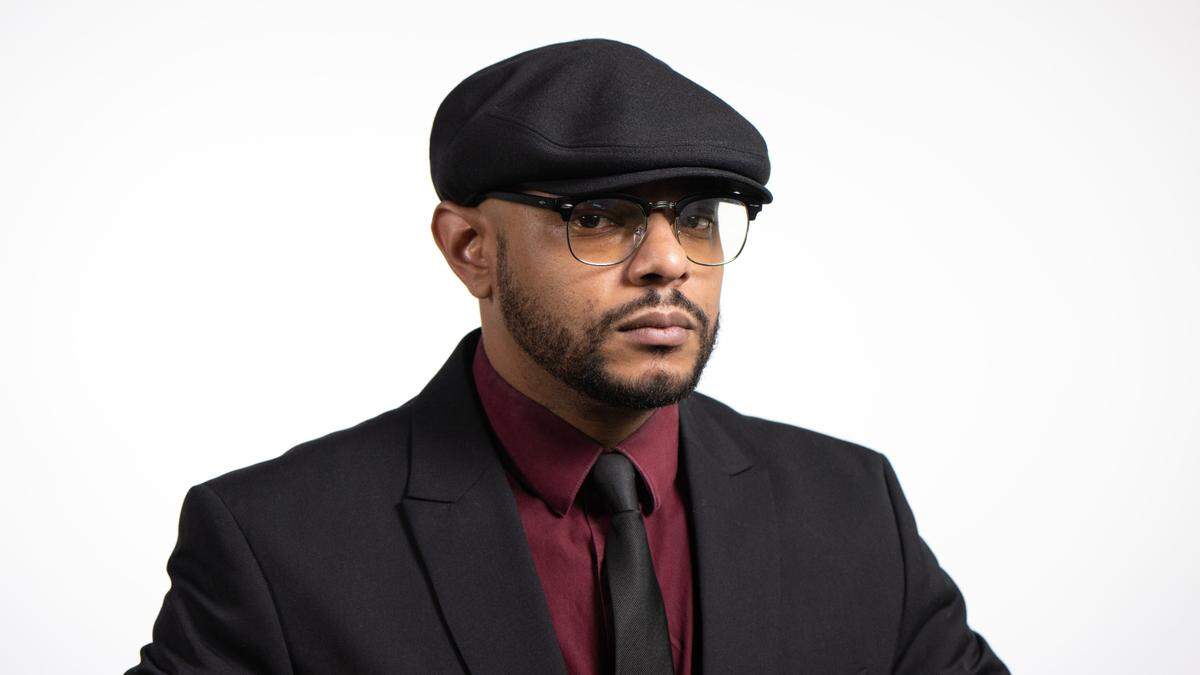
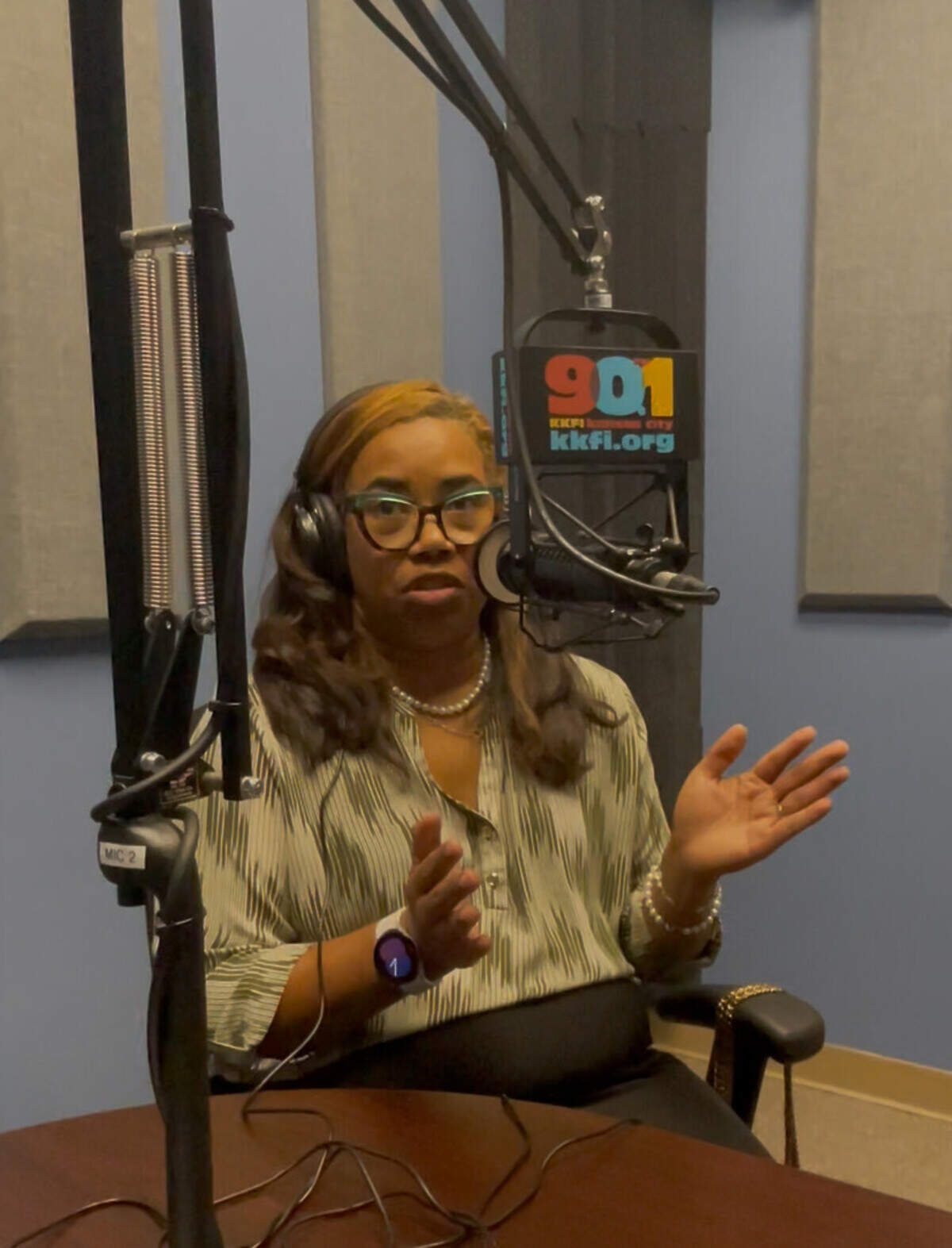
The Star wanted to know more, so we invited Scott to the KKFI community radio studios where she sat down with culture and identity reporter J.M. Banks, to talk about her mission and the journey that brought her to a place of education leadership in Kansas City.
Meet Samaiyah Jones Scott
The Star: What led you into the field of education?
Scott: So, for me, I sort of stumbled into education by being at a historically black college in Augusta, Georgia, where I had a faculty member who thought that I was a great student and he introduced me to something called the Mellon Fellowship Program. It’s founded by the Andrew Mellon Foundation and it seeks to increase the number of black students to enter higher education as professors.
Every year they select 30 students around the country who attend historically Black schools. I was one of 30 students selected in, I think, 2003. From then on I was sort of on a trajectory to enter higher education as a professor.
But from then on, you know, sort of my mission has been to help students of color particularly, but all students, obviously, achieve higher education or an education of some form.
What was your educational journey like here in Kansas City , and was there any particular educator in your life who played a big part?
I am a student who was a part of Kansas City Public Schools. I was a part of the “Southwest Cluster,” if anyone can remember the “Southwest Cluster,” that was Hartman, Cook (Hale Cook), and Marlborough (schools). Of course, I was blessed to be accepted into Lincoln Prep (Lincoln College Preparatory Academy).
I attended from sixth grade to 12th grade and so I have had a number of impactful educators throughout my time as a student. I can remember every one of my teachers by name just because the education that I received in KCPS was impactful.
Some other notable, professors that I remember, Dr. May Washington (Ph.D.), who is now at Saint Theresa’s. She was my English professor for IB (International Baccalaureate) English. And I just recall her making sure that we read things that were relevant to our experience.
So she made sure we read things like Beloved. I really, really thank folks like Dr. May Washington for being there for us.
What is it about the Lincoln curriculum, you think, that connects with so many kids here in the metro?
Right. So, you know, at the time, I didn’t know of the sort of rich history of Lincoln Prep when I went. So my mother, she was a Central Eagle and she decided that she would have all of her four children to attend Lincoln Prep. So, Lincoln historically has always had a tradition of academic excellence for African-Americans.
So, few people know that, you know, at one point, Lincoln actually offered an associate’s degree. That is before we were allowed to attend MCC as a community college. So that was during segregation when we (Black people) were not allowed. So it’s had that tradition of academic excellence in the black community for decades. I think it’s been a Blue Ribbon school for several decades now.
Where does your passion come from and how do you channel that into the work you do?
Sure. So my upbringing is servant leadership. My parents have always been really active in our community. We were active in church. We were active in our local youth groups. Any educator is, by nature, a servant leader of some form, and so any kind of work I do, I look to find out how I can be of service, how I can pour back in.
And so for me, education sort of comes naturally. My mother was an educator. My aunt, she was an educator for years. Probably, without even knowing it, I sort of followed their lead in terms of what good education looks like, what pouring into other students looks like.
I can remember when I was in elementary school, I was sort of paired with another student who wasn’t doing as well in math. So, you know, a good teacher strategy is always to sort of pair folks together and have them sort of help their peers to learn. I remember, just sort of naturally beginning to do that with my peers around me, like someone was struggling. I’m going to help you. I want to help you to learn. I want to help you to get it. I want you to make sure that you know why the answer is this. So, I think I’ve just kept that throughout. Education is a really great place for those people who have service in mind.
Can you walk me through the work you do at Penn Valley and what that’s like to take on the challenge of bringing in those students?
As Dean of student development and enrollment management, I like to say that we are with the student from recruiting them all the way to graduation and everything in between on the non-academic or non-instruction side of the house. So, we work collectively with our K-12 partners, with our community partners.
At a lot of our charter schools, as well as Kansas City Public Schools, we have really robust relationships with the faculty and staff there. Because one of the things that, as educators, we know is that our K-12 folks have relationships with their students. They know really well what students have achieved so far. They know sort of where they’ve ended up academically and what places would be great for them.
Right. So it’s our job in higher education to communicate what we offer, how we support students so that they can feel comfortable with us being an option for the students. So we’re really blessed that our partners see the vision.
A community college experience in education is something that, we’re really working to destigmatize in our community. But, also nationally in terms of it being a quality education and it being an education that is for all students and not necessarily just for schools where people think students haven’t done so well, so they need a community college. It’s there for that too. But it’s also a good option for students who have really done well, but they want to make sure that they are not straddled with debt.
Students who have done really well, but they don’t necessarily want to, go the traditional four-year education route. They would like to have a CTE (Career and Technical Education) education where they are well paid. High-paying jobs where the training is much shorter.
It speaks more to their abilities and their desires and interests in other ways. Like you know, HVAC (Heating, Ventilation, and Air conditioning) or computer-integrated machining and technology, things of that nature.
We also want them to know that this is the most affordable option that exists for them in Kansas City.
So that’s what we communicate with our community. Then once the student gets to us, you know, sort of all hands on deck to make sure that the students know all of the options that they have. I’d say for any student, whether they go to a community college or a four-year college, or anything in between, if all you do is go to class and graduate, you have missed your opportunity because the education happens inside the classroom and outside of the classroom.
So we offer career services. We also offer counseling services. We offer, student life and leadership opportunities, student organizational opportunities. I think they used to be called sort of soft skills that, you know, employees are saying, “well, why don’t they have them? They don’t know how to communicate written or verbally. They don’t know how to work well with teams. They don’t know how to, you know, meet deadlines where we have deliverables and all of those things you will learn as a college student.”
So, our goal is that as soon as a student enters, they attend those orientation events that sort of set them up for all of the first year experiences that they need to participate in. Most of our students they are graduating with a job, and they’re good paying jobs.
You had mentioned there being a stigma surrounding community college. What do you feel that comes from, and what do you do at Penn Valley to dissuade that perception?
Right, sure. So, it’s an old, you know, stigma. Right. I think it probably dates back, probably to before I was born, where we consider our high-achieving students, we want to push them into going to Ivy League institutions or whatever we consider the best schools in the country.
U.S. News and World Report, they do the whole education series where they rank all the schools.
But when you have best colleges in the country, and they start out with four year institutions, it gives the appearance that a community college is for students who have not done well. Right? Are students who people believe don’t learn as fast or they they’re not as good of students. So number one, there’s a stigma around that.
We want to get rid of the stigma that somebody is not a good learner.
Again, that stigma is also detrimental, in another way, because it has sort of caused this huge debt crisis that we have in our country where, you know, we tell the student that the most important thing is that they go to whatever is considered the best school in the country, no matter what it costs.
We really need to help our students understand that regardless of what other people have told you, you need to have a better way to evaluate what’s best for you.
So that’s that part of the destigmatization that we have to do with our community, with our parents, with our schools.
What are you all at Penn Valley doing to make sure that people know that secondary education is still much needed?
So, you know, there are a lot of ways to think about it. I tend to be someone who’s a lot more progressive in that discussion. Right. I don’t think that every student needs a four-year degree, even though I have a Ph.D. and have loved everything about higher education.
So our assumption is if a student has applied, that means they have done their due diligence, they have researched, and they want to invest in what we have to offer. Most of our students, their participation is society driven. They’re going because somebody told them that they need to go. But in higher education, we just assume that they are applying so that they already know what they’re getting into.
I would say the statistic is around 20 something percent of students still change their major at least once by the time they get there, which means that they didn’t quite know exactly what they wanted to do. So that means that they don’t actually know exactly why they’re there. They’re not necessarily mission focused yet, and there are a lot of students who will graduate with a degree that they don’t want to use.
They just don’t want to change their major because they know it’s going to take them way longer to finish and way more money. So they’ll just stay the course.
Right now, I think that there is a study about how many Americans are not operating, or not working, in their degree field, and it’s quite high.
I think that all those people who are not working in their degree field are the people who were like, “Oh, I should have changed it.” So it’s not that it’s not valuable, it’s just that we have to help our students to determine who they are, what they think their purpose or their goal is in life, what their sort of career aspiration needs to be, much earlier. Before they begin to take out loans.
There are a lot of careers that they will tell you, we can’t get enough applicants in this field because it’s a well-paying field, but it’s not well known. It’s not glamorous. It’s not doctors, not lawyers.
So one of the things that I think has sort of, you know, begun to boom for us is trying to get more students into STEM.
What’s important for our students, as well as our institutions, is to have a keen awareness of what the market needs, right? And to be able to pivot when they need it. So MCC, for example, we decided to go after our first bachelor’s degree program. That was based on market needs and us understanding that there’s this great need in the community.
We need to encourage our students to be that focused earlier because, without that, we’re going to continue to have students who have this sort of, bad taste in their mouth of going to college and getting a degree that they can’t use.
What are the enrollment numbers like since you’ve been at Penn Valley? Have they been going up, or down, or are they steady?
I’ve been at Penn Valley for three years. I came right after Covid. Everyone had a huge decline because of Covid, right? We knew that everyone would begin to climb after Covid was over.
So our’s has sort of steadily been climbing. Two-year institutions we tracked were a pace behind four-year institutions. Four-year institutions had their boom almost immediately. We saw a boom a year after that. With that said, on top of the Covid crisis that we had, all of higher education has been watching what people have been calling the enrollment cliff, which is that at some point, 20 years ago, our typical families began to produce fewer children.
What we all know is that at some point, though, that low birth rate would result in us having less college students. We hit that a year ago and so institutions that are prepared to welcome in, and encourage, more first-generation students or most students that had not been in college before, are better situated because we’re not depending on the traditional student demographic.
So at Penn Valley, we have not had a decline because of that. But that’s because our community of color population is growing. We have one of the larger international student populations at our campus and English-as-a-second-language programs at our campus. So students who would love to go to college, but they need to have English proficiency first, they come to Penn Valley, they can complete an associate’s degree, they can go on to a four-year institution, or can participate in one of our CTE programs once they finish.
MCC has really done a great job of sort of tapping into the market that is there. We have a predominantly white student population. However, there are a lot more students who are older, who’ve never been to college.
Our students of color population is growing particularly because we have those really great relationships with our K-12 partners..
What do you think are the biggest challenges that you face in your role at Penn Valley as the dean of enrollment?
I would say the biggest challenge that we have at Penn Valley, specifically, is organizing all of our constituents. It’s a good problem to have but we have so many partners. We have community organization partners who have a population that they would like to see go to college, and they want to support them in that.
We’ve got an early college program with traditional learners and they have middle college students, which are students who have not completed high school.
So they complete high school on our campus, which is stigma free. It’s a wonderful environment for them. They graduate every semester. I think since that program started — that middle college program — we have graduated over 500 students with a high school diploma that otherwise probably wouldn’t have finished. We’ve got a partnership with Literacy KC that’s also on our campus.
They all have different needs. Some of them are similar but just slightly different. So I’ve got some of the best people here. In the entire Kansas City area working in student services and enrollment at Penn Valley particularly, but of course, across all of MCC, so we work hard.
What are some things you would like to see implemented over at the campus?
We need to have a better way to make sure that we’re not letting any student fall through the cracks.
We also want to make sure that we can ensure that everyone gets excellent service from us and they all get the same service. So we don’t want it to look like one school is getting differential treatment because they get to have this type of experience and they may not have to jump through these sorts of hoops.
I would say another thing that I would love to see implemented at MCC, just in terms of how we service our students, is sort of those opportunities in which our institutional partners that are in the instructional side, partner a lot more with students in terms of those project-based learning, those service-learning, opportunities.
A lot of our institutions have moved to those pieces of the educational experience because that really helps students become prepared for the working world. So we do have some programs that do a really good job of that sort of project-based learning experience.
Other programs, you know, that’s sort of a new thing for them. But I would love to see all of our students graduate having had that experience as a part of their education.
Nice. Excellent. How can people get more information about the projects you have going on at Penn Valley?
I would encourage them to go to our website. mcckc.edu. You can look up Penn Valley campus. Then, of course, if you happen to be a K-12 educator or a community educator, we would love to have those students come in, view our campus to see our virtual hospital, our Advanced Technical Skills Institute and our police academy. We also have at the Maple Woods campus our vet and veterinary tech and also the agriculture. Then, of course, at Longview we’ve got automotive. Those are some really great buildings, great opportunities for students to really see what they can probably be learning about.