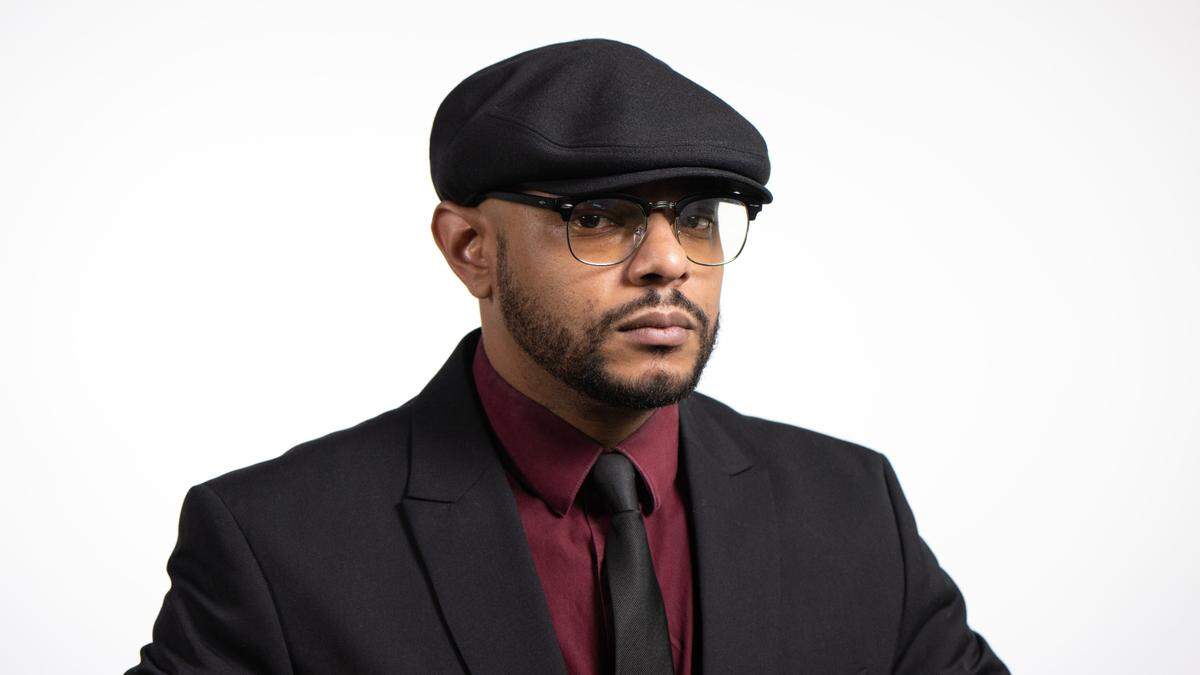
His bond with students, teachers, propelled Kansas track coach to school principal
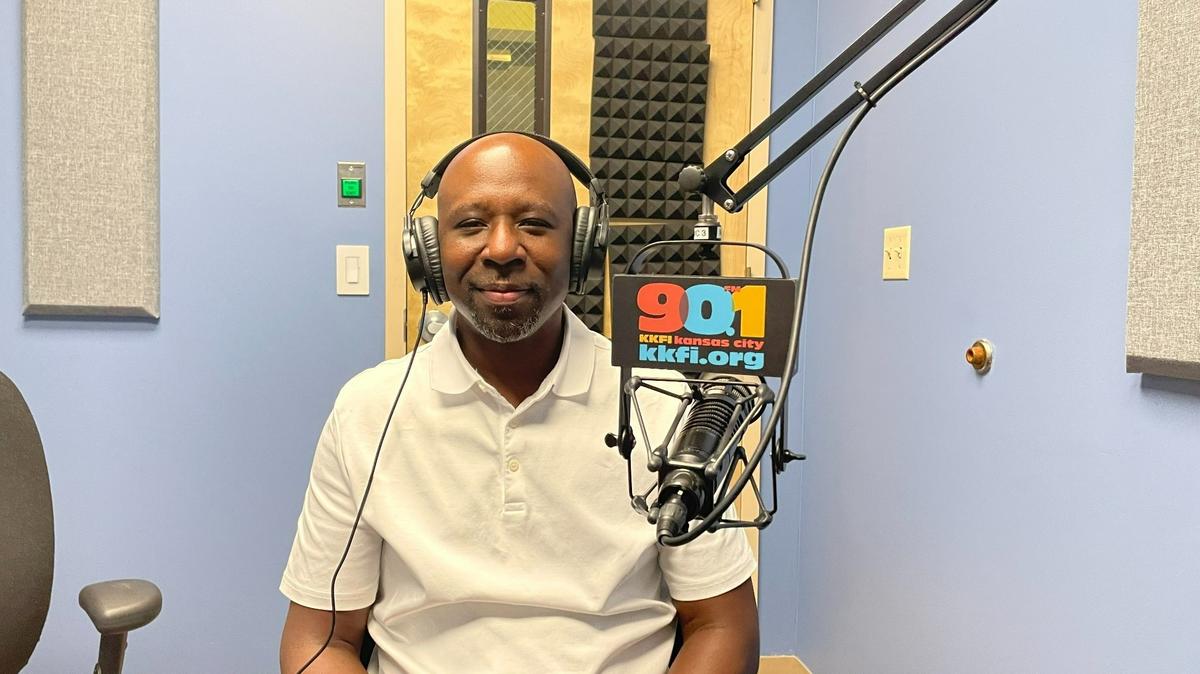
This interview is part of the third season of Voices of Kansas City, a project created in collaboration with KKFI Community Radio to highlight the experiences of Kansas Citians making an impact on the community. All the episodes are available at the KKFI.org site https://kkfi.org/program/voices-of-kansas-city/ and listen to KKFI live on 90.1 FM, or at KKFI.org. Do you know someone who should be featured in a future season of Voices of Kansas City? Tell us about them using this form.
Torrence Allen’s journey toward a career in education has taken him from dedicated track coach to Belton High School principal where for two years he has made building relationships between administrators and teachers, teachers and students, teachers and parents, among the most important elements for creating the kind of academically strong and socially safe school, he strives for.
Starting out as a substitute teacher with aspirations of becoming a PE instructor, Allen discovered early on the unique power of athletics to connect with students in ways traditional classrooms sometimes can’t.
Over time, he transitioned through various roles, coach, teacher and eventually became principal. Each step marked by its own set of challenges. To reach his full potential, in a redefined path, Allen decided to return to college to advance his career. That decision meant balancing school with family and work, an often-daunting process. He made it through and gives deserved credit to the strong support he got from colleagues, mentors, and family.
The Star invited Allen to join us in the studios of KKFI radio station where he spoke to culture and identity reporter, J.M. Banks, about how he navigated the demanding road from the sidelines as a track and field coach to the leadership of a school and the deep commitment to student success and meaningful relationships he developed along the way. That interview, with minor editing for space and clarity, is published here in a question and answer format to share Allen’s authentic voice.
Meet Torrence Allen
Why don’t you begin by telling me what led you into the field of education? And why do you think it’s important that more professionals enter the field early on?
Allen: What really got me into education was my high school PE teacher, Leonard Sparkman. Back in elementary school, he seemed like he was 6’8” or 6’9”, at least he felt that tall to me. He was a life-changing role model, especially as a male figure in education, and someone I truly looked up to as a male in education.
I aspired to be a PE teacher, then I got to college and I realized there was a lot of science involved and science was not my favorite subject. So I ended up deciding I was going to change my major and the quickest path to graduation was general studies.
I changed my major and I was on that path. I was also running track for UMKC (University of Missouri Kansas City). I was actually a part of UMKC’s first track team. But as my season was winding down, it became evident that I wasn’t going to finish my degree at that time. I decided to go and coach for Sumner Academy.
From there I decided to be a substitute teacher and that’s when I realized that education was what I truly wanted to do. I went back to school, finished my degree and then completed my teaching certification at Avila University, and here I am.
What type of coach were you at Sumner Academy?
My first year, I was a track coach. I coached boys and girls in the triple jump. I ended up coaching wrestling, basketball, and football, so that kept me pretty busy. I enjoyed every bit of it. I was making a difference in kids’ lives and it’s one of those things where you get tired of telling kids they need an education, that college is the way to change their lives. Here I was living every day as a substitute teacher and not practicing what I was preaching. So it just hit me one day, I needed to stop being a hypocrite and go back to finish. My students cheered me on throughout the process and it was great.
I ended up taking my first real teaching job at Don Bosco, here in Kansas City, Missouri. It was a challenging job, but I was successful there as well. Sumner Academy had a position open and then I went back to Sumner to teach and coached there for many years.
So I coached for 19 years and for eight years as a full time teacher . I worked as a substitute teacher for 11 years and spent one or two years as a parent volunteer coordinator.
How old were you when you actually went back and got that degree?
Probably my late 30s.
What is it about athletic education that you think appeals to so many students and that you can reach students like regular teachers might not be able to?
You know, it’s the ability to have fun. The court, the field, or the track is your standard classroom. You can still teach, make connections and build relationships with kids in a firm way. Sometimes, teachers in the classroom don’t always have that same ability to have fun with kids.
With sports, the connection is just organic. You’re just out there having fun, being competitive. The student is competitive, the coach is competitive, and you’re sharing that same bond. You can tie it all into real-world and life. It just takes on a life of its own.
Sometimes, you and the student connect because they like it, you love it, or vice versa. Once that connection is made, it really takes off and becomes something beautiful. I was having more of those meaningful connections in the athletic setting and that was reinvigorating me to have success in the classroom as well.
Then, when I transitioned into a full-time teaching role, it all elevated even more because I had learned how to find those connection points in both settings.
So in the course of your career, you went from PE teacher, substitute teacher, and you’re now all the way up to principal. What have been the challenges along that journey?
The biggest challenge has been going through the process. You know, in life, people are often discouraged from going through it because it can seem insurmountable, like you just can’t overcome it.
Being a substitute teacher and having to go back to school. Sometimes that process is daunting and discouraging.
So, that was probably the greatest challenge, getting back into the groove of being a student and having a family on top of that. You’ve got to juggle all of that and it was challenging but I had a lot of support, whether it was from teachers already in their roles, coaches, or my family. That support helped me navigate those tough times.
Was there ever a moment in your life that you thought there was another career path that might be in the cards?
Yes. I tried to be a police officer. I failed the police test. So being a police officer was something that I aspired to do, but I think that was not my destiny, education was and that’s where I find myself at today.
The educators we’ve spoken to speak about the urge they had early on in life to be a teacher. What is it about education that calls people at such a young age to serve?
I think it’s the relationships. When you find a teacher that just changes your life, it’s like, I want to do that, I want to have that, I want to reconnect with that feeling.
Then you fast forward to probably 2002, 2001 and I’m trying to be a high school coach for girls’ basketball and lo and behold, Coach Sparkman is the coach. He said, hey, do you have everything that you need? Now he’s once again pouring into my life and he gives me all the information I need to prepare for interviews to even have an opportunity to get a job.
But I did get the job. So, you know, when you see those relationships, when kids have positive relationships with their teachers and those educators along the way, more kids have a greater chance of going back into education than not. I think that’s one of the things that us as educators have to really work hard at making sure that they have more positive relationships and touchpoints with kids.
In your high school, you have got seven or eight teachers and if you’re only having a positive experience with one, sometimes that’s not enough.
How does the position of principal differ from the position of teacher in your experience?
Your view is a lot different. As a teacher you are on kind of an island. You know, I teach this subject. I have got this many kids and this is my world. When you are principal, I have this building and I have this many teachers. I have this many students and they come with this many parents.
You don’t have the island anymore; you have the whole kingdom. So you have to be able to look at it from maybe a 10,000-feet view. You get to the district office and you’re looking at it maybe from 30,000-feet view. So you have to take off the teacher hat and put on the principal hat and start looking at things from a greater point of view.
Then you’re governing people now, not just teaching students. But you are governing adults, and then your adults become your classroom. So when I do professional development, all my teachers are my students and that’s my classroom where I get to do things to help teach them and help them get better and grow.
With you having to deal with so many different facets of the educational sphere at the school, are there any particular blind spots you may have?
Education is one of those jobs where it’s on the job training. You are a lifelong learner and you’re constantly adding to your toolbox. So blind spots for new, administrators would be budgeting, facilities or finding a balance between instruction, culture and climate.
So you got to sharpen those skills, daily, weekly, monthly, yearly, because they never go away, you have to get better at them. As a teacher, you know, your blind spots could be classroom management because you think you have this great idea of what you’re going to teach and then you got to manage the kids and everything doesn’t go as planned based on those unique circumstances.
What are some qualities you look for in the staff that you have at the school?
You know all of them pretty much can teach the subject matter. So you start to look at some of the soft skills, the connection. Because you’re looking for a fit. You’re looking to see do they have the ability to build relationships with kids and teachers.
Sometimes we do personality assessments, sometimes people do mock classroom sessions and they bring kids into a classroom space and have a teacher teach. It just depends on how in-depth you want to get with the process. You’re looking to make sure that that teacher has a strong pedagogy.
So you listen to their story and you hear them out and you see if this is resonating with you, and will they fit into your culture and climate and want to be successful. Sometimes you get it right and sometimes you don’t.
With the new batch of teachers coming out of college, are there any particular traits that you’ve seen, with how they teach in the classroom?
Technology. Our seasoned teachers may see technology sometime as a distraction or hindrance. Take for example our younger generation will leverage it and figure out how to use it and build into their classroom, our seasoned teachers might see it as a tool of torture.
Kids are just going to cheat with it. So how do I as a principal help those teachers embrace this new resource that is not going anywhere?
So you’re constantly trying to make sure that the young and the seasoned all have a balanced toolbox in what they’re doing.
How do you keep up with those changes in a constantly evolving landscape?
Well, you got to stay abreast of what they’re doing for us in Jeff(Jefferson) City. The Department of Education is constantly changing. So you got to pay attention to those movements that are happening there, to our legislators and to our commissioners. So that’s a piece of it.
Then we have a greater Kansas City, Missouri Principals Association group and we stay together and we make sure that we are communicating the changes that are happening. Then there’s new education initiatives that are constantly coming out.
We’re part of a lot of different organizations that constantly send us information. You’ll be amazed at the number of emails we receive from someone who’s trying to sell us the next best thing, every single day.
It’s a busy world in education if you don’t stay connected to the right resources, you’ll find yourself, struggling as a principal.
Earlier you said you had done some work as a peer liaison, what does that entail and what goes into that work?
So during those days, I was the bridge between the parents and the school. So whatever the school was trying to do, my job was to make sure the parents were very much aware of what the school was doing and keep them in the know. For example, at Central Middle School over in KCK we had a community who spoke Mandarin and the school sent out all this communication.
So my job was to make sure the school understood that, we have a group of people here that’s not getting this communication, not understanding, not knowing what’s going on. What can we do to make sure we are servicing in this community?
Then we had to go out and figure out how to get things changed over. So that position was a very popular position at that time.
But now we have so many tools and resources that things can be translated for parents to be able to receive it in a timely manner.
It’s very interesting, because I know a lot of educators who say dealing with parents is probably the most difficult aspect of the job. Everybody has a hands on approach on how they want their child’s education to go. However, it’s not custom made to each individual child. It’s for everybody.
They send their children to school every single day and they love them dearly. It’s our job to really work to build a relationship with parents. I tell my teachers all the time, you can either start communicating early and build an alliance with a parent, or you can communicate late and you deal with the wrath of that parent.
Because that parent is going to be frustrated that you did not communicate with them. Then on the back side, you got educators and other people saying, the parent has one or two kids, I got 180 students in my classroom throughout the day. I need them to check on their kid just as much as you need me to check on them and connect with you about your one kid.
So I understand the frustration on both sides, but at the end of the day we have a great opportunity to leverage those relationships. Those conversations are not very difficult when you meet parents where they are and just understand that they’re just a passionate parent.
Once they know that you are working to build a plan of success for their child, you got them.
With education today, what do you think are the most critical things we need to focus on as a community?
What we really need to focus on is reading. Literacy is critical and our students really have lost sight that education can really change your life. When I think about my journey, coming up in the projects (government-subsidized housing) with a single parent, my father was present. He was active in my life. But I lived with my mother.
Going from the projects to director of finance, that’s massive. That doesn’t happen for me if I don’t have an education. There’s a pathway and it’s not the only way, but it is a great way to really change your life. Then on the flip side, when you look at college career readiness for students and their finding, trades and other avenues to be successful, literacy is the key.
People have got to be able to read, write, and just stay to the basics. So you got kids right now, they need to be reading. They need to be reading every single day. Because that is what’s going to help move them forward. They need life experiences, we need to take our kids to all our cultural things that we have.
So giving our kids those rich experiences and educating them about our history and reading those things that we really need to focus on.
Not just in the urban core, but just in education altogether. It doesn’t matter what history you have, the kids need to know it. They need to know who they are and they need to be solid readers.
What are some ways some, parents can empower themselves outside the classroom to take a proactive step in their children’s education?
I think the one thing that parents can do is just remember that they are their child’s first teacher. So no matter what you’re doing as a parent, you’re teaching your child something. So just being very intentional about what it is you’re going to teach them when they’re little and their reading. Sometimes you can just turn the TV on mute and put closed captions on and make them read their cartoons and you’ll know when the kid gets it, because he’s going to bust out laughing because it’s the stories playing out in their head.
So it could be as simple as something like that. but just using every opportunity to educate them. When a kid asks why, don’t say because I said so. You help them understand.
They’re learning in those moments. They’re hungry for knowledge. That starts right around when they get to kindergarten. They’re asking why, why, why? We have a great opportunity to educate them and parents to take the time to do it. We see a huge difference in parents who take that route.
Teach your kid everything you know and don’t be afraid to talk about finances and money and things like that, because what you don’t tell your kid, the world will find a way to share with them.
What are some things that you are hoping to grow and expand on, within your school in the future?
I always try to make the school a home.
I use terms like family, team and all these things to try to make sure that I create an atmosphere where everybody feels seen, heard, valued and respected in school. Then create space that is conducive to learning. So that’s the goal. You want kids to be able to come to school, feel good about the space they’re in, and teachers to create a classroom where kids feel good about learning and want to learn and want to be there.
I think every principal really wants a thriving academic school that is also successful in their athletics because when athletics are doing well, academics increase because people want to be there. They want to perform well.
Athletes want to do well. So when you have a volleyball team who has a 3.8 GPA, they’re raising the academics in the school. But when they’re winning, they’re raising the energy in their school and the team pride and so you want to have a school that centers around all of that.
Because when you get that energy going, you have a pretty good school. You can look at the different schools and see, who has it and who doesn’t, or sometimes what you see on the outside may not necessarily be what’s reflective of what’s on the inside.
But football has a way of setting the tone for a lot of schools. Sometimes basketball, but just finding that balance in both extracurricular and instruction. Then raising them both simultaneously will elevate your school and allow you to have a good time.
How do you juggle athletics and the arts in terms of extracurricular activities?
So if I look at it from the principal role, I want to support them all because I have got to I have a responsibility to support all my kids, and I try to build relationships. So I might be in a football game on Friday night, a cross-country meet on Saturday, and a theater production on Sunday.
We try to get out and see things as the principal. But it’s an investment when you do it. Your kids see that you care and support them and they appreciate it.
In terms of metro education as a whole, what are some things you’d like to see get implemented across the board?
You know, right now our cell phones are our greatest distraction and sometimes our MacBooks, Chromebooks, iPads could be a double-edged sword. But we see a lot of distractions with cell phones. They dominate a lot of our discipline time. They create a lot of disruptions.
But I know safety, from a parent perspective, you know, being able to have access or media access to their kid is paramount, based on, you know, school shootings and things that have happened to the education system.
So I get it on both hands, but it’s hard to educate a kid when they’re constantly being distracted.
Did you get a lot of pushback from students and parents about electronics and taking them away in class?
Yeah. You know, one of the things early on when we first did it at our school, kids were not happy. “Why would you do this?” Then the immediate feedback that we started getting from teachers and from students is there’s a lot of talking taking place. Before, kids had the earbuds in and they were just isolated in it.
Then we take those things away and kids are talking. And now that they can use their devices in the cafeteria or in the hallway, they’re hardly on them. They still sit at the table talking with each other, and they’re learning how to manage the tool rather than the tool managing them.
All that screen time is not healthy for them. So it was a little push back. I only had one parent, surprisingly, that was really upset. And after a while she settled down.
Nice. What advice would you give to educators looking to transition from being teachers to administrators?
The people who sit in those position can make those positions look easy, But it is a lot of work,
So before you take that leap, you want to really make sure that you do your homework, that you, built relationships with other administrators, get connected, and really take on some leadership roles in your school.
It could be you being a basketball coach. It could be you, coming up with a plan to successfully manage the classroom, cafeteria, whatever leadership role you could be. It doesn’t really matter. Get in there. Get involved.
Nice. Folks, if you’re out there listening, you got kids in school. Next time you see a principal, be sure to shake their hand and thank them for all the work they do.
Yes, be kind to your principal. Just because they suspend kids don’t mean they find joy and pleasure in it.
This story was originally published July 23, 2025 at 6:00 AM.