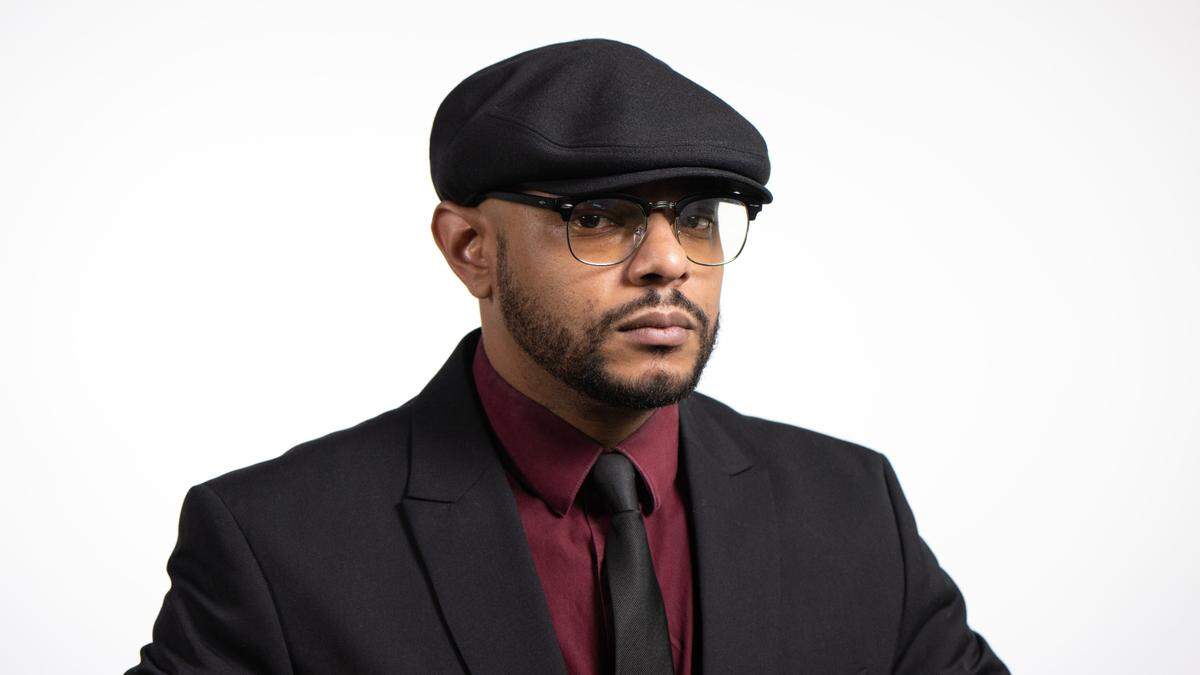
She grew up wary of KC’s justice system. Now Jackson County prosecutor wants change
Before Melesa Johnson ever stepped into the Jackson County Prosecutor’s Office, she was a young Black girl growing up on the East Side of Kansas City. There weren’t many lawyers in her immediate neighborhood, but what she did have was a strong village of people who encouraged her to pursue spaces where she wasn’t always told she belonged.
That early support from her community helped shape the belief that she could and should be part of the law and order system she once viewed with skepticism.
Today, Johnson leads one of the most powerful legal institutions in the Kansas City region. fully aware of the weight her position carries. As a former assistant prosecutor in Kansas City who initially hesitated to join a system she believed had long failed people who looked like her, she now uses her role to drive change from within.
Johnson, the first Black woman elected Jackson County Prosecutor, says she is focused on those she serves: the community. From launching forward-thinking initiatives like SAVE KC, to forming specialized units to protect small businesses, to advocating for local control over law enforcement, she is clear-eyed about the obstacles—but even clearer about her mission. At the heart of her leadership is a commitment to changing perceptions of an adversarial prosecutor’s office in the community that raised her.
Johnson sat down with The Kansas City Star’s culture and identity reporter J.M. Banks to talk about growing up in Kansas City and her emotional connection to a city she loves, why she chose a path in criminal justice, and her efforts to help stem violence in the city and create stronger communities.
Banks: Growing up, were there many people in the legal profession within your community?
Johnson: Not in my immediate, like nuclear family or like in my neighborhood, but I am so blessed and fortunate to be kind of a product of a village. A lot of people have circled around me and rallied around me and willed my success.
So while I didn’t have any in my immediate nuclear family. So being exposed to that world at somewhat of a young age just kind of made this a possibility for me. I mean, I vividly remember indexing files at my godfather’s law firm as a kid, if I wanted allowance to go to the movies or money to go do fun things.
But just being able to see professionalism as a young black girl, you only know what you can see, right? You can only fathom what is presented to you and not just my godparents, but my mother is an amazing professional. I remember her working three jobs to send me to private school for high school. My aunt is a very renowned professional, and so I’ve just had some really, really awesome role models.
What were your early memories and personal views of law enforcement and the criminal justice system? Have those perspectives changed over time?
It was rough. You know, the more that I learned about the plight of Black people in this country, learning the connection between chattel slavery and mass incarceration, you can’t help but to criticize what we call the criminal justice system and understand that it has not always been just to people like me.
Law enforcement and policing have literally been used as tools of oppression in our country’s history and I’m appreciative that, at least within the last decade or so, I feel our country is reckoning with that in a real way. But, we still obviously have a lot of work to do.
So as a little black girl on the East Side, I was not very friendly, or kind, or open to law enforcement. Not saying that I was a troublemaker because I was far from it. But you just hear stories and you know people who have been victims of excessive force that have gotten an unfair shake in the criminal justice system.
So how that has evolved for me is becoming an assistant prosecuting attorney back in 2014. It was my first job straight out of law school and I was nervous to accept that position just because I felt like I was going to now be kind of a part of this machine that has not always been kind to people that look like me. But, I quickly realized the power and the importance of having diverse individuals in these positions and in these spaces.
The reality is people want police in their neighborhoods and people want to feel safe. People want this system to function in a restorative and fair way. We just need to have diversity at the table so that we can curate and create what public safety looks like for us. But we have to participate in that, defining it.
So from being an assistant prosecutor to now being the elected prosecutor, I find a lot of pride in being able to sit around these tables with the chief of police, with the mayor, with all of our chiefs of police in Jackson County and presenting a perspective of somebody that lives in the urban core, that lives in a high crime neighborhood, and being able to demonstrate my expectations and my desire for their work.
What are some other ways you think we can shift the community’s perception of the criminal justice system, particularly in the urban core?
We talk a lot about community policing, but I just believe in community public safety and community law enforcement as a whole. Like, yes, it is amazing that people hand out cookies to kids, do coat drives and hand out baseball cards like old school police officers used to do. That certainly does help with the community relationship.
But the real way that we change the public safety system perspective, and specifically in the urban core, is we have to actually let people participate in what justice looks like. It’s the language that we use when we’re responding to scenes. We need to make sure that we are upholding the highest level of professionalism. That we are treating every single human being as a human being, no matter what walk of life they come from.
Sure, they might have a drug problem or they might be houseless, but we need them to make our cases and so availing ourselves to community in that way.
I mean, even since I’ve started, prosecutors in my office have attended over 65 different community events and meetings because it is really important for me that our community knows and feels their prosecutors as well, just as they should know and feel their police officers.
It also is rooted in having some very difficult conversations. We in this country have a tendency to try to lean into revisionist history. I already mentioned the through-line between chattel slavery and mass incarceration.
But we’re still reeling with the effects of decades upon decades of disinvestment in systemic racism and so being able to confront those realities while also upholding a code of conduct in Jackson County and making sure that we know people need to adhere to it. It’s a delicate balancing act and so I think that it doesn’t just happen when the cameras are on. It doesn’t just happen around Easter when we’re doing Easter egg hunts with the kids. It happens every single day, through every conversation, through every word that we use. Through every point of contact that we have with Community and we also have to understand it’s our responsibility as the system to make it better for the citizens that we are hired and employed and called to serve.
Sometimes people will say that they should just be more willing to cooperate. Well, what are we doing to make that a reality? We can’t expect them to just throw away 400 plus years of being treated less than human.
We have to do the work and that’s what I’m committed to doing. The members in this office are committed to doing and it’s hard, but it’s valuable.
As a Black woman running for this position, what did you anticipate would be the biggest obstacle in winning the election?
You know, I’m a bit of a newcomer in the political space and as much as we like to say that the elected prosecutor, is not a political position, everything is political, especially in this day and age.
So, you know, I was running a race without a lot of name recognition or notoriety. I didn’t have any previous elected offices to stand on. I had no voting record to point to and I was drastically out fundraised as well, especially in my primary.
Frankly, the stereotypes that a lot of people just tried to force me into. Because I am a young black woman who lives on the East Side, people automatically assumed that I was going to be soft on crime. Because I talked about restorative justice and restorative practices and the need for them in our system, I was being too pie-in-the-sky and not focusing on the core functions of the job.
A lot of people thought that I was inexperienced and that I wouldn’t be able to command the respect of my coworkers, some of whom actually trained me when I was a little baby prosecutor. But I think the power of authenticity and remaining consistent, no matter what room I was in. If I was on the East Side. If I was in eastern Jack (Jackson County), if I was at the Sugar Creek parade. If I was in Lake Lotawana. I’m saying the same things because I believe that every single corner of this county deserves safety and I felt passionately that I was the right person to bring it to them.
Is it difficult to resist the pressure to fit into traditional expectations of what a county prosecutor should look or sound like?
It’s hard. It’s hard. I would love to sit before you and say that it’s easy, but it’s not.
You know, people have so many expectations for the people that they elect into these offices and they expect you to almost relinquish being a human and now be this persona. Which is just so unrealistic.
The reason why I think I’ve been able to stay so true to myself is my village. I’ve had the same best friend since I was five years old. I talk to my little sister every single day. The moment that I tried to get a little jazzy with my mom, she likes to remind me that this is not a courtroom, this is her house.
Being rooted in what I’ve always been rooted in and I think that has really solidified my authenticity and keeps kind of the sacred parts of myself whole. When I decided to run for office, I knew that I was going to have to sacrifice a lot.
But I did promise myself that I was not going to sacrifice who I am at my core and I’m really proud that at least six months in that has not happened. I am confident the people in my life, the people that I call family and the people that I love, will make sure that Melesa stays Melesa.
At a recent press conference addressing the shootings in the city, you became emotional. Why do you feel it’s important to stay emotionally connected during these moments?
If there ever comes a day where six people losing their life in one weekend doesn’t affect me emotionally, then I don’t need to be in this position.
This is hard work. I don’t work from 9:00 to 5:00. I work 24/7 and like most people in this space do, I care. And so sometimes the weight of that it compounds on top of each other. I had a moment, 20 seconds of tears, and we’re right back on the saddle.
But I will never apologize for being emotionally affected by the loss of life. I will never apologize for feeling sad that hours after our Juneteenth celebration, somebody lost their life in the historic Jazz District where my ancestors and my forefathers tried to create a better environment for people that look like me. I’m never going to apologize for that. I’m never going to be OK with children having to go to sleep to the sound of gunfire and waking up tired to go to school because they’ve been up all night.
These things should affect us and I think things have gotten a little bit out of control because people aren’t affected enough. People only want to start crying out when it lands in their backyard. But I’m never going to apologize for being a prosecutor who feels the pain that I am called to address on a daily basis. If I stop doing that, then I don’t need to be here.
How do you continue to keep that empathy without kind of going emotionally stagnant?
I think my personal experiences helps with keeping my empathy. When I read these case files and I view these pictures, these videos and have these conversations with family, I don’t view them as just another case.
I view them as a cousin that has experienced a run in with crime or the criminal justice system. I remember some of the families that I worked with as director of public safety. I remember how I felt when I was dealing in a very intimate way with people suffering unimaginable loss.
When I read these case files and when I view these videos, I’m constantly reminded of the real human impact, the real human weight that these instances have on people in our community and naturally, like, I’m just an empathetic person.
I also saw some of the backlash. Listen, I’m a crier. I cry when I’m frustrated. I cry, when I’m upset. I cry. Of course, when I’m sad I cry, but it’s not a sign of weakness. It is a sign of strength. It is a sign of emotional management and emotional intelligence.
Sometimes things build up into your body where you just have to let it out and so no, I’m not going to stop crying and the moment that I do again, I do not need to be in this position.
Now that you’ve been in office for several months, have there been any unexpected challenges? How are you managing them?
Absolutely. You know, people always ask me, is the job everything that you thought it was going to be? There’s no way you could ever imagine the weight and the magnitude of this job. Things that I didn’t even necessarily know or realize I was going to be dealing with, like jail population control.
All of these different things. It’s so much more expansive than just the handling of criminal cases and leading a team of attorneys, and so absolutely. There’s certainly been some challenges.
I think the biggest challenge is trying to reinvigorate or regain a level of confidence in this office. Because if people don’t feel like this office is functioning as designed or as it needs to, then they’re not going to call the police and then we can’t prosecute what the police don’t respond to and investigate.
So really doing the community engagement work, deploying prosecutors to over 65 different meetings, updating our dashboard, attending KC 360 events, attending the Chamber events and making sure that business owners know what we’re up to.
Starting a new unit to make sure that we’re being responsive to the property crime that is taking over our community, and so that is probably the biggest challenge that we have faced, that we will continue to face. But also, if we can get that right, if we can get people believing in this office, it’s going to have a positive impact on our entire criminal justice system, which of course will spread over into our community.
As county prosecutor, what specific initiatives are you pursuing to reduce violent crimes, assaults, and robberies in the metro area?
So, SAVE KC, (Stand Against Violence Kansas City) our renewed focused deterrence program that has been in existence for just about over a year, I am proud to serve on the leadership team.
The reason why I like to start with that is because so much of what prosecutors do is reactionary. The crime has already happened. The harm and the damage has already been done. But how can we work in collaboration with each other to identify people that are kind of like right there in the margins and at risk of either committing or being victimized by crime.
Then steer them on a more productive path and that’s exactly what SAVE KC is about. We have liaisons, prosecutor liaisons assigned to different patrol divisions at KCPD. Also, the assault squad and the robbery squads to make sure that we are collaborating in real time. If you have a question about additional pieces of evidence that our office needs to be able to file charges supported by all of the evidence, now you have this point person where you can connect with them and get the answers that you need on the front end. So that by the time the case is submitted to our office, it’s ready to go and all of the boxes have been checked.
We recently acquired additional resources to hire a couple of new positions that I’m really excited about in our office. We have amazing victim advocates that support our victims at every single juncture in the road, but we don’t have that same level of support for our witnesses. In some of our cases, our evidence relies on the eyewitness testimony of one, maybe two, individuals.
Usually the lines between defendant, suspect and witness can be very blurry, especially if you live in a certain element. So we have some new positions to provide support for our witnesses to make sure that we are keeping tabs on them and supporting them so that they can cooperate with the judicial process.
Over the last three years, I had our office run some data. We had to decline over 200 cases based off of witness noncooperation and so hopefully with these additional resources that will be 200 more cases that we will not have to forego moving forward.
Of course, domestic violence has been a huge focal point of the first six months of my administration.
It is unconscionable and it’s unacceptable, but domestic violence also happens to be one of the most difficult categories of offenses to try to prevent and preempt because it’s happening within the household among loved ones. Like these aren’t things that are usually happening out on the street or at parks.
So there’s usually one, maybe two witnesses there as well, and so really making sure that more domestic violence cases are being routed to my office as opposed to city prosecutors so that they can be handled at the felony level and we can attach felony consequences.
That kind of leads me to my last point: that is just trying to strike that balance between accountability and restoration. We can’t incarcerate everybody, we literally don’t have the infrastructure or the resources to do so. So how are we making sure that we are restoring individuals so that they can lead a more productive life and that they don’t reoffend? Because our recidivism rate in Missouri is extremely high.
I will end with one last point, communication with the community. Making sure that we are constantly peppering the community with good outcomes on our cases, with charges that we are able to file to try to serve as a deterring warning to other people in our community who might be considering a life of violence, or really leveraging social media a lot more.
Have you faced any resistance in implementing these programs or initiatives?
Absolutely. There is a healthy part of our community who wants blood and wants for us to just incarcerate everybody and file cases that are not supported by all of the evidence. Some people want us to violate our ethical obligation as prosecutors to only file cases that we believe we can prove beyond a reasonable doubt.
I get it. When harm is caused, people want solutions. They want action, they want answers and I also understand that the nuances of the criminal justice system, especially for laypeople, it’s just a lot. I went to school for three years and then had to practice for 10 years to even get my mind around it completely, and I’m still learning on a daily basis.
We are always going to have that sector of our community and I serve them as well. I am their prosecutor too. And so making sure that they know what we are doing in the accountability lane but also not being afraid or shy about speaking on what is actually going to make us safer.
Diversion programs actually make us safer, using restorative practices actually makes us safer. Trying to deploy combat funds in a way where we are serving the people most in need actually makes us safer.
The solution to really restore public safety in our community is never going to be a one track solution it is going to have to be a multi-pronged approach. Sometimes when I’ve talked about a holistic approach and the need for a holistic approach, people hear that and think that, oh, I’m just trying to open up the jails and let everybody free.
Absolutely not. Holistic means that we are leveraging every tool at our disposal. Yes, one of those tools is prosecution and incarceration, but another necessary tool is making sure that people have adequate access to opportunity and feel like they don’t need to enter the criminal element in the first place.
So just presenting data, staying close to my bottom line and not changing course when political pressure is applied.
You recently launched the Property Crimes Unit. With the rise in crimes targeting small businesses, what made this a priority for you?
Because our business community deserves to thrive and when we’re talking about these break-ins and these burglaries, we’re often not talking about Walmart or Target or these big corporations that have loss prevention offices and can sustain that level of loss. We’re talking about mom and pop shops.
We’re talking about brick and mortar spaces that were opened using the blood, sweat and tears of generations upon generations of families.
What makes Kansas City and Jackson County beautiful is not an Applebee’s on every corner. What makes us beautiful and an amazing place and on this national stage is our small business community and they deserve to be protected. They deserve to have their hard work.
Honored. And I’m fortunate that I am in a position to try to have their back. So, yes, on March 10th we launched our crime strategies unit, dedicating a team of attorneys and data analysts to track trends and to work directly with community to identify high impact and prolific offenders and make sure that we are holding them accountable to the fullest extent of the law.
In your role, you work closely with the Kansas City Police Department. How do you feel about the idea of local governments overseeing police departments instead of state-appointed oversight committees?
I will always be a proponent of local control. I think we really have to ask ourselves, why is it that Kansas City and St. Louis are the only two remaining cities under this type of structure? Why is it that we don’t trust our residents in our community that are actually bearing the brunt and burden of crime, to elect people that can oversee one of the most important public utilities that we have in our community, and that is law enforcement.
But all of that being said, I think the conversation about local control and my working relationship with KCPD, those are two separate and distinct conversations. I’m very thankful for the Kansas City Police Department and the working relationship that we have established and that we continue to grow and nurture. None of this works if we’re not on the same page. I know that Chief (Stacey) Graves knows and that all of our chiefs in eastern Jack (Jackson County) know that. And I really enjoyed getting an opportunity to get to know them a bit better.
The more that we approach our working relationship with that understanding, I need you to do well so my office can do well and vice versa, the better off we will be and we have been and will continue to be.
For more stories about culture and identity, sign up for our free On The Vine newsletter at http://KansasCity.com/newsletters.
This story was originally published July 1, 2025 at 4:01 PM.