Is La Tiara coming back? What’s next for KC area maker of beloved taco shells
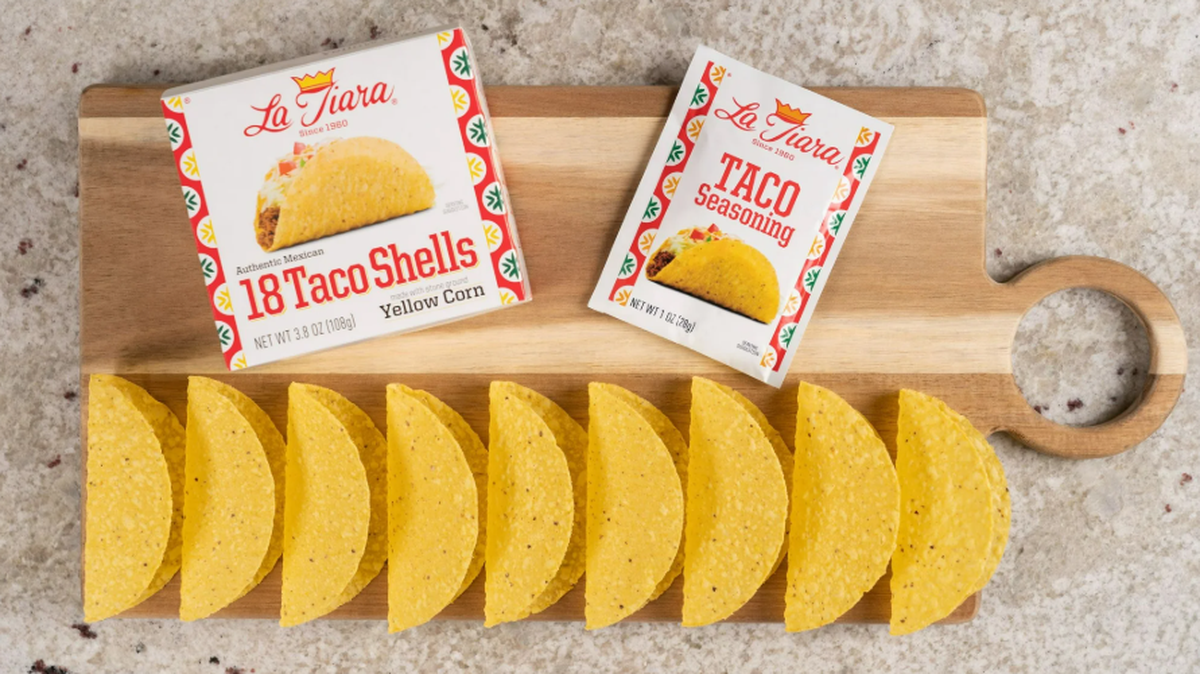
To the great dismay of home cooks across the country, La Tiara taco shells disappeared from store shelves earlier this year.
The reason: Gladstone Food Products, the Kansas City area company behind the brand, went out of business.
On a Facebook page called “Please Bring Back La Tiara Taco Shells” — now 15,000 members and growing — fans have spent the last two months clamoring for someone to buy the company (and its recipes) and revive the brand.
As of this week, it appears their Taco Tuesday prayers have been answered.
On Tuesday, a Clay County Circuit Court judge approved the sale of all major assets owned by Gladstone Food Products to an as-yet-undisclosed buyer for $10 million.
All that is currently known about the buyer is that it is “a large, publicly traded company operating in the food products industry,” according to court filings.
The sale was overseen by Missouri-based consultant Eric Moraczewski, who was appointed by the court as a neutral third party, called a receiver, to manage and sell Gladstone Food Company’s assets.
Moraczewski told The Star that as part of its $10 million offer, the buyer requested anonymity until the sale is finalized, likely due to its status as a publicly traded company. With the judge having signed off on the sale Tuesday, Moraczewski expects the deal to close sometime in the next month, at which time the buyer will be revealed.
Moraczewski also said it is likely that the new owner will continue to manufacture La Tiara taco shells locally.
“They’ve said in court that their intent is to grow the facility in Gladstone,” Moraczewski said.
By the numbers
Moraczewski was appointed to his role in March, after Gladstone Food Products’ largest creditor, Commerce Bank, filed a legal motion asking a judge to appoint a receiver to take control of the company and maximize its assets through a court-supervised sale.
It quickly became clear to Moraczewski that this would not be a typical sale.
“I have never seen a small brand with such a cult following,” he said. “Once we started to publicize the sale, it was clear there was so much passion out there for La Tiara. I was in D.C. one day and an attorney came up to me and said, ‘You need to save my taco shells.’ And they never even sold in that market!”
The CEO of a St. Louis firm that works on receiverships, he received 45 inquiries from prospective buyers over the next two months, including private equity funds and other food products companies. Seventeen interested parties traveled to Gladstone to tour the company’s facilities at 607 NE 69th St. All signed nondisclosure agreements to inspect both the facility and the company’s finances.
In court filings, Moraczewski said that the company, owned by Kim Catalano, discontinued operations Jan. 2 “due in large measure to interruptions associated with a now-complete construction project pursuant to which (Gladstone Food Products) sought to expand its manufacturing capacity.”
“The real issue from what I could tell is that there were construction issues with this new space that they built out and they had to have it basically redone a second time,” Moraczewski told The Star. “And so what was supposed to be a 12-month project took five years and twice as much time as anticipated.”
Before it closed, Gladstone Food Products had roughly 25 employees, Moraczewski said, and $6.24 million in sales in 2024. It owed various creditors roughly $5.7 million, he found, chief among them a $4.5 million debt to Commerce Bank.
Other contractors have filed claims against the company this year, including Quality Plumbing, Inc. for $254,000, Yates Electric for $203,000, Old Dominion Freight Line for $47,000, and Multipack Co., Inc. for $168,000, according to court records. More creditors could emerge in the coming month, but Moraczewski said he’s confident that the $10 million sale price should be enough to fully repay all Gladstone Food Products’ creditors.
He said Catalano and her family, which started the business in the early 1960s, have been “extremely helpful” in facilitating the sale of the business.
“It’s obviously been a difficult transition for them to let go of something they worked so hard to build over the years,” Moraczewski said. “It’s been in their family for more than 60 years. So it’s sad, but it’s also beautiful in a way. I think they are glad to see their family’s legacy move forward to another generation.”