How KC area police keep standoffs from turning deadly. ‘This person needs help’
Around 20 Kansas City police officers had their guns drawn, aiming at a man as he held a knife to his throat.
When the call came through earlier this year for an operation 100, or a standoff, on a Kansas City-area highway, an officer from the Kansas City Police Department’s crisis negotiation team was among those who headed to the scene.
There, Sgt. Ben Lindsay saw the man in severe distress, bleeding from his neck from where he held the knife, and showing signs of suicidal thoughts.
Moments earlier, around 3 p.m. April 1, the man had allegedly pointed a gun at officers and other drivers on the highway, before dropping the gun and fleeing.
When he got to the scene, Lindsay didn’t know how the man ended up in that situation. He had missed the first part of the call describing the man pointing a weapon at officers. But no matter how the man ended up surrounded, Lindsay’s job was to resolve the conflict peacefully, he said.
After about 90 minutes of talking with the man, Lindsay deescalated the situation enough that officers could take the man into custody.
“It took a long time to build trust… because it’s hard to trust me talking to him when there’s 20 other people with guns pointed at him,” Lindsay said.
“After he understood what was going on and where we were coming from… that just kind of deescalated the situation. He decided to just put the knife down and give up.”
Lindsay, a 17-year veteran of KCPD, said that throughout his time at the department, he has seen the approach to deescalating those kinds of situations change. Before he came to the department, negotiators were given less time and resources to end situations peacefully before SWAT teams took over, Lindsay said.
Now, Lindsay said, KCPD leans on negotiators more. Sometimes negotiations take hours or an entire day.
“We have to make sure nobody else is going to get hurt,” Lindsay said. “We have to make sure that the scene is safe (and) if a suspect decides to run, they can’t hurt somebody else.”
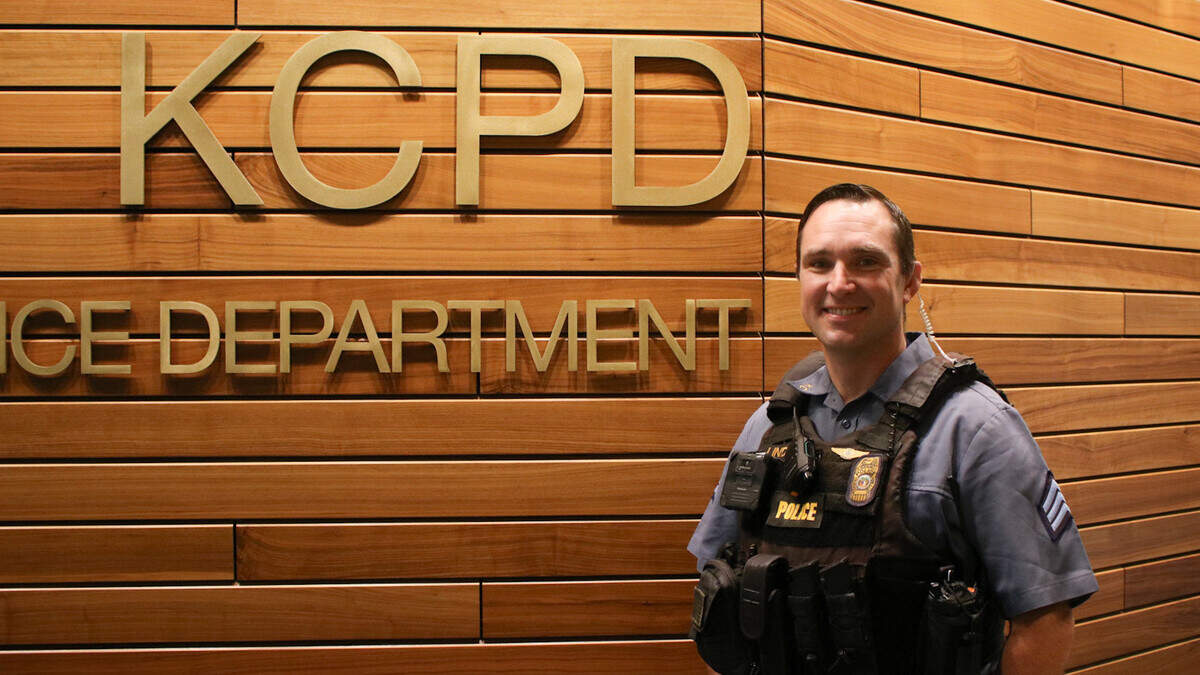
Crisis negotiation in the metro
As of May 29, crisis negotiators at KCPD have responded to 15 incidents so far this year that required deescalation. Negotiators respond every time there is a standoff or incident involving a person in crisis who has the intent or proximity to harm themselves or others.
This can look a lot of different ways, Lindsay said, like a person barricading themselves in a home or apartment, someone not wanting to exit a car, or someone threatening to jump off a bridge or building.
This year, there are 20 negotiators employed at KCPD. Lindsay and another sergeant lead three teams of six to seven officers who are required to take a 40-hour negotiation class to get certified.
The officers rotate on-call responsibilities as negotiators, which is an auxiliary role in addition to their normal duties.
Most agencies maintain monthly or quarterly training for negotiators. Officers learn about mental health conditions, suicide awareness, communication techniques and intelligence gathering, among other topics.
Lindsay said there is a lot that goes into the training, but two big components are learning how to effectively listen and communicate with a person who is likely not in a good state of mind. Not every officer is “wired” to do that kind of work, he said.
“It’s about having empathy and not getting worked up or judging somebody from the position they’re in,” Lindsay said. “You have to kind of take it as this person just needs help, and it doesn’t matter what they did.”
Other Kansas City area police departments also employ negotiators. Similar to KCPD, the roles are part-time positions or duties held in addition to officer’s full-time jobs.
At the Lee’s Summit Police Department, they are utilized most during situations where their SWAT team, called the Emergency Services Squad, is deployed., said Sgt. Chrisopher Depue. A sergeant oversees five negotiators at the department.
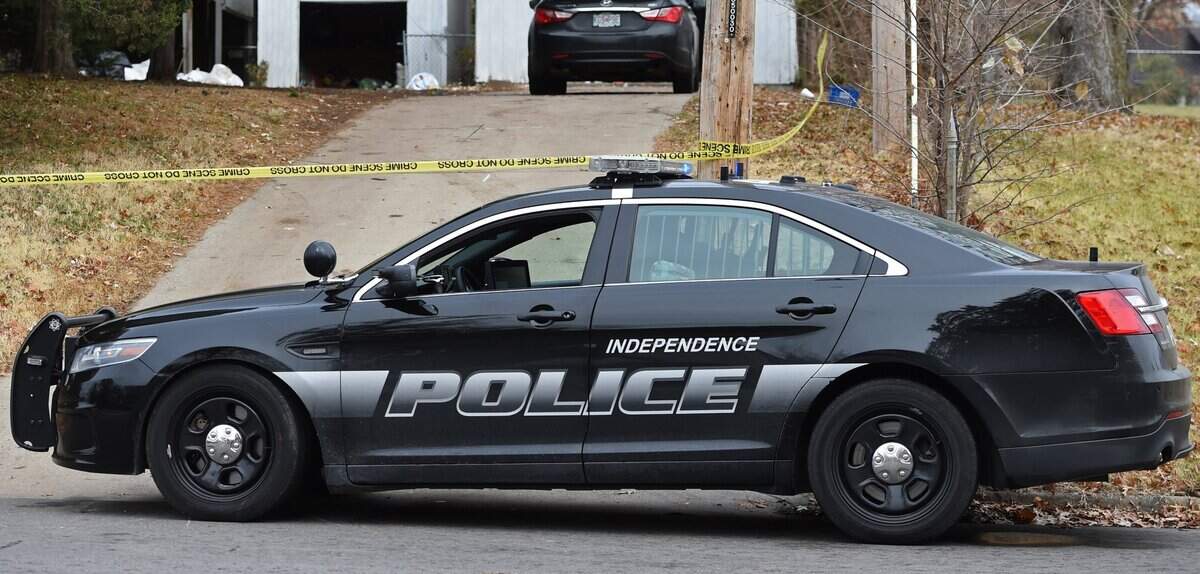
The Independence Police Department employs 10 negotiators in its unit. They primarily respond to barricade and hostage situations, according to Officer Bryan Conley, an IPD spokesman. So far this year, Independence police have used negotiators twice. That is compared to five times negotiators were used all of last year.
In Overland Park, there are 2 sergeants and 7 officers who also serve as negotiators. In 2024, the negotiators were deployed 7 times. So far this year, they have been used 3 times by the department.
Cpl. Justin Ewing was a negotiator for five years with the Missouri State Highway Patrol. He now serves as a public information officer for Troop A.
Ewing said that while some larger agencies have full time SWAT teams equipped with negotiators, many agencies have part-time tactical and negotiator teams because of call volume.
“While they may still have regular calls, it is easier to have a call-out protocol, and allow those officers to serve their normal full time function while maintaining training and proficiency in the tactical and negotiator skill set,” Ewing said.
While negotiation is a useful tool in law enforcement, it is not always possible to use in high-stakes situations, Ewing said. For any negotiation to be successful, there has to be communication between a person and law enforcement.
If someone refuses to communicate or cooperate, negotiations can easily fail, Ewing said.
“Each agency is going to have their own protocol for what determines a call-out for a negotiator,” Ewing said. “There are probably situations where a negotiator could be utilized and they are not.”
To that end, Ewing said negotiations are not usually possible during “active incidents where violence is occurring or imminent.” When an officer finds themselves in that kind of situation, the threat has to be immediately addressed, Ewing said.
“Depending on the circumstances, it may not be practical to have an officer called... and to wait for their response time to a scene,” Ewing said. “Also, many situations in law enforcement are rapidly evolving. A situation that may not appear to need a negotiator at the beginning could quickly change.”
Crisis intervention training
Since it is not always practical for a negotiator to respond to a scene, especially when violence is imminent, more departments are training their officers in crisis intervention.
The training, known as CIT, teaches officers how to interact with people who may be dealing with drug, alcohol or mental health issues.
“CIT officers are often able to communicate and better understand the subjects situation, and help provide resources to an individual in crisis,” Ewing said. “But... when any situation evolves to an imminent or active threat, negotiations can not occur and the threat must be addressed to protect human life.”
In the past decade, Kansas City area police have been scrutinized for instances where negotiators and officers, including those trained in crisis intervention. fell short.
On Jan. 20, 2018, Overland Park police were called to a welfare check on 17-year-old John Albers, who was known to deal with mental health issues and was believed to be in a suicidal state. As the teenager was backing the family minivan out of the driveway, an officer fired 13 shots at him, striking him six times.
At the time, the officer said he feared for his life and opened fire after Albers ignored commands to stop. Overland Park paid the officer severance and no charges were filed in the shooting.
Sheila Albers, John’s mother, called for “significant changes” within law enforcement, including improved crisis intervention training and accountability.
In 2021, Grandview police responded to a call involving a suicidal teen with what was later discovered to be a BB gun. Lantz Stephenson Jr., 17, was shot and killed by police after he “aggressively approached” officers, the highway patrol said at the time.
Last November, Independence police responded to an apartment complex on a domestic disturbance call. After officers spent some time talking with those involved and trying to get the distraught mother to put down her baby, body camera footage shows Maria Pike, 34, grab a large knife and move toward an officer, knife raised.
A police officer opened fire, killing both Pike and her two-month old baby, Destinii.
When negotiations fail
On January 14, an hours-long standoff at an east Kansas City apartment ended after failed negotiations. Officers were able to safely remove multiple juveniles from the residence while the man, who was allegedly armed, barricaded himself in a bedroom.
After officers heard the sound of gunshots, a SWAT team breached the home and took the man into custody. Inside, they found a woman with gunshot wounds.
The woman, later identified as 44-year-old Lulu Livingston, died weeks later from her injuries. Livingston was known in the Kansas City community for her advocacy for those experiencing homelessness.
According to court records, the shooting happened after an argument broke out between Livingston’s boyfriend and a man who she let stay at her apartment. The tense situation wasn’t resolved by negotiators, and a life was lost in the exchange.
Lindsay said even though the majority of negotiations end peacefully, there will always be the danger of deescalation tactics not working.
“Our whole careers, no matter if you’ve been on for a year or 15 years, you learn very quickly that a lot of things aren’t going to happen the way you wanted it to,” Lindsay said. “And you just have to remember that person made a decision and there was nothing we could say or do that was going to change it.”
Lindsay said throughout his time as a negotiator, he has never looked back in hindsight and thought there was something else they could have done differently.
“We handle every one the same exact way,” Lindsay said.
Upgrades in technology and routine training help KCPD negotiators be more effective, said Sgt. Phil DiMartino, a KCPD spokesman.
More advanced communication tools are being developed that help negotiators stay in contact with individuals in crisis, DiMartino said.
To keep up with best practices, negotiators at KCPD complete training exercises and do competitions with other departments throughout the state and country. At the competitions, Lindsay’s teams often win awards for excellence in negotiating.
“We’re honing the skills and using them in scenarios that are very well done,” Lindsay said.
Lindsay honored at Royals game
Lindsay was honored at a Kansas City Royals game May 19 for his 90-minute negotiation in April when a man had a knife to his throat.
Thinking back to that day, Lindsay attributes its success to the whole team of negotiators and officers providing other support so he could focus on talking to the man.
“I count on all these other officers to make sure that if this guy decides to do X, Y or Z, that, you know, those things are handled and my primary job is only to try to talk to him and deescalate the situation,” Lindsay said.
“We would not be able to do the job… without the teamwork and support of everybody else… when we go into any negotiation.”
This story was originally published June 11, 2025 at 6:42 AM.