Wyandotte County weighs if it can afford to freeze property taxes another year
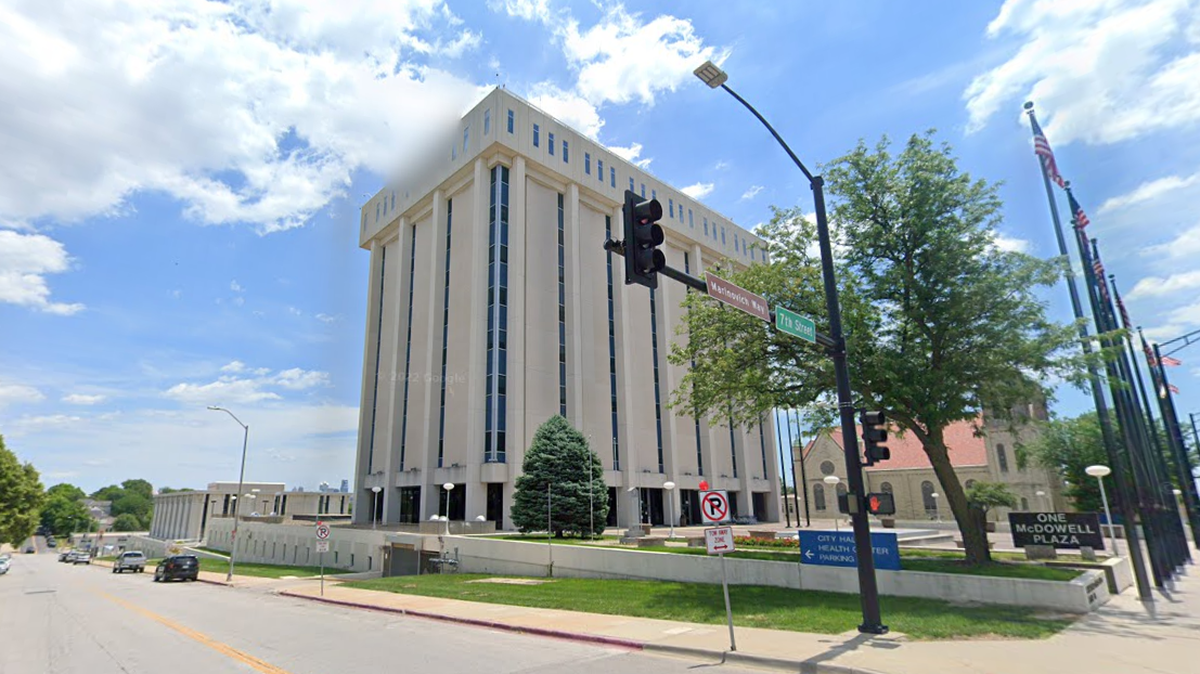
Over the next few weeks, Wyandotte County commissioners will need to decide whether to freeze property tax revenues for a second consecutive year. And at least one local official said it’s time for the Unified Government of Wyandotte County and Kansas City, Kansas, to stop playing games with taxpayers over the matter.
Government staff during a May 15 budget hearing weighed the ramifications of again not collecting additional property taxes from residents who have long cried for relief, a move referred to as “revenue neutral” that ultimately resulted in cross-government spending reductions and cuts to public services.
Revenue neutral means the Unified Government promised to not collect more money in property taxes this year than it did last year — even though the costs of running the government went up. Since property values increased, the Unified Government needed to lower tax rates to keep that promise.
Prior to the 2024 decision to go revenue neutral in the 2025 budget year, the Unified Government made a habit of collecting increased revenues from property owners which, with spiking valuations in recent years, hit taxpayers particularly hard.
Now, as the 2026 budget year nears, commissioners will soon have to decide whether to increase the UG’s portion of residents’ property tax bills or spend another year on a tight budget that would continue to strain public services, like public safety and transportation.
Commissioners will have to notify staff what they plan to do by mid-July and are on track to adopt next year’s budget in August.
That said, the Unified Government alone freezing property tax revenue doesn’t guarantee property taxes won’t go up. Wyandotte County consists of other taxing entities that will independently adopt their own tax rates that may affect area bills.
David Johnston, the Wyandotte County administrator, said the local government needs to prioritize paying its bills and provide essential services that have recently suffered, which may mean collecting more from property taxes and not freezing revenues again this year.
“That’s a game we have to stop playing with our tax payers. How much money do we need in the levy to pay our bills? That’s what we need to talk about with our taxpayers and stop fixating on the mill rate,” Johnston said on March 15.
He added that speaking to people about how much of their money it will take to keep things running is a better way to improve communication and heal community trust than getting caught up in explaining what the annual tax rates are.
2026 options
Increased property values in 2025 will allow the Unified Government to collect roughly 9% more in property tax revenues during the 2026 year, even if the mill levy rate stays the same. That’s because people’s tax bills would increase if their properties were assessed at higher values this year. Collecting that full 9% would bring $12.6 million in added revenue across UG levy funds, according to the county’s chief financial officer.
Even so, Johnston said his team plans to budget conservatively and will likely not propose collecting that full amount. This means that although staff will likely recommend what would ultimately result in a property tax increase, they wouldn’t recommend collecting the maximum amount that the Unified Government could.
County commissioners, including Chuck Stites, Philip J. Lopez and Evelyn Hill, asked staff at various points whether there was any way to offer property tax relief for affected residents. Stites noted that reducing the government’s tax rate did not equate to a reduction in residents’ bills given rising valuations.
Mayor Tyrone Garner said the government could instead consider selling properties, like the Kansas City Monarchs’ stadium, to collect revenue and cut upkeep expenses. Government staff are considering what properties the UG may be in a position to sell; that will be presented to the commission in late June.He agreed with Stites that the language Wyandotte County has historically used in the property rate adoption process, like emphasizing rates are going down even though bills are increasing, needs to be more transparent.
How’d we get here?
Local taxing entities, of which there are several across Wyandotte County, annually collect property tax funds by applying that year’s tax rate to the value of residential and commercial properties within their taxing districts. Often, unless the owner utilizes an exemption, the higher a property is valued, the more someone has to pay on that property.
Values are increasing across Wyandotte County and elsewhere and have been for years. The median value of a single residential parcel in the county was $74,100 in 2017. That grew to $181,600 between then and 2025, according to the county appraiser’s office.
Data show that although values for both commercial and residential properties are increasing, the rate at which those values are rising has begun to slow down.
Commissioners this spring heard financial updates during which staff and officials promised to be more financially responsible with tax dollars after years of previous financial decisions, like regularly dipping into reserve funds and quickly, consistently taking out long-term debt, that have affected government operations.