Local lawyer recalls journey making his way as a Black-Canadian in the U.S.
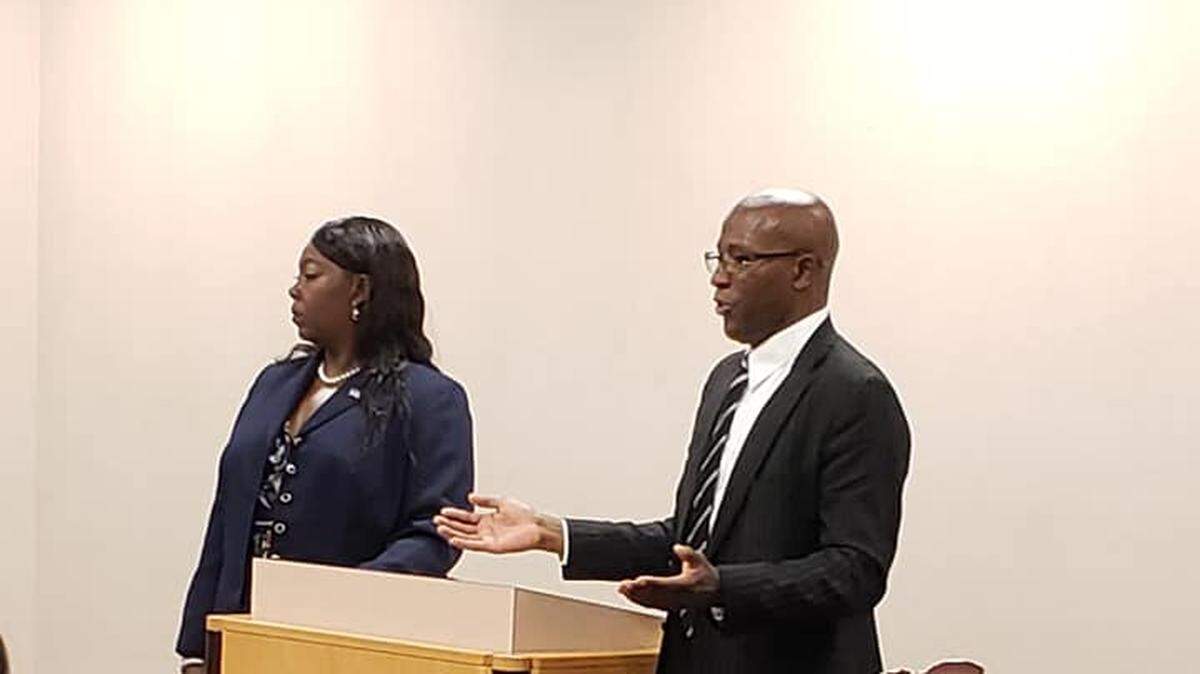
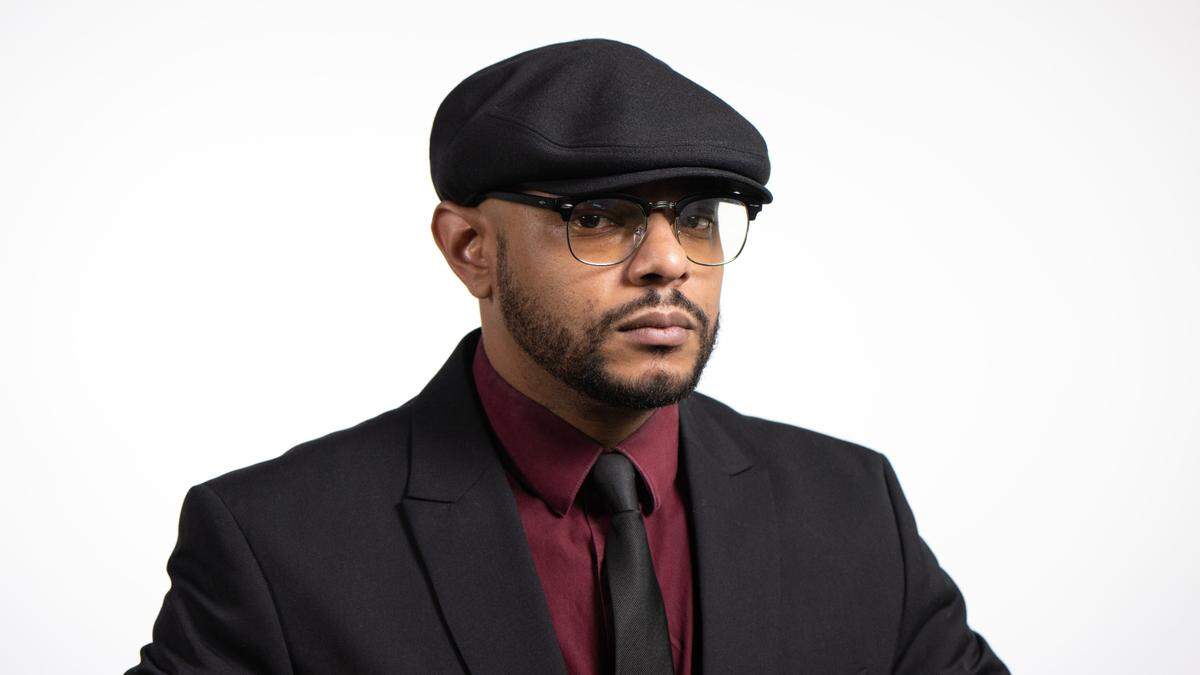
Henry Service remembers feeling like an outsider as a young Black college student. Born in the United Kingdom to Jamaican immigrant parents, his family later moved to Canada, where they were the only Black household in their town.
Driven by a cultural expectation to pursue a financially stable and lucrative career, like law or medicine, Service moved to the United States to attend law school.
Attending the Claude W. Pettit College of Law at Ohio Northern University, he experienced profound culture shock, confronting American racism and systemic oppression unlike anything he had faced before. Navigating these challenges Service felt like an outsider so he reached out to and connected with the Black community. With his law degree in hand, Service chose to remain in the U.S. to serve the Black community that had embraced him during his years in school.
While he continues practicing law and takes special pride in representing people who may have been wronged by law enforcement, Service also dabbles in real estate. Recently he purchased the historic Lincoln Building in the heart of the 18th and Vine Jazz District. Service is in the middle of a “huge renovation,” of that 100-year-old commercial property. In the 1940’s The Lincoln Building housed the Kansas City Monarchs office and later the offices for Thurgood Marshall, who at the time was chief attorney for the NAACP and was arguing the case for the desegregation of the Swope Park Swimming Pool in 1952.
Service recently sat down with Kansas City Star culture and identity reporter J.M. Banks to talk about growing up abroad, the cultural shock of being Black in America and the need for more Black lawyers in the metro.
Banks: Can you begin with telling me about your early life and upbringing?
Service: I was born in England and I was raised in Canada to Jamaican immigrant parents. My dad was a welder and my mom was a nurse. When I was young, Britain was offering money for immigrants to leave England and Canada was offering money for immigrants to come. My father decided to move. At the time, Canada was looking for skilled laborers so we first landed in Toronto and then Hamilton. I went to Edmonton, Alberta, Canada where I did my high school and under graduate studies.
When I decided to go to law school I thought the states would be a cool place since America sort of exports culture. I went to a small school in the Midwest then ended up doing most of my studies at Brooklyn Law School in New York and from there finished the rest of my studies at Ohio Northern University College of Law in 2009.
What was it like growing up in Canada as the child of Jamaican immigrants?
There were not a lot of Black people where I grew up. Alberta is in the country. Hamilton is a city, but my parents got divorced and she (his mother) left and moved to a smaller country place. So we were probably the only black people in the entire town.
But Canada doesn’t have the same history as the United States in terms of segregation and racial disparities. That is not to say that there is no racism there, it is just a different type.
Canadians are the people who really fought and helped escaped slaves, remember the Underground Railroad went to Canada. So you would think living out in the country would be really bad, but it was not bad.
When and what influenced your decision to go into law?
When you come from poor people you tend to look at what makes money. There is a thing with immigrants, and Jamaican immigrants are no exception,that when you come to a foreign land it’s like you can’t come and be a bum. It’s a shame on your family. In fact, you’re expected to give money back home and the idea that you wouldn’t make money doing something was ridiculous.
So I knew whatever I had to do I had to make money and that was the driving concept.
At the time, I knew lawyers and doctors made a lot of money so it was going to be one of those. I hated math and science so I went with law.
When you moved to the United States was there a culture shock coming here?
It was a culture shock for sure. Canada has more continental Africans and people from the Caribbean. So coming here and meeting American Blacks and seeing the different cultures was a shock.
The United States is bigger and I didn’t particularly relate to a lot of people initially because I was just a little Canadian, British boy with my accent and I couldn’t sort of find my area. I think it may be because they had a different struggle than I had because the racism here was more palpable.
A lot of people, African-Americans, didn’t have the opportunities. Like, schools aren’t funded based on income (in Canada) so I had certain advantages coming in, some of which prevents you from relating to a lot of people. I think I ended up isolating myself until of course, you make friends and just have a better experience.
I still consider myself an outsider but I’ve made investments in the community.
What do you think the biggest misconception people have about lawyers or the law?
I think people think that lawyers are shifty and dishonest. Also, I think they give us credit for knowing more than we know. We know about the law in the area that we practice. Some people think because I am a lawyer I should know about maritime law or something. I think people think we are more arrogant than we really are. But it has been in my experience that most lawyers are very self-effacing.
What kind of law do you specialize in?
I’ve traditionally done domestic law, child custody, child support, divorces, adult and child guardianships, that kind of thing. I’ve done some sports and I’ve done criminal defense. I sue the police a lot and I’ve got several lawsuits against (in Kansas City) them. And I sue corporations all the time.
Are there any challenges Black lawyers face that their white counterparts do not?
So when we say white privilege, a lot of people have different conceptions. When I talk about it I mean the people who think black people, black lawyers, black professionals, black journalists, black whatever are less qualified and less capable than white people.
We are supposed to pretend it doesn’t exist and play along. I don’t have the presumption of confidence when I enter a court all the time. I am not saying it is all judges but I don’t get to make the same mistakes as white lawyers because they (mistakes) are magnified when I do it. I have to always be at 100 %. My parents always used to tell me that I will have to work twice as hard to get half as much.
What do you think is the most fulfilling element of being a lawyer?
I think I do get to help people and everyone says they want to help people. For me it is helping my community. It’s fun and it’s rewarding. I like it when powerful people get their comeuppance and my community finally gets justice once in a while. It doesn’t always happen when people can’t find a defense.
Is there any type of case in particular that is difficult for you as a lawyer to take on?
The system is set up to make it so you can’t sue the police. They have sovereign immunity or qualified immunity so even when you can prove they have done something wrong they may still be immune. It is a challenge to any attorney in general because the state has all the resources and clients usually don’t. But it is also the most rewarding kind of case because you get to fight the people and organizations that genuinely need to be challenged.
What are your plans for the future professionally?
I also work in real estate because for me in my culture and the way I was raised. You never are supposed to be comfortable with what you have and not because you’re greedy but you just never think it’s going to stay. So you always have to have a side hustle. It’s kind of a joke or a stereotype about Jamaicans having 50 jobs.
But in in my household the fall back plan was always another job. So I bought a few houses and started renting them out and just employed that as a strategy for a steady stream of income in case the sky does fall. I had sold a bunch over the years and I own a commercial office building and I’m actively doing a huge renovation on it. It is the Lincoln Building in the Jazz District and I hope to make it a business hub for Black businesses, like a little version of Black Wall Street.
For more stories about culture and identity, sign up for our free On The Vine newsletter at http://KansasCity.com/newsletters.