
After 20 years, Symphony in the Flint Hills will play its last notes. Here’s why
The concept always seemed a little odd, a symphony concert in the middle of the Kansas prairie, music patrons more accustomed to a concert hall sitting on lawn chairs in the June heat, slathered in bug spray and sunscreen keeping one eye on the tempestuous Midwestern weather and both ears on the music.
In some years, they sweated through 91 degrees with a constant warm breeze.
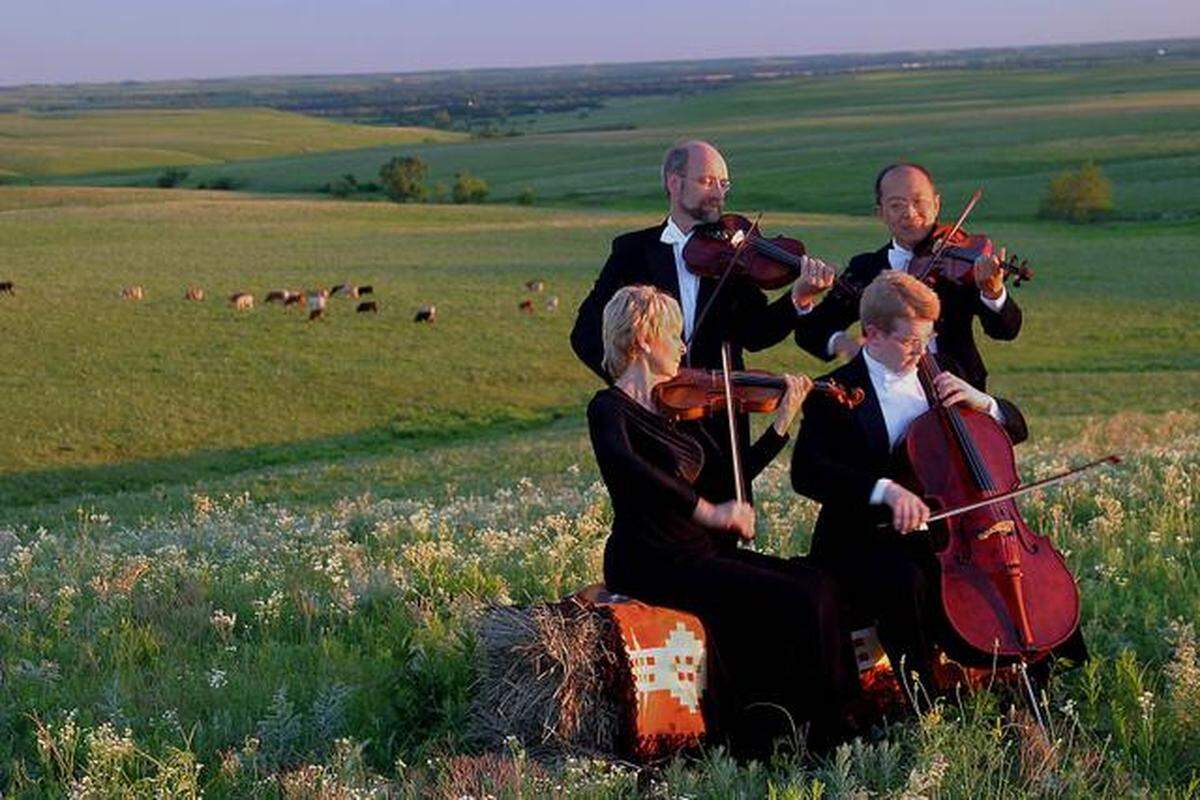
The music was glorious, provided by the Kansas City Symphony that transported musicians, instruments and equipment more than 100 miles from its home base for the show. The program always fit the grandeur of the setting.
One year associate conductor Aram Demirjian directed a program that included “Old American Songs” by Aaron Copland and sweeping movie music from “Raiders of the Lost Ark,” “The Magnificent Seven” and “Dances With Wolves.”
Some years brought special guests — Lyle Lovett twice and singer/actress Katharine McPhee just last summer.
And what other symphony can say they share the night with a choreographed cattle drive?
Now it’s over. After 20 years, the last notes of the Symphony in the Flint Hills will be played Saturday night.
Organizers announced Tuesday it is sold out.
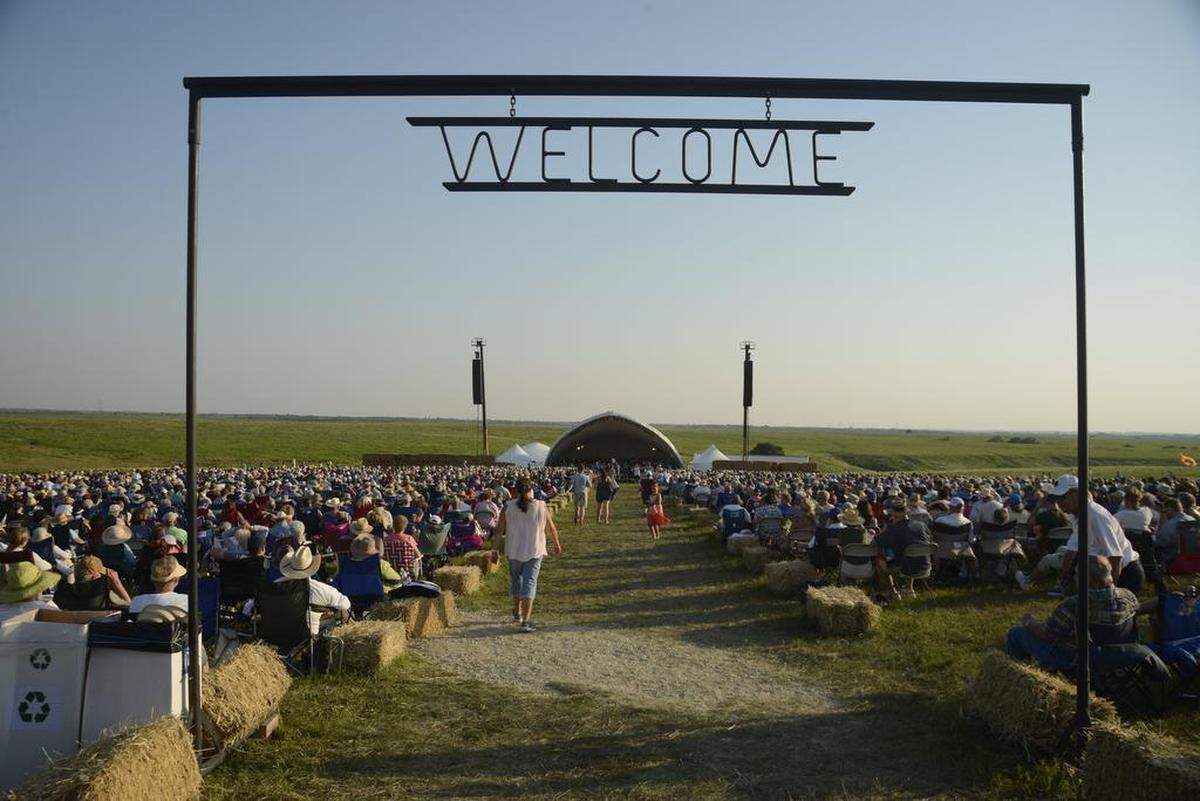
Patrons might not have known that two decades was the intended shelf life.
“Internally, we’ve always said the goal was to see if we could do our Signature Event for 20 years,” said Kelly M. Tastove, manager of operations and donor relations for the program based in Cottonwood Falls, Chase County, Kansas.
“We’ve met that goal — and more. We’ve put the Flint Hills on the map. When weather forecasters now say a system is heading for ‘the Flint Hills,’ we know this organization played a part in making that name known.”
Though sponsors and patrons remain deeply supportive, and the last show is sold out, “attendance had been declining, particularly in the years following COVID, as many guests view the concert as a once-in-a-lifetime bucket list experience,” she said.
“The physical demands of the day — heat, walking and exposure to the elements — can also deter repeat visits. And in today’s world of endless entertainment options, it’s become increasingly challenging to turn interest into commitment.”
It was always about location, location, location. Over the years private ranch owners in the middle of Kansas opened their land to music patrons who gamely navigated dusty, rocky back roads to reach the concert sites. The Tallgrass Prairie National Preserve hosted a few, too.
“Over the past 20 years, Symphony in the Flint Hills has brought more than 125,000 people to experience this incredible region,” Tastove said. “In one year alone, we had ticket buyers from 47 states and seven different countries. But more than just the numbers, we’ve heard again and again that people leave with a deeper appreciation for the Flint Hills.”
The concerts are designed as all-day cultural experiences, she said, with gates on Saturday opening at 1 p.m. and educational presentations under tents beginning at 2 p.m. and running all afternoon before the evening concert. “These sessions explore the ecology, culture and history of the Flint Hills,” Tastove said.
In other words, it’s a way to get in touch with your inner Laura Ingalls Wilder, covered wagon rides and all.
This year Mitch Holthus, the voice of the Kansas City Chiefs and a fan of the concert series, will be a featured speaker.
“For many attendees, these presentations are just as meaningful as the concert itself,” Tastove said.
The majority of audiences over the years traveled from Kansas City and “we’ve always been grateful for that support,” she said.
“For Kansas City Symphony fans, this event offers a completely different setting to hear the orchestra — under the open sky, with the Flint Hills as the backdrop instead of a concert hall. It’s Kansas City’s symphony, but it’s everyone’s prairie.”
It began with a birthday party
In 2015, former U.S. Sen. Nancy Landon Kassebaum Baker recalled the first concert in 2006 for the audience.
“It was a beautiful evening. I never would have dreamed I would see this crowd, like today, still, 10 years hence,” she said, somewhat awed. “The hills are alive with the sound of wind and the sound of music.”
People often say “it’s unlike anything else they’ve ever attended — breathtaking, moving, unforgettable,” Tastove said. “But more than anything, they say you simply have to be there to understand it. There’s something about walking into that vast open landscape, seeing the sky stretch endlessly, hearing music fill the prairie. It takes your breath away.”
In 2014, Modern Farmer magazine wondered if cattle and classical music was “the Midwest’s answer to Burning Man.”
The idea of playing symphony music on an ocean of grass began in 1994, “when Jane Koger, a fourth-generation (Kansas) rancher, invited the whole county to her pasture for her 40th birthday,” Tastove said.
“She staged a free performance by an all-women’s orchestra and said she simply wanted to hear a symphony echo through the land she loved.”
Modern Farmer described it as “quite the bash.”
“Admission was free, with a charge for the beer and burgers from Lawrence’s Free State Brewery. Revelers sprawled on the grass, enjoying a rousing rendition of Aaron Copland’s ‘Appalachian Spring,’ heading home as the sun dipped low. Beautiful weather and thrilling performances. A one-time thing, to be sure.”
“It was totally exhausting,” Koger told the magazine. “It took an army of volunteers. … I wasn’t ever going to do it again.”
“But Koger’s concert was such a sensation, it stuck,” wrote Modern Farmer. “It dug into the hearts and minds of those who were there, sprouting roots as thick as those wedged into the rocky soil found in these parts.”
“That spark eventually inspired a group of locals from Chase, Morris and Wabaunsee counties to form a board and create what became Symphony in the Flint Hills,” Tastove said.
“The mission — then and now — has always been to heighten appreciation and knowledge of the Flint Hills. It just so happened that a symphonic concert in the prairie became the perfect way to do it.”
Every year, finding the right site was the “first and sometimes the hardest step,” she said. “The land needs to have a natural amphitheater, wide-open views, and space to safely park thousands of vehicles. Some years we didn’t finalize a site until January or February.”
“Once the location is chosen, we begin the massive effort of moving tents, generators, stages and sound equipment onto often minimally maintained roads,” she continued. “We work closely with counties to improve access. Our largest tents are 100 feet by 190 feet — big enough to host our patrons, sponsors and meal service areas.
“We rely on hundreds of volunteers. This year, we have around 450, but in past years that number has reached 750. Volunteers help with everything from parking and guiding guests, to busing tables and supporting our education presenters. It truly takes a community to make this happen.”
Winds, tornadoes and COVID were challenges
Organizers were always beholden to factors they couldn’t control, mostly the weather.
Oh how the wind can scream across the prairie.
In 2014, as some of the more than 7,000 patrons worried that they wouldn’t be able to hear the 90 musicians because gusts were hitting the players square in the face, Demirjian, in his second year as conductor, calmed their nerves.
He promised the wind would not be a factor, even though “all our music is written down and paper blows away,” he told the crowd. “It’s just something musicians adjust to.”
“I can’t think of a more beautiful setting,” he said. “Inside a concert hall you don’t have the vista of the prairie.”
Five years later the weather caused organizers one of their worst headaches.
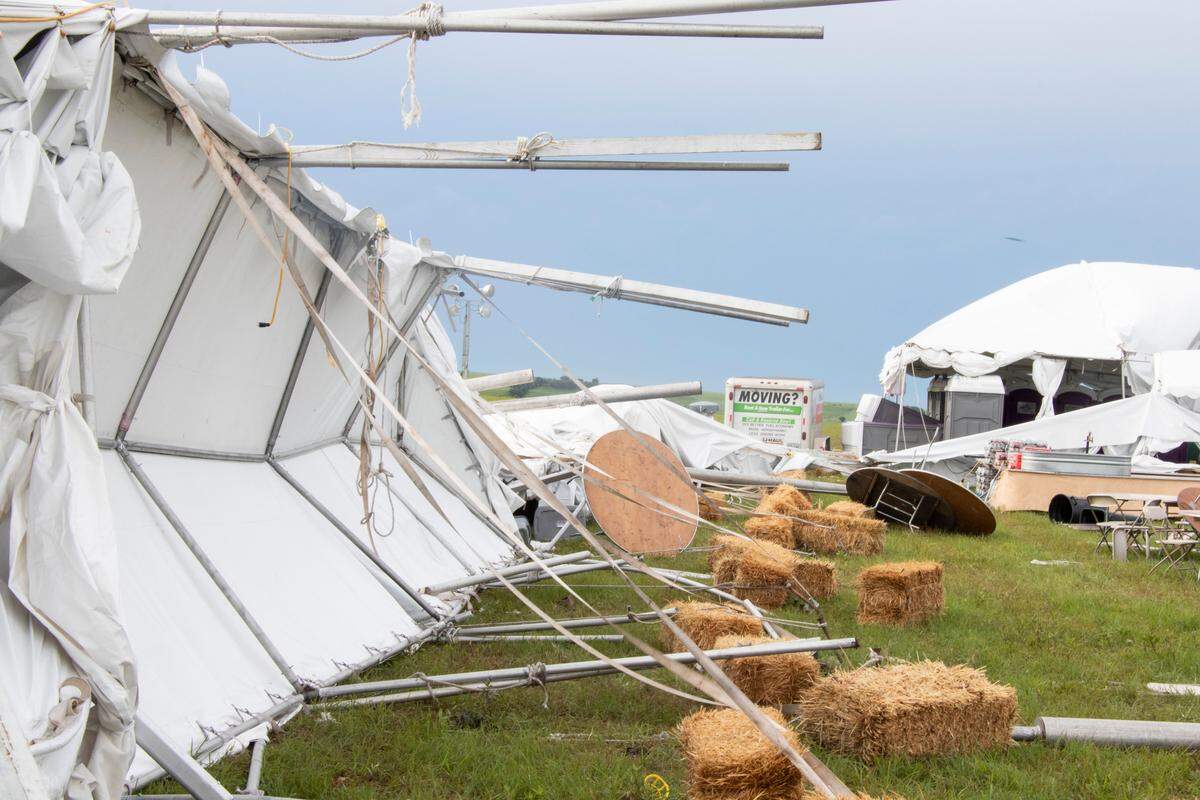
“2019 was a heartbreaker,” Tastove said. “A microburst the night before the event destroyed multiple tents, forcing us to cancel. It was the first and only weather-related cancellation.”
The decision to cancel was a serious disappointment to organizers, musicians, exhibitors, volunteers — and to more than 5,000 people who bought tickets for the concert and did not get refunds per the group’s cancellation policy.
The next year, “the pandemic shut us down again,” Tastove said. “We’ve learned that flexibility and communication are everything.”
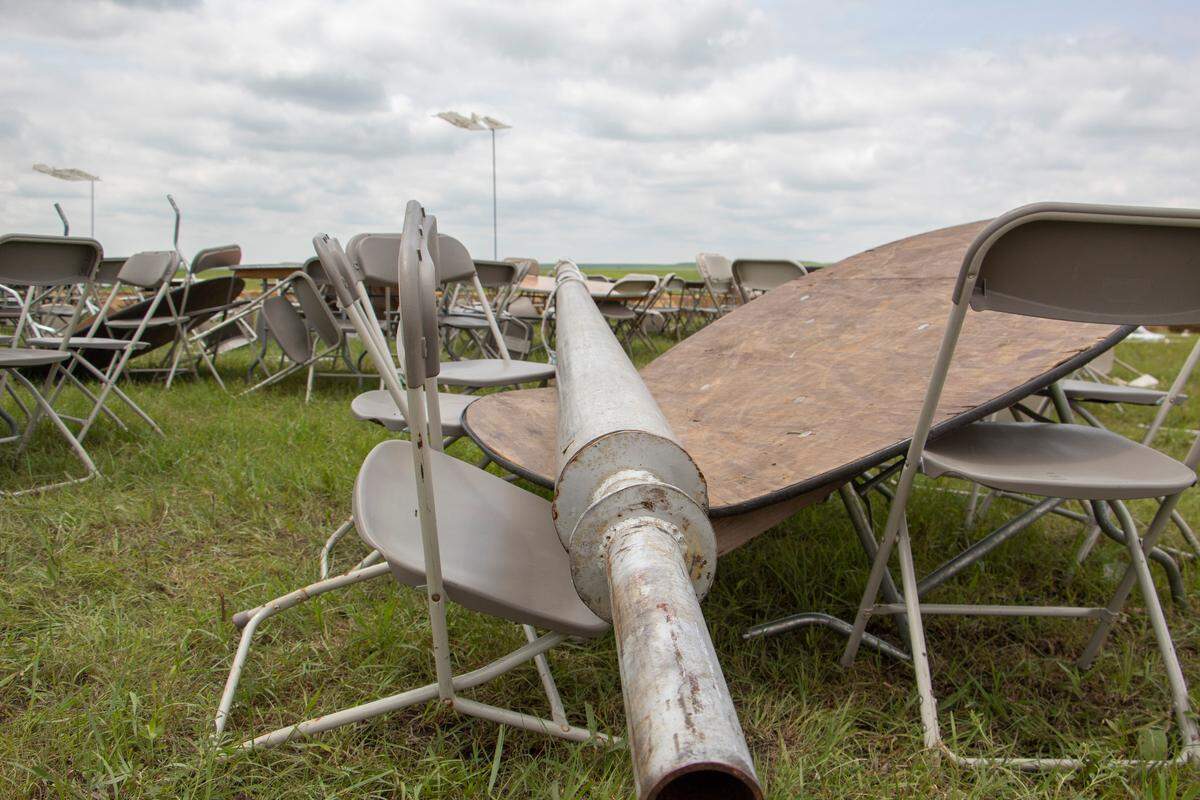
She counts the concert of 2022 as one of the most memorable weather stories.
A sudden storm blew in during intermission.
“We had to stop the concert early and evacuate the site,” she said. “As thousands of guests walked to their cars in the rain, they began singing ‘Home on the Range.’
“It was a powerful moment that reminded us this is more than an event — it’s a shared experience.”
What happens now?
The mission of the Symphony in the Flint Hills group has never been just about the music, Tastove said.
“While the signature event is concluding, the organization is not disbanding,” she said. “A visioning committee is actively exploring what’s next, and that might take time. But the passion for this place remains strong, and so will our work to share it.”
The committee will also decide the future of the accompanying art auction and Field Journal.
“The Field Journal is one of our most beloved traditions. This year marks the 17th edition. It’s titled, ‘A Prairie Sunset: An Anthology,’ and it features a collection of some of the most powerful stories we’ve published over the years,” said Tastove.
The journal is an online database about the ecology, history and culture of the tallgrass prairie. Researchers around the world have downloaded the information. Hard copies are available, too, at shop.symphonyintheflinthills.org.
“The art auction, Field Journal and educational initiatives are all part of a broader ecosystem that has supported our mission, and we’ll be looking at how each piece fits into the future,” Tastove said.
The last guest performer of the series will be Kansas native Logan Mize, who appeared recently at the Big Slick Celebrity Weekend in Kansas City where tickets to the symphony concert were auctioned off.
Mize will perform during and after the concert. Symphony assistant conductor Daniel Wiley will lead the orchestra.
Tastove joined the staff after the first event in 2006 and has worked for the group ever since.
“One of my favorite moments is always the cattle drive,” she said. “It wasn’t part of the original plan. In 2008, someone just asked if our outriders could herd cattle across the horizon during the music, and now it’s a tradition.
“That, and ending every concert with ‘Home on the Range.’ It brings everything full circle.”
This story was originally published June 10, 2025 at 1:55 PM.
.jpg)