
This ornate Kansas City building started out as part of the 1893 World’s Fair
In the 1890s, as Kansas City crept farther and farther from the riverfront, it began looking less and less like a small frontier town.
But few of the new buildings in it were as flamboyant as the one that appeared on the northeast corner of 7th Street and Grand Boulevard in 1894.
That’s because the eye-catching shingle style brownstone structure started its life elsewhere—in Chicago at the World’s Columbian Exposition of 1893. It served as a pavilion for the state of Wisconsin’s displays.
When the world’s fair ended, James C. Rogers, a banker from Wamego, Kansas, purchased the building, then had it disassembled and reconstructed piece by piece on land he owned here.
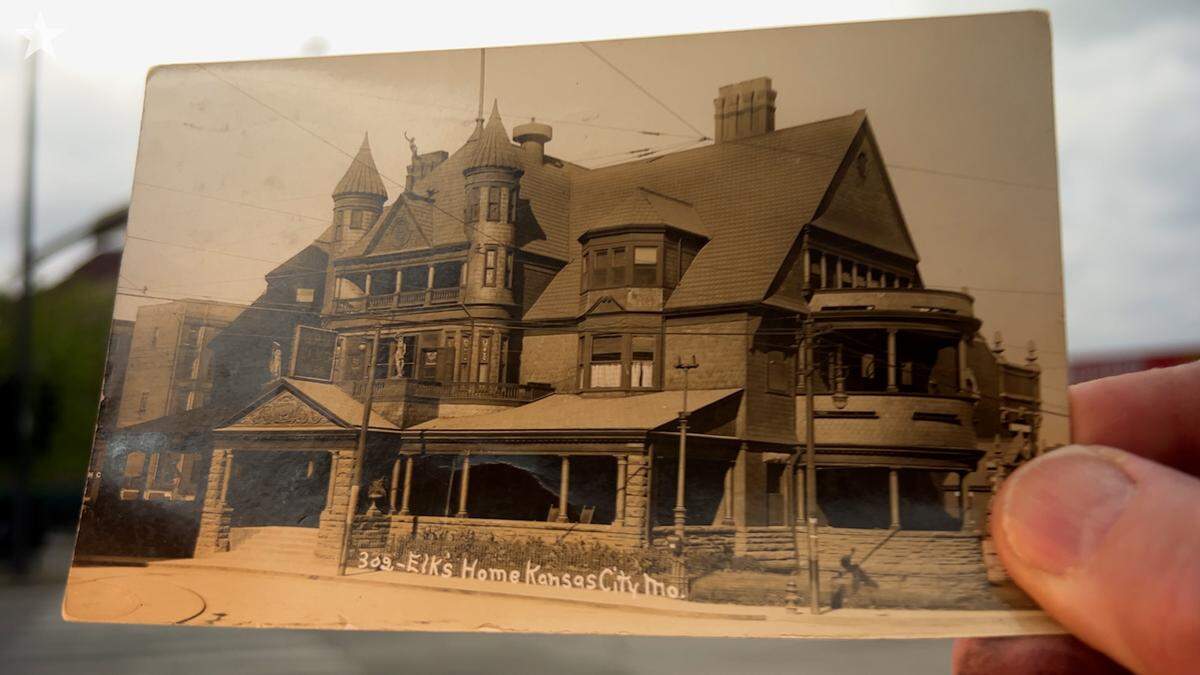
A gambling parlor called the Wisconsin Club occupied the building for less than a year. After that, the Midland hotel across the street used it briefly as an annex.
In 1898, the Elks Lodge #26 opted to do something highly unusual for fraternal organizations at the time. The group bought the building and conducted their activities in it until 1951.
They even hosted the Elks’ national convention there in 1934. For that occasion, members painted the entire building a bright green and gold, then repainted it soon after.
When the Elks finally moved to a new location on Armour Boulevard, they sold the site to City Union Mission. Ten years later, the ornate old landmark met the wrecking ball..
It’s been a surface parking lot ever since.
Having trouble seeing the video? Watch it here.
Looking for more Kansas City history?
They called it “Gully Town” for a very good reason—KC’s early growth required some serious excavating
Well before the American Royal Parade, the Priests of Pallas brought big fun to the streets of downtown
In 1928, KC displayed how “up to date” it was by hosting the Republican National Convention