Kansas worker helps small business. It’s her way to build up communities
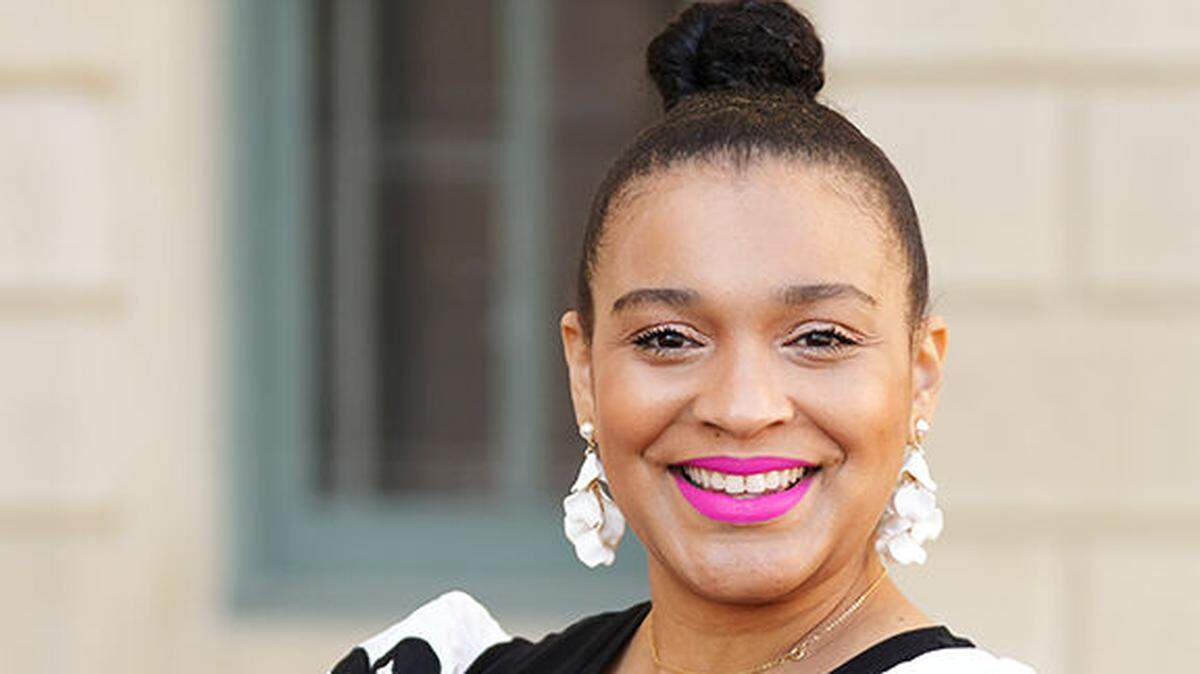
Taylor Overton comes from a long line of entrepreneurs. Her family’s history in small business stretches back to her great-grandparents.
Growing up, she watched her parents run a construction company and saw the many challenges that small business owners face raising capital and finding resources, especially small businesses that were owned by minorities. Black business owners and women, she said, were often discriminated against with slow payment or denied jobs altogether. Those early experiences inspired her to take a different path — one focused on creating solutions.
Overton said she’s learned over the years that small business is integral to having a thriving community. She calls them “The backbone of our community.”
Today, Overton serves as the director of small business and entrepreneurship at the Kansas Department of Commerce, where she develops innovative strategies to ensure entrepreneurs across the state have the tools and support they need to succeed.
Overton recently sat down with Kansas City Star culture and identity reporter J.M. Banks to talk about how vital entrepreneurs are to the economy, the needs of small businesses and the growth of entrepreneurship in Kansas.
Banks: Can you tell me about your early childhood and upbringing?
Overton: I’m a Kansan, born and raised. I was born in Lawrence and stayed there until I left for college. Right after high school, I went to Morgan State University in Baltimore, Maryland, because I really wanted to attend an HBCU (Historically Black Colleges and Universities). I played tennis competitively and still do to this day. I ended up transferring back home and attended Ottawa University, where I majored in Business Administration and eventually graduated.
I started my career in HR at Tesla. I left Tesla shortly after the pandemic hit and was recruited by the National Minority Supplier Development Council, where I served as director of minority business and corporate development.
How did you begin working with the State of Kansas aiding small businesses?
I had been working out in the Bay Area, Las Vegas, and Hawaii. Eventually, I decided to come home to take intentional steps toward shifting the landscape of opportunities for Kansas small businesses. I was recruited into this role because of my West Coast experience, and I was very vocal about my passion and desire to contribute to creating more opportunities here in Kansas.
I had previously worked in some roles with the Department of Commerce, and when they announced the creation of an Office of Small Business Development, I knew I wanted to be a part of it. I wanted to look at the entire state and support all small businesses. Through this office, we’re taking a holistic approach to identifying and addressing the needs of small businesses so they can elevate and thrive.
Why do you think you’re so passionate about helping small businesses?
I was raised by two entrepreneurs. My grandparents were entrepreneurs, my great-grandparents too. I’m a fifth-generation entrepreneur. My parents owned a construction company on the Missouri side when I was a child, and I was always curious about that world. They were a small, minority-owned contractor, but they did some amazing work, like subcontracting projects around the Kansas City Zoo.
I saw firsthand the barriers they faced. I remember not getting back-to-school clothes because a large general contractor delayed payment on a project my parents were working on. Sometimes, it felt like they were only included on projects to check the box for being a minority- or woman-owned business. That experience stuck with me.
It’s why I take this work so personally. Small businesses aren’t just businesses; they’re families, livelihoods, and the backbone of our communities.
Can you tell me about your position as Director of Small Business Development and Entrepreneurship?
The Department of Commerce focuses on economic development from several perspectives. Within it, we have divisions for workforce development, tourism, broadband development, community block development, and more.
My team is part of business development, which focuses on recruiting, expanding, and retaining businesses — not just small businesses, but all businesses — throughout Kansas. Specifically, my work focuses on the small business landscape, from access to resources to the ecosystem of support.
We have three main initiatives which are Ready KS, that focuses on small business readiness in areas like export, capital, and supply chain readiness. E3, which stands for Entrepreneurial Ecosystem Engagement, and focuses on strengthening the network of resource providers to better serve entrepreneurs based on their needs. Lastly our Resource Partnerships, where we focus on identifying gaps in the ecosystem and supporting resource providers with tools, training, and collaboration to meet entrepreneurs where they are.
What are some ways you’ve seen the entrepreneurial landscape changing over the last few years?
I’ve noticed a shift, not just in Kansas but in Missouri too — from thinking about business success regionally to thinking about it globally. If you go to markets on the coasts, for example, there’s robust infrastructure to support small businesses. That kind of infrastructure — the systems, resources, and networks — helps entrepreneurs move from point A to point B with less risk.
As we’ve started to adopt this global mindset in Kansas, we’ve begun creating more inclusive, supportive spaces for small businesses. This shift is making our small businesses more competitive, and it’s also making Kansas more competitive as a state in how we support them.
How have you seen small businesses grow within minority communities in Kansas?
I see minority businesses as key contributors to our economic landscape. Often, these businesses are born out of a need, a challenge or gap in the community. That resourcefulness is culturally ingrained in many minority communities. If no one in town does hair, someone learns how to do it. That’s entrepreneurship.
In the minority- and women-owned business space, we’ve seen a lot of innovation and a strong desire to get certified. It’s about filling gaps, creating opportunities and building something sustainable. While this isn’t unique to minority-owned businesses, the growth we’re seeing in certifications and entrepreneurship is exciting and meaningful.
Can you walk me through the process for a small business looking to get support from your program?
I always tell people, we support those doing the work, boots on the ground. I never want to disrupt the infrastructure that already exists in communities. I want to enhance it — whether that’s through building capacity, offering education, or providing training.
For a small business looking for support, a great first step is connecting with this network. They help businesses at any stage understand what resources are available and help make meaningful connections in the community. From there, we help connect them to the specific support they need to move forward.
Are there any specific trends you’ve noticed among small businesses?
Our small businesses are getting really smart, especially around capital. Entrepreneurs are coming to us with more targeted, informed questions. They understand the capital landscape in a way I haven’t seen before.
We’re seeing interest in all kinds of funding — revenue-based loans, equity programs, venture capital, angel investors. It’s a more nuanced and robust environment now, and small business owners are tapping into it.
What are the main challenges facing small businesses that you’ve encountered in your position?
One challenge I see is among our resource partners. Sometimes we struggle with what it truly means to have an abundance mindset. There are more than enough opportunities and resources to go around, but when a new grant is announced, we may hesitate to share it with others.
We need to naturally connect resource providers who are doing similar work so they can learn from each other and collaborate more. It’s not about protecting our own piece of the pie, it’s about putting the entrepreneur first and helping them navigate the ecosystem effectively.
What are your organization’s plans and goals for the future?
We’re now one year in, and we have a lot of exciting tools and resources we’re rolling out to support both small businesses and the resource providers who serve them. In May, we’ll be highlighting many of those supports and talking about how we can continue to strengthen our ecosystem.
Going forward, I want to keep championing the abundance mindset. I want our entrepreneurs to avoid searching for resources in silos. They should be able to access what they need, when they need it, with clarity. That’s a commitment I bring into every space I enter.
For more stories about culture and identity, sign up for our free On The Vine newsletter at http://KansasCity.com/newsletters.