KC artist creates work revealing the joy and femininity of trans women’s journeys
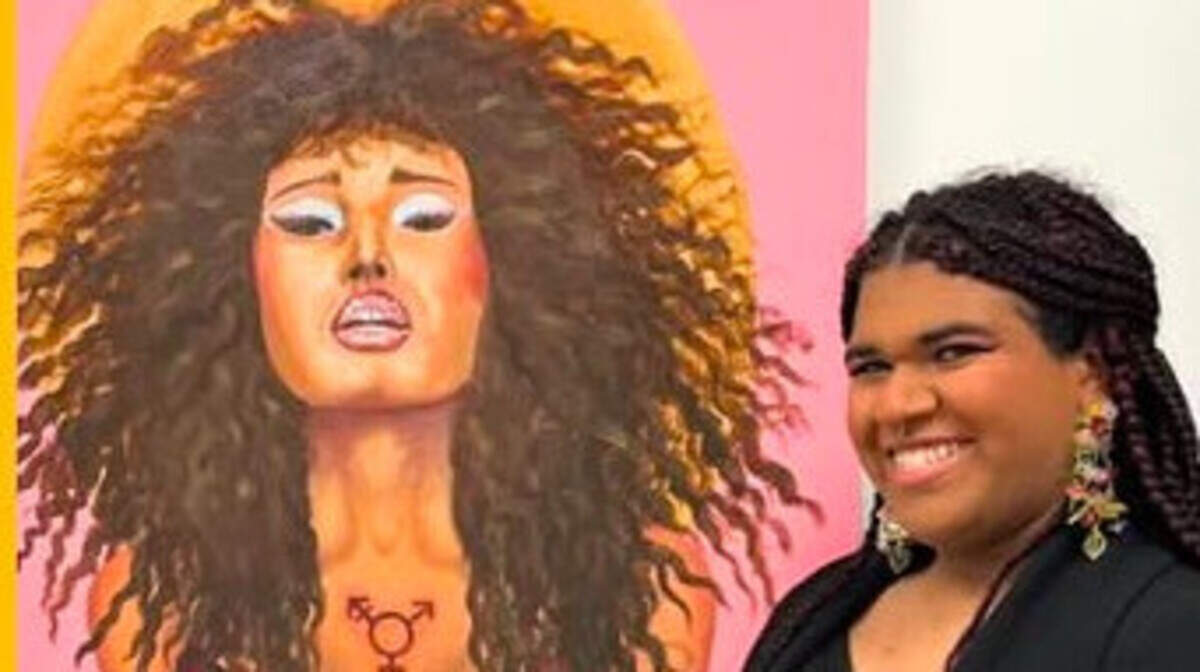
Two years ago, Junie Brown made the decision to fully embrace her identity as a trans woman. Since then, she has focused on creating art that celebrates femininity in all its forms. Now in her second year at the Kansas City Art Institute, studying to become a professonal painter, Brown is working toward building a career centered on painting the images of underrepresented trans women she always wished to see.
At just 19 years old, Brown aims to use her art to challenge the common portrayal of trans women of color as being in a constant state of struggle.
This past weekend, she participated in the Trans Women of Color Collective’s Queer Market, where she had a booth showcasing her artwork. Brown was thrilled to present her creations in the LGBTQIA community for the first time.
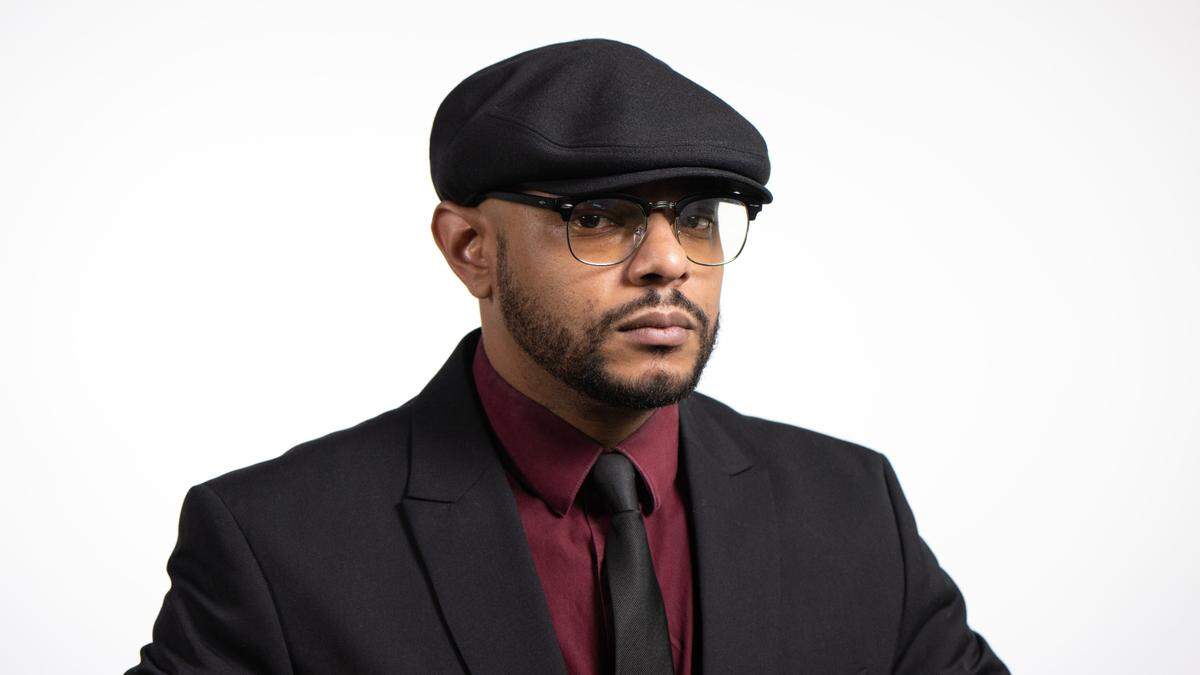
Recently Brown sat down with The Kansas City Star’s culture and identity reporter, J.M. Banks, to talk about discovering her identity as a woman, using art to explore femininity and the importance of representation of trans figures in art.
Banks: Can you tell me about when you began to discover your identity as a trans woman?
Brown: I am an Afro Latina trans woman. I am biracial, Black and Mexican and I was born and raised here in Kansas City. I went to Foreign Language Academy which was a full immersion school for Spanish and became bilingual there. My upbringing wasn’t perfect and there were difficulties that I had to endure. But it was nice to know that I had people in my corner. I feel like through those people I learned who I was and I learned how to be confident.
I came out as gay at a very young age and I was very sure I didn’t have an attraction to women in general. I always experimented with makeup and clothing and I knew there wasn’t something completely right about my gender. It wasn’t until I started going to college and was surrounded by other queer people that I allowed myself to think about being trans as a possibility. That’s when I took the step to completely shave my face of all facial hair except my eyebrows. That’s the moment when I knew that I felt more euphoric, presenting as more traditionally feminine.
My mother was great. She was very supportive and she still is. I was lucky enough to be surrounded by friends at school who understood the concepts of being trans and being under the trans umbrella in general, so I feel like I was very supported. I started dating my partner and he is a trans man and he helped me navigate my transition.
How did you get into art and how would you describe your artistic style and what influences shape your work?
During the pandemic I started to watch a lot of reality TV shows about makeup and drag. I started trying to design clothing, which was pretty fun. I did a lot of anatomy studies and fell in love with charcoal figure and graphite figure drawings. Eventually I moved up to painting. I put together a portfolio to go to the Kansas City Art Institute and they accepted me and I’ve been there the past two years now.
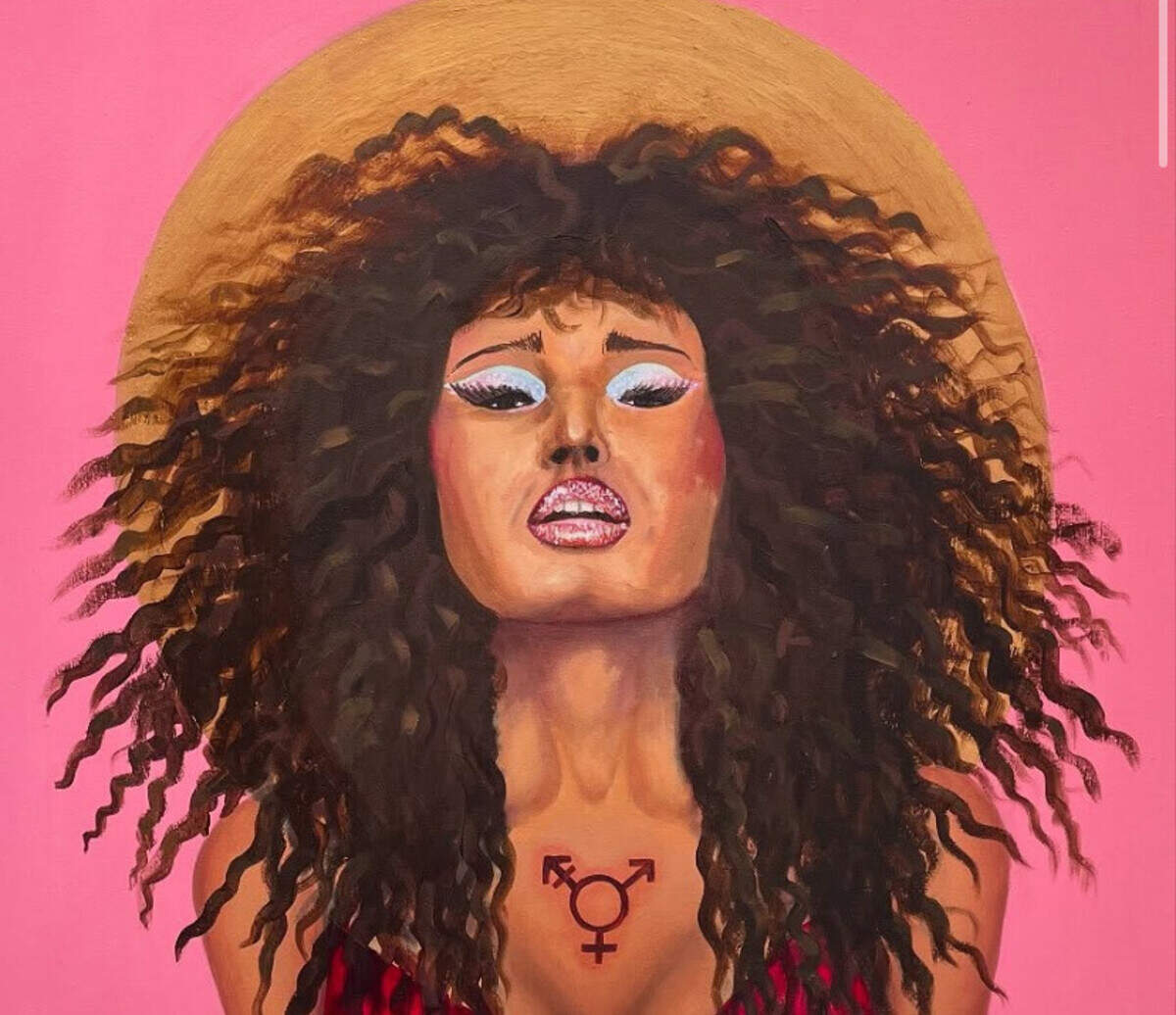
I feel like the best way I can describe my art is divine feminine. I’m a trans woman and I’m very inspired by just femininity and the traditional ways of representing that and also kind of going out-of-the-box with it. I’m usually inspired a lot by activism and I just love knowing that there are people like me out there fighting for my rights, especially in this day and age. I want to pay homage to them and I want them to be immortalized the same way you would see a saint in a Catholic church for example.
Just dealing with my transition through my art is also a huge thing that I am inspired by. I feel like it’s an essential part of who I am and my story and for the most part, my art is a reflection of who I am, just in a tangible form. I feel like they’re pretty hand in hand and my personality influences my art very much.
How would you define divine femininity and how do you express that in your work?
I think divine femininity is just unapologetic expressions of being feminine and all of its forms. Sometimes I feel pressured to stick to the more traditional versions of what women are supposed to look like and felt like I have to conform to that to be accepted as a woman. But I am learning to express myself and my art in the way I always wanted to.
What role do you believe representation plays in the broader artistic community, particularly for the trans community?
It’s 1,000% very much needed. I feel like the subject has been something that’s been so taboo throughout history and we’re just now getting to a point where it is mainstream. The way it’s depicted in today’s day and age is not ideal, it’s not accurate to who trans people are but especially also for people of color. It is not all struggles. It’s really important to know that for the majority of us, we are experiencing joy and there is still hope to experience joy in the future.
Have you encountered any specific challenges navigating the art world, particularly with your focus on femininity as a trans woman?
I’m still at the very beginning of my career but I know, especially with the current political climate right now, being trans isn’t something viewed as positive by everyone. So I feel like there is still a little bit of a stigma there and hesitancy to show work that includes trans subjects and find the market for it. But I feel like overall the art world is very accepting.
What has been the reception you’ve received from members of the trans community regarding your art?
I feel like it’s been a pretty positive reaction that I have been getting. Just because I feel like I’m not sexualizing the trans subject. I feel like a lot of the media that we consume that’s around trans women is around sex work. It is a big part of trans history and something that is very talked about and I don’t have experience with that. It is not something to be ashamed of but since I can’t relate to it as much, I feel like that sort of helps me depict figures in the way I do.
What do you think are the main challenges you face as a trans woman trying to navigate this art world while authentically portraying the feminine perspective?
I feel like it’s mainly just the stigma around being trans right now. There’s just so much hate towards trans people, especially trans women and especially trans women of color. I feel like it’s really important to make sure that there are positive depictions of us. I feel like social media is drowned in negative depictions of who we are and it is very much needed for us to be presented in a positive light.
How do you see your art contributing to a larger conversation around gender identity and visibility of trans individuals in society?
I think it’s a good way to start a conversation. I fell like that is the biggest thing that we need because we live in these bubbles of information and once you’re in one it’s very easy to have a confirmation bias about your beliefs. We are your neighbors, we are the people around you. I just want people to experience the joy the way I feel it.
What will you be doing at the Trans Women of Color Collectives’ Queer Market?
I am going to be selling prints of my work and accepting a few commissions. I am also going to be doing a raffle for a free portrait. It is really about just networking with other people in the community. It feels wonderful and gives me so much joy knowing that there are other creatives who are people like me coming together. That gives me hope to know that I can make a career of what I am doing in school and know that there is a market and opportunity for me to share my work.
What’s next for you as an artist and are there any specific projects or themes you are excited to explore in the future?
I’m working on a body of work that explores the extent that trans women go to be accepted as women in our society. Working in a plethora of different mediums for example, braiding, needlework, sewing, just kind of stereotypical women things that women do and asking myself the question of am I a woman now? Just the journey of seeing how far I will have to go to be viewed as a woman by society.
For more stories about culture and identity sign up for our free On The Vine newsletter at http://KansasCity.com/newsletters.