Off-duty officers to be dispatched in KC to deter break-ins. Will it work? Experts dubious

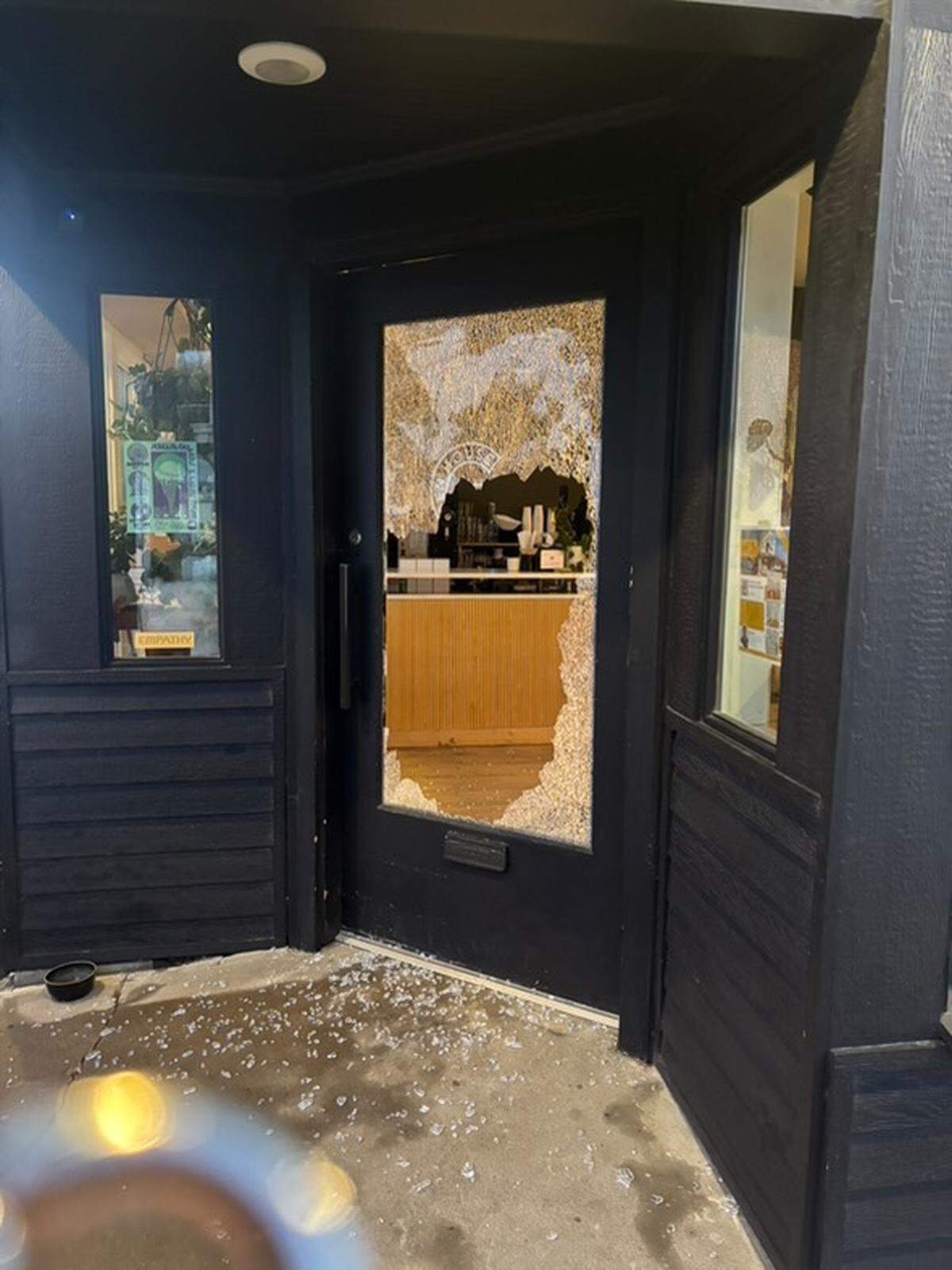
Police officers and sheriff’s deputies from regional law enforcement agencies could soon be hired in Kansas City to act as off-duty security in neighborhoods recently targeted by break-ins and vandalism.
A new ordinance passed in January would allow the city manager to recruit for extra security in areas recommended by a task force, the legislation reads.
Kansas City could invest up to $1 million for the enhanced security.
The measure, sponsored by Kansas City Mayor Quinton Lucas and 6th District at large Councilwoman Andrea Bough, came after an outcry from business owners and people in neighborhoods impacted by property crime.
But local law enforcement experts say the city could run into road blocks with police staffing shortages, and the ordinance may result in legal implications if the “off-duty” roles are not clearly defined.
A Kansas City lawyer specializing in personal injury and civil rights cases said while she feels an initiative to protect small businesses is a good idea, the city should be transparent about the off-duty officers’ policies and procedures. Attorney Paeten Denning reviewed the ordinance at the request of The Star. Among other litigation involving law enforcement, she has represented clients in excessive force cases involving off-duty officers.
“I just think for the public... I don’t think it’s as black and white as, oh, there’s going to be (more) police and that’s going to deter property crimes,” Denning said. “It’s a more complex issue than that.”
A short term solution
Off-duty officers generally mean those who put in normal hours as a law enforcement officer, and then are contracted to work in a different capacity. Sometimes that can look like patrolling an area of the city with a lot of tourists, or by working at an event space or something similar for extra pay.
The ordinance passed in January allows for more of a specialized assignment where the emphasis is going to be on property related crimes.
Seth Fallik, an associate professor of criminal justice and criminology at the University of Missouri — Kansas City, said while having a greater police presence may help in the short term, off-hours roles for officers is not sustainable in the long term.
“There’s some underlying root cause issues that certainly promote violence and property crimes in these communities,” Fallik said. “And after hours officers are only going to be able to necessarily scratch the surface of those things.”

Kansas City’s River Market and Crossroads districts are among those which have seen a notable uptick in property crime. But a troubling part of the ordinance, Fallik said, is not knowing yet where the task force on public safety will recommend more police presence.
Only focusing on areas where there is an uptick, and not areas with long-standing issues of property crime, would neglect part of the issue, Fallik said.
“(The task force) should be mindful of how this budget can disaffect groups in the city,” Fallik said. “ Crossroads and River Market are great examples of places that have seen an uptick. But these issues exist, you know, east of Troost as well. And so, just be mindful of how this resource, which is a city resource, is being dispersed. So, I’d just be cautious about that.”
Denning said it is important for officers to be familiar with the areas in which they are working. Officers familiar with their community improves policing, she argues, but said she wonders whether temporary off-duty officers can be effective in this way.
“I think when it comes to security, a lot of times, the businesses themselves are going to have a better understanding of the crime in those areas,” Denning said. “I’m aware of the task force and, you know, kind of what their role is. … Are they also having conversations with these small businesses and are they also explaining to them, you know, like civil logistics of it?”
Sherae Honeycutt, a spokeswoman for Kansas City, said the task force is actively assessing high-need areas based on crime data, community input, and resource availability.
“Recommendations focus on locations with high calls for service, break-ins, nuisance activity, and other public safety concerns,” Honeycutt said in an email to The Star.
It is unclear as to how many off-duty officers are needed. The city has not yet determined which agencies may be involved in providing officers.
High-need areas are under review by the city manager. The timeline for deploying off duty officers will depend on officer availability and logistical planning, Honeycutt said.
But the city aims to have additional law enforcement presence sometime this spring.
“The ordinance was designed to address immediate public safety concerns,” Honeycutt said in an email. “The city will assess its effectiveness post-implementation and determine future funding based on evolving needs.”
New ordinance could stir legal questions
After reviewing the ordinance, another concern Denning said she had was whether an off-duty officer’s conduct could open up local businesses to liability.
Denning said there is Supreme Court precedent that helps define when an officer is actually an officer, acting under the authority of state law. Those cases can be complex, she said.
“There’s a lot of gray area there, and I think you’re potentially opening up these small businesses to litigation if there is some type of excessive force or just use of force. You can have these 1983 civil rights claims brought up,” Denning said.
Denning said if the off-duty officers are going to work with small businesses, they need to let them have access to their policies and procedures. She said they also need to understand what training these officers get.
“I think the biggest thing with police and police presence that I’ve noticed is, it kind of comes down to transparency,” Denning said. “It comes down to our police working with the communities, being transparent with the communities.”
Immediate public safety concerns
As of Feb. 1, the most recent data available, the Kansas City Police Department had 1,164 staff, 54 of which were members in academy training. The department is down 244 officers, according to Sgt. Phil DiMartino, a spokesman with KCPD.
At the beginning of the year, KCPD welcomed its largest academy class since 2019. For years, the department has been down 300 officers, but according to DiMartino, staff numbers are trending in the right direction.
“Staffing shortages of course present challenges but we continue to work through those with data and technology,” DiMartino said in an email to The Star. “Our aim is to reduce the staffing shortage completely.”
To address property crime during a staff shortage, KCPD utilizes data-driven deployment, or allocating resources where needs are identified.
DiMartino said a recent success story due to data-driven deployment is the arrest of a man who allegedly burglarized businesses in Kansas City’s Brookside neighborhood. Detectives determined a pattern and linked five burglaries to the suspect, police said in a social media post last week.
Fallik said research shows this strategy of data-driven deployment can be effective. He said it’s unclear, though, how this tactic may be used by off-duty officers from various agencies.
Off-duty officers can start addressing immediate concerns, Fallik said, but argues the long term solution is hiring more officers, to promote more officers within the ranks, and to give them the training they need to be effective in their positions.
“You have to really focus on the problem itself before you start pivoting to more long term stuff, because you have to stop the behavior that is contributing to (crime),” Fallik said. “We really need to have these interventions where we’re identifying the perpetrators… then pivot to more investment in long term solutions.”

Long-term solutions
Addressing property crime trends, DiMartino said consistent progress for KCPD means consistent effort, even under staffing shortages.
“KCPD will remain consistent in putting forth the effort to address property crimes, violent crimes, and all quality of life issues within our community,” DiMartino said.
DiMartino said addressing crime is a collaborative effort in Kansas City. And while the recent impact on small businesses has been publicized, theft, property damage and stolen vehicles affect hundreds each month, he said.
“Crimes of theft can often be crimes of opportunity,” DiMartino said. “Don’t leave valuables in your vehicles, park in well lit areas. Lock your doors and windows.”
DiMartino said Community Interaction Officers with KCPD can help business owners establish more robust security measures. Having good surveillance can make the difference in identifying those responsible for crimes, he said.
In a news release announcing charges in a string of burglaries Tuesday, Jackson County Prosecutor Melesa Johnson discussed her office’s efforts in prosecuting repeat offenders accused of property crime.
“Unfortunately, a small number of repeat offenders cause the majority of the harm in our community, causing trauma, financial hardships, and inconveniences for far too many,” Johnson said in the news release. “We expanded our Crime Strategies Unit to stop incidents just like this one, identifying patterns of criminal behavior and ensuring repeat offenders face appropriate charges to prevent them from continuing to victimize our community.”
In addition to ongoing efforts by police and prosecutors, Fallik said more investment is needed in community programs that are often neglected for other immediate needs.
“You know, if it’s education, if it’s community outreach, if it’s services to disenfranchised groups, it’s these sort of things that are frequently on the chopping block — to be quite honest — that we know have really beneficial long term impacts for communities,” Fallik said.
“They can make the difference between a person having a life course set on crime or a life course that maybe dipped into some problems for a hot second and then transitioned into being a productive member of society,” Fallik said. “It’s super meaningful.”
While Kansas City continues to address crime trends through community programs, data-driven deployment and KCPD’s ambitious, wide-reaching crime plan, the implementation of off-duty officers is yet to be seen.
The city manager has discretion to allocate up to $1 million from the unappropriated balance of the Public Safety Sales Tax fund, the ordinance reads.
Increasing officer visibility is the goal of this new ordinance, according to city leaders. How effective it will be, and how officers’ roles are defined through this city initiative are still unclear.
“I don’t think that just because you have police presence that is going to, you know, necessarily resolve that problem of property crimes,” Denning said. “ It really, really matters how this task force implements this budget.”
“Each small business probably has their own concerns and worries, and, you know, their own experience with property crime,” she said. “So I think it’s just very, very important that the task force communicates with the small businesses, and then as they’re doing that, I think they need to be transparent with the community as well.”