‘No hope, no dreams:’ After decades wrongly imprisoned, KC man helping to free others
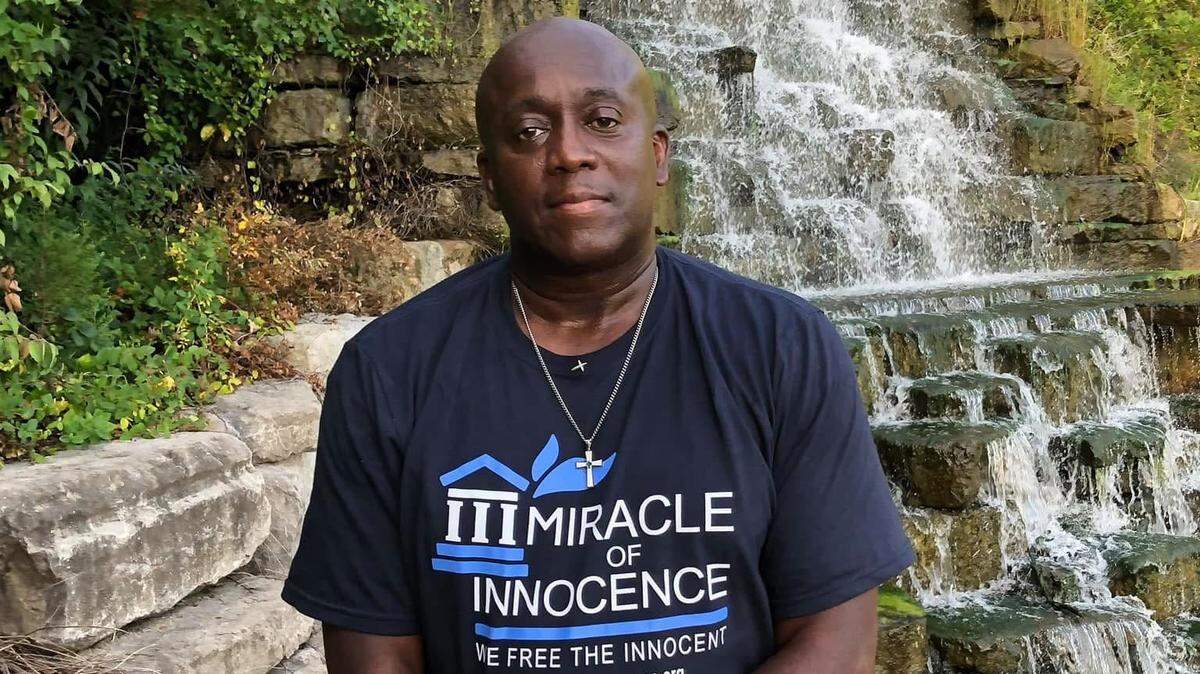
For more than 20 years, Darryl Burton endured imprisonment for a crime he didn’t commit. Convicted in 1984 for the murder of another man, Burton watched the justice system that was meant to protect him, instead robbed him of his freedom.
He recalls that the first eight years in prison were filled with intense frustration and despair. He struggled to comprehend how an innocent men could have been wrongful convicted and stuck behind bars while life ticked away. It wasn’t until much later that he began to entertain hope that his name would eventually be cleared and his freedom restored.
Thanks to the efforts of organizations like Centurion Ministries, an organization that helped wrongfully convicted inmates, Burton was released in 2008.
MIn 2017, nearly another whole decade after he had been released from prison, Burton, at the age of 63, co-founded The Miracle of Innocence, a nonprofit aimed at helping the wrongly accused, wrongly imprisoned, gain their freedom and successfully re-enter society.
Recently Burton sat down and talked with The Kansas City Star culture and identity reporter J.M. Banks, about his life before prison, life in prison and the passion that lead him to help start a nonprofit that frees the men and women behind bars who should not be there.
Banks: Can you tell me about your upbringing and early life?
Burton: I grew up in St. Louis on the West Side and come from a large family. In the community I lived in there was gangs, drugs, violence, alcohol and poverty all around.
My mom and dad split when we were young and separated and she became a single parent. I was raised around a lot of young people and of course as a kid we didn’t know we were poor. We didn’t understand all the intricate things that go on trying to be a single parent.
My teenage years were pretty much the same and spent in the same community where I had some high points and low points. I got in trouble with the law with some of the other delinquents. I was sent to a detention center for youth until I was 15. I got sent to prison for two years for a burglary charge which, I pleaded guilty to because I was wrong for that. After getting out I became a father to a little girl who I wanted to take care of. She was seven months old when I first saw her.
Can you walk me through the background behind your wrongful conviction?
I was like 25 or 26 and was wrongfully accused of capital murder. I was facing the death penalty in St. Louis for a guy who was killed pumping his gas. Three or four people described to the prosecution that the person who committed the crime was a short light-skin guy. I am seven feet tall and have never been light skinned. There was no motive, ballistics, DNA, confession or fingerprints.
The victim had been a gang member who had been shot three other times prior to him being shot and killed and they hid that fact from the jury. They hid a lot from the jury. Nothing connected me to the crime except two witnesses who were jail house snitches. They were the key witnesses for the prosecution and they made deals because they were facing some years and lied. I had a public defender who I saw one time for one hour.
What was it like hearing that guilty verdict in the courtroom and coming to grips with going to prison for murder?
I was in disbelief, just shocked. I felt anger and hated the entire criminal justice system. I felt like the laws were not set up for me and the people who sent me there didn’t follow the rules or care about the laws. They waved the death penalty and sentenced me to 75 years consecutively without parole. It was a death sentence but instead of death by lethal injection it is death by incarceration. In my community if you did the crime you had to go and do the time. But I never thought anybody went to prison who was innocent or didn’t do the crime.
What was your experience like in prison and knowing you didn’t belong there?
I was feeling like all these dudes here for something they did and I’m here for something I didn’t do. You can’t talk to these guys for real about your case. At least I couldn’t because they would get upset. And so even if you are innocent, they all say they innocent, they will say if you are innocent then prove it.
Everybody was so angry. I was angry, because we resided at Missouri State Penitentiary. That place was once described as the bloodiest 47 acres in America and it was. There was violence every day. People filled with anger, rage. It was just an environment that was evil from the top down. When you get to the prison there is a sign that all new prisoners saw that said welcome to Missouri State Penitentiary. Leave all your hope, family and dreams behind. That was your introduction and they meant it. No hope, no dreams, literally just nightmares.
How did you prevent yourself from being consumed by anger and lose hope while incarcerated?
It took me a long time to get to a place where I wasn’t consumed by it. I felt like the prosecutors, the police, the judge, the whole system, had scapegoated me to confiscate my freedom. I used my anger as fuel. The fact that I had a little girl got me thinking I have to get back. The tragedy of that is she didn’t know me and she ended up in the foster care system. We were both in institutions at the same time.
What were those first stages of starting the process to fight for your freedom like?
The first stage was to try to get to a place where I can get to the law library. When I got to prison they put me in sort of solitary confinement. It was the higher security level.
There was a class that a guy was teaching on paralegal skills, so I joined that. It was a process because I had to get into general population then I had to figure out the law because that is what had me there. I started filing motions and pleas with the courts and became what is known as a jail-house lawyer. I wrote hundreds of letters to presidents, governors, senators, you name it I wrote them a letter.
I had seen a story on the news about Centurion Ministries, which was the first organization I saw helping people get out of prison. I wrote them in 1990 and they told me they are a small organization and it would take them 10 years to get to my case. I was doing 75 years so I had time. It took them 10 years to take on my case, then it took another eight years to get me exonerated.
But in the year 2000 is when I began to let myself feel some hope.
Was there a key piece of evidence that the organization used to get you released?
Yeah there was a woman who was a witness who told them that I was not the person. The defense had and hid that information. She had moved to Baltimore and they found her in 2003. It came out that they lied about the convictions of one of the witnesses that had 12 convictions and only facing a couple years. The witness was in fact facing 30 years in another murder case and went on record as an informant for police to take years off.
Five months after he testified against me he signed a sworn affidavit saying he lied on the stand. We found out there was another suspect who did shoot the victim before and was telling people he was going to kill him over a drug feud.
What were those first initial feelings like getting out of prison after all that time?
It was unreal, unbelievable. The world had changed so much and the world was a lot faster with the technology. I felt lost, like Alice in Wonderland or something.
I was thinking I don’t know if I could keep up with this world outside because so many things are different. I had never used a cell phone. The people you knew, landmarks, everything had changed. Being set free and home was a joy on one hand, but also painful.
I went to these organizations for help and was told that the re-entry couldn’t help me because they don’t help innocent people, which seemed strange and was not the response I was expecting. Everything was a challenge.
Were you unable to get compensation for your wrongful conviction?
No. Missouri only compensates those with DNA exonerations. So I never received anything. It is strange to me and I don’t understand the system when it comes to that.
Can you tell me about The Miracle of Innocence and the work your organization does with the wrongfully convicted?
We started in 2017. It was started by me and my co-founder, who spent 23 years (in prison) on the Kansas side.
We basically have a two-pronged approach with this organization. One is to help innocent people get out of prison by raising funds for lawyers, investigators and forensics. Once the person gets out, just like when I came home, there was nothing in place for me when I asked for help. So, we try to help individuals when they come home with the basic necessities that a person is going to need. Identification, trying to find a job, a phone, transportation.
We mentor, we also do education and public safety awareness programs. We always tell people not to lose hope. We understand how hard it is trying to get life situated.
What is the selection process for the incarcerated who are selected into the program?
Both men and women write our organization looking for aid. We have intake specialists who look at the cases and see if it fits our criteria. We don’t just take a case because they said they are innocent. There has to be evidence or something that shows there are some red flags that might lead us to a deeper dive into the case. So it is a long and tedious process to go through.
What are the biggest challenges you face with your organization?
With any nonprofit you have got to raise funds. It can be anywhere from $50,000 to $350,000 for one case, so funding is big. Also, bringing these cases, the awareness is being made more and more in the community. A lot of folks are starting to see these cases in the news.
What are your organization’s goals for the future?
I want to grow to a point where we could do up to 10 cases at a time and really do more work and reach more people. I would love to see us get a bigger office. We are still a pretty young organization, so we are still looking to expand our staff and work with as many cases as possible.
For more stories about culture and identity sign up for our free On The Vine newsletter at http://KansasCity.com/newsletters.
This story was originally published February 25, 2025 at 10:19 AM.