‘Life is so dark’: Trump cancels flights to KC for 108 refugees fleeing war, persecution
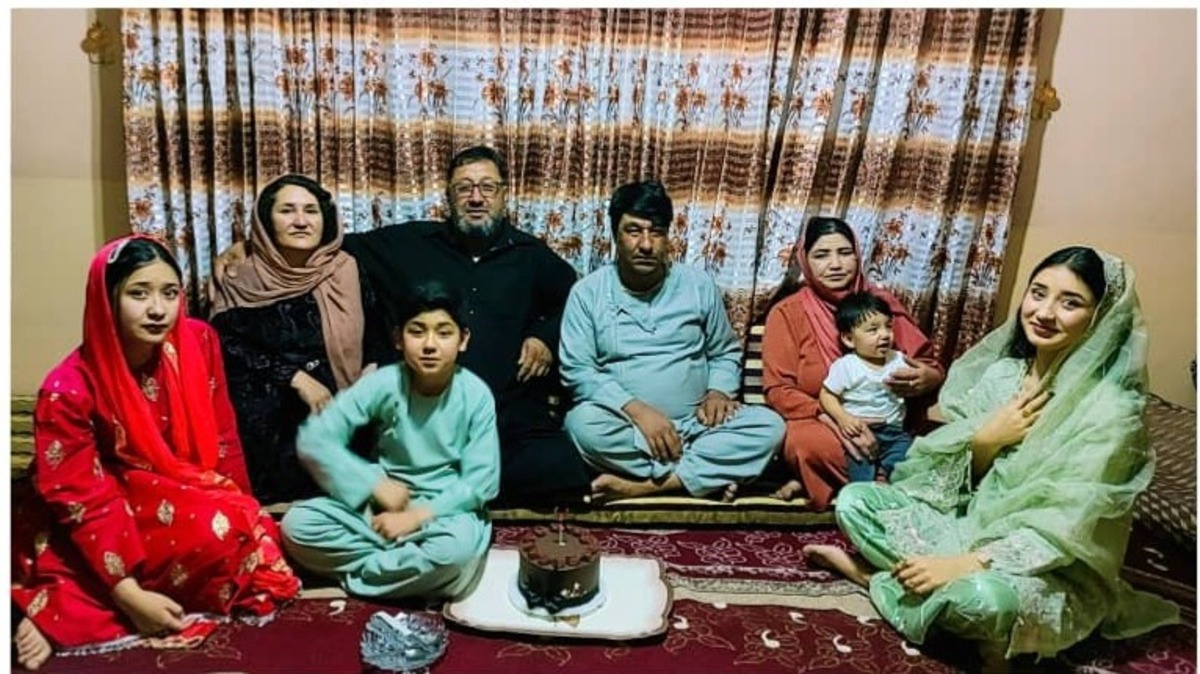
On Feb. 2, a family of refugees — a father, mother and their five young sons, having fled the oppression of Taliban-led Afghanistan —were scheduled to arrive at Kansas City International Airport at 2:29 p.m. on United Airlines Flight No. 561 to begin their new lives in Kansas City.
They had tickets, but no chance to board a plane.
In the wake of President Donald Trump’s executive order suspending the U.S. Refugee Assistance Program — an inauguration day order that on Monday was challenged in federal court — the family’s flight was canceled.
So, too, was the flight of a Congolese mother, father and their two teenagers set to arrive at KCI on Feb. 7, having waited seven years to reunite with their loved ones already here. A flight three days later for another family of eight from the Democratic Republic of Congo, with six children under age 14, was similarly canceled.
“We had flights already scheduled. . .To get so close and have it pulled away has to be devastating,” said Hilary Singer, executive director of Jewish Vocational Services.
Hard days
JVS is one of four refugee resettlement organizations in the Kansas City area that, last year, collectively resettled some 1,600 people from countries torn by war and persecution, including genocide.
Numbers supplied by JVS, Della Lamb Community Services and Mission Adelante show that as least 108 refugees (JVS 42, Della Lamb 56, Adelante 10) who were expected to arrive in Kansas City in February no longer will. The figure is likely higher given that Catholic Charities of Northeast Kansas, which resettled 343 refugees in its last fiscal year, opted not to say how many refugees had been expected to arrive this month through its efforts.
Suspension of the program — which includes cutting off federal aid used to support refugees in their first 90 days in the U.S. — not only has devastated families, but also has thrust refugee aid organizations into uncertain futures.
“February 6th was one of the hardest days I’ve experienced in my time at Mission Adelante,” Executive Director Jarrett Meek posted in a blog Monday, citing a freeze on federal funds. “We had to let go of our entire refugee resettlement team — seven dedicated employees, who had worked, loved, and given their all to serve the 171 refugees we had welcomed over the last 12 months.”
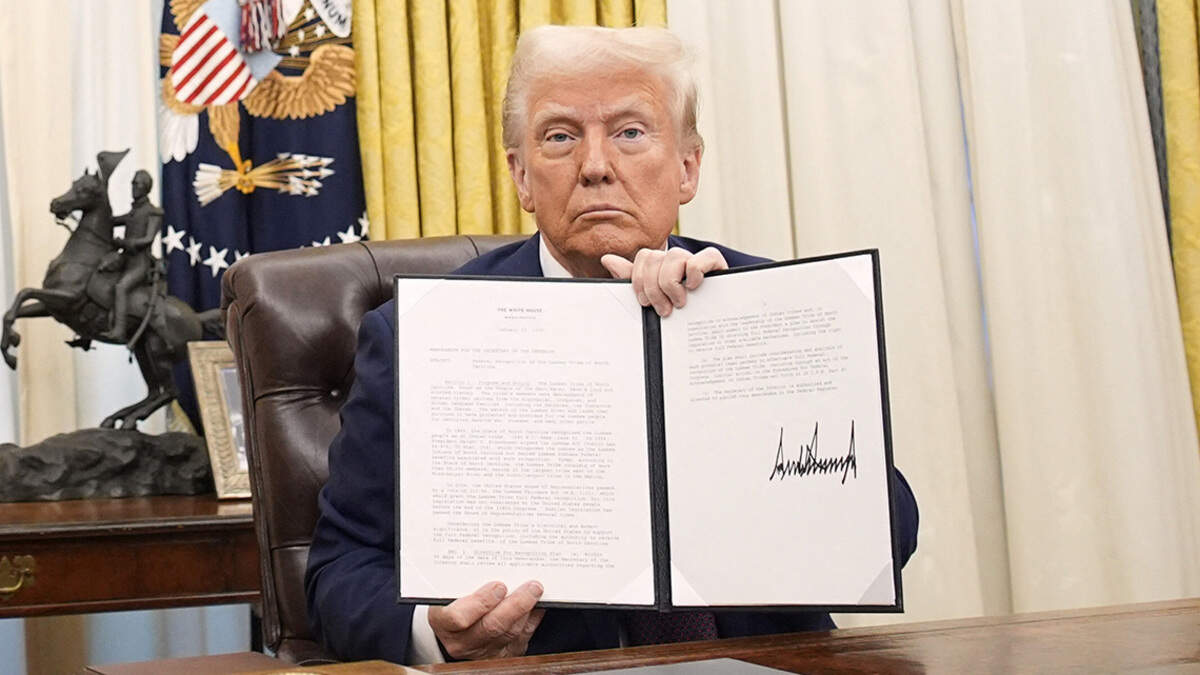
Trump, in his Jan. 20 executive order, noted that he was suspending the program over security and other concerns.
“Over the last 4 years,” the order reads, “the United States has been inundated with record levels of migration, including through the U.S. Refugee Admission Program. . . .The United States lacks the ability to absorb large numbers of migrants, and in particular, refugees, into its communities in a manner that does not compromise the availability of resources for Americans, that protects their safety and security, and that ensures the appropriate assimilation of refugees.”
The order notes that within 90 days of its signing, the Secretary of Homeland Security, in consultation with the Secretary of State, would submit a report to the president regarding whether the resumption of refugees through the program “would be in the interest of the United States.”
On Monday, a coalition of resettlement organizations sued the Trump administration in federal court in Seattle, holding that Trump’s suspension is unlawful. It asks the courts to restart the program.
Under former President Joe Biden, about 100,000 refugees were allowed into the U.S. Some 10,000 had been approved to arrive when Trump’s order went into effect.
“President Trump cannot override the will of Congress with the stroke of a pen,” Melissa Keaney, attorney for the International Refugee Assistance Project, one of the plaintiffs, said in a news release.
“The United States has a moral and legal obligation to protect refugees, and the longer this illegal suspension continues, the more dire the consequences will be. Refugees and the families and communities waiting to welcome them have been thrown into indefinite limbo and the resettlement agencies ready to serve them don’t know if they can keep the lights on.”
Fleeing the Taliban
For families, there is the personal toll.
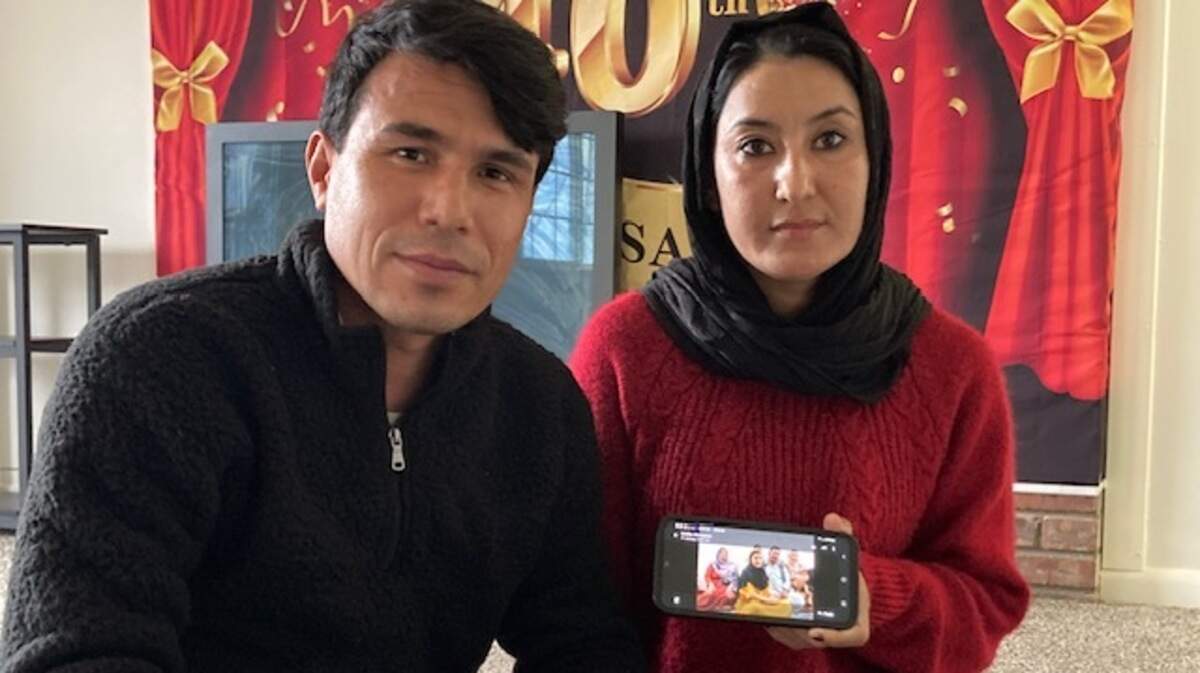
“The first time we heard this news, my wife, she was crying,” said Qasim Rahimi, 33.
A refugee from Afghanistan, Rahimi had been a target of the Taliban, having worked for organizations that supported the U.S. government. In August 2021, he was among the Afghan crowds that swarmed the tarmac at Kabul’s international airport desperate to flee the country. His ultimate destination was Kansas City, where a sister and her family already lived.
“I was lucky to have got on a plane and came here,” Rahimi said. “Probably I was to be killed by them.”
Although Rahimi could get out, his wife, Samia Tahiri, could not.
It had already been two years since they’d seen each other, as Tahiri was still a student when they married, studying business in India at a university in Bangalore.
Under the Taliban, girls are barely educated and women do not attend universities or hold outside jobs. The Taliban’s most recent vice and virtue laws make it unlawful for women to bare their faces in public. They must be fully veiled. As their voices are considered intimate, they are banned from singing or reading aloud or being heard outside their homes.
Tahiri, now 27, remained in India. Five years would pass before this past December when she and her husband were reunited in Kansas City. The expectation was that Tahiri’s parents, four siblings, as well as her aunt, uncle and cousin would follow from where they were refugees in Pakistan, perhaps as soon as this year.
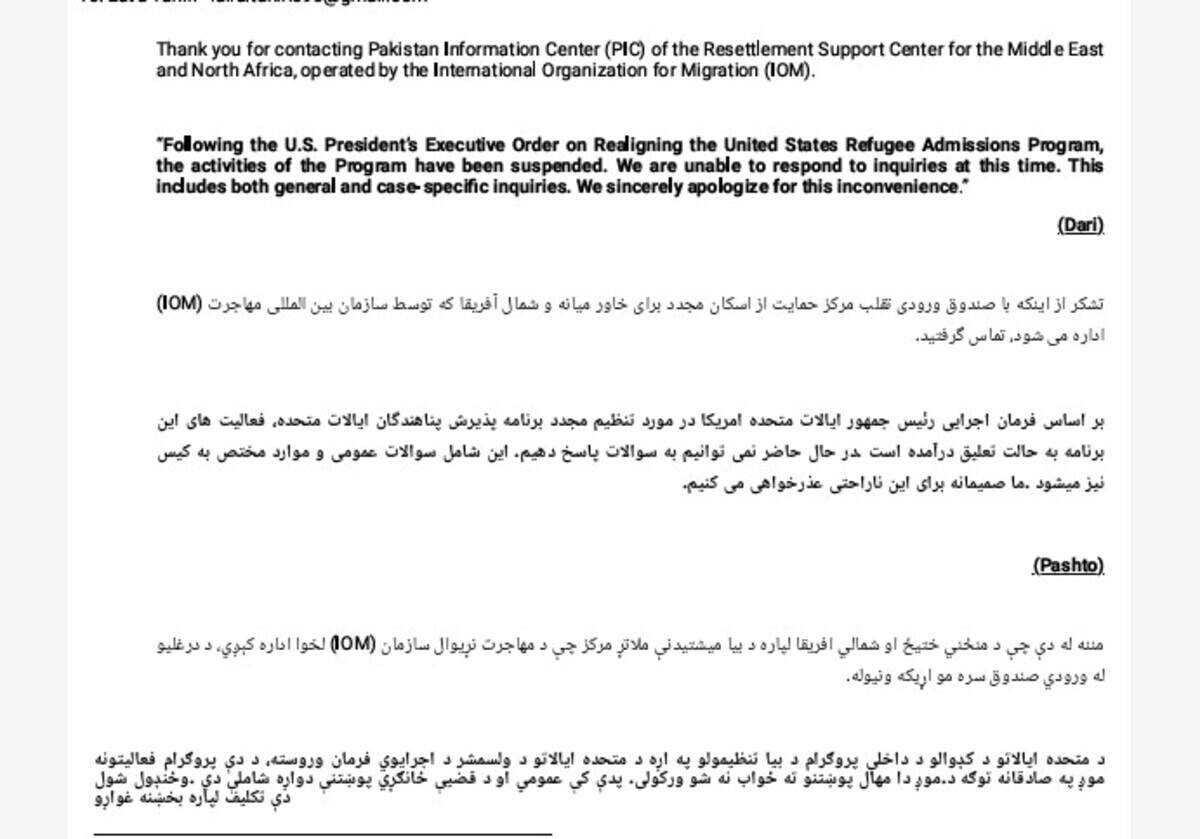
But then on Feb. 3, the family received a letter from the International Organization for Migration: The activities of the U.S. Refugee Admissions Program had “been suspended.”
Tahiri broke down when the email arrived. They talk but by phone. But it’s been eight years since Tahiri has physically been with her family.
“I almost lost my hope,” she said. ”Nothing is clear right now.”
Dark life without mom
The same holds for Evarist Peter, 23, who, along with his younger brother, arrived in Kansas City in December 2022 from a refugee camp in Tanzania. A sister and brother would also come. Peter now lives in Gladstone.
“I was born in Tanzania, but I am Congolese,” from the Democratic Republic of Congo, Peter said.
Violent clashes between Congolese armed forced and various militias have wracked the country for decades, displacing millions of people, including Peter’s parents.
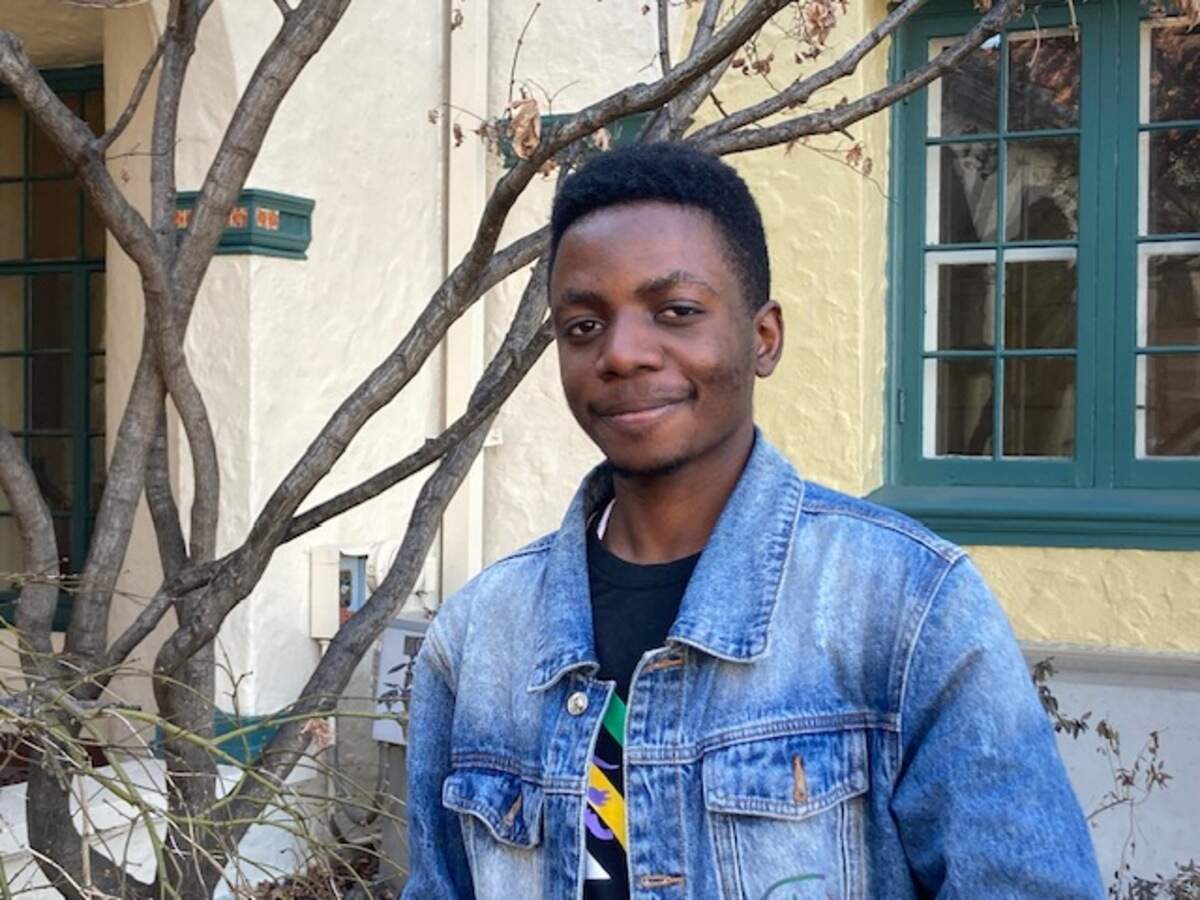
“I was born as a refugee. I was raised up as a refugee. I got the opportunity to come to America,” he said.
Speaking mostly French and Swahili, he quickly learned English. He’s now a student at Penn Valley Community College while also working part-time fulfilling orders for Amazon.
Left behind, he said, are his parents and five siblings. Although he hopes that the refugee resettlement program will recommence after the 90-day suspension, he also knows that it may not happen and that years more could pass before he sees his mother, brothers and sisters again.
“Because you know life, I will say home, without mom is dark,” he said. “It’’s something dark, you know. Life is so dark without father.”
The news that they won’t be coming, he said, came hard.
“If somebody expected something and it happened differently, it is painful,” he said. “Painful.”
Meek of Mission Adelante said their organization was expecting refugees from Venezeula. Della Lamb said the same.
“We were supposed to start receiving people last week,” said Sarah Kolsto, Della Lamb’s refugee services director. “And the way it works is that our clients (before arriving) basically get rid of all of their earthly belongings. So that’s what they all did.”
‘We have to live with hope’
Refugee organizations were aware that immigration and refugee resettlement would change in the second Trump administration.
In January 2017, during the first days of his first term, the president signed an executive order that banned travel to the U.S. for 90 days from seven predominantly Muslim countries. The order sparked protests across the country and it was challenged in court. But in June 2018, the U.S. Supreme Court, in a 5-4 decision, ruled that such a ban was Constitutional and within the president’s power.
Singer, at JVS, said that during the first Trump administration refugee resettlement in the Kansas City area dropped precipitously.
In 2016, the last year of Barack Obama’s presidency, JVS resettled 600 refugees from a dozen countries into the Kansas City area. By the end of Trump’s first term, the number had dropped to 80 individuals, most of them Christian and 80% from the Democratic Republic of the Congo. By the end of Joe Biden’s presidency in 2024, the number had returned to 650 people from a range of countries including Congo, Afghanistan, Syria, Somalia, Iraq, Venezuela and others.
“We were anticipating with Trump something similar to what the administration did during his first term,” Kolsto of Della Lamb said. “He came in saying, ‘OK, we’re not going to let this many refugees in.’ He lowered the ceiling. So we were anticipating that.
“But what he did in this round, it’s really, really extreme and chaotic. He’s not only completely cut off refugee arrivals for a minimum of 90 days, he’s also stopped funding. That includes funds for clients to pay rent and utilities, give them pocket money for those first three months while they’re looking for employment. It included case management support. We receive funding to provide salaries for our case managers. We haven’t laid anybody off at this point, but we are having to find private resources to continue to support these people.”
That’s currently where Kansas City’s refugee resettlement organizations stand — reaching out to private donors to help support and provide services to the refugees who just recently arrived. In it’s last fiscal year, Della Lamb resettled 362 individuals. This fiscal year, before the stoppage, it had been slated to resettle 530.
“I can say with probably a pretty good degree of certainty that even if they kind of restart this program,” Kolsto said, “it’s not going to be anywhere near the capacity that we were at, right?”
Meanwhile, refugees like Tahiri and Rahimi are left waiting and hoping.
“We have to live with hope,” Rahimi said. “Without hope, nobody can live. We are still trying to be strong.”
This story was originally published February 13, 2025 at 1:27 PM.