
Does Kansas City have a full staff of air traffic controllers? What the numbers say
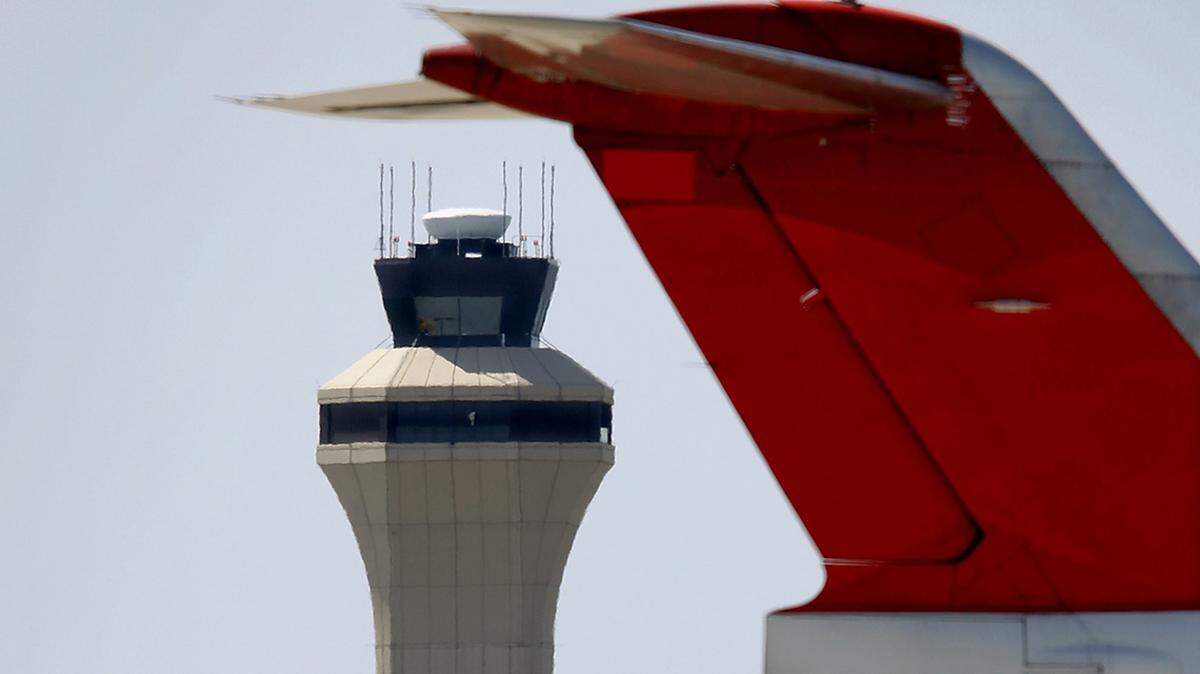
Amid national calls for more air traffic controllers, Kansas City International Airport’s air traffic control appears to be adequately staffed, according to a Federal Aviation Administration document from 2023.
Those calls have been amplified by concerns raised by the deadly mid-air collision near Washington, D.C.’s Reagan National Airport on Jan. 29, when American Airlines flight 5342 from Wichita was hit by an Army Black Hawk helicopter on a routine training mission, exploding into flames before plunging into the icy Potomac River waters. All 67 people on both aircraft were killed.
A preliminary FAA internal report said staffing at Reagan’s air traffic control tower was “not normal for the time of day and volume of traffic,” with one controller working two positions. But some airports have been operating at reduced staffing levels for years, according to FAA data.
In Kansas City, however, an FAA air traffic controller workforce plan showed the airport, known as MCI, has 39 controllers and controllers in training, surpassing the staffing standard set by the FAA, which is 26. The FAA bases its staffing standards for each airport on controller workload, traffic volume and facility staffing needs.
The statistics are also compared to targets set by a higher target goal agreed upon by the Collaborative Resource Workgroup (CRWG), a group including the FAA and controllers union. This target indicates an optimal level of staffing that workers prefer.
In 2023, MCI fell just shy of reaching the CRWG target of 40 controllers.
Kansas City’s air route traffic control center, however, is not as equipped as the international airport.
The center that’s located in Olathe, which guides aircraft through the region at high altitudes between plane approaches and departures, is approximately 83% staffed with 199 controllers on board; 35 controllers short of the FAA’s target of 234 and 42 controllers short of CRWG’s target of 241.
The staffing numbers are from September 2023, the most recent year made available.
The Star’s requests to gather more recent statistics from Kansas City leaders were denied. The Star was told to ask the FAA for hiring numbers, which provided just the 2023 workforce plan.
Wichita, Kansas’s tower is nearly 75% staffed to CRWG’s standards with 29 controllers on board. 40 is the CRWG target, while the FAA’s target is 30.
More overtime, fewer controllers nationwide
A 2023 report commissioned by the FAA found that overtime was at a “historically high level” and that, despite the increasing complexity of American airspace, there were about 1,000 fewer fully certified air traffic controllers in August 2023 than in August 2012.
The report blames several factors, including budget cuts in 2013 that suspended hiring for 10 months and the COVID-19 pandemic, which paused training for eight months. It also notes that the 1981 air traffic controller strike — which prompted President Ronald Reagan to fire the strikers — led to a wave of new hires who retired between 2005 and 2007.
Larry Richards, a former FAA safety inspector and president of LCR Aviation Consulting, said capped government salaries are also part of the problem. Pay rates for FAA employees are capped at $225,700, according to FAA documents.
“The highly skilled and highly educated individuals can make more money working for the industry,” Richards said. “So they jump to the industry side.”
In Kansas City, FAA academy graduates start at a yearly salary of just over $55k. Controllers receive increases as they progress through the process of becoming fully certified, depending on their progress and certification level. Pay bumps occur when controllers complete quarters of their training before becoming fully certified.
Certified Kansas City controllers make a minimum of over $72k. The maximum salary they can earn is more than $209k at the highest level, a level that takes years to rise to.
Richards said the process of becoming a fully certified controller can take two to three years.
Nationwide, the FAA implemented mandatory overtime to cover short-staffed facilities. More than 40% of air traffic controllers regularly work six-day workweeks, according to the controllers union in Dec. 2023.
On Jan. 28, the White House offered buyouts to 2 million civilian full-time federal workers as part of a “deferred resignation program”. Federal public safety positions, such as air traffic controllers, are exempt from the buyout after controllers previously received early retirement letters.
Richards believes the government’s efforts to reduce its workforce will backfire as they attempt to pick up the pieces from the deadliest plane crash in recent U.S. history.
“Shorting by positions, I think is a crucial mistake,” Richards said. “There’s a reason why [air traffic controllers] have a 20-year retirement. If you’re on the scope for 20 years, you’re gonna retire. While you still have your sanity.”
Matthew Kelly, Jonathan Shorman and Daniel Desrochers contributed to this reporting.
This story was originally published February 4, 2025 at 5:55 PM.