Former DOT official says Army helicopter likely caused deadly Wichita plane crash in DC
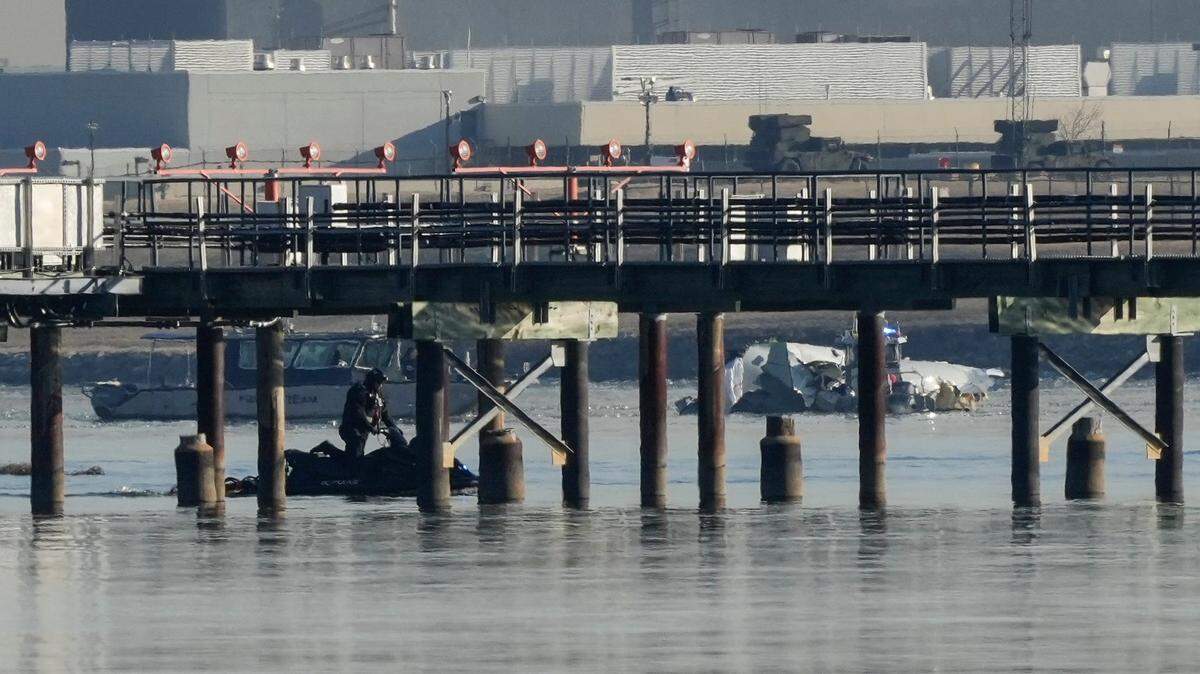
Mary Schiavo was horrified when she saw the video Wednesday night of the collision between an Army Black Hawk helicopter and an American Airlines plane over Washington, D.C.
The former inspector general for the U.S. Department of Transportation had flown to the D.C. area on business on another American Airlines flight and left Reagan National Airport less than an hour before the crash.
“It’s terribly tragic, and it’s just heartbreaking,” Schiavo told The Star. “It’s hard to watch. It actually makes me ill.”
American Airlines Flight 5342 was approaching Runway 33 at Reagan National Airport in Arlington, Virginia, when it collided with the military helicopter over the Potomac River at about 8:48 p.m., according to the Federal Aviation Administration. The crash produced a fiery explosion that left no apparent survivors and debris from both aircraft scattered in the frigid and choppy water.
Schiavo, a former assistant U.S. attorney in Kansas City and DOT inspector general from 1990 to 1996, said it appeared the helicopter caused the crash.
“The commercial aircraft was cleared to land and on the landing path,” she said. “And at Reagan National, federal aviation regulations say you can only fly a commercial passenger service under air traffic control service. You can’t just go eyeballing it, winging it. That’s the law.
“So they had the clearance, they had the airspace. When the tower asked the helicopter, ‘Do you have the plane in sight,’ it was clear they were flying by visual flight rules. I think the collision happened, as best I could tell from the radar, at 350 feet. The helicopters are supposed to be below that. They’re supposed to be under 300 feet. So they were too high, and they didn’t have the traffic in sight.”
The videos of the crash show another plane nearby, Schiavo said.
“So there were two aircraft lights in the air,” she said. “It’s possible they saw the other aircraft and thought that’s the one they were supposed to watch.”
It’s common, Schiavo said, for helicopters to fly under visual flight rules because they fly so low.
“I’ve thought to myself, ‘So why don’t they have good traffic alert systems and collision avoidance systems and all that?’ But you know, when it’s a really crowded airspace, a lot of times unless it’s required like on a commercial service aircraft, pilots turn it off because you just get constant false alarms.”
Schiavo, now a transportation lawyer and safety advocate, said the weather conditions Wednesday night weren’t ideal.
“It was ridiculously cold, with wind and chop,” she said, “but the weather had nothing to do with the accident.”
The National Transportation Safety Board, which investigates plane crashes, should have a preliminary report out quickly, she said.
“I think they will have the answers fairly soon to the ‘what,’” she said. “The ‘why’ really takes a better national transportation policy. We have known for at least two years that near-collisions, near mid-airs and runway incursions, were dramatically on the rise. And I think we had a record number this year. And we know this, and we just keep tinkering around the edges. We just say, ‘Oh, we’re going to pay attention to this or pay attention to that.’”
Overcrowded airports a serious concern
What really needs to be addressed, Schiavo said, is overcrowded airports.
“We stuff most of our airline traffic into about 30 airports,” she said. “We have 5,000 commercial-use airports.”
And now, she said, drones are escalating the problem.
“We just need a better, more sensible transportation policy, and that’s going to mean telling some people ‘no,’” she said.
When Dulles International Airport opened in 1962, Schiavo said, Reagan National was supposed to close.
“But everybody liked it for the convenience,” she said, “and of course, Congress and the Senate, they all have their perk parking places there. And it didn’t close, and then the number of flights that were allowed to be there also increased over time. At certain times, that main runway at Reagan is the busiest runway in America. And it wasn’t supposed to be that way.
“Anybody who has spent time in D.C., the sky is always full of helicopters. And no one’s willing to say, ‘No, we just can’t have this’. So I hope that we have a sensible debate about spacing aircraft. How much can this airport really tolerate?”
The crash will have two investigations, Schiavo said.
The NTSB is always in charge of the civilian aviation investigations, she said, and the military has its own investigation board. The two will have to cooperate, she said, and because the crash involved civilian deaths, the military “will have to be subservient to the NTSB.”
“I worked many military crashes, and they issue their own reports, and then they issue a report that doesn’t become public about what are they going to correct within the military to make things better,” she said.
Schiavo said the change in administration this month, with President Donald Trump appointing new transportation and defense secretaries, should not impact the investigation.
“The NTSB is really pretty nonpolitical,” she said. “I don’t think politics will have any role in this.”