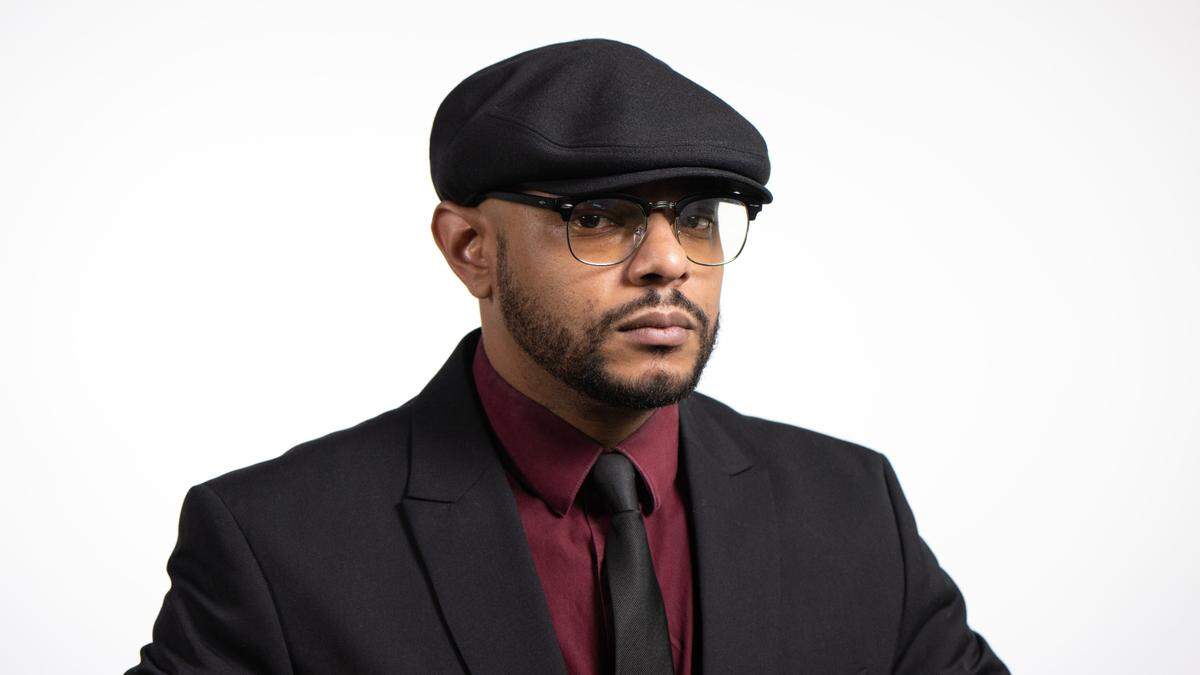
Kansas City performer embraces his love of puppets to create ‘pockets of peace’
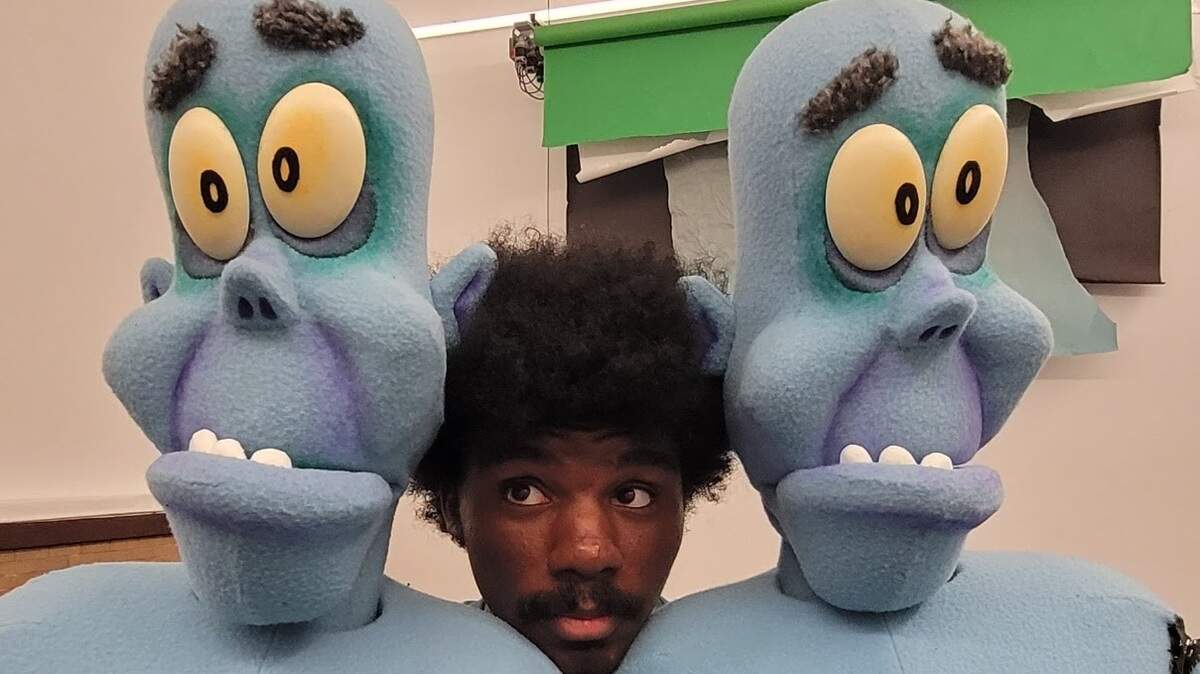
Like a lot of young children over the last 70 years, when Zachery Garner was a kid he developed a passion for puppets and watching all the educational antics of puppeteer Jim Henson’s Sesame Street and Fraggle Rock muppets.
Puppets, and the way the colorful characters tell stories, captivated young Garner. By the time he was in second grade, he started taking his first steps toward mastering this intricate craft. Garner studied YouTube tutorials, read books on the subject, and made his first puppet with a sock.
Despite a passion for puppetry that he had cultivated over years, Garner faced uncertainty about whether to pursue it as a career. But when he entered college and focused on theater, his passion for puppetry was reignited. That’s when Garner began to seriously consider a future as a professional puppeteer.
Today, Garner has established a successful career as one of the few Black puppeteers in the country.
At 25, he’s leading the charge to advance the art of puppetry in Kansas City, an endeavor fueled by a recent visit to the Chicago International Puppet Theater Festival. Regularly Garner incorporates puppets into his stand-up comedy, theater productions and social media content. And said he is grateful for an opportunity to elevate puppetry to new levels.
Recently he sat down with The Kansas City Star’s culture and identity reporter, J.M. Banks, and talked about his love of puppetry, using puppets as a way to tell a story and the stresses of being a puppeteer.
Banks: Can you begin by telling me about your early life and upbringing?
Garner: I am one of nine children and the youngest boy in my family and some of my earliest memories growing up are watching television or movies and pretending.
I also remember just making up songs about my day or whatever. I watched a lot of puppet related content like The Muppet Show, Sesame Street and Fraggle Rock were always on in my house. My parents would buy me all these Muppet VHS tapes and I don’t know why specifically, but I would sit down and watch them regularly.
At the time I had no idea what a puppeteer was but I was just mesmerized by it and the characters and the songs. Fast forward a little and I discovered that puppetry was a thing that you can do. Around the third grade I made my first puppet. I was home, bored and really into drawing at the time so I was like how do I learn how to draw an animal. I would go to the computer and type in how to draw whatever animal and there was this website called Our Activity Kids TV, or something that doesn’t exist anymore. There were a whole bunch of categories on there and one was like a basics on sock puppets. My first puppet was a bat and his name was Batty. Very original.
When did you decide that you wanted to become a full-time puppeteer?
I didn’t really considered it to be a like a career until maybe my senior year of high school. I’ve always wanted to do it as a job but I was like, how many puppeteers do I know? Realistically, I thought, I might go into character design or into theater as an actor, writer or director. I still loved puppetry but I am just going to add it on top of these other things. Around my freshman year of college I started really thinking that I want this to be my job and I want to do this forever.
How did you learn the craft of being a puppeteer?
It was maybe the second or third grade when I really started to learn about puppetry through YouTube. I watched other puppeteers talking about building (puppets) and how to perform.
I watched a lot of those videos and went down the rabbit hole for hours. I learned the basics from watching old behind the scenes videos and reading about puppeteer techniques. I started to learn about the great puppeteers like Kevin Clash who was the first Black muppeteer and the original Elmo. That was my puppetry school.
I got to learn hands on with Paul Mitchell Puppets, now called What If Puppets. That was where I learned the physical fundamentals of puppetry and got to use all the things I learned on YouTube through the years. So, there I really got to learn my own technique and learned about the specificity of characters — how everyone is different, playing multiple characters and keeping track of their voices.
What are the ways you utilize puppets as an art form?
I tell people a lot that like puppetry is just a medium in which to tell stories and some stories lend themselves to puppetry, and some stories don’t. Puppetry allows for stories to weirdly feel more dimensional and there are more layers. I do everything except for like really raunchy puppet stuff, that just feels like it’s been done. I am not going to belittle any performers who do it because they usually do it in a way that is elevated but that is just not for me. I think puppetry is something that can be used for education or for entertainment and I think that teenagers are underserved in the puppetry world. It is evident, with animation, that group really wants something fantastical and don’t mind something weird or absurd or ridiculous.
What are the challenges that you face in your career?
It is very physically demanding and I am not the most healthy person. I do not eat and I do not treat my body well. I would say every smart puppeteer would tell you that you need to stretch, you need to warm up and cool down. You need to take care of your body, eat right and exercise and I am like, I am ok. I will put Icy Hot on my shoulder and I will be fine. It can also be psychologically straining. I am also a puppet builder so I am building puppets regularly and staring at what I made and making edits in my brain. At the end of the day I can really be whipped out because it is both physically and mentally taxing.
What is the most fulfilling part of your work?
Talking to anybody about the magic of puppetry or theater. Performing is fun and wonderful and building puppets is also wonderful but God blessed me so that I am in spaces where people don’t just recognize my talent but they recognize me. Which is weird because puppertry is kind of a job of anonymity. No one knows who you are but they know the characters you perform. I am always caught off guard when someone says “hey, you are the puppet guy,” and we sit and have a conversation about the show that I did or puppetry and how much they want to see more. That is always the most rewarding part to me.
Do you have a personal motto or philosophy that guides you?
I guess I have kind of a philosophy, I’m a religious person and I pray often to create pockets of peace for people. I believe that me performing in front of people for people and giving them peace for even an hour or getting to act a complete fool in front of them and giving them a sense of peace because they’re able to forget about whatever they are dealing with at home, work or with themselves. They get to forget about it and just enjoy the entertainment.
What are your organization’s goals for the future?
I would like to produce a high quality Christian puppet show. I want to create a puppet show that people enjoy and create a puppet show that caters to that teenage demographic who isn’t watching TV anymore. I want to create a mainstream puppet show that isn’t the Muppets of Sesame Street. They are wonderful, do amazing work and have inspired people for generations, but there are more things out there and I want to shed light to that.
What advice would you give to someone who is looking to follow the same career path as yourself?
My advice for someone who wants to go into puppetry is to just make the puppet. Don’t get hung up on if it’s going to be good or if people are going to like it. Speaking from personal experience, there’s no way to get better than to just start. It is never too early and it is never too late.
For more stories about culture and identity sign up for our free On The Vine newsletter at http://KansasCity.com/newsletters.
This story was originally published January 23, 2025 at 5:00 AM.