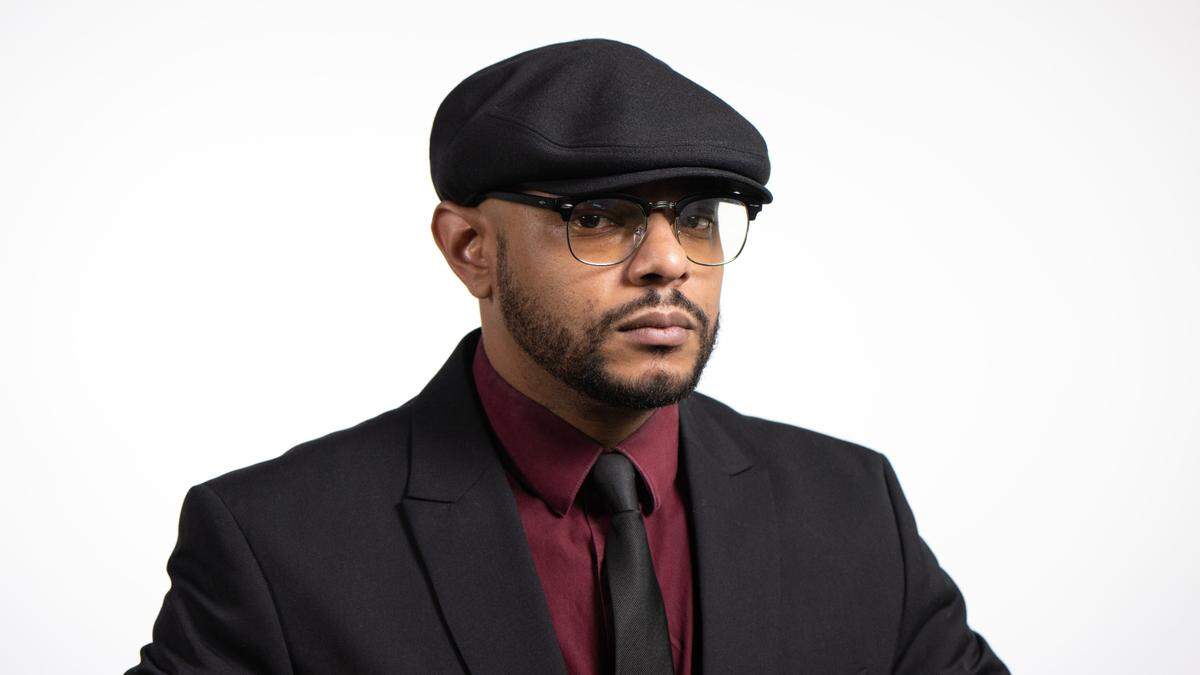
White parents of Black KC non-profit CEO named him Martin, to honor MLK and service
.jpg "Earl Martin Phalen")
Earl Martin Phalen, a Black man, grew up in an all white family in a small town outside of Boston. His biological mom was a kid when she gave up her baby for adoption.
His adoptive parents, who were inspired by the strength of people participating in the Civil Rights Movement of the 1950s and 1960s, like the Freedom Riders, wanted to do something to make a difference, something life changing.
After his adoptive mother read an article about the plight of Black boys left in the foster-care system, she decided this was how they would make their stand. This act of love from his adoptive parents, changed the life trajectory of Phalen, who was raised in a house of love where he was taught the responsibility of service to the community. Growing up he always knew that some how his life would be tied to service.
Fitting that since his parents were so moved by the civil rights cause and the leaders of that movement, they would bestow upon Phalen the middle name Martin, in honor of The Rev. Martin Luther King Jr.
Their son did not disappoint. Phalen sought the place where he could be most at service and went first into education and later nonprofit work. Today he runs a non-profit with a mission of service and changing lives.
His journey brought him to Kansas City three years ago to serve as CEO of Great Jobs KC. In that position Phalen has concentrated on empowering metro residents with well-paying jobs in an effort to help them avoid poverty.
Banks: Can you begin by telling me about your early life and upbringing?
Phalen: I was born to a teen mom who realized she was not able to raise me so she placed me into foster care. I went into my first foster home in 1967 and my second in 1968. There was a front page article in The Boston Globe that said that 70% of Black boys in the Massachusetts foster care system would end up in the prison system before they were 20 years old. So my adopted family George and Veronica Phalen had seven children and my mom had wanted to go and be a Freedom Rider to address the social injustices happening.
My mom and dad spoke and being a Freedom Rider was dangerous and he told her he didn’t want her to do that. When she read that article she said she wanted to adopt because we have a lot of love in the family and in our heart so let’s adopt a Black boy and address this issue. So, I was adopted by the Phalen family at age two and grew up in an all white family in a small working class town called Noland right outside of Boston. That experience really shaped my values and my life was completely changed.
Can you tell me about the work your organization does?
Our work here is really focused on helping adults in KC realize their economic potential. Great Jobs KC has a scholarship program that awards $50,000 college scholarships to 1000 young people every year. We also provide support through our scholar advocates who help our scholars choose the right school and the right major. All of our kids go to schools in Kansas and Missouri and have 23 different campuses.
Our scholars are graduating at a 70% rate from college and most are first generation low income students. Then there is our Great Jobs KC program for anybody 17 or older who wants to get short term training that will lead to a better paying job and we generally define that as $45,000 to $125,000 a year plus benefits in that program.
That program started only two years ago and we have over 7,000 people enrolled and over 2,000 of our graduates have secured better jobs, making about $24,000 more plus benefits.
What made you want to go into this particular areas for a career?
I have been in this role for three years and there are two things that made me want to work with this organization. First when I arrived we just had a scholarship program and I felt like in my 30 years of education that was one of the best scholarship models I have ever seen. I felt like I could help expand the program.
We saw that 50% of the high school graduates are choosing to go right into careers so they asked me to build a program. I was excited at the opportunity to make a program that didn’t require a college degree but still allowed for individuals to get a good paying job.
How do you feel that the Great Jobs KC organization builds on the dream of Dr. King (Martin Luther King, Jr.)?
As you look at the end of King’s life he launched the Poor People’s Campaign. The goal of it, among many things, was fair wages for Black individuals, women and other immigrant groups. The second part was to help a million Americans move from poverty or unemployment into jobs that allow them the dignity of work and the ability to take care of themselves and their families.
So Great Jobs KC is directly aligned with Dr. King’s Poor People’s Campaign and we work with folks who are either underemployed or unemployed by helping them get a family-sustaining job.
How do you feel the legacy of Dr. King has most inspired you?
My birth mother named me Earl and I was adopted into the Phalen family, but my parents gave me the middle name Martin. King’s life of being a servant, leader, a drum major for justice and a voice for those who are voiceless has always been my North Star which I aspire to. To have this deep commitment to justice, equity and fair treatment of all.
What are the biggest challenges that you face in your career?
One of the biggest challenges we have right now is raising more resources. We are helping a thousand adults per month sign up for the Great Jobs program. So the biggest barrier for us is making sure we have the resources to change their lives economically and to empower them.
How do you feel your work impacts the community around you?
Every negative outcome in life is associated with poverty. Someone who is raised in poverty will generally have a worse education, child mortality rates, health outcomes, obesity, shorter life spans and generally this is in the communities where violence is most prevalent.
The Great Jobs program gives folks the power to choose. They now have a choice in the school their children go to and the quality of education that child gets. They will have access to more nutritious food and live in safer neighborhoods. Giving economic freedom to parents allows them to transform all of those outcomes that I talked about before. When parents have the dignity of work it has an impact on them and an impact on the next generation.
Do you have a personal motto or philosophy that guides you?
I grew up Roman Catholic, I am not any longer but we would go to church every Sunday and the story that my mother would lean into was the story of a Good Samaritan. The short version of the story is there is somebody on the side of the road, they’re clearly disabled or injured and one person thought If I go and help that person, maybe they’ll try to jump me or maybe they’ll try to steal my money. But the Good Samaritan asked if I don’t help what will happen to that person. So that is the mantra that my parents instilled in me, that it was my duty to help.
What are your organization’s goals for the future?
I would like to help a hundred thousand adults in the next seven years and move them from economic insecurity to prosperity.
What advice would you give to someone who is looking to follow the same career path as yourself?
Know your why. Because the work is incredibly hard, there are setbacks like in anything and obstacles that you have to overcome and you have to be grounded in a strong reason of why you do this work. Then you can fight through and persist and organize. I think the second piece is for those going into this line of work is figure out your revenue model and how to scale your work in a way that is consistently funded to meet the demand that the community has for the work that we’re trying to do.
For more stories about culture and identity sign up for our free On The Vine newsletter at http://KansasCity.com/newsletters.