
See how these home movies from almost 100 years ago promoted KC’s latest tech gadget
It seems surprising, but home movie making is more than one hundred years old. Kodak introduced the first 16-millimeter camera for consumer use in 1923.
These days, collectors like Joe Tomelleri scour the internet in search of vintage camera gear and old film reels, many bearing images that haven’t been viewed for decades, if at all.
Tomelleri admits that sometimes what he buys turns out to be little more than “Billy eating an ice cream cone on the front porch.”
But recently, the Leawood resident (a scientific illustrator by trade) struck the mother lode.
Much to his amazement, some unmarked film canisters he’d purchased on eBay were chock full of moving pictures from Kansas City in the 1920s and 1930s.
Those images are the centerpiece of The Star’s five-part video series, “Reel Rare: Found Films from Old KC.”
Our final installment of the series focuses on another of the era’s emerging technologies—radio.
According to Chuck Haddix, curator of UMKC’s Marr Sound Archives, KDKA in Pittsburgh acquired the first government radio license in 1920. “Two years later,” he says, “there were four licensed radio stations. The next year there were 576.”
Kansas City jumped into the new tech wholeheartedly. Haddix points out that the Coon-Sanders Nighthawk Orchesta, broadcasting live from the Muehlebach Hotel on WDAF billed itself as “the band that made radio famous.”
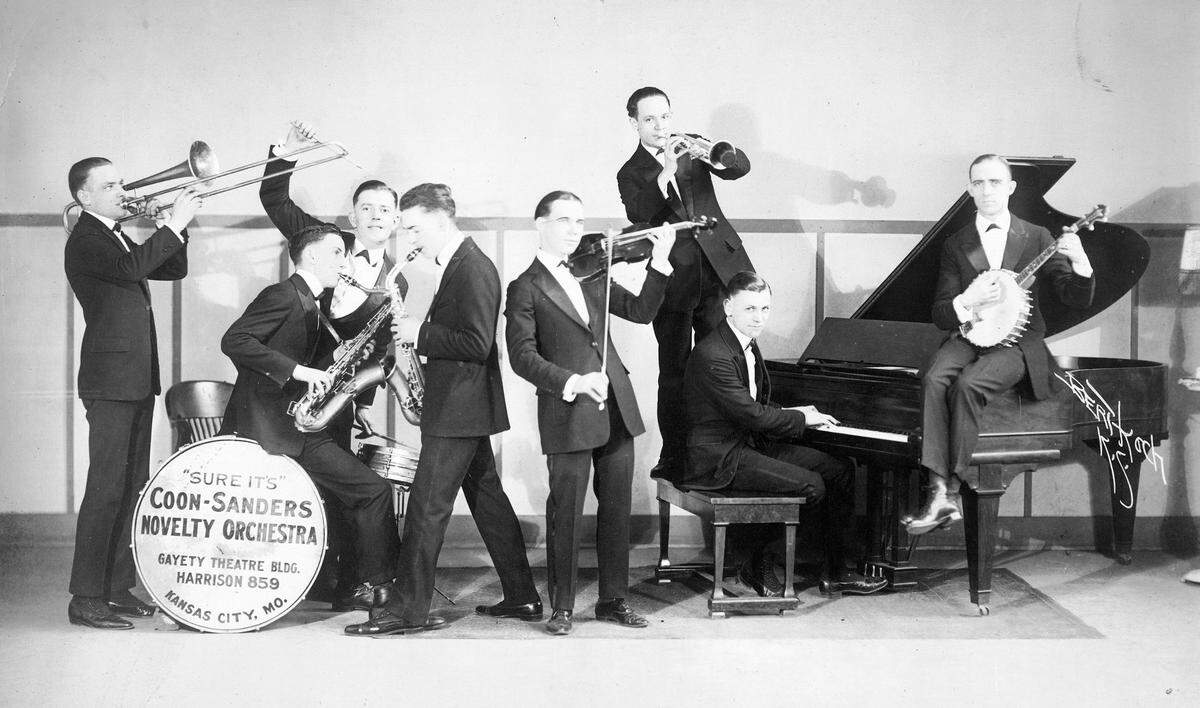
WHB also sent Kansas City jazz across the country from its broadcast towers atop the Sweeney School near Union Station. The station’s antenna can be seen in one of the films.
Another of Tomelleri’s reels includes what looks like an early (and silent) infomercial for the Sterling Radio Corporation at 1515 Grand Boulevard. The store’s owner Thomas Benton Lee and a group of salesmen mug like madmen around a large Majestic radio out front on the sidewalk.
Later, that radio hits the road—first appearing with some circus folk, then heading to Muehelbach Field for a pregame ceremony on the diamond. Apparently, Sterling was bestowing radios on the most popular Kansas City Blues players at the 1929 Little World Series.
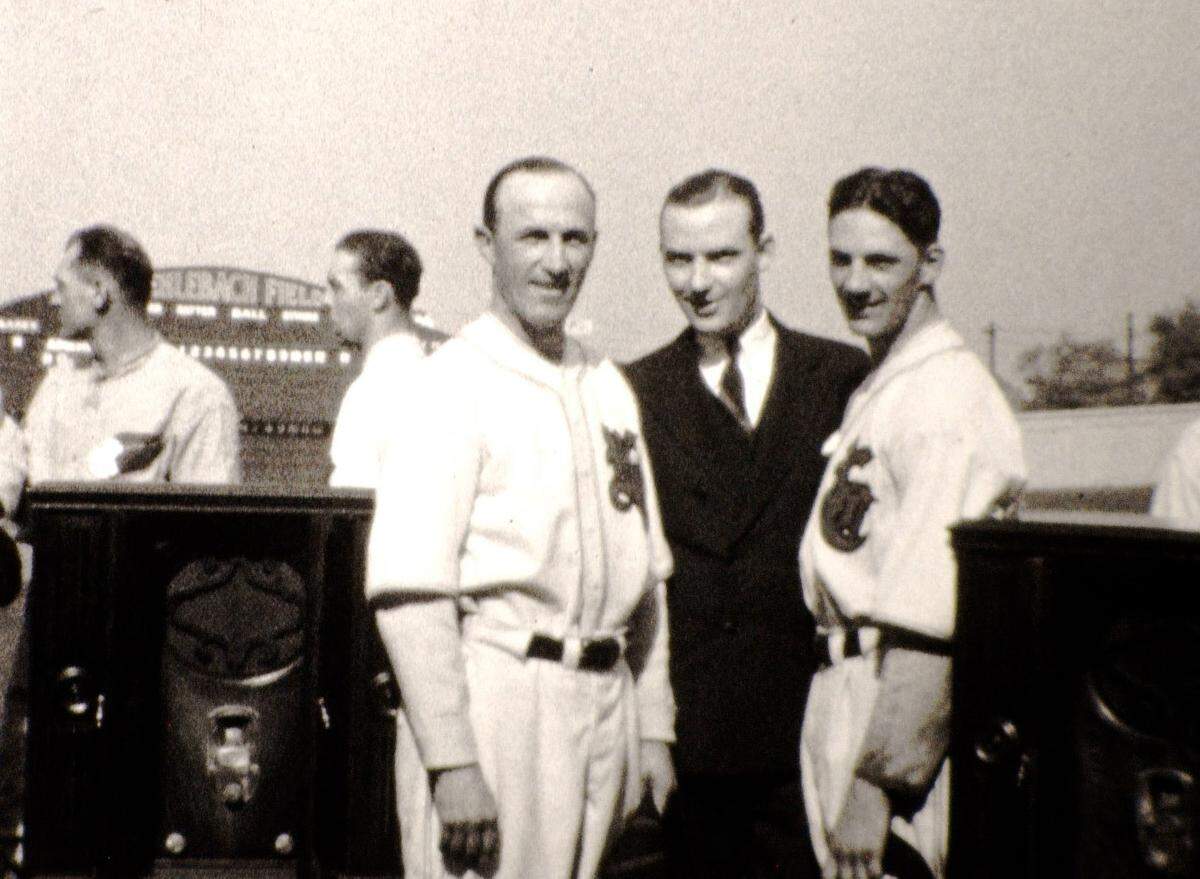
That footage also helped us hone in on a possible answer to the inevitable question—who shot all this?
A simple title card at the end of the radio reel reads “Presented by Hanley Photo & Radio Shop.”
The store at 116 E. 10th Street was owned by Lawrence “Moxie” Hanley . As one of the city’s preeminent photographers, his connections could help explain the eye-opening access to circuses and ball games; and to the likes of Tom Pendergast, City Manager Henry McElroy, Governor Guy Park and the Ready-Mixed Concrete plant.
What’s more, Hanley’s obituary in 1965 included a photo that bears considerable resemblance to a man who shows up several times throughout the reels.
Still, Hanley wasn’t responsible for all of the films Joe’s found..
Many of the most thrilling images—the stockyards, Union Station, Petticoat Lane and the zoo—what Michael Wells, special collections librarian at the Kansas City Public Library, calls “slices of life,” were captured by someone else.
Tomelleri, using old city directories and dogged determination has deduced who it was. His research led him to Thomas Paul Humphrey, a University of Kansas graduate who owned the Missouri-Kansas Mercantile Company, and later joined the Amateur Cinema League.
“He took his movies with a tripod most of the time, “ Tomelleri said. “So his pictures are steady. And he knew how to pan the camera so there wasn’t too much motion. He did a really good job.”
Having trouble viewing the video? Watch it here.