Eric DeValkenaere’s sentence was commuted by Gov. Parson. Can he be a cop in KC again?
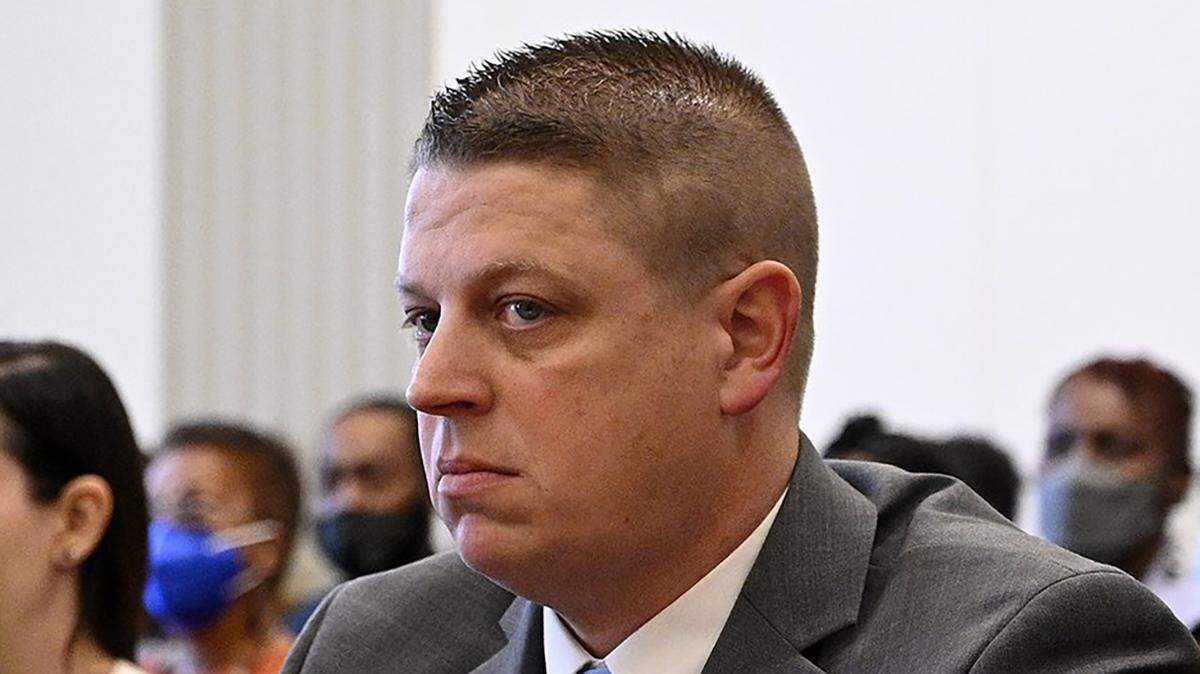
Five years after then-Kansas City Police Department detective Eric DeValkenaere fatally shot 26-year-old Cameron Lamb as he entered Lamb’s backyard without a warrant, he is set to be freed from prison on the order of Missouri’s governor.
Gov. Mike Parson on Friday, Dec. 20, commuted the prison sentence of DeValkaenere, currently serving six years in a out-of-state facility. The governor announced the commutation weeks before his time in office came to an end.
DeValkenaere received a commutation, meaning he does not have to serve his remaining prison sentence of about four years and 10 months. Instead, he will be on parole until October 2029. Parson’s order says that DeValkenaere’s parole could still be revoked if conditions set by the state parole board are violated.
DeValkenaere, 45, who is white, had been found guilty following a bench trial in Jackson County Circuit Court in 2021 on charges of second-degree involuntary manslaughter and armed criminal action. He shot and killed Lamb, a Black man, on Dec. 3, 2019, on Lamb’s property.
Lamb, 26, was backing his pickup truck into his garage when DeValkenaere fired several shots, killing him. DeValkenaere claimed Lamb was armed, but prosecutors have contended the gun found near him was planted.
Since Parson has commuted DeValkenaere’s sentence, can he become a cop again in Kansas City? Here’s what the law says about clemency.
What does commuting a sentence mean?
The action of commuting a sentence can be taken by a governor, president or administrative board for a person serving a prison sentence, according to the Missouri Department of Corrections. The executive can either free them or reduce their sentence as part of their powers of clemency.
Clemency is the process by which an executive may reduce a defendant’s sentence or grant a pardon, according to the Death Penalty Information Center.
There are four types of clemency, according to the Missouri Department of Corrections:
Full Pardon: It doesn’t remove the conviction from a person’s criminal record, but it restores all rights of citizenship and removes any disqualification or punitive collateral consequence stemming from the conviction without conditions or restrictions.
Partial Pardon: It provides limited relief and can take a variety of forms, depending on the circumstances of the person commuted. Restoration of rights is an example of a partial pardon.
Commutation of Sentence: It applies to a person serving a prison sentence. Full commutation frees them. A partial commutation may reduce the time they have to serve in prison to a lower level, but it does not free them.
Reprieve: It stays the execution of a sentence for a period of time. A reprieve cannot be granted until after a sentence has been imposed.
Since DeValkenaere received a commutation, rather than a full pardon, the collateral consequences of his conviction should still stand.
Can someone become a cop if they were convicted of a felony?
DeValkenaere was convicted of second-degree involuntary manslaughter and armed criminal action in the shooting of Lamb, both felonies.
Even after he is freed from prison and off of parole, it’s unlikely that he will be able to rejoin the police, according to Missouri statewide statutes.
Being convicted of a felony is a nonstarter for many law enforcement careers. State and federal laws prohibit people with felonies from possessing a firearm, usually a requirement of the job. Missouri law also sets certain standards for police officers to remain licensed by the Department of Public Safety, and officers face revocation of their state-issued licenses if they are even suspected of a crime in certain cases.
Section 590.090 states that a director can immediately suspend a police officer’s license if they were under indictment, charged or convicted of a felony. A recent job posting for KCPD requires that applicants not have any felony convictions.
The status of DeValkenaere’s license and the details surrounding the end of his employment at KCPD are not known, except that he was set to be terminated following his conviction, but the department would not confirm months afterward if it was a termination, retirement or resignation that led to his departure.
If he was terminated, the department’s guidelines state that former members will not be considered for re-employment if the termination was based on a disciplinary action.