After deadly dog attack, Kansas City officials call for city to take back animal control
A Kansas City Councilwoman is calling for animal control responsibilities to be taken away from KC Pet Project after a series of complaints about service and a deadly dog attack.
The nonprofit KC Pet Project, which operates the city’s animal shelter at 7077 Elmwood Ave., has handled Kansas City’s animal control duties under contract since 2020. It has operated the city’s animal shelter since 2012.
In a phone interview Wednesday, Third District at-Large Councilwoman Melissa Patterson Hazley said she has sponsored a resolution calling for the city to reclaim animal control services instead of renewing a contract with KC Pet Project.
Patterson Hazley said she has heard consistent complaints from constituents about KC Pet Project’s animal control services for the past 18 months.
“It’s been pretty significant feedback about response times, following through on consequences, making sure the community knows what the protocol is to report and what they need to do in order to remove a dog, particularly dogs, from an environment,” she said.
The news comes nearly a month after 46-year-old Chris Culbertson was mauled to death by a pack of dogs in the 3200 block of East 80th Street.
Many questions have gone unanswered about what police or KC Pet Project staff knew about the dogs in advance and what might have been done to prevent the attack.
In the four weeks since the attack, Kansas City police and KC Pet Project have not answered questions about where the dogs are now.

Patterson Hazley said Culbertson’s death was not the sole reason the decision was made, but she added: “I wish we could have done something sooner.”
In a written statement, KC Pet Project spokesperson Tori Fugate said the nonprofit was informed Wednesday about calls for the city to take back animal control responsibility.
“This announcement comes as a surprise and poses significant concerns for the continuity of services,” the statement reads in part. “We believe our professionally trained Animal Services Division is in the best position to continue providing the most effective and efficient services for residents and animals in Kansas City.”
Fugate said she believes KC Pet Project has proven its ability to deliver efficient and effective animal control services since they took over, managing over 15,000 calls for service each year.
KC Pet Project contract talks
KC Pet Project was given a one-year contract extension in May while the city put the new animal control contract out for public bid, Patterson Hazley said, but no other organizations applied.
Recently, the selection committee decided to recommend the city not go forward with a contract renewal with KC Pet Project, and Patterson Hazley is putting forward a resolution calling for the city take over again.
Kansas City Manager Brian Platt has 30 days to investigate what a transition would look like if the city decided to take back the responsibility of animal control and present it to the council.
“We’re getting a lot of complaints in all neighborhoods of Kansas City, about loose animals, about timeliness and about the quality of the response and making sure that we’re taking care of animals out in Kansas City and making sure that everyone can be safe,” Platt told KCUR. “We think that we’ve got an opportunity to improve the level of responsiveness and communication and service if we bring it back in-house.”
Patterson Hazley said the city council will be weighing in every step of the way if it decides to take back animal control to ensure a plan for streamlined communication with KC Pet Project, which will still be operating the city’s animal shelter, to avoid previous pitfalls.
“I want to commend the community for really keeping their foot on the gas and making this known that they wanted us to do something about it,” Patterson Hazley said.
“I think this is a bright spot for city government and am looking to hearing, if my colleagues support it, how we might be one of the best animal control services in the nation.”
KC Pet Project and animal control
The city sought to have KC Pet Project take over animal control starting in 2019, two years after an audit showed the city’s animal control division was too ineffective at rescuing animals, and suffering from poor communication and a lack of trust.
The audit said the city was inconsistent in writing citations and that, in a sampling of 25 cases of abuse or neglect, half of the follow-ups were not performed.
At the time, KC Pet Project was operating as the city’s animal shelter and gaining national recognition for its no-kill management. Relations between it and the city animal control were said to be strained and marked by communications breakdowns.
It was thought by some that having the nonprofit take over with its emphasis on educating the public and offering resources as a priority would be more effective.
An unprovoked deadly attack
Questions about animal control in Kansas City became urgent on Nov. 2, when a pack of seven pit bulls attacked Culbertson as he biked home in south Kansas City. The attack went on for 23 minutes as Culbertson screamed for help.
A neighbor who came out with a golf club hoping to scare the dogs off was herself seriously injured.
First responders struggled to get control of the dogs, eventually getting them away from Culbertson long enough for a paramedic to drag him to an ambulance. In the end, they put the dogs back behind the fence and left, his sister said.
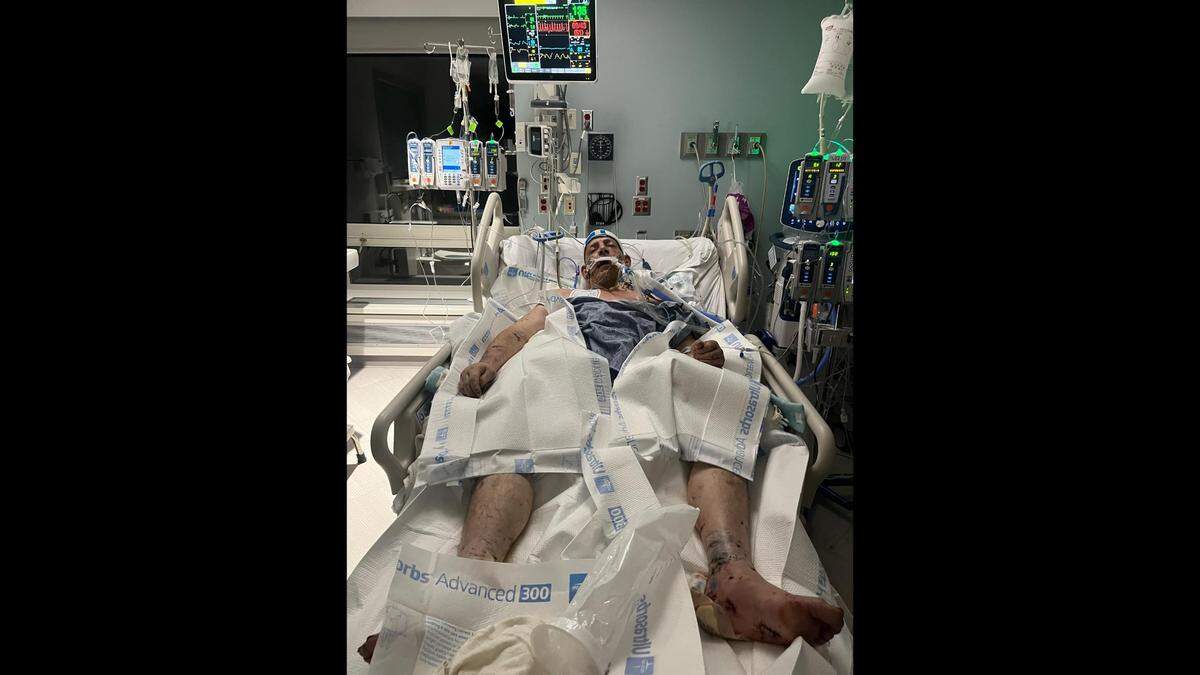
Had Culbertson not died Nov. 6, he would’ve needed to have his right hand and left leg amputated, live on dialysis and have a tracheotomy for the rest of life.
Philip DiMartino, spokesperson for the Kansas City Police Department, has said investigators are making progress and are in communication with prosecutors to determine applicable charges.
KC Pet Project reports
According to online data, officials in the Animal Services Division — operated by KC Pet Project — were aware of the potential danger these dogs posed for nearly two years before the fatal attack.
Starting February 2023, the Animal Services Division listed the same block each month as an area with dogs becoming a potential public safety concern.
According to their reports, when officers responded to the scene, the dogs were gone, so they frequently patrolled the area hoping to encounter the aggressive dogs.
Despite nearly two years of searching and over a dozen reports from neighbors, the division continued to list the block as an area of monitoring emphasis.
Search warrant dispute
As recently as 2022, there has been a disagreement between police and the city when it comes to who should execute search warrants for animal control.
Police then said they would not initiate, execute or provide assistance in the execution of warrants, even though Kansas City Mayor Quinton Lucas said city code required them to.
The role of Kansas City police has been to assist KC Pet Project and aid in enforcement — only taking over if an animal control administrator doesn’t respond to a scene in a reasonable amount of time, according to Kansas City ordinance.
The ordinance also states that if a dog bites a person or other domestic animal, they are to be impounded immediately by the supervisor of animal health and public safety, and afterwards put down humanely. An animal that can’t be caught may be killed by the supervisor or police if no other means of capture is successful and if the animal continues to be a threat.
But despite first responders and an Animal Services Division officer witnessing the pack of dogs attack Chris Culbertson, they did not confiscate the dogs, instead leaving them in their backyard after eventually getting them to back away by shooting one dog with a taser gun.
Police didn’t return until the next day, according to Angela Culbertson, Chris Culbertson’s sister.
Timeline: Animal control in Kansas City
2011: The KC Pet Project was founded by volunteers and animal welfare enthusiasts to run the city’s “dog pound”—a building nearly 50 years old originally intended to house the equipment used to build Arrowhead Stadium.
2012: KCPP officially took over the “dog pound” from city animal control employees. The group reduced the overall euthanasia rates for animals in the facility from over 60% to under 10%, and earned “No-Kill” status in its first six months of operation.
2017: Kansas City voters passed a measure that funded a new animal shelter to replace the “dog pound” building, which was in poor condition and too small for the city’s needs. The measure allocated $10 million in donations and $18 million of city money to build the KC Campus for Animal Care. Several audits showed that Kansas City’s animal control division was failing to properly enforce city ordinances, suffering from “poor communication and lack of trust.”
2019: Audit findings leads to City Council vote in August to turn animal control services over to the KC Pet Project.
2020: KC Pet Project officially took over animal control services for the city of Kansas City on Dec. 1. Construction on the KC Campus for Animal Care was completed, and the new shelter officially opened on Jan. 1, of that year.
The Star’s Natalie Wallington contributed.
This story was originally published December 4, 2024 at 3:27 PM.