‘This is infuriating’: Frustration sets in over small business break-ins in Kansas City
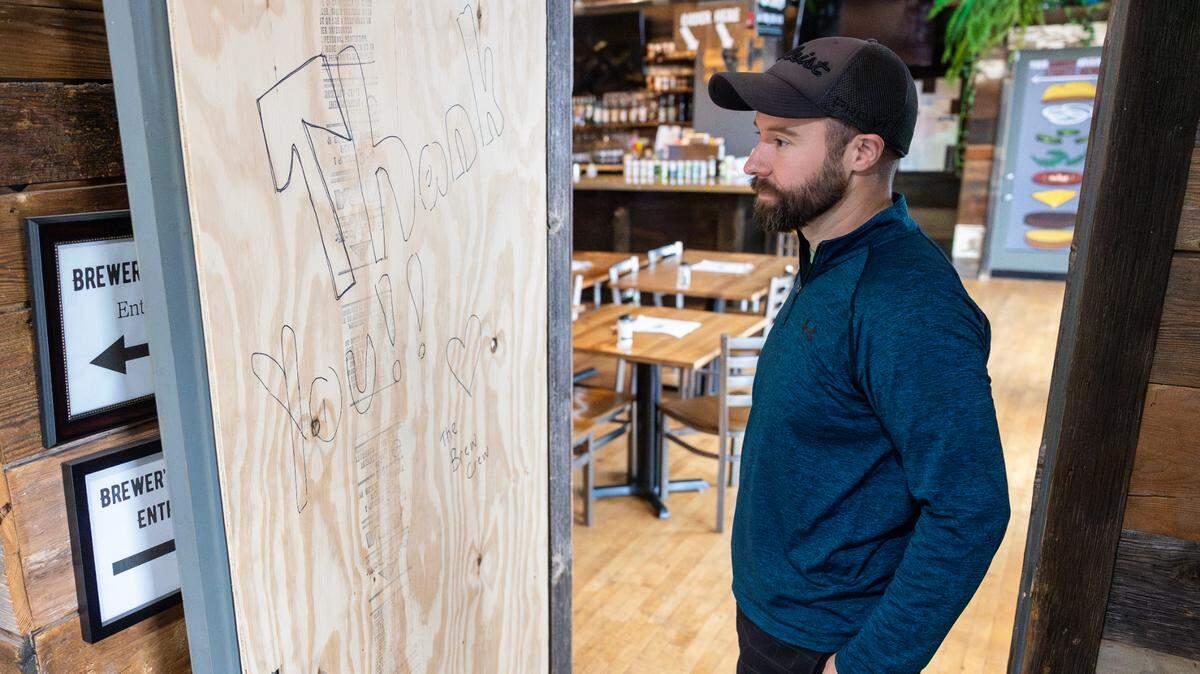
When Chris Riggins walked up to his restaurant and bar in Hyde Park in late August, a sinking feeling came over him.
The owner of Brewer’s Kitchen and Corner found the universal signature of a break-in: broken glass. His space, including thousands of dollars worth of liquor and other items, were still exposed to the world. He found someone had stolen a safe containing about $3,000.
A police card was sitting on the glass shards, left by someone from the Kansas City Police Department who had noted the break-in and left.
The situation felt violating. He felt alone.
“My building is sitting here unguarded, unprotected, completely open,” he said. “It just felt weird. I guess I was baffled.”
Since then, Riggins has wrangled with insurance, the frustration of working through the city’s Back to Business program, which city officials launched last month offering funds for businesses affected by property crime, as well as the feelings of loneliness and vulnerability that swelled in him following the incident.
He wished an officer had stayed to watch his space until he arrived, for some personalized interaction from the police, or support from someone, anyone.
Riggins and other owners of food and drink establishments in Kansas City who spoke with The Star described their frustrations with the recent spate of break-ins and property crime in the city, the financial and emotional toll those incidents have exacted and possible solutions they’d like to see the community pursue. They’ve dealt with broken glass and lost inventory, but also something less quantifiable that’s left behind — a sense of vulnerability.
With World Cup games and a swell of visitors coming to Kansas City in 2026, “We’ve got to get through this tough time to get to this huge economic boost,” Riggins said.
“If our city doesn’t support these small restaurants, all (visitors are) going to have is chains to eat at.”
Riggins also does restaurant consulting, and has plenty of connections throughout the city. He distills what he’s heard from others this way: “From my perspective, the vibe is that this is infuriating that this is happening, and it feels like small businesses are under attack.”
‘Making progress’
The frustration comes as Kansas City police say property crime is actually down by 3% compared to last year at this time.
“We’ve stepped up a lot of enforcement to address some of the property crimes issues in Kansas City and that’s been all across our city, there’s not one specific space,” Kansas City Police Chief Stacey Graves told members of the media following a roundtable discussion on public safety with leaders of community improvement districts (CIDs) in the city. A CID is a special local entity that can levy taxes to pay for improvements.
Graves said lately police have received “a lot of feedback” on property crimes in the downtown corridor, and said the department has renewed the use of its entertainment district plan, which deploys more officers in the downtown area during overnight hours.
In an email to The Star, Captain Jake Becchina, a KCPD spokesman, said the department began deploying additional officers in the city’s entertainment districts at the start of summer on weekends and is now continuing the strategy past the end of summer.
“It’s resulted in a lot of arrests,” Graves said. “Obviously prevention efforts, sometimes you don’t know exactly what you prevent, but we’ve seen a lot of good comments and a reduction in crime.”
Following the CID roundtable, Mayor Quinton Lucas said he understood the feeling that some in the city don’t feel as safe as they’d like, but said he felt the city is making progress on property crime.
“What Kansas City will never do is allow an era of smash-and-grabs to take over any business district in our city,” Lucas said. “You’ve seen that in other major American cities, you’ve seen that in other major American downtowns. We have ongoing investment in downtown Kansas City and other areas, I think because businesses and investors from around the country know we’re going to address it.”
A war on restaurants?
Alan Kneeland, who owns The Combine KC and serves as president of the Greater Kansas City Restaurant Association, echoed the sentiment expressed by Riggins, saying at the height of the recent stretch of break-ins it felt like a war was being waged against restaurants.
The most difficult moment of that period came in August, when well-known chef Shaun Brady was fatally shot outside his Brookside restaurant, he said.
“We just want to make sure that our city leaders are proactively trying to stop this,” Kneeland said. “If not, then a lot of businesses, I don’t expect to see them around.”
He pointed to the proposed detention space at the Kansas City Police Department headquarters downtown as a positive effort in pushing back on property crime, but more broadly would like to see city leaders open up to conversations with residents, business owners and groups as they look for fixes.
At times, he’s felt like the issue hasn’t been a priority.
Kneeland has heard from other business owners that the application process for the city’s Back to Business program was confusing and frustrating to work through. Some just gave up on the process altogether, he said.
“I don’t think this is just a conversation that city council or city leaders should just be having on their own and trying to solve by themselves,” he said.
Kneeland said business owners are excited to see how Jackson County’s new prosecuting attorney, Melesa Johnson, will handle the issue when she begins her term.
In the run-up to the Nov. 5 election, Johnson said she believed the office needed to ramp up property crime prosecutions, and said she planned to establish a new, focused property crimes division.
‘Why did this have to happen to me?’
Donutology owner Andrew Cameron got the call every business owner dreads in September.
Opening employees notified him that the business’s River Market trolley location had been broken into in the middle of the night by someone who had smashed open a pick-up window. Then a vandal shattered the door at the business’s Westport location in October.
The combination of the two incidents cost about $4,000, he estimated.
Cameron would like to see the community be tougher on crime, including more prosecutions and more officers doing patrols. He also wonders if a CID could be helpful.
“I think we’ve been through all the stages of grief at the moment,” he said. “We’ve been frustrated, we’ve been sad, angry, and right now, I’m just tired. I’m tired of it and maybe even a bit jaded with everything.”
PH Coffee in Pendleton Heights has been open for five years and has dealt with crime incidents around 12-15 times, including one in July, owner Eric Rosell said.
They’ve ranged from someone grabbing a tip jar and running off, to someone brandishing a weapon, to a break-in in July in which a group of three people smashed the business’s front door, made their way to the basement and stole a safe that contained about $8,500 in cash, he said.
“Quite honestly it just feels violating,” he said. “You feel like why did this have to happen to me?”
Rosell wants to see 911 wait times improved, and to be able to know personally the police officers who work in his neighborhood.
He also said he’s committed to building more connections in his neighborhood through events at his shop in a way that he hopes might cut into crime.
“Once you understand the person next to you and you know their name,” he said, “you know their situation and you see something happening to them or to their property, it’s quite easy to call somebody when you have their name and number, or it’s quite easy to step in and be like, ‘Hey, what’s happening here?’”