Beyond fraud indictments, problems mount at two Kansas City luxury apartment projects
One month after executives for the developer Lux Living were indicted for fraud in St. Louis, two of their Kansas City luxury apartment projects under construction — Katz on Main and Wonderland — are said, according to the company’s attorney, to be continuing “full steam ahead.”
Except court actions, interviews and a visit to an open and unsecured Katz work site suggest the projects are facing troubles.
Two Kansas City area subcontractors this month have filed mechanics’ liens against Lux Living and its in-house general contractor, Big Sur Construction, for more than $1 million in unpaid bills.
One of the contractors, Epic Concrete Construction, Inc. of Kansas City claims it is owed just short of $648,000 for work done at Wonderland, the 215-unit project still being built at 1923 Broadway Boulevard. The company poured concrete for foundations, footings, slabs, balconies, sidewalks, curbs and driveways.
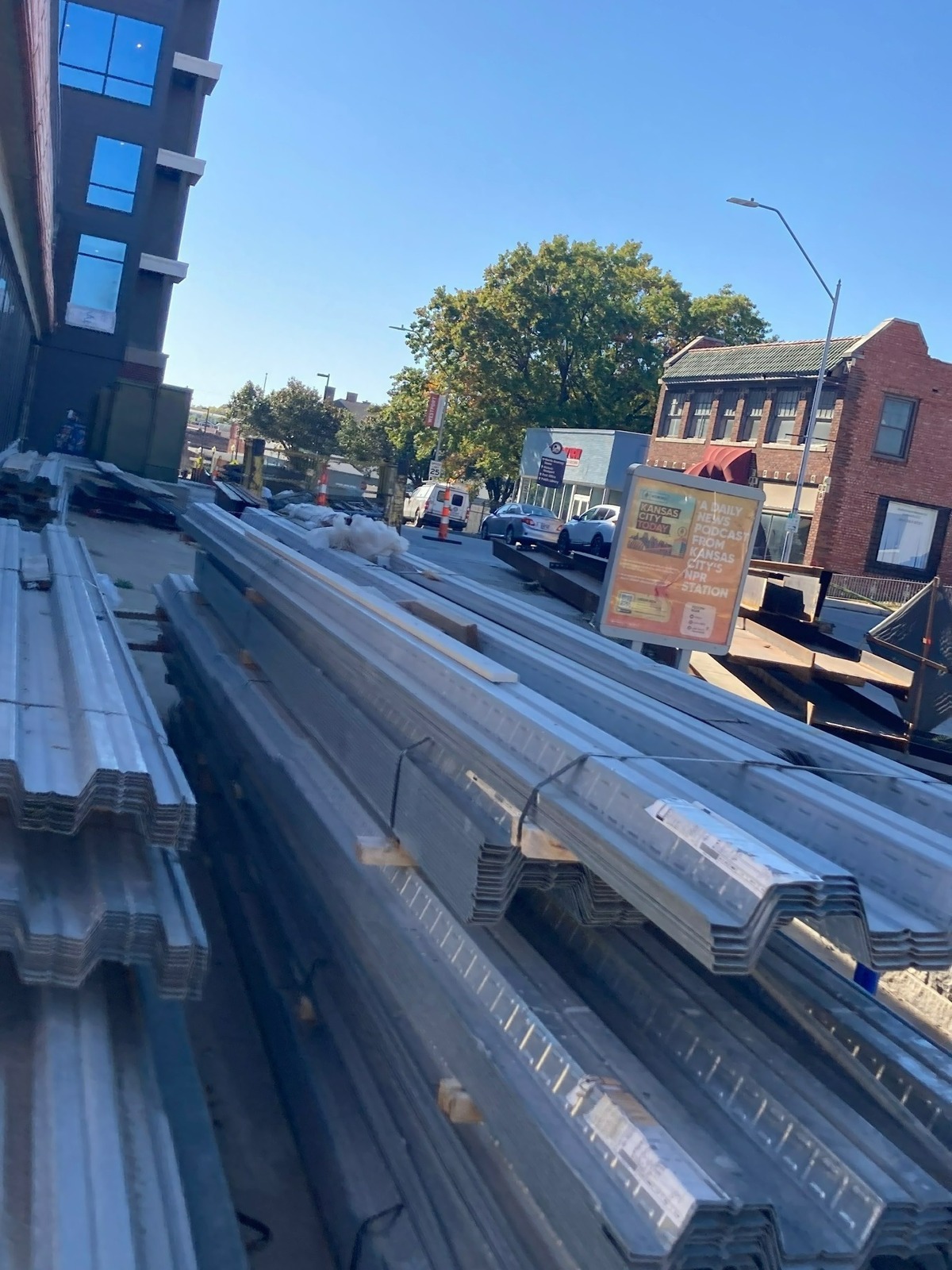
The other, Contract Services Corporation of America, is a family-owned steel fabricating company in Raytown. It claims it is owed about $395,000 on more than $1 million worth of structural steel to be used for the 192-unit Katz on Main project at 3948 Main St. The steel, company officials said, was to be used for the support columns and the rooftop swimming pool deck that would serve as the top of historic Katz Drug Store.
“It’s been a really bad situation for us. The legal cost has been unbelievable as well,” Rae Ann DeVargas, co-owner of Contract Services, told The Star this week about Lux Living. “These people. It’s been emotionally draining.”
Formerly owned by the Redeemer Fellowship church, the old Katz Drug Store site was put under contract for development by Lux Living in 2020. In 2021, the Kansas City City Council approved a tax incentive package abating 75% of its property tax bill for 10 years and then 37.5% for 15 more.
Lux’s plan has been to construct a $37.6 million six-story luxury apartment building at the west rear end of the former drug store. The drug store’s brick facade and distinctive clock tower would be preserved and repurposed as possibly an entryway or cafe to the building.
When it opened in December 1934, the 20,000-square-foot Katz Drug Store at Main and Westport Road was said to be the largest drugstore in the world.
Katz on Main work site
The six-story apartment building is close to completion. A visit to the site this week found workers laying carpet and hammering could be heard inside.
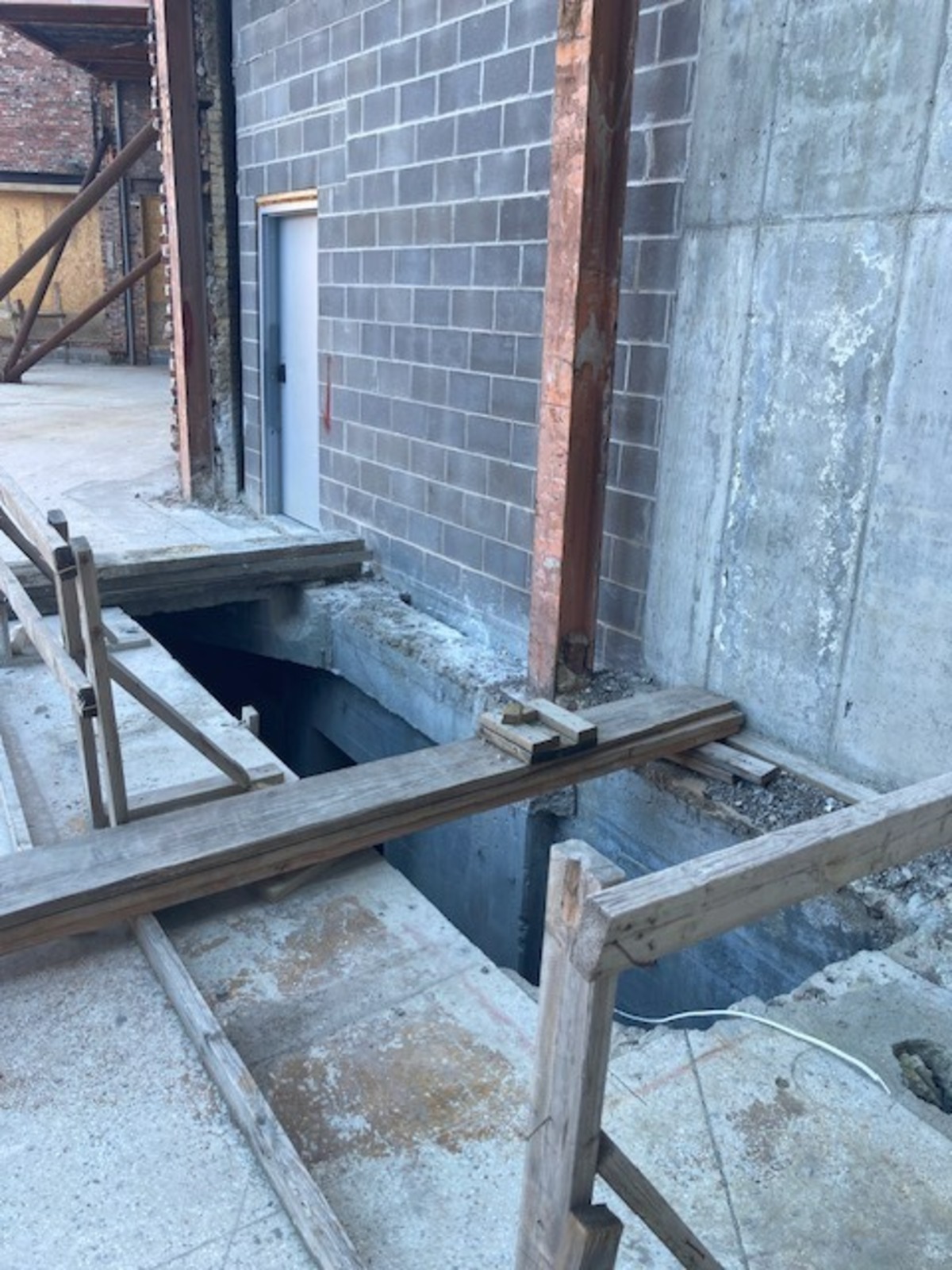
But the old Katz drug building has for months remained a brick shell with no ceiling or roof, open to the weather, with steel braces holding up its walls and no work occurring.
The site this week and on multiple previous occasions was also found to be unsecured and open to pedestrians, having no locks, no surrounding fencing and, in some spots, no railings to prevent possible falls through gaping holes in the drug store’s floor to the basement some 15 to 20 feet below. A nail in one spot protruded and was left exposed in the floor and, nearby, a hole to the basement some 10-inches wide was covered over only by a chunk of the floor placed on top.
The site allowed free access to a spiral staircase into the clock tower, where a portion of the wall was missing, having no barrier to prevent potential falls.
DeVargas said that, in June, her company delivered multiple truckloads of structural steel to install the supporting columns in the old drug store for the roof and rooftop pool decking.
But as soon as the erecting company began to put up the columns is as quickly as they took them down for safety concerns. They started and stopped the work in one day.
The drug store’s old terrazzo floor, she said, had not been made safe enough to support the steel columns.
David Conley, the project manager for Contract Services, said that as the steel was put into place, the floor beneath it began to chip, crumble and break apart.
“When our erector saw that,” DeVargas said, “he decided to bring everything down, for the safety of the crew and the safety of the building.”
Conley said that erecting the steel under those conditions created a potential long-term risk.
“It was not only dangerous to our workers,” he said, “but it was also dangerous to any tenants. At some point in time, you’re going to have a failure. I’m not saying that would happen. I’m saying it was a possibility. It was definitely not safe.”
DeVargas said that her company has done no work on the building in the five months since.
Lux Living had originally projected that Katz on Main would be ready to be occupied in 2024.
DeVargas said that until they are assured that the old drug store floor will properly support the steel and until they are paid the $395,427 they are owed, they have no plan to continue.
Stacks of steel, including I-beams, now sit outside the Katz building, as well as in the storage yard of the company’s Raytown headquarters.
Lux Living
Inspectors from the Kansas City City Planning & Development Department recently visited the Katz and Wonderland sites to confirm that construction is continuing.
In a call to The Star, Ira M. Berkowitz, attorney representing Lux Living’s contract firm, Big Sur, said the company planned to take care of any outstanding liens.
“They’re working that out right now,” Berkowitz said.
“It’s full steam ahead,” he said of both projects.
He also said that the recent indictments of the company’s two principals, Sidarth “Sid” Chakraverty and Victor Alston, along with chief accountant Shijing, “Poppy” Cao, would not affect construction of the projects in Kansas City.
In Sept. 20, the executives were indicted in U.S. District Court in St. Louis on one count each of conspiracy to commit wire fraud and 11 counts of wire fraud. The charges center on two other luxury apartment complex projects in St. Louis, one known as the Chelsea Project and, the other, the SoHo Project.
The U.S. Attorney for Eastern District of Missouri holds that Chakraverty, Alston and Cao conspired to defraud the the City of St. Louis’s minority-owned business enterprise (MBE) program and its women-owned business enterprise (WBE) program to gain millions of dollars worth of city sales tax and property tax incentives.
“These indictments, at this point, are not going to slow these projects down,” Berkowitz said, but he offered no timeline for completion.
“Both projects are moving forward,” he said. “The liens: They will get resolved.”
This story was originally published October 24, 2024 at 6:00 AM.