At nearly 80, anti-violence advocate uses his life of crime to motivate KC youth
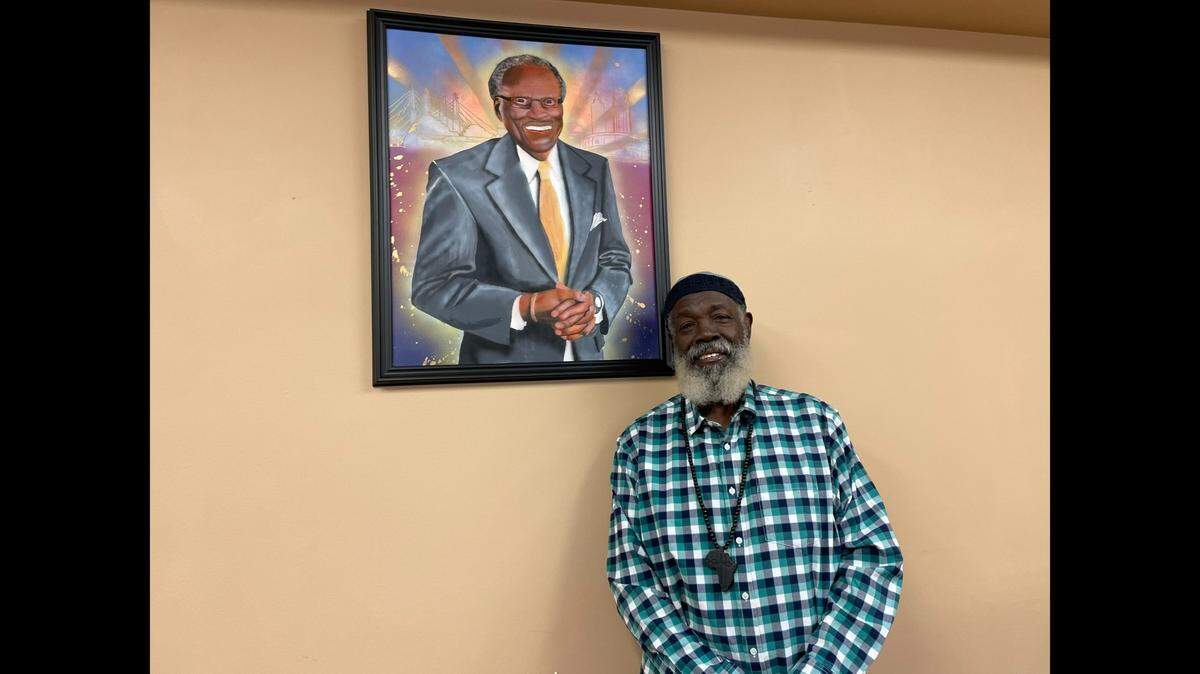
For the past three decades Calvin Neal has dedicated himself to mentoring inner city youth in Kansas City and keeping them away from a life a crime. This mission means so much to the 78-year-old St. Louis native because he was once a misguided youth who fell victim to the negative influences in the streets.
After serving 10 years in prison Neal vowed to turn his life around and give back to the community instead of taking from it. Since the mid 1980’s Neal has worked with AdHoc Group Against Crime in various capacities including talking with young men who may not pay much attention to a motivational speaker whose life has not mirrored their own.
Recently, Neal sat down with The Kansas City Star’s culture and identity reporter, J.M. Banks, to talk about the importance of mentoring, KC crime and civic groups working together to manifest change in the community.
Banks: Can you begin by telling me about your early life and upbringing?
Neal: I was a little short, Black boy that got picked on quite a bit. I hated myself and got called a lot of different names like tar baby and Little Black Sambo. When I was a kid that was actually a book that they had us read in elementary school until the 1960’s I believe. I started to hang out with the older boys and then started getting into a lot of trouble. I ended up getting incarcerated a couple times and going to the penitentiary. I have been shot and stabbed. I have a lot of things that I regret and that I am remorseful for.
When did you first go to prison and for what?
The first time I was probably 12 going on 13. After I turned 13, I was 5’11 and started getting into a lot of fights. I ended up getting sent to prison for 20 years and of that I served 10 for robbery. I didn’t think I was going to ever get out of prison and thought I was going to die there. But there was this older guy who told me to go to class and pick up a trade. I ended up getting my diploma and a certificate for architectural and mechanical drafting.
What made you want to change your life and start working with young men?
What put me on the right path is when I was incarcerated. There was a young man who was 16 that they sent up to Missouri State Penitentiary. I had befriended him and tried to help him with the lessons on the inside, like don’t borrow no money, gamble and keep to yourself. He was gang raped by a group of inmates. After that he got a shiv, a small handmade knife and ended up stabbing two of the men. He didn’t kill them but they came back and killed him and I watched him take his last breath. After that I dedicated myself to working with young brothers to try to keep them out of that circumstance.
When did you first get started working with the youth?
I moved here to Kansas City because I needed a change and didn’t want to get sucked back into old ways. I came here because my aunt and uncle had a construction business. I met a young woman named doctor (PhD.) Karen Curls, who is a professor at Penn Valley. She told me I had a story to tell and she encouraged me to go into the juvenile courts and talk to the kids. One of the supervisors who sat in on my session told me after that he was impressed that those young brothers actually were there listening to what I was saying and they didn’t really do that with the other people they brought in. After five to six months of volunteering I was asked to come on as a full-time employee.
Can you tell me about how you started working with the Adhoc Group?
We have several programs like Thinking For Change and our job program that I still speak at and mentor. How I got started with this organization is in 1985 I met a older gentleman who stopped me to introduce himself. He turned out to be Alvin Brooks and he told me about what he did and what the organization was doing in the community. He asked me to come down and I asked him if they were those people out in the street marching in front of those drug houses and he said they were. I thought they were damn fools and I didn’t want to attend the meeting. So the second and third times I saw him he kept asking me until finally I came out and I liked what I was hearing. I ended up becoming a board member from 1985 to 1990. We got a contract in 1990 from the federal government for HIV and AIDS prevention. I applied for the position and had to step down from the board. But after that program ended I ended up doing a gang intervention program.
What are the challenges that you face in your career?
There are a few. Not seeing as much success as I would like to. There is a lack of funding and a lack of empathy from certain people. There are people who have the resources to make a difference but chose to stand back or ignore what is going on. We have a murder rate on par with some of the bigger cities.
How do you feel your work impacts the community around you?
At one time I had taken so much from my community that now I feel that I am able to give something back and I don’t mind getting out there in the mix. I am in my 70’s and people ask me when am I going to retire. I always tell them when we stop subjecting ourselves to the abnormal things going on in our community, like how we are killing each other. That is when I will retire.
What is the most fulfilling part of your work?
Whenever somebody comes up to me and tells me that I made a difference in their life. That feels good. I have gotten very emotional. That is my reward.
Do you have a personal motto or philosophy that guides you?
Lead by example and show folks there is an alternative. You don’t have to be stuck in the same life. I used to use drugs and I used to drink a lot of alcohol. I had some frightening experiences that made me say I need to change this.
What are your organization’s goals for the future?
Well, we have plans for a new building that we are hopefully going to see completed in 2025. I hope that I will be around to see it. We are just working with other entities to try to make the biggest changes we can.
What advice would you give to someone who is looking to follow the same career path as you?
First thing is to do the research. See who is out there really doing something and see how you can get involved. We hope that more young people will get involved and carry the torch.