Immigration rhetoric fuels this KC advocate: She trains and protects new arrivals
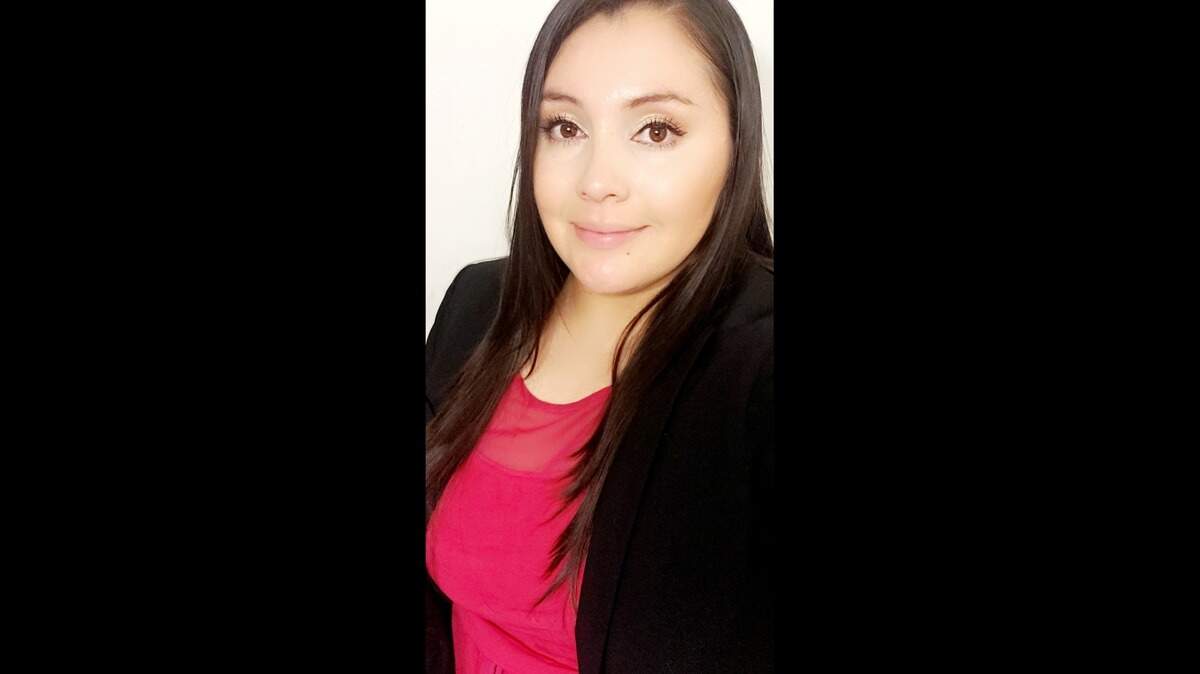
Karla Juarez was born in Mexico and moved with her family to the United States at the age of 4 for a chance at a better life.
Juarez, now 32, would not become a U.S. citizen until 2020. She knows firsthand the long and difficult journey that many immigrants face trying to find resources to start a new life, in a new place.
Juarez, the executive director of Advocates for Immigrant Rights and Reconciliation (A.I.R.R.), works to provide aid to immigrant populations that face cultural, political and economic barriers while seeking U.S. citizenship.
She spoke with J.M. Banks, culture and identity reporter for The Star, about the struggles of Kansas City metro area immigrants, the immigration process and the ongoing anti-immigration rhetoric happening across the country.
Banks: Could you tell me about your early life and how those experiences impacted your career choice?
Juarez: I was born in Chihuahua, Mexico. I moved to Albuquerque, New Mexico when I was very young. I grew up undocumented without a social security card. Luckily, New Mexico is a very immigrant-friendly state and I was able to obtain a driver’s license. Undocumented immigrants here in Kansas or Missouri can’t. I was able to get scholarships as an undocumented student and got my bachelor’s degree in political science with a minor in philosophy.
When did you obtain your U.S. citizenship and what was that process like?
It has taken 10 years. I became a U.S. citizen in February of 2020. There are different pathways and really when people come to the country, they have limited options and one of our options was through the humanitarian visa. Individuals must be victims of violent crimes to qualify or even be considered and the qualification process is still difficult. There is a lot of paperwork and the police are involved in the certification of your application. We had a work permit first, then our permanent resident card, which is the green card and we must have that for five years and then we could apply for citizenship.
How did you end up in your current position and have you always worked in this particular field?
I have not worked in this particular field always as a job, but I have done it as a volunteer. Growing up, my mom was very involved in similar organizations and I think she instilled that advocacy, organizer type of personality in me. I moved here in 2017 when I finished my undergrad. I wanted to move out here to be near my mom. I was interviewing at a law firm to be an assistant secretary and one of the attorneys, Angela Furguson, who I interviewed with, mentioned AIRR. She is actually one of the founders of the organization.
I ended up working there for a month before I left to work at the Missouri Department of Labor, but stayed on as a board member. It was then that I got involved with the Safe and Welcoming Wyandotte Campaign, which was a local ordinance that community members were trying to pass. It was very close and very personal work.
Can you tell me more about the Safe and Welcoming Wyandotte Campaign?
It was a campaign started in 2016 and it started off as an idea that everybody in the county would be able to obtain a municipal ID. Why a municipal ID? Well, it starts off very basic. You need a municipal ID’ for housing, to enroll children into school, get a prescription for medicine and you need an ID to even get a library card.
The second part was to prevent Immigration Customs Enforcement from working with local law enforcement in certain situations. It wouldn’t have blocked them from working with them in all cases, like public safety issues or some huge investigation. It would have blocked them from something like a person gets pulled over and doesn’t have insurance and they call I.C.E. The State of Kansas preempted half of our ordinances which were the police policies but allowed the municipal identification.
What are some of the resources that AIRR offers to the community it serves?
We are the immigrant rights and advocacy organization in Kansas and Missouri. But we do a lot of work across the state with partners. First and foremost, we organize community members to take action around immigrant rights. So, if there’s an ordinance that benefits the immigrant community, we are there. If there is a bill or other ordinance that is against us or will harm our community, we are also there and we will activate and organize the community to take action. We do a lot of leadership development for immigrants so that they can advocate for themselves.
We provide tools such as public speaking training and government 101 training. One of the training courses that we have is called Know Your Rights. We train all community members about their constitutional rights because everybody has rights, regardless of where they were born. We have a support program for new arrivals or immigrants who’ve been here for a long time and just need some support. We connect them to resources if we don’t have the resources ourselves.
What’s the most fulfilling aspect of your work?
This job is very personal with the ongoing negative rhetoric against immigrants. So being able to help my community is the most fulfilling part. The work, the life, and just seeing the fruits of our labors when someone has finished the training and feels they can now activate their power to advocate for themselves.
What do you think are the main issues facing the Metro’s immigrant population?
I think number one is housing. I think another thing that we’re seeing amongst a lot of populations is housing prices are expensive. New arrivals often get their passports taken away at the border, so they don’t have ID’s to even sign a contract. I think that is also tied to the wage gap. Employers take advantage of our community by not paying them and them being afraid to report because they might get deported. It’s difficult.
What are the main challenges that your organization faces?
Ongoing threats against immigrants. We have talked to our volunteers and our team about how attention is laser focused on immigration and we are a pretty well-known organization among our community and we sort of fear that. Just the fear that our community might be harmed in one way or another. I think that’s the biggest challenge, fighting all the negative.
Where do you think those negative feelings toward immigrant populations come from?
I think it is a lack of curiosity, lack of education. Immigration is very complex and that is why we offer courses because we will talk to anybody about the realities of immigration without making them feel dumb or intimidated. It is just that immigration laws and policies change all the time. I think it is just plain ignorance and lack of education. It is sad.
How would you say your work in the organization impacts the community you serve?
We train people on their constitutional rights when they encounter police, any type, federal, state, local. They do have an impact on people’s daily lives. People are more informed, trained and organized.
Do you have a personal motto or philosophy that guides you in your work?
Yes, mine would be do it for the cause and not for applause. That is my personal motto.
What continues to drive your passion for your work?
The results I see, like, with the leadership development in the community. That is what keeps me going.
What advice would you give to somebody who was wanting to go the same career route?
My advice would be to get involved. Get involved and volunteer if you really care. These types of jobs are not for the paycheck, they are about the difference you are making in someone’s life. When someone asks me what I do for a living I tell them I am working to change the world and to make it to be a better place.
This story was originally published September 6, 2024 at 6:00 AM.