Women at Missouri prison earn degrees, find hope, through classes from KC university
For Vermonn Roberts, earning her associate’s degree means her life is not over and she can still achieve her dreams — even though she is in prison.
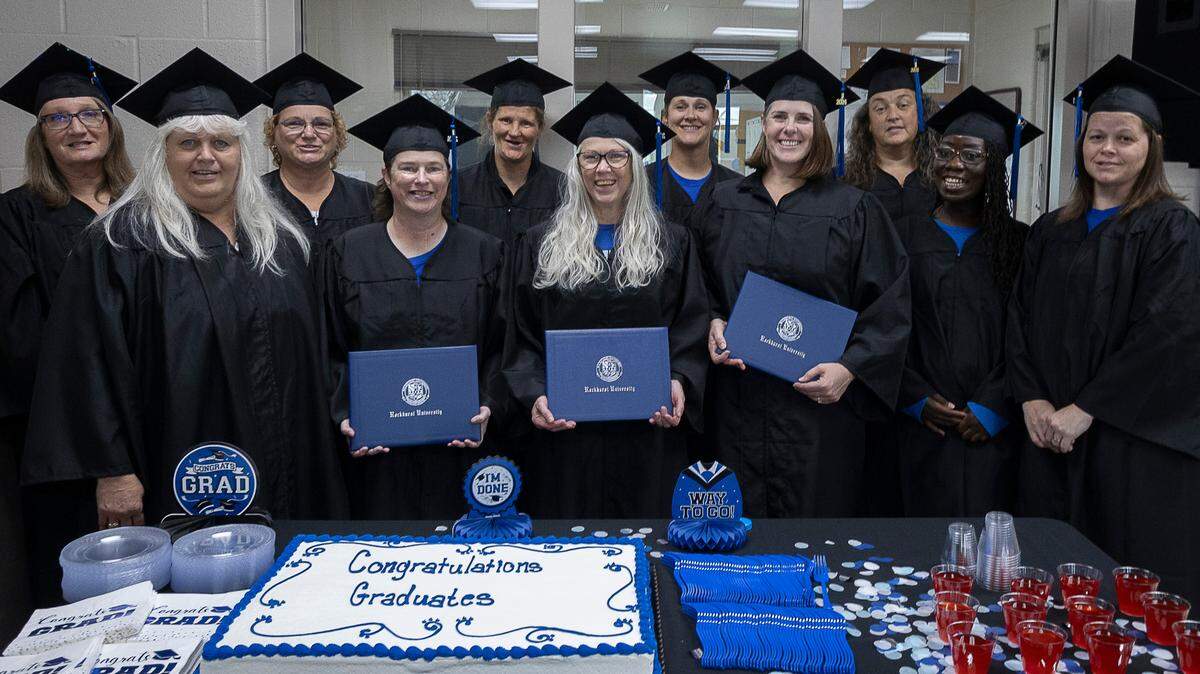
Roberts, 39, was one of 11 who recently graduated from a college program at Chillicothe Correctional Center, about 90 minutes northeast of Kansas City. It was the first class of graduates in the program launched by Rockhurst University.
Five of the graduates were prisoners and six were Missouri Department of Corrections staff members, according to Craig Watz, the program’s director at Rockhurst.
The women’s prison did not have a degree program. In 2017, the Department of Corrections approached the university about putting together a curriculum. Watz said the program falls within the Jesuit mission and that the curriculum included a “traditional Jesuit foundation.”
One class was taught per semester. Watz said the Rockhurst faculty members who taught the classes in the prison were as transformed as the students.
Some of the participants are serving life without parole.
“So many people think that education is a means to a job, which it is,” Watz said. “But we look it at as a means to really kind of demonstrate to these students about the shared humanity that we have, about the feeling of belonging, about the feeling of acceptance in the community, and that education is that vehicle, is that opportunity, to really kind of give them a sense of worth.”
Vermonn, who was living in North Kansas City before her 2005 conviction, said one class that stood out to her was a course on criminal justice. It taught her that even though the law is written in black and white, people need to “look deeper into each individual, each person, each situation.”
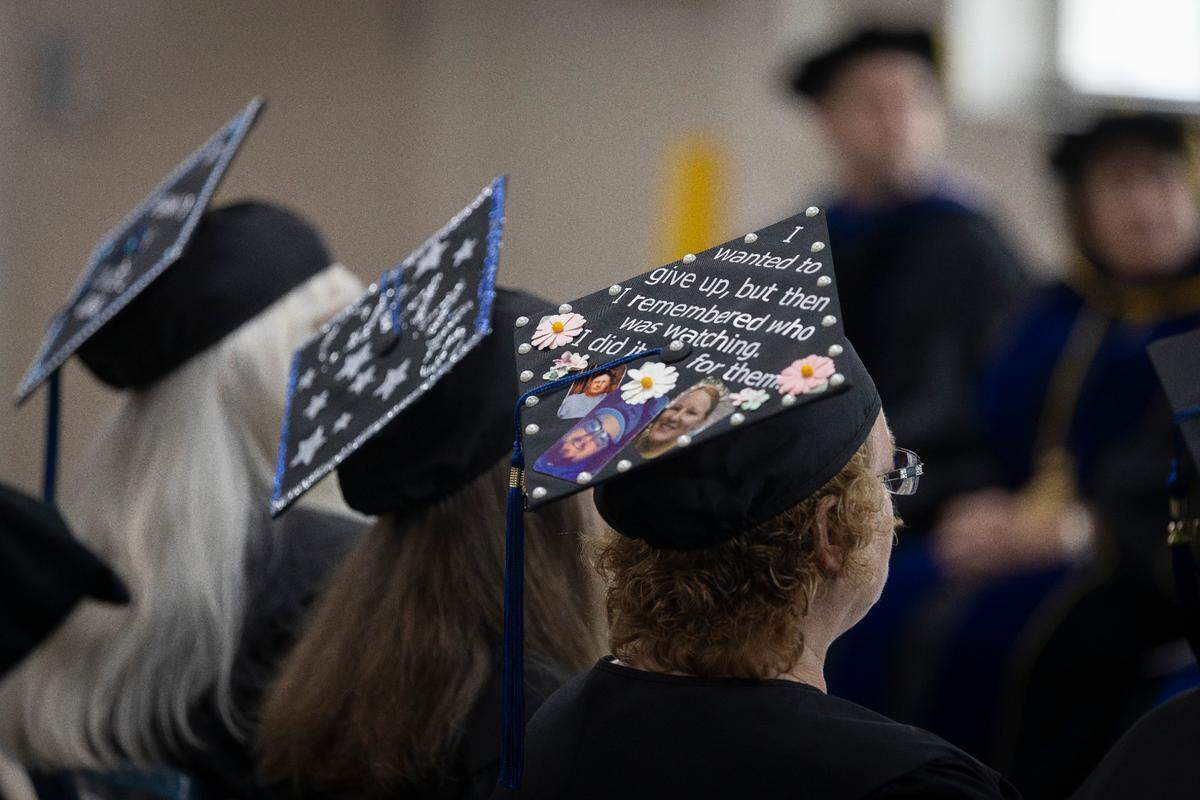
In a written reflection, Lisa Suter said she had been incarcerated over 30 years in 2018, the year the program began. She was “tired of living the same day over and over. I had taken advantage of every opportunity here, but most doors are closed for people with my kind of time. I felt like giving up.”
Through the program, she was able to take English, history, science and philosophy, among other courses.
In a call from the prison, she said she has tried to better herself to honor her victim and change who she is. She’s completed many programs. But in her decades of incarceration, participating in this one was the first time her father had told her he was proud.
“I’ll never forget that,” she said.
Before the program, their phone calls were short and simple. They became fun and engaging after she enrolled and they talked about what she was learning and he shared his experiences in school.
“When Rockhurst is here and I’m in class, I don’t feel like a prisoner with a number, I feel like I’m a regular student in a classroom,” she said. “Rockhurst has given me more than an education, they’ve given me hope.”
Suter said she has applied for clemency. If it was granted, she said she wants to move to Kansas City and continue her education at Rockhurst.
Karen Pojmann, spokeswoman for the Department of Corrections, said the program was unprecedented for staff members who face financial barriers and time constraints that can put furthering their educations out of reach.
“Rockhurst brought higher education to them, demonstrating a true commitment to serving the people who serve our state,” Pojmann said.
Lisa Smith, an institutional parole officer at the prison, said getting a college education had always been on her bucket list.
“But I have two kids and putting them through college was always more important,” she said. “I probably wouldn’t have done it if it hadn’t been offered here.”
Even though finding coverage for her job responsibilities was challenging at times, corrections officer Naomi Yuille said shift supervisors and sergeants went the extra mile.
“Everyone wanted to see us succeed.”
The program, primarily funded by private grants and donations, will continue this fall.