Born into slavery, Kansas Citian became champion dancer. Now his story is being retold
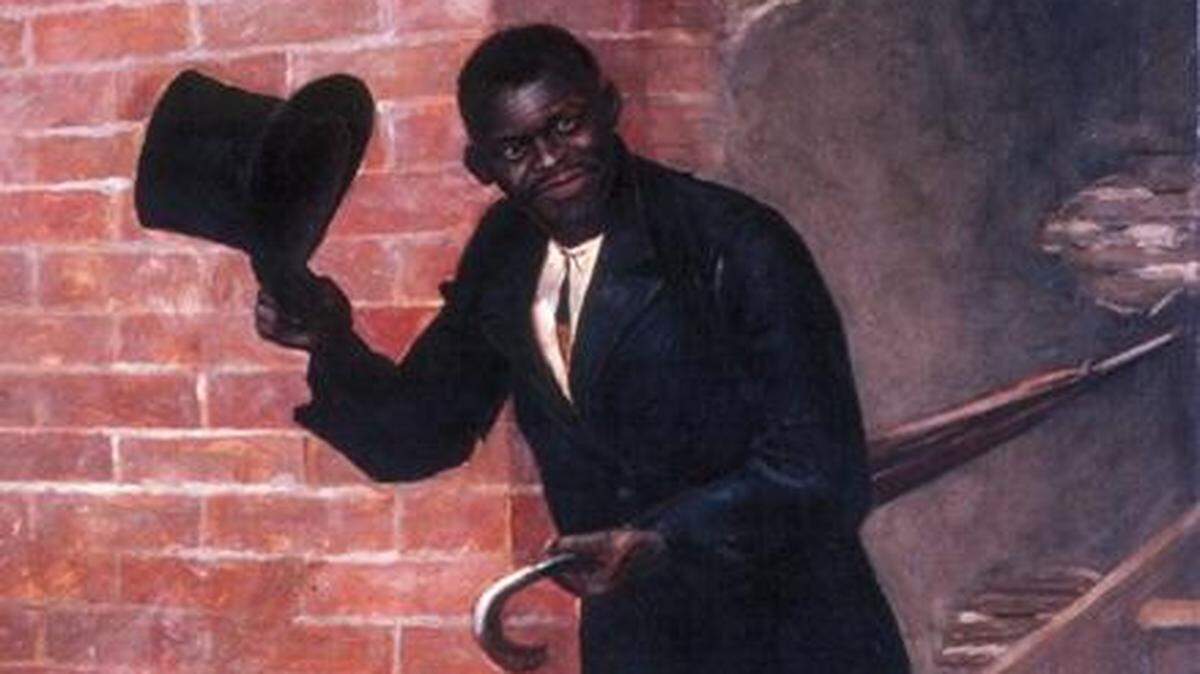
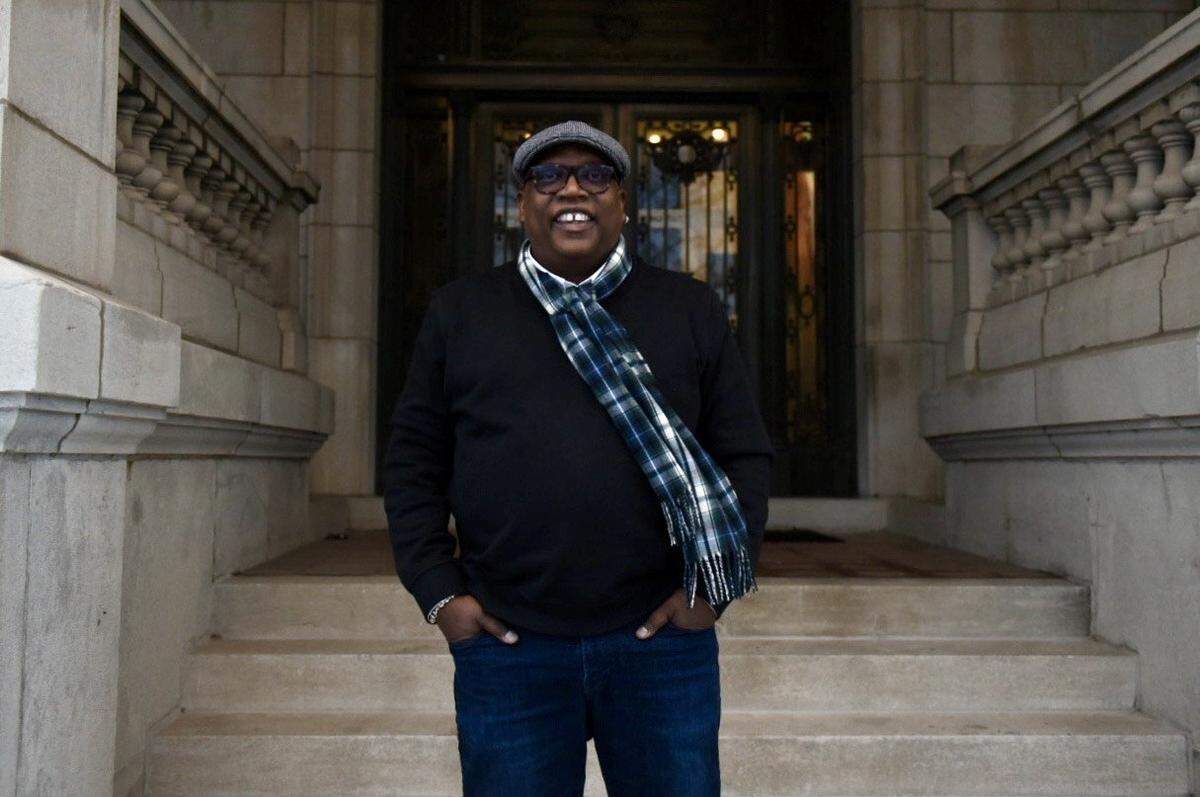
The distinguished Kansas City poet and playwright Glenn North was unfamiliar with Doc Brown until 2012, and his introduction to one of the city’s most vibrant historical characters was inauspicious.
North saw a painting of the legendary cakewalk dancer (more on that later) at the Kansas City Museum. The 1896 portrait by Kansas City artist Millard C. Haywood shows Brown, who was born into slavery near Arrow Rock, Missouri, tipping a top hat and carrying an umbrella.
“I just immediately thought of the minstrel tradition, and, in all candor I just felt ashamed, the first encounter I had with that portrait,” said North, the poet in residence at the Kansas City Museum and its director of Inclusive Learning and Creative Impact.
But now he is a big fan of William Henry Joseph Cutter Brown, a champion dancer from the turn of the 20th century.
North, in fact, has written a reader’s theater production about Brown called “Consummate Showman,” which will be presented Aug. 16 at Community Christian Church. It premiered May 4 to a standing-room-only audience at the Old Schoolhouse in Arrow Rock as part of the Voices of Arrow Rock series.
The piece, produced by Arrow Rock native Michael Kateman, stars Darryl Reuben Hall, who will fly in from New York to perform. North will lead a discussion after the performance.
The poet, who had made a presentation on Haywood’s portrait for the Kansas City Museum in 2012, revisited Brown’s legacy when Kateman approached him about doing something for the Voices of Arrow Rock series.
During his research, North learned much more about Brown and the cakewalk, including that enslaved Black people created the dance to imitate “slave owners doing the waltz or what have you.”
“Black people would mimic those dancers really to poke fun of the white slave owners,” he said.
“That was interesting to me in that on the surface that kind of benign-looking style of dance was really in a way subversive, and how that was kind of an inside joke with Black people during that time.”
It turned out the white slave owners also enjoyed the performances, which included theatrical steps that participants sometimes improvised to syncopated melodies. After the Civil War and the abolition of slavery, competitions developed, with cakes going to the winners. Thus, the phrase, “That takes the cake.”
Brown took a lot of cakes, as well as medals that were prizes at some events. He won competitions throughout Kansas and Missouri, with trips to Omaha; Washington, D.C.; Albuquerque, New Mexico; and New York City, where he won what was billed as the “world’s championship” in April 1893 at Madison Square Garden.
Hometown story
“Consummate Showman” has been a personal project for Kateman. He grew up in the Arrow Rock area and returned to live on his grandparents’ 100-acre farm 2 miles outside the historic Saline County village with a population of 60.
Kateman said he learned about Doc Brown when he was a child, but he didn’t know the full story.
“There was this fellow who was born in Arrow Rock and became a famous showman,” he said. “I didn’t understand what cakewalking was as a kid.”

He also didn’t grasp the concept of slavery in his hometown.
“I was raised being told that, ‘Oh, yes, Mike, there were slaves in Arrow Rock, but they were happy slaves. They were treated well.’ That happy-slave narrative that has been perpetuated was always in front of me as a child.”
As an adult, Kateman works to eradicate such misconceptions with the Voices of Arrow Rock series sponsored by the Friends of Arrow Rock, the Arrow Rock Lyceum Theatre and the Arrow Rock Federated Church.
Although cakewalking became something of a craze among white folks, even spreading to Europe, Kateman noted that as the dance grew in popularity with white audiences, not all Black people shared their enthusiasm.
“There was criticism at the time from progressive Black folks saying that Doc Brown and all those folks that did cakewalking and competed were just a throwback to slavery,” he said.
Cakewalking also became associated with the blackface minstrel genre, Kateman pointed out.
At its core, however, he says Brown’s legacy stands on its own.
“Regardless of everybody’s thoughts and opinions on Doc Brown, he was a human being who was born enslaved in Arrow Rock … ,” Kateman said. “And once emancipation set him free, he figured out to leverage his God-given talents and make the most of it.”
Racist coverage
Local newspapers, including The Star, covered his exploits in detail. The Star even ran a lengthy obituary after Brown died.
“In those days, The Kansas City Star didn’t print much at all about Black people, obituaries or anything, let alone write a favorable article about a Black person,” North said.
“It’s phenomenal that the articles were written, because we’re talking about a time when Black people were not considered to be worth reporting on. But what kind of lens was being used to write those articles? I did struggle with that as well.”
Newspapers’ coverage often included 19th-century racial stereotypes and dialect. Such language, which “Consummate Showman” doesn’t incorporate, creates a dilemma for North.
“Sometimes, I think it’s easy with a contemporary kind of mindset to pass judgment on someone who lived 100 years ago,” he said. “But then on the other hand, I don’t want to let people off the hook who lived 100 years ago who were highly racist and say, ‘But everybody was racist back then.’ You don’t want to fall into that either. So it becomes this weird kind of tightrope.”
Delving into Doc
The more you dig into Doc Brown, it seems, the more you discover.
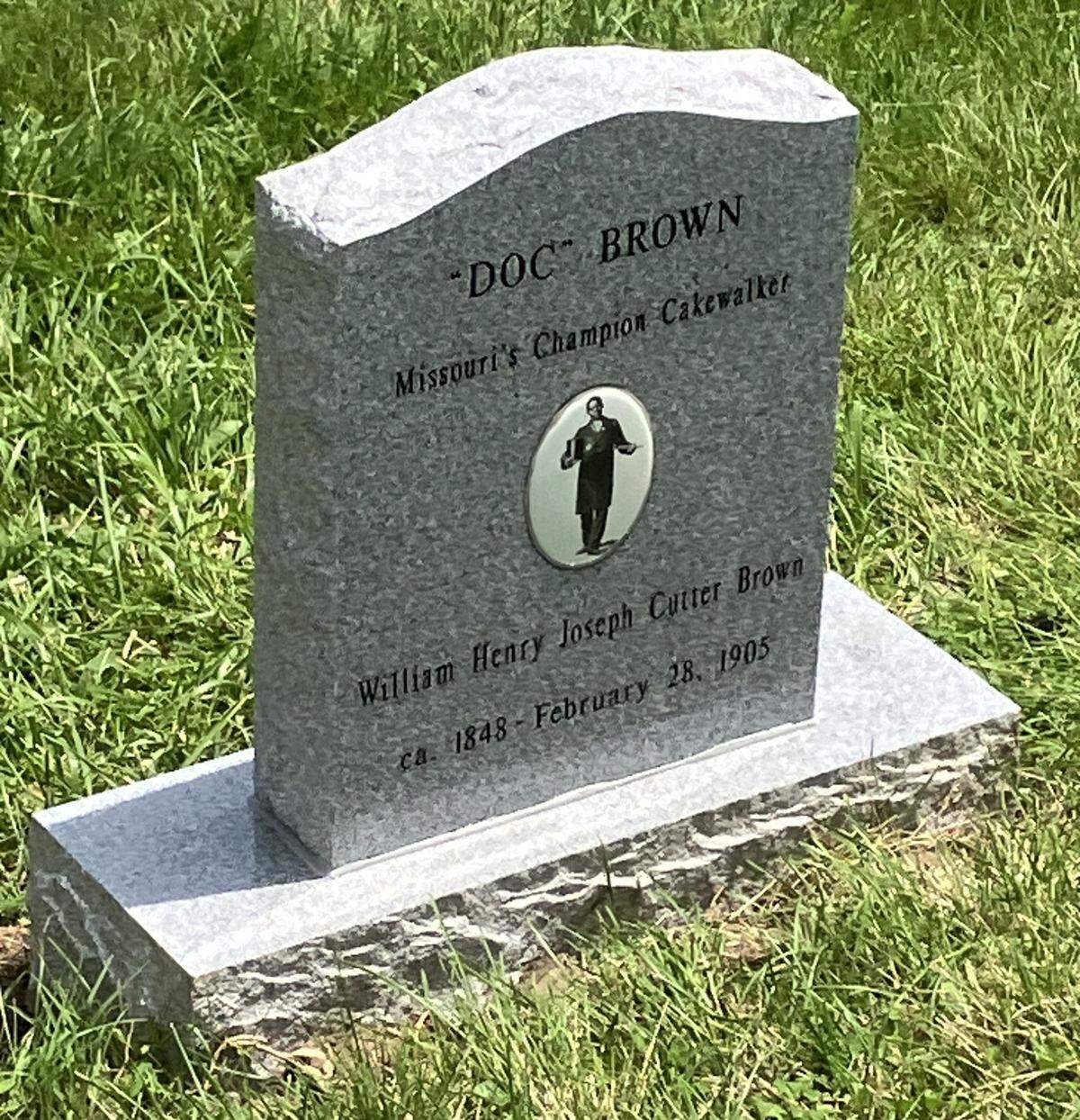
▪ His age was unknown. The Star’s obituary said, “He gave his age as 43, but the hospital doctors said he must have been nearer 65.” The program for “Consummate Showman” estimates his birth year as 1835, but a new marker in Union Cemetery says “ca. 1848-February 28, 1905.”
▪ He delivered newspapers in Marshall, Missouri, before moving to Kansas City, where he became a common sight dancing for children on sidewalks.
▪ Brown was a master at marketing himself. In an 1896 story in The Star, he announced his upcoming wedding at Second Baptist Church. The event turned out to be a mock wedding, with the ceremony spoken in rhyme followed by a cakewalking exhibition. Attendees were charged 15 cents.
Brown never married.
▪ Being a cakewalk champion didn’t make him rich, but he was known for dressing well.
In 1943, The Star ran an article reminiscing about Brown’s life in the 1890s. A woman named Lena Scurlock said he stayed in the basement of a boarding house where she lived, taking care of the furnace, helping the cook and running errands.
This was at the peak of his career, when Scurlock said he performed for $3 or $5 — or sometimes nothing at all.
But he always commanded respect.
“When he donned his swallowtail coat and high silk hat and flourished the cane he always carried when dressed up, he was a jaunty figure as he strolled out into Locust Street,” Scurlock said. “At that time, he must have been about 40 years old, and we used to marvel at his agility. He seemed to possess the manner of perennial youth.”
‘Consummate Showman’
6:30 p.m. Aug. 16 at Community Christian Church, 4601 Main St. Free admission; see arrowrock.org.