Woman sues KU hospital, claims it denied her abortion on day of Kansas vote over access
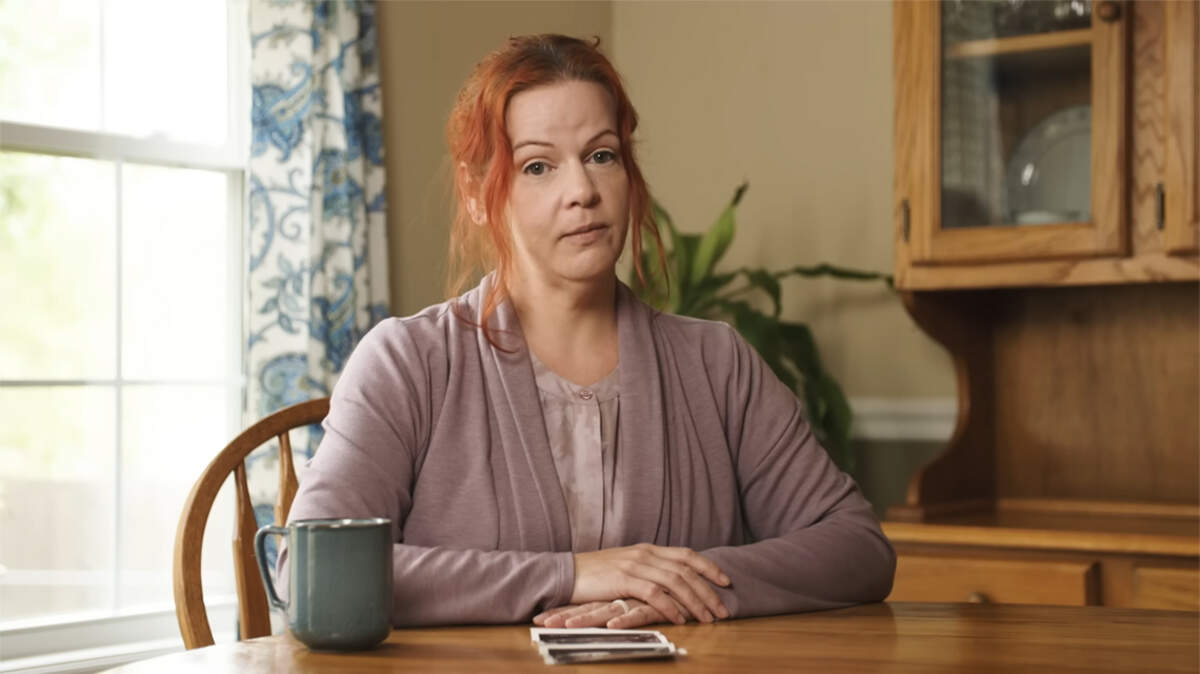
A Missouri woman is suing the University of Kansas Health System, alleging that she was denied an emergency abortion while experiencing complications in her pregnancy in 2022.
Mylissa Farmer, a resident of Joplin, Missouri, arrived at the University of Kansas Hospital emergency room in Kansas City, Kansas, on August 2, 2022, after her water broke after 18 weeks of pregnancy, according to court documents reviewed by The Star.
That happened to be the day Kansas voters weighed in on a constitutional amendment on abortion. It was overwhelmingly rejected, preserving the right to an abortion in the Kansas Constitution.
The lawsuit claims Farmer’s abortion was denied because the hospital determined it was “too ‘risky’ in the ‘heated’ ‘political’ environment.”
By the time Farmer made it to the emergency room, her pregnancy was no longer viable, as most of the fluid in her amniotic sac was gone. However, Farmer herself was now at risk of blood loss, sepsis, infertility and death, according to court documents.
Farmer came to the hospital looking for an emergency abortion, which would have been permissible in order to save her life under both state and federal law. Instead, court documents read, hospital staff refused to treat her — or even to take her temperature and vital signs.
“Though TUKH doctors confirmed both the non-viability of Ms. Farmer’s pregnancy and the grave risks she faced if she did not receive emergency abortion care, they turned her away with no treatment whatsoever — not even antibiotics or Tylenol,” the lawsuit filed Tuesday in federal court reads.
Farmer consulted with NWLC, along with Cohen Milstein Sellers & Toll PLLC — a national law firm — and Dugan Scholzman LLC, a firm based in Overland Park, to file the suit against the University of Kansas Health System on Tuesday. The lawsuit also names the University of Kansas Hospital Authority, which oversees and regulates the health system. The hospital authority could not be reached for comment.
The University of Kansas Health System denied the allegations made in the lawsuit.
In a statement provided by spokeswoman Jill Chadwick, the health system said it “complies with all applicable laws and regulations in providing the highest quality of care to patients, regardless of how they come to our hospital.”
“While we cannot comment publicly on the specifics of an individual patient’s care, The University of Kansas Health System believes that the care provided to Ms. Farmer was entirely appropriate, non-discriminatory, and in compliance with all applicable law.”
Was federal law violated?
Farmer was also denied emergency abortion through Freeman Health System in Joplin at the time, The Star previously reported.
The group filed a separate civil rights lawsuit on the federal level in January against then-unnamed hospitals in Missouri, Kansas and Illinois on Farmer’s behalf, alleging discrimination, The Star reported.
“What happened to me should never happen to anyone. Denying me care not only put my life at risk but inflicted irreparable trauma, physical and mental suffering, and financial hardship on me and my husband,” Ms. Farmer said in a statement shared by the National Women’s Law Center (NWLC). “I endured a horror no one should ever have to face. Through this lawsuit, I hope to achieve justice and help prevent others from suffering the same experience.”
A federal investigation concluded that the University of Kansas Health System violated federal law when refusing to provide Farmer the abortion, The Star and The Associated Press reported. The investigation concluded in May 2023, according to court documents.
According to the investigation, any state law regulating abortion is overruled by federal law requiring doctors to provide patients with life-saving care, The Associated Press reported. This includes a federal mandate to provide abortions when the life of a pregnant person is endangered by their pregnancy, the AP previously reported.
These requirements fall specifically under the Emergency Medical Treatment and Labor Act (EMTALA), which states that medical facilities are required to determine if a pregnant person is in labor — and then either facilitate the birth or treat whatever is happening — when someone pregnant presents at a hospital experiencing pain or complications.
“When a state law prohibits abortion and does not include an exception for the life of the pregnant person — or draws the exception more narrowly than EMTALA’s emergency medical condition definition — that state law is preempted,” guidance from the Department of Health and Human Services reads, according to The Associated Press.
Post-overturning of Roe
Farmer’s lawsuit is one of the first filed under EMTALA since the overturning of Roe v. Wade in 2022. Along with EMTALA, Farmer is alleging her experience violated Kansas nondiscrimination law, the NWLC said in a statement.
“A hospital that provides emergency care to all but sends home pregnant patients to suffer possible hemorrhage, sepsis, loss of fertility, or even death has discriminated based on sex, pure and simple,” Michelle Banker, senior director of litigation for reproductive rights and health at NWLC, said in a statement. “We are committed to holding the hospital accountable and will not stop fighting until all people can get the abortion care they need.”
Along with financial compensation, Farmer is seeking an official statement by the hospital system admitting to violating state and federal law by denying her the emergency abortion.
Farmer was able to get the care she needed at the HOPE Clinic in Granite City, Illinois, two days after The University of Kansas hospital turned her away, The Star reported last year. But experts worry she’s not the only one being denied life-saving care in Kansas.
Since the overturning of Roe v. Wade shuttered abortion providers across the Midwest and nation, Kansas abortion clinics have been frequented by residents of nearby states, particularly Missouri. Moments after the Dobbs v. Jackson verdict became official, a set of 2019 “trigger laws” went into effect, and Missouri became the first U.S. state to ban nearly all abortions, The Star reported.
At the time, abortion access advocates and members of the medical community began to express their concerns that the new restrictions could cause confusion for health care providers, particularly around life-saving care and medication access. St. Luke’s Hospital, for one, temporarily stopped distributing emergency contraception in the days after the ban.
“As the decision came down, we were very clear that this was going to send off a public health crisis in the context of already having a maternal mortality and morbidity crisis,” said Colleen McNicholas, the chief medical officer for Planned Parenthood of the St. Louis Region and Southwest Missouri, told The Star in 2023.
“We have absolutely seen that come to fruition.”
Farmer’s situation was also cited in a series of television ads in the 2022 Missouri Senate Race. She was featured in a series of attack ads criticizing then-Missouri Attorney General Eric Schmitt for his contribution to the immediate “trigger law” ban on abortion after Dobbs v. Jackson.
Still, Schmitt began serving as the junior United States Senator from Missouri in 2023.
The Star’s Katie Moore contributed to this story. Previous reporting by Kacen Bayless was used in this article.
This story was originally published July 30, 2024 at 11:03 PM.