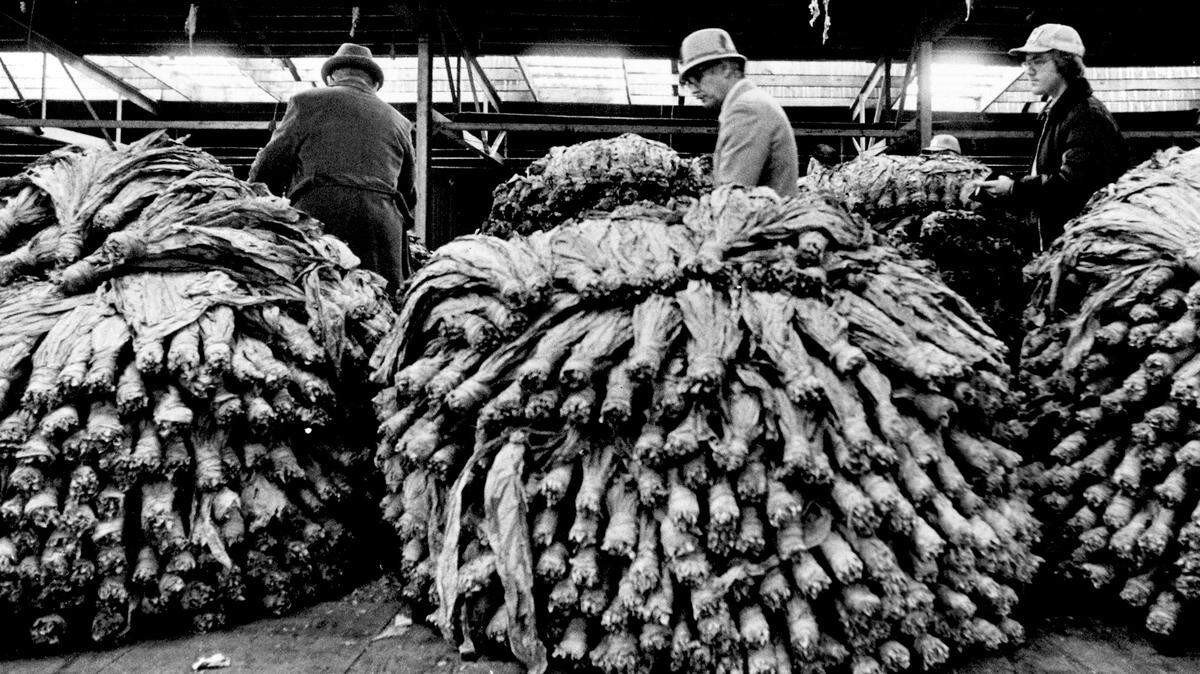
Inspectors from the Department of Agriculture grade the growers’ crops and set minimum prices. After the inspectors finish grading, the tobacco is auctioned to national tobacco companies.
Kansas City Star archives
Editor’s Note: The Kansas City Star has an extensive photo archive filled with images of events, people and places that have shaped Kansas City. We’re sharing some of those images for a look back at memorable, or forgotten, moments in Kansas City’s history.
For decades, Weston, Missouri, survived as the only active tobacco market west of the Mississippi River.
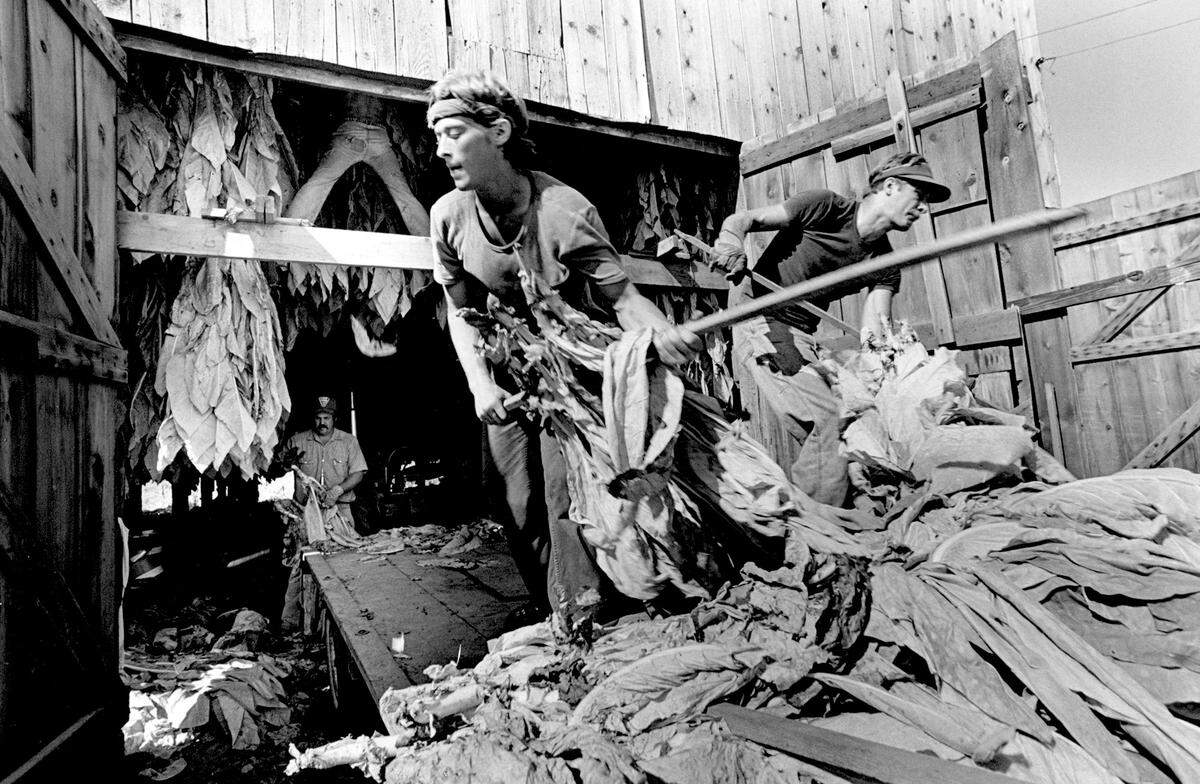
These vintage black and white photographs from the archives of The Kansas City Star capture moments of a bygone era. Tobacco farming is labor intensive and workers on small family farms hand-planted the tobacco seeds in the ground, then cutting, hauling and hanging tobacco in the barns to cure.
According to an article published in The Star in 2008, tobacco farming has been a big part of the agricultural scene in Weston since the 1800s. Riverboats and railroads provided an affordable way to ship the crop back east.
For years the post-Thanksgiving tobacco markets were festive as growers and curious onlookers were checking out the prices buyers were paying for that year’s crop. Downtown was full of residents who celebrated the occasion with chili feeds and events that added to the festivities.
In the late 1990s, the market system ended as farmers began growing tobacco under contracts with pre-determined prices. The old warehouses in Weston became shipping stations for loading contracted tobacco onto semi trucks.
Additionally, health concerns from the effects of smoking cut the demand for tobacco products even further.
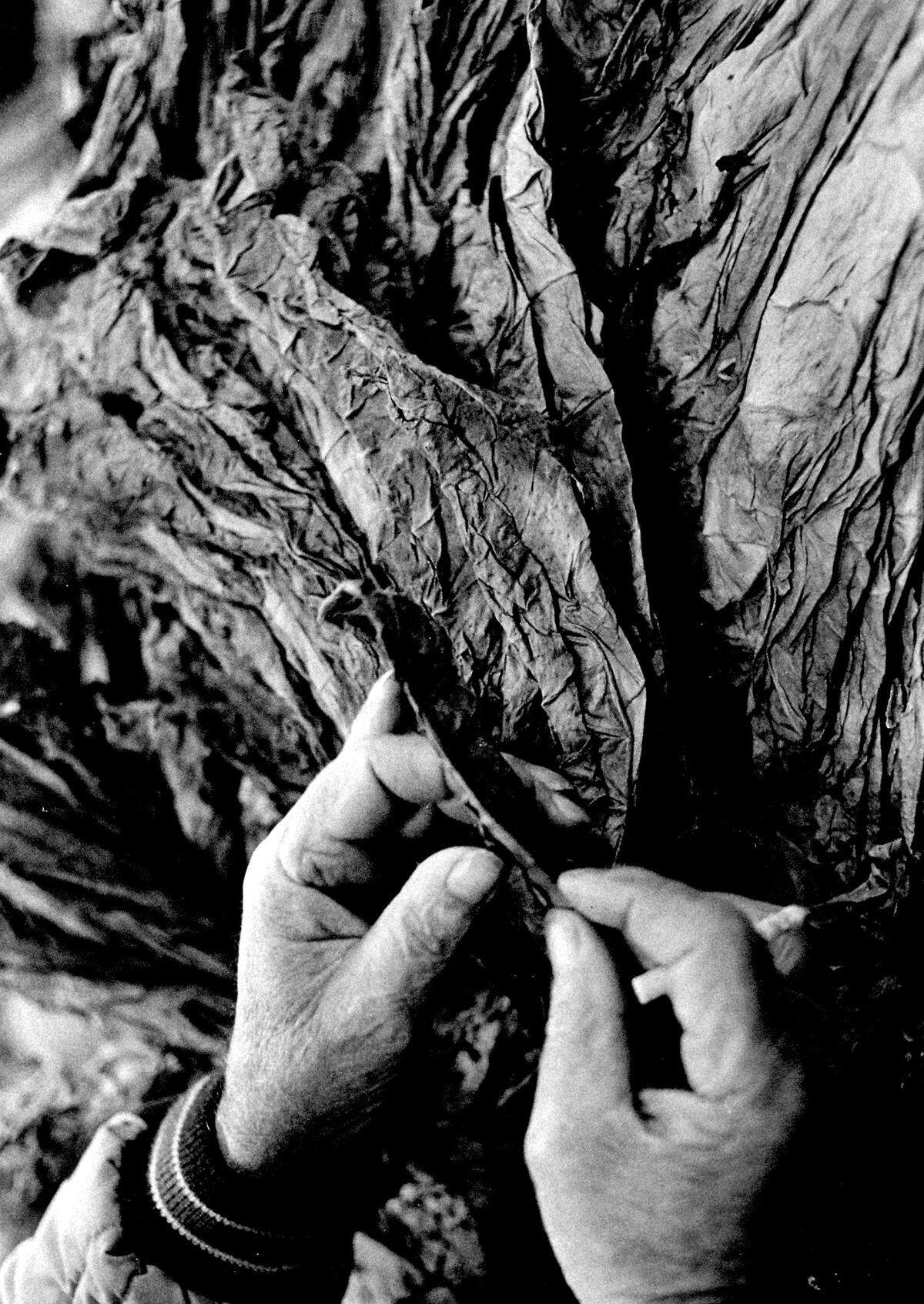
An inspector from the Department of Agriculture examines a leaf of tobacco. After the inspectors finish grading, the tobacco is auctioned to national tobacco companies. Kansas City Star archives
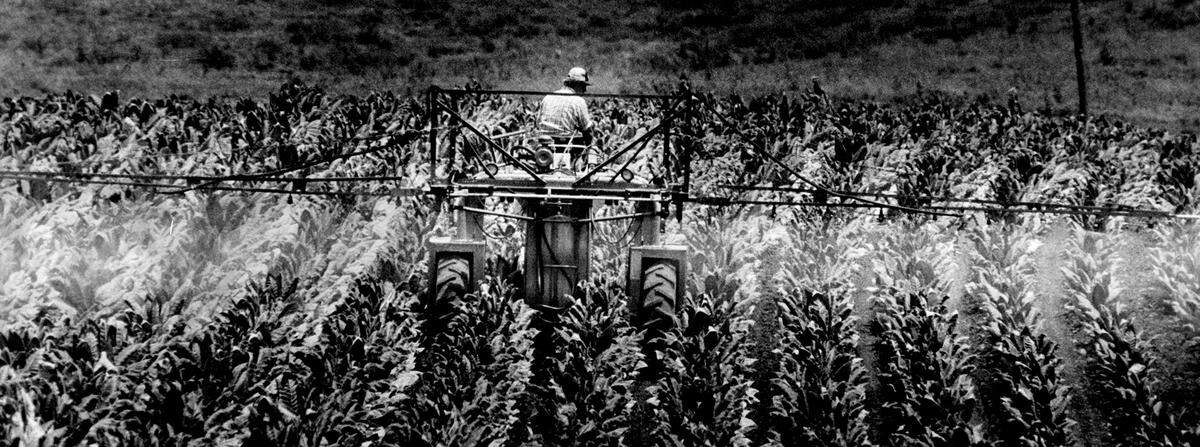
Mike Driskel sprays Orthene on rows of tobacco at the Siler farm near Weston. Orthene is an insecticide produced by the Ortho Co. Kansas City Star archives
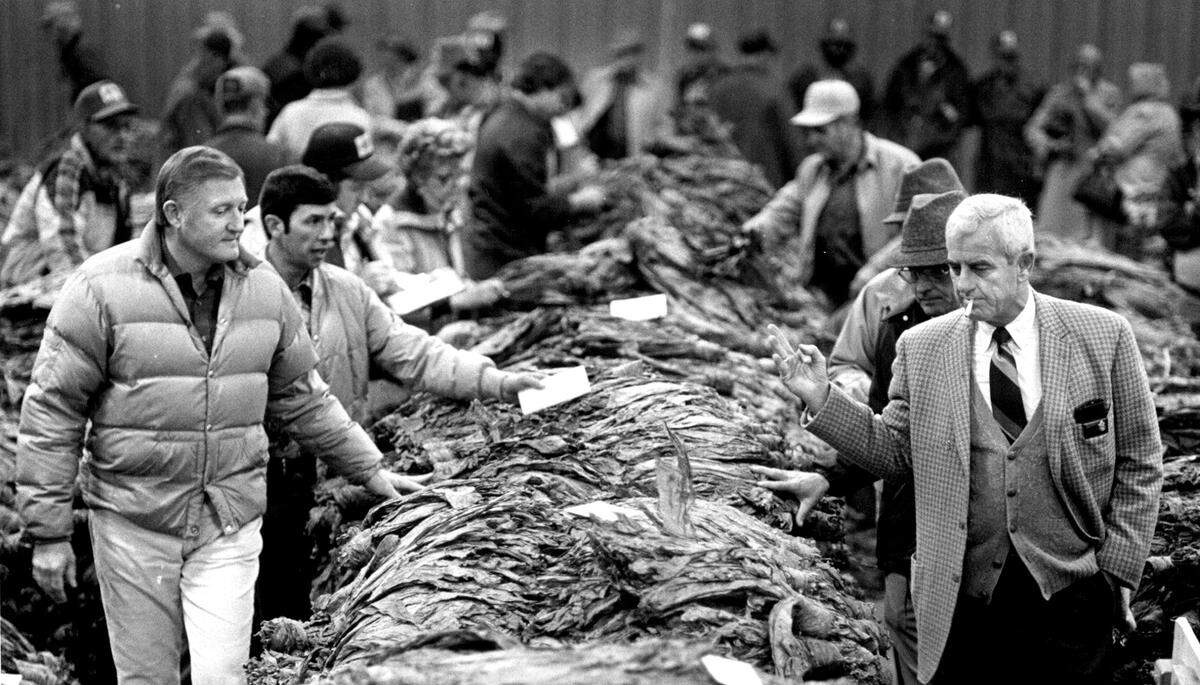
Bob Musgrave, left, and Bub Hull, right, tour rows containing more than 200,000 pounds of tobacco at the New Deal Tobacco Warehouse in Weston. At an auction, prices for 1983 tobacco were 4 to 6 cents a pound higher than the previous year. Kansas City Star archives
Rodney Atwood and Rich Rennie rush to protect grower Chuck siler’s tobacco from blue mold. Kansas City Star archives
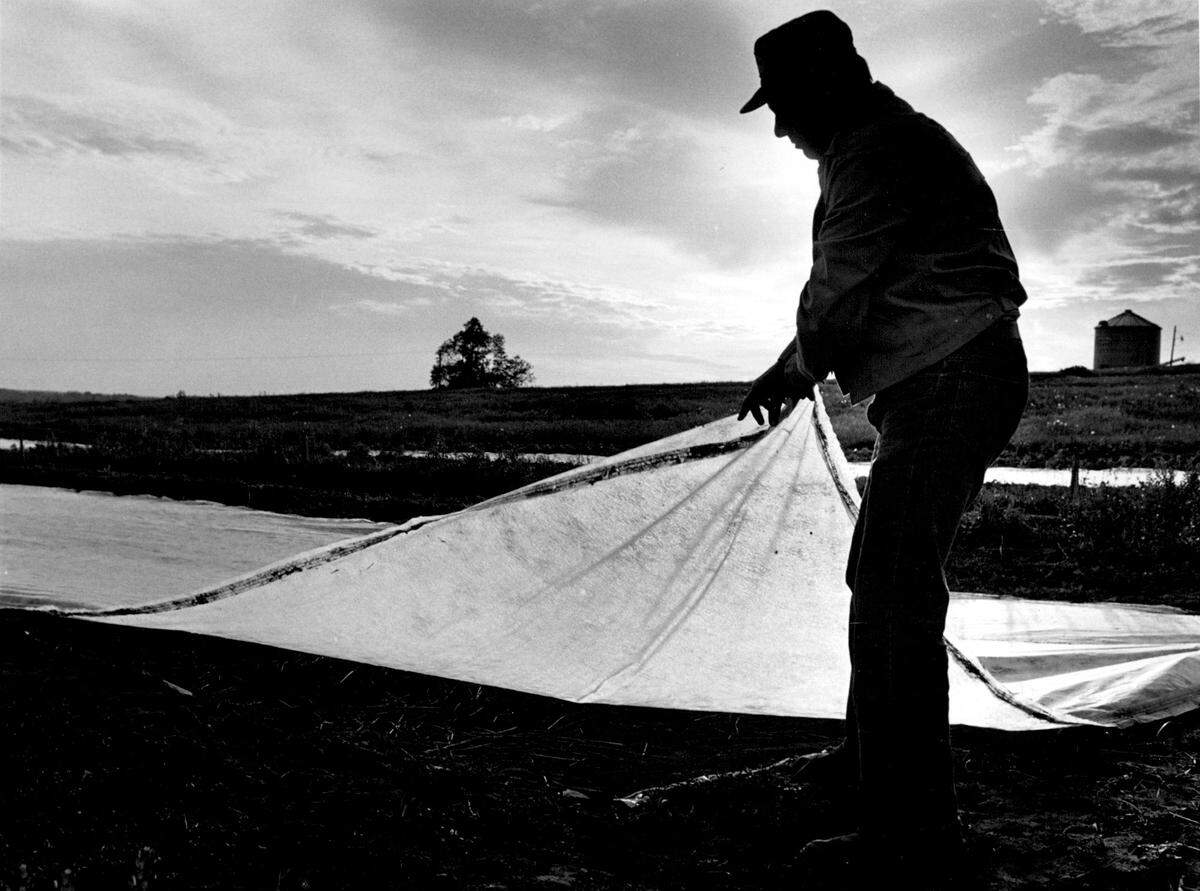
E. J. Siler, a farmer near Weston, Mo., covers his tobacco plants to protect them from nature’s elements. Kansas City Star archives
One of the few remaining tobacco plants in 1979 awaits harvest near Weston, Mo. After being dried in barns, the tobacco leaves will be auctioned in November. The annual sale in Weston is the only tobacco auction west of the Mississippi River. The first Weston auction was in 1911. Kansas City Star archives
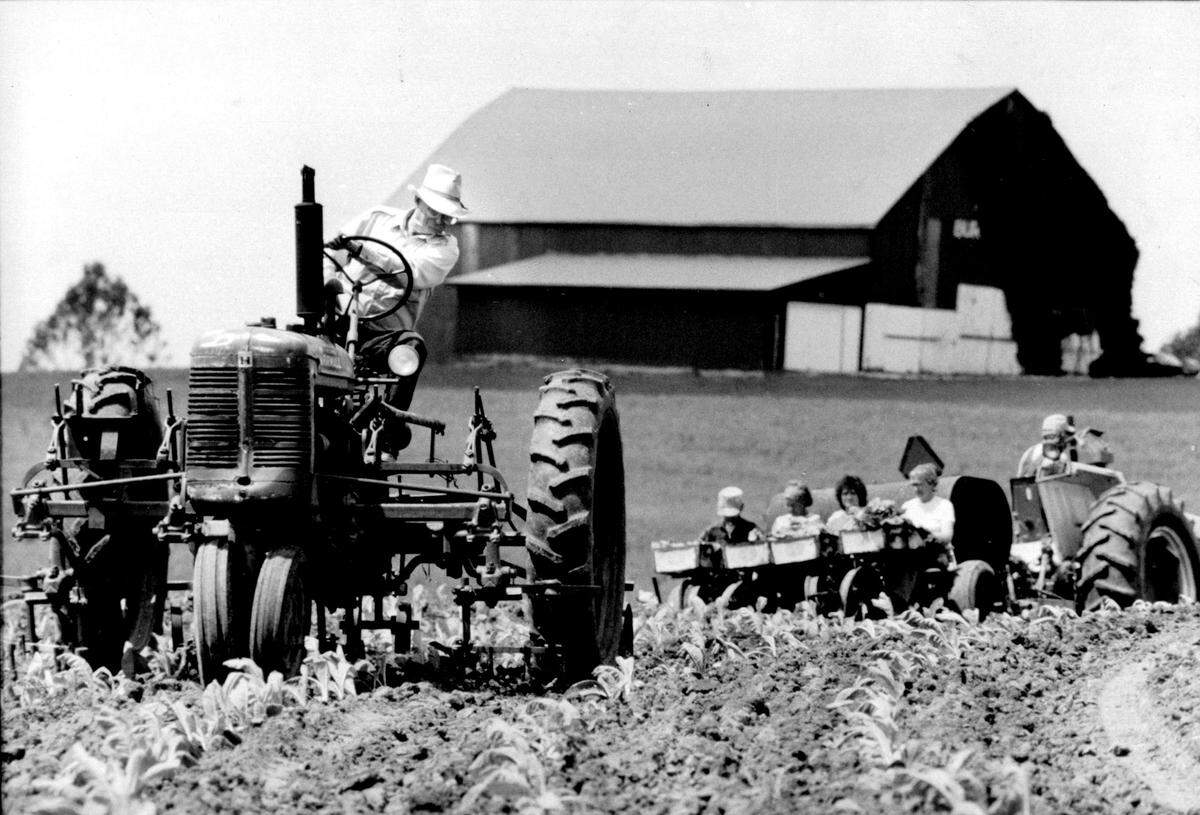
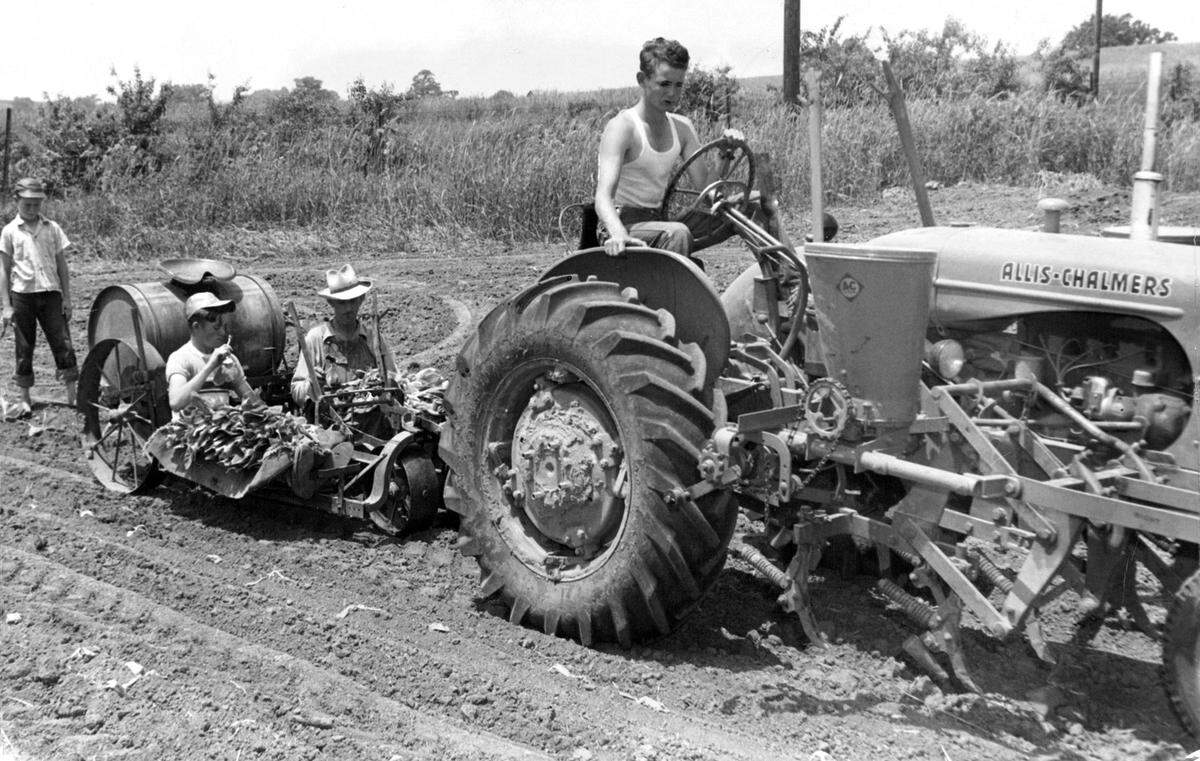
Sunny and mild weather in 1990 made it a perfect day for setting tobacco. Just outside of Weston, 69-year-old James Hill, left, cultivates freshly planted rows as his son, Jim Hill, along with Jean Gannaway, Donna Hewitt and Maggie George ride the back of a planter. James Hill said the tobacco field amounts to about 6 acres. Kansas City Star archives
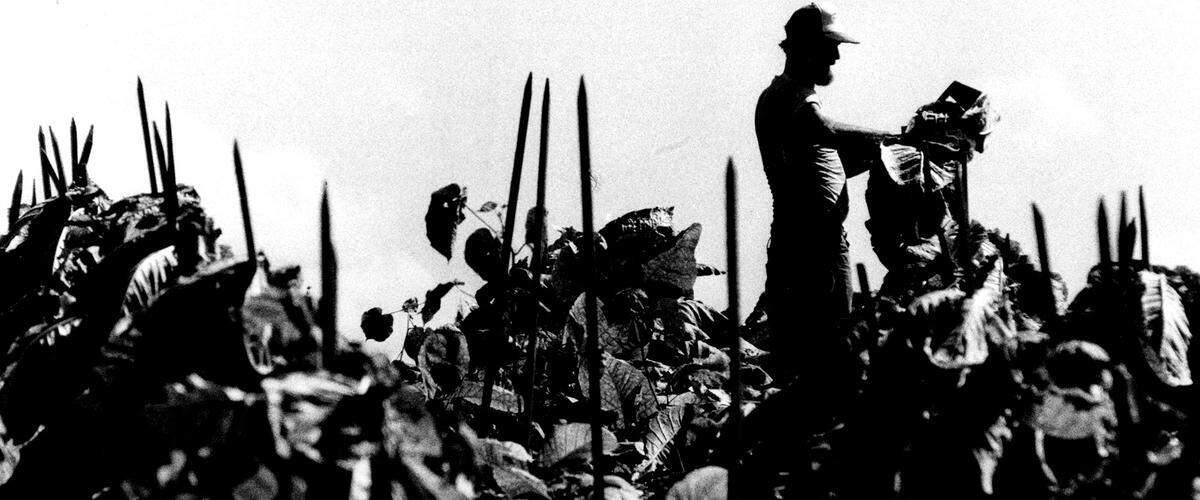
Gene Lewis, above, spikes freshly cut stalks of tobacco onto sticks so that the sun’s rays cause the plants to wilt. Kansas City Star archives
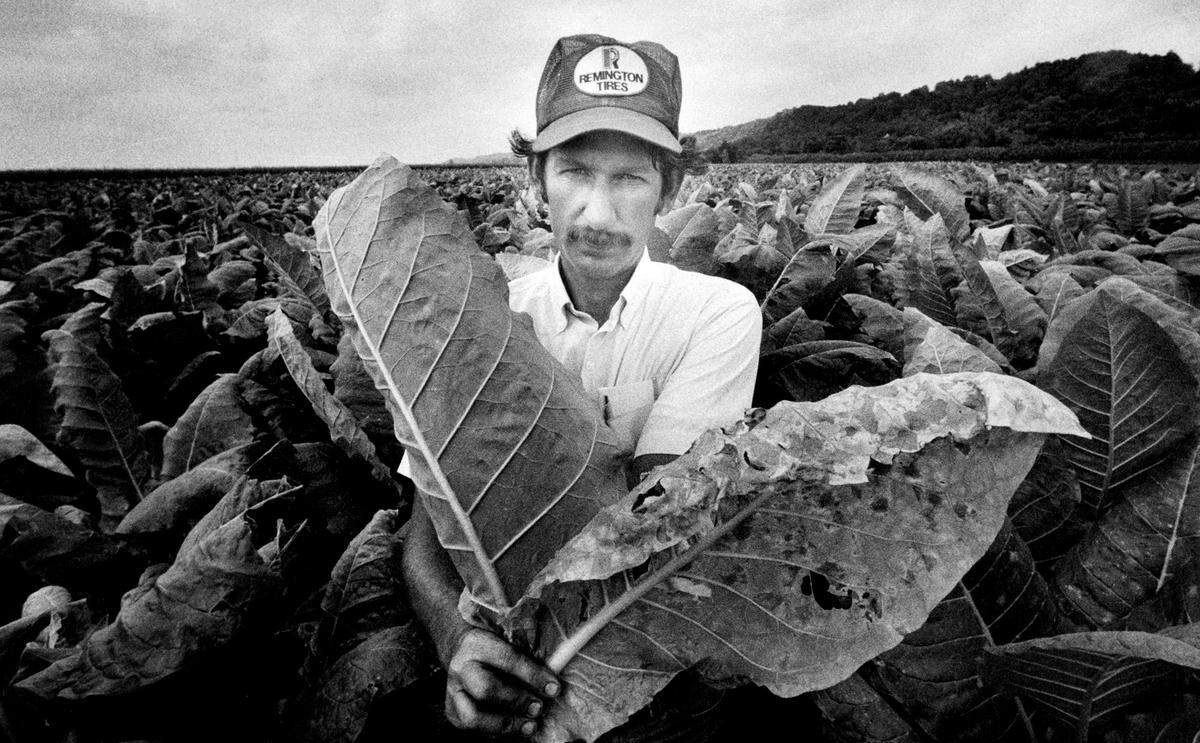
Gary Anderson, a Platte County tobacco farmer, holds a healthy tobacco leaf, left, and a leaf that was devastated by blue mold fungus near the bottom of the plant in this 1990 photo. Kansas City Star archives
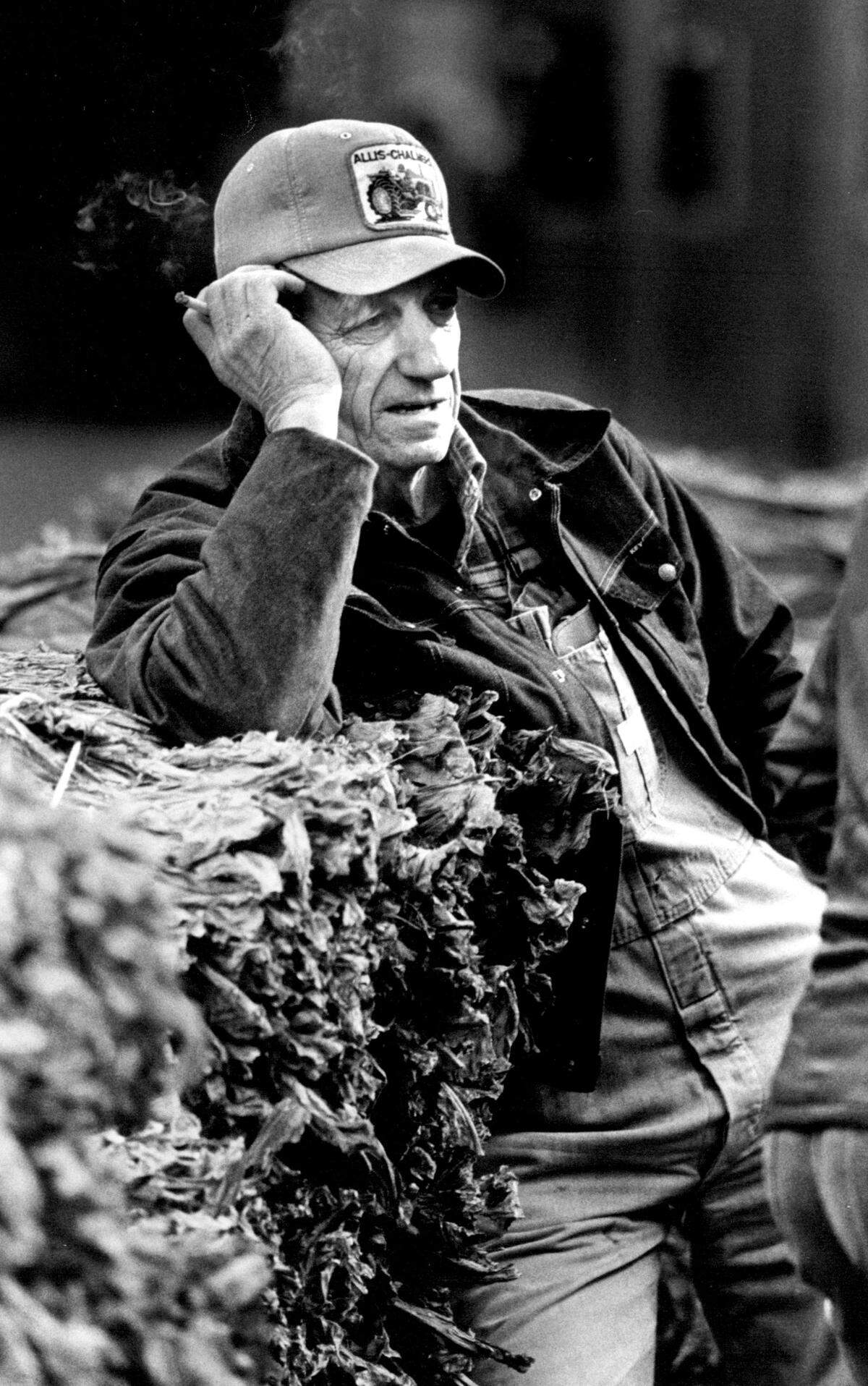
Lifelong Weston tobacco farmer Earl Manley waits for the auction to start in 1982 Kansas City Star archives
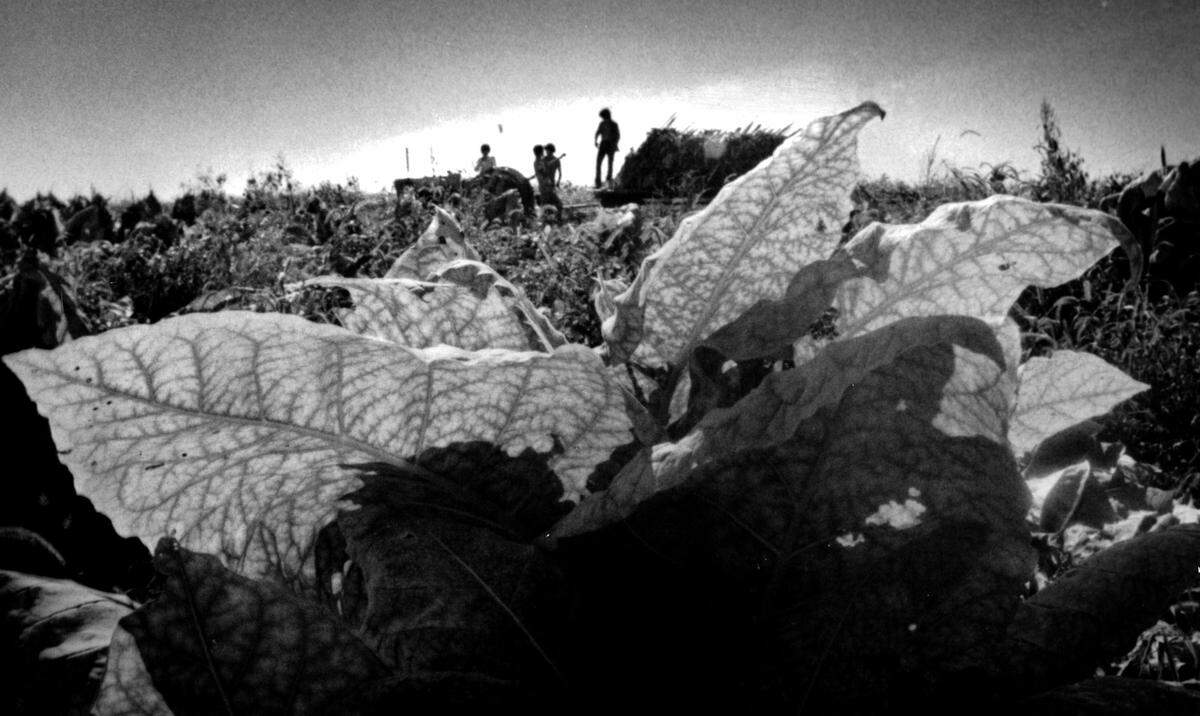
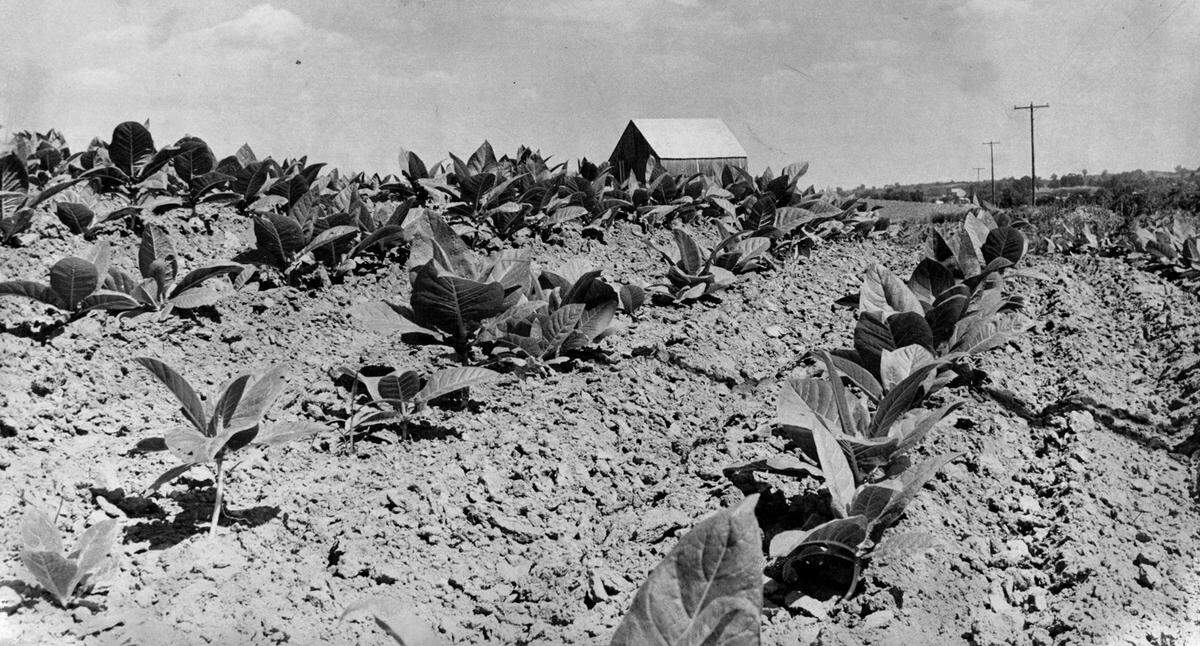
1974 photo: They are green now, but eventually these burley tobacco leaves growing alongside M-45 north of Weston in Platte County will provide pleasure for tobacco users. In the fall the plant will be cut off at the base and hung in barns, such as the one in the background, to dry. The leaves will be stripped off and sorted according to quality. They will be bound into bundles and sold at auction in Weston tobacco warehouses. About 5 million pounds of burley tobacco are sold annually at Weston. Kansas City Star archives
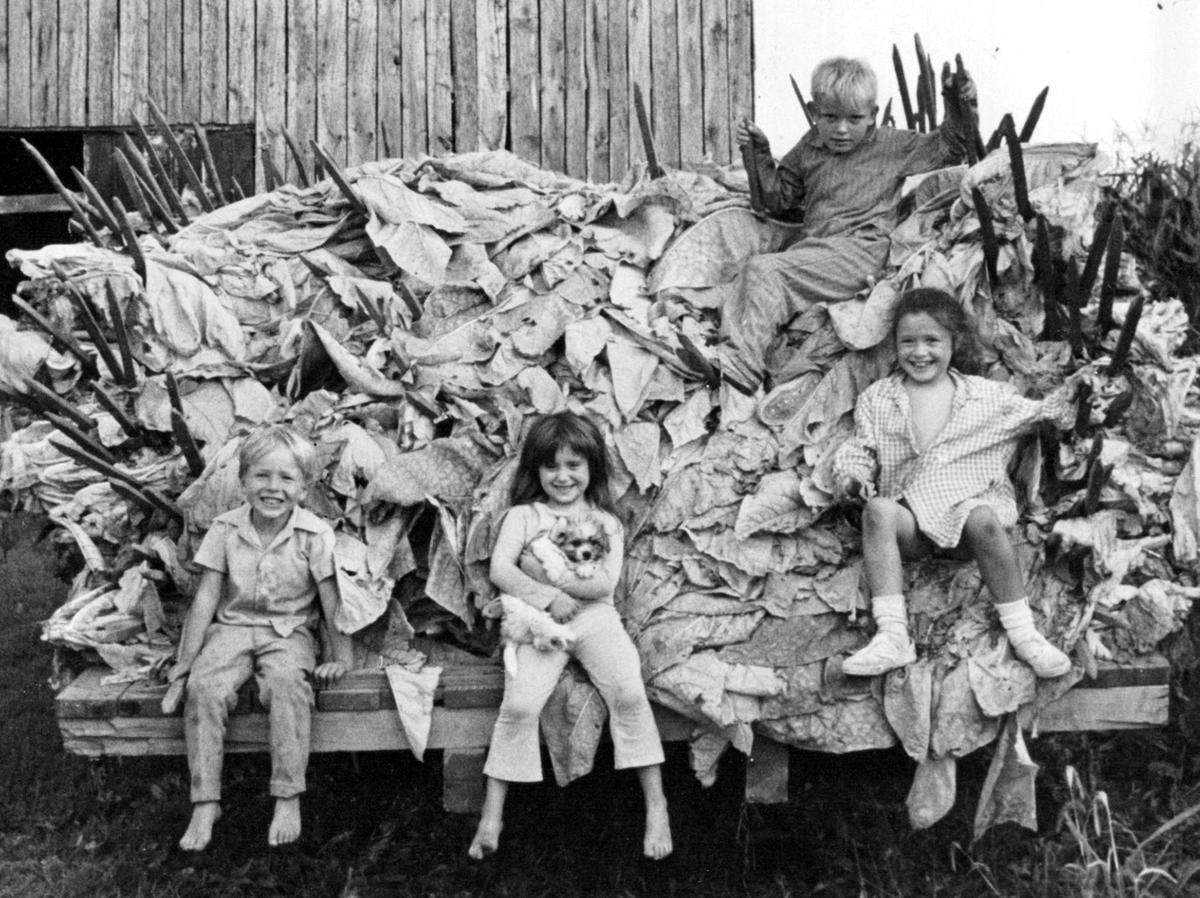
Riding with a load of tobacco to the housing barn are four children of Mr. and Mrs. Bill Lester, from left: Joe, 4; Jana, 5; Kenneth, 8, and Kathy, 7, in this 1972 photo. The load of tobacco stalks were harvested on the Lester farm near Weston in Platte county. Roger Reynolds The Kansas City Star
Tobacco planting is a Howe Shanks family project who are shown setting out the seed plants for the 1952 tobacco crop. Kansas City Star archives
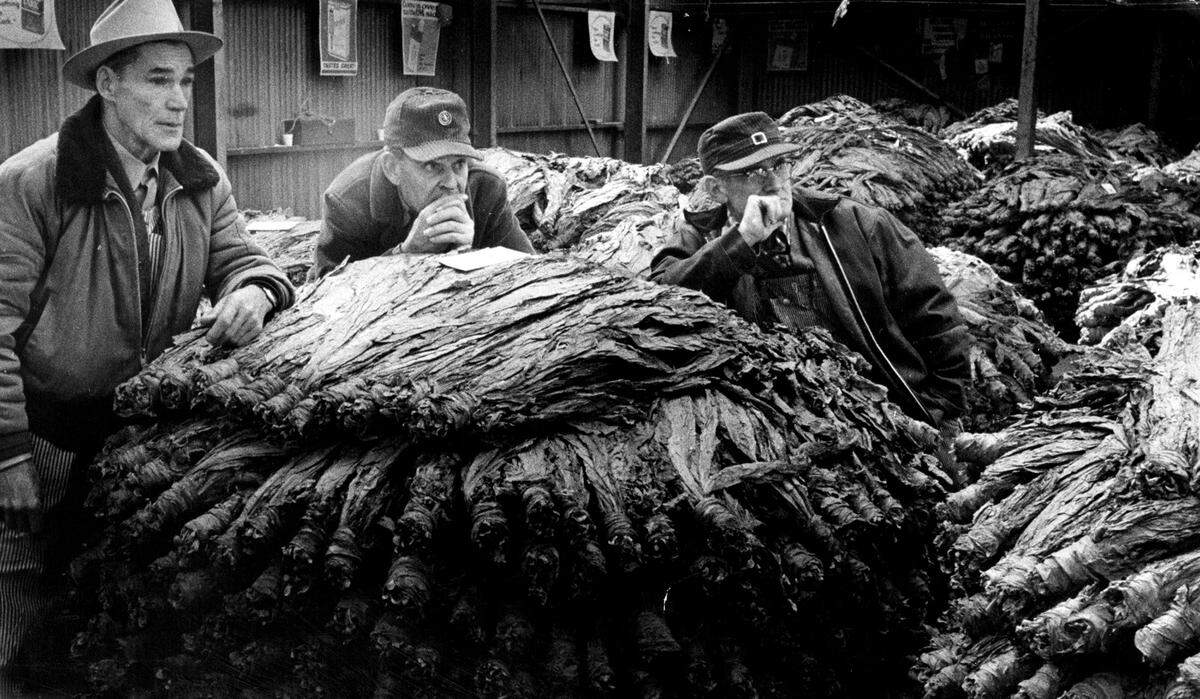
Three tobacco growers from Weston watch as inspectors from the Department of Agriculture grade the growers’ crops and set minimum prices in 1972. The growers are A. Smithers, left, Floyd Bramble and Ben Craven. The grading occurs daily at the Weston Burley House, Inc. After inspectors finish grading, the tobacco is auctioned to national tobacco companies. Kansas City Star archives
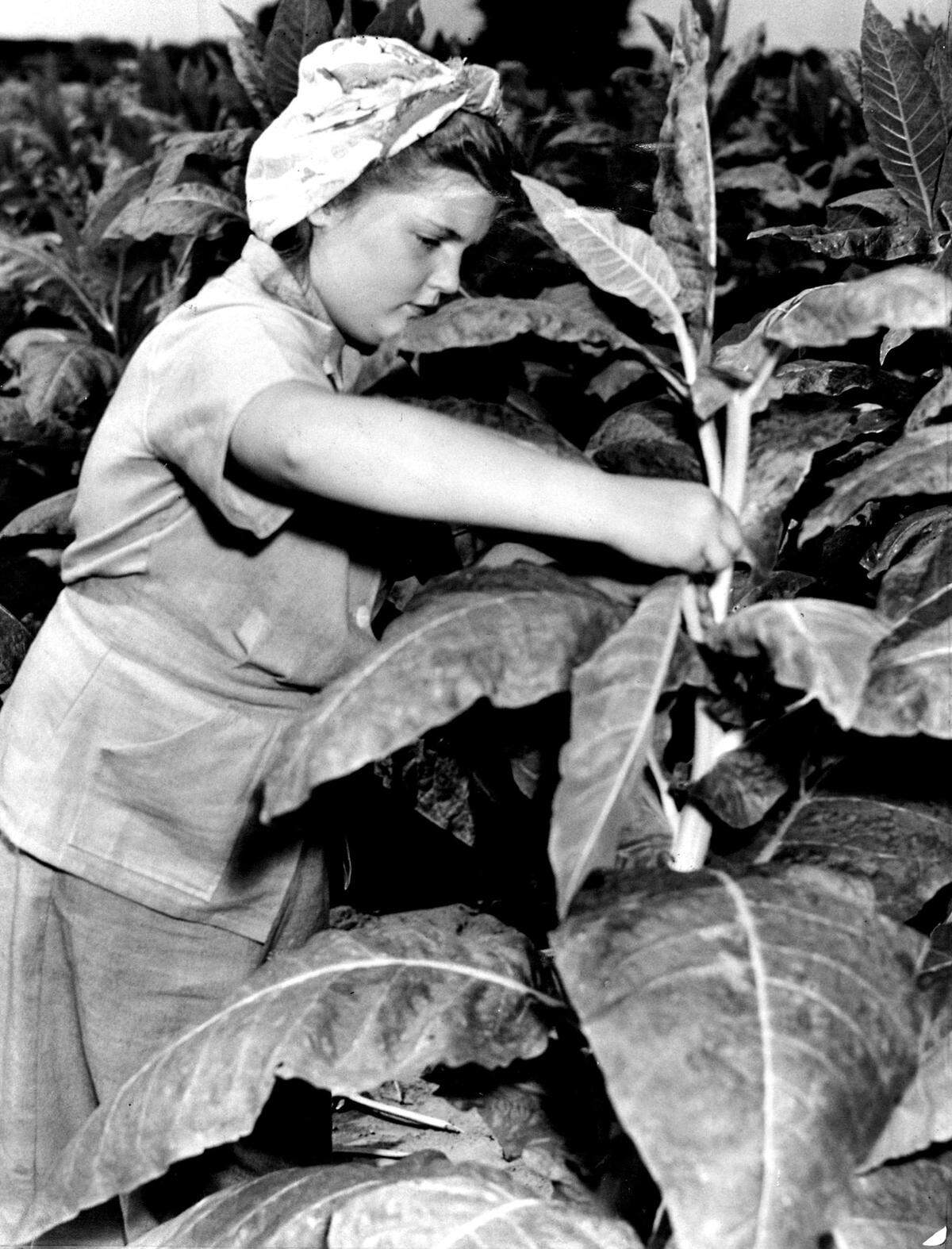
Marcia Mae Watson is removing the tops from one of the two rows of fine white burley which she planted and is caring for herself in 1944. The two rows, 1,320 feet long, will yield about $175 for Marcia Mae. The tops are removed so the stalk will leaf out, with a resulting better quality and yield, rather than growing higher. Kansas City Star archives
Monty Davis is a video producer and has been with The Kansas City Star for 20 years. He specializes in telling human interest video stories using mobile gear such as his iPhone 13 Pro. Recently he took up an interest in deltiology which is the study and collection of postcards. From that came a new series for The Star called Past | Present. When he’s not working, he’s spending time with family, his pugs, kayaking and reading historical biographies about the American Revolution and the Civil War.