
A lesbian enclave in midtown Kansas City? Inside Womontown’s rich LGBTQ+ history
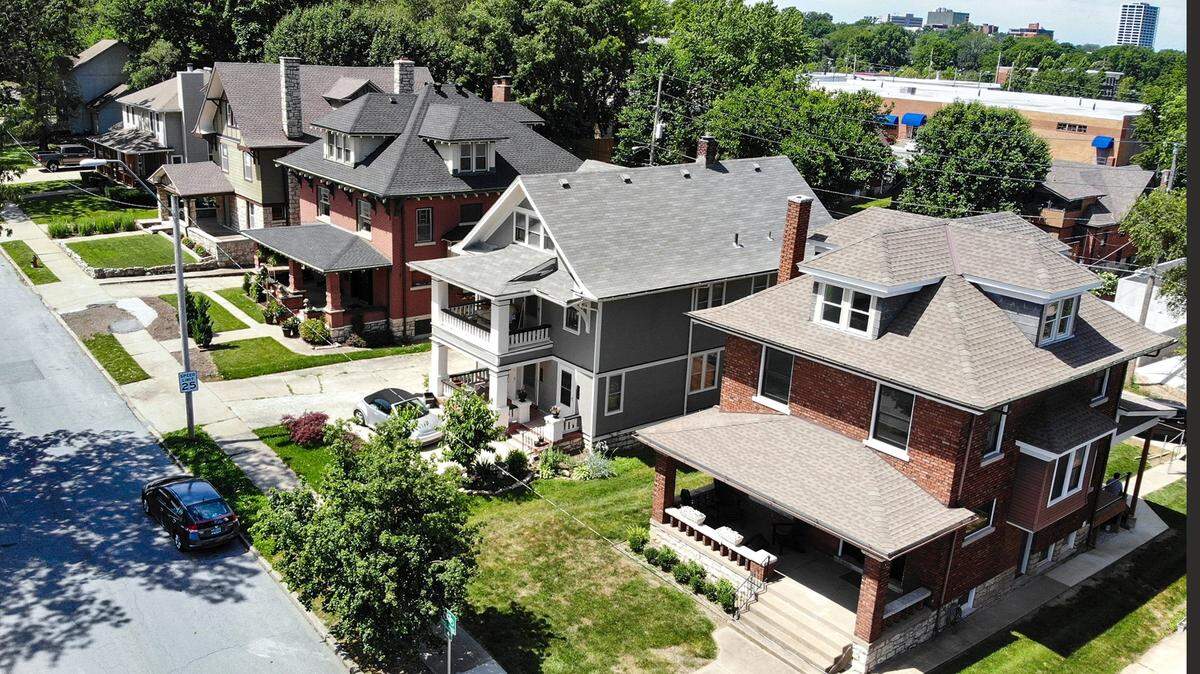
The Longfellow neighborhood of Midtown Kansas City is known for its quiet, shady streets and the whimsical fairy houses tucked in the roots of the big trees lining its roads.
But next Thursday, June 13, the neighborhood will commemorate a lesser-known part of its unique history: as the site of an intentional community of lesbians in the early 1990s.
Known as Womontown, this queer enclave is the subject of a short documentary from Kansas City PBS, which is free to watch online. While the community has largely disbanded in the past three decades, some women who bought homes in the original Womontown still live in them today.
Here’s what to know about the upcoming celebration and the history of this unique Kansas City community.
What is Womontown?
The idea of an intentional lesbian community probably calls to mind an organic farm or an artists’ retreat in the mountains. But partners Andrea Nedelsky and Mary Ann Hopper wanted something different: an urban enclave where women could enjoy all the benefits of city life without fear of harassment.
They set out to create such a neighborhood in Longfellow, the residential area tucked between Gillham Road and Troost Avenue just north of 31st Street.
“We just started imagining, what if we could just walk hand in hand freely down the street, a bunch of lesbians all in this neighborhood?” Hopper said in the 2022 documentary. “And I thought, well, if we can do the work, then I can imagine it would maybe be fun to live here.”
The couple bought a home together and began their outreach efforts to bring lesbians from around Kansas City to move to Longfellow. In an effort to distance themselves from a reliance on men, they adjusted the name of the community to avoid the words “man” and “men.” Womontown (pronounced “woman-town”) was born.
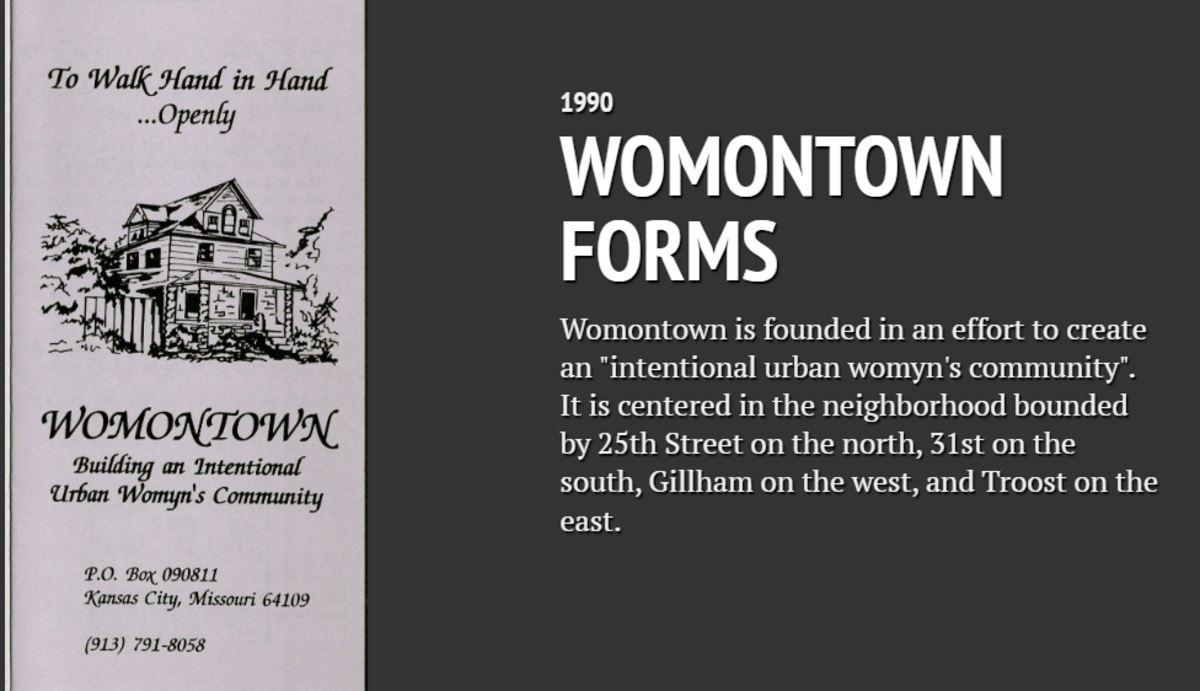
Together, Nedelsky and Hopper coaxed friends and strangers alike from around the country to Kansas City. The fledgling community set up support systems, from potluck dinners to temporary lodging for new arrivals to help renovating newly purchased houses.
“We weren’t an exclusive community in that anyone could buy a house there,” former resident Martha Haehl said. “But by that concerted effort to get women to buy houses, we formed a nice social community.”
Womontown eventually grew to cover 12 blocks in Longfellow, complete with quirky details like purple-painted fire hydrants and an unofficial security patrol of lesbian residents driving decommissioned U.S. Postal Service vans.
The “Dutch Hill flag,” a purple design featuring three tulips that had previously been used to represent the nearby Dutch Hill neighborhood, became the unofficial symbol of Womontown. Residents would hang it on front doors and porches so lesbians could identify one another.
At its peak in the mid-90s, more than 80 women called Womontown home. Together, they owned 28 homes and 14 apartment buildings in Longfellow. While many of these residents eventually moved away in the decades that followed, the neighborhood served as a haven for LGBTQ+ women despite a lack of widespread acceptance.
How will Longfellow celebrate Womontown next week?
The Gay and Lesbian Archives of Mid-America at UMKC will place and dedicate a bronze plaque commemorating Womontown’s history at a ceremony in Longfellow next week.
The plaque, which features the neighborhood’s iconic tulip design, will be unveiled on the triangle at the intersection of Charlotte Street and 27th Terrace. You can attend the dedication event starting at 4 p.m. on Thursday, June 13.
The event will also feature guest speakers, including some original residents of Womontown, as well as a performance by the Sass-a-Brass Band, Kansas City’s queer parade band.
Do you have more questions about LGBTQ+ history in Kansas City? Ask the Service Journalism team at kcq@kcstar.com.
This story was originally published June 6, 2024 at 7:00 AM.
.jpg)