Kansas City roads are more deadly than ever. So why is traffic enforcement declining?
Kansas City has a deadly problem — traffic crashes are claiming lives at a faster rate than ever before.
But as fatal crashes have soared, police traffic enforcement has plummeted.
As of the end of June, 49 people have been killed on the city’s roads and highways this year. That’s up from 39 for the same time last year, an increase of nearly 26%.
Police say a common theme is playing out with this year’s increase in fatal crashes: excessively high speeds, lack of seat belts and impaired drivers, sometimes all three at once. While police place the blame on drivers’ risky behaviors, an analysis by The Star found that police traffic enforcement efforts to curb unsafe behavior have been declining for years.
Since 2020, Kansas City police have issued nearly 63% fewer traffic citations, even while the number of fatal wrecks has skyrocketed. In 2014 and 2015, Kansas City police issued more than 220,000 citations each year. Last year, it was under 50,000.
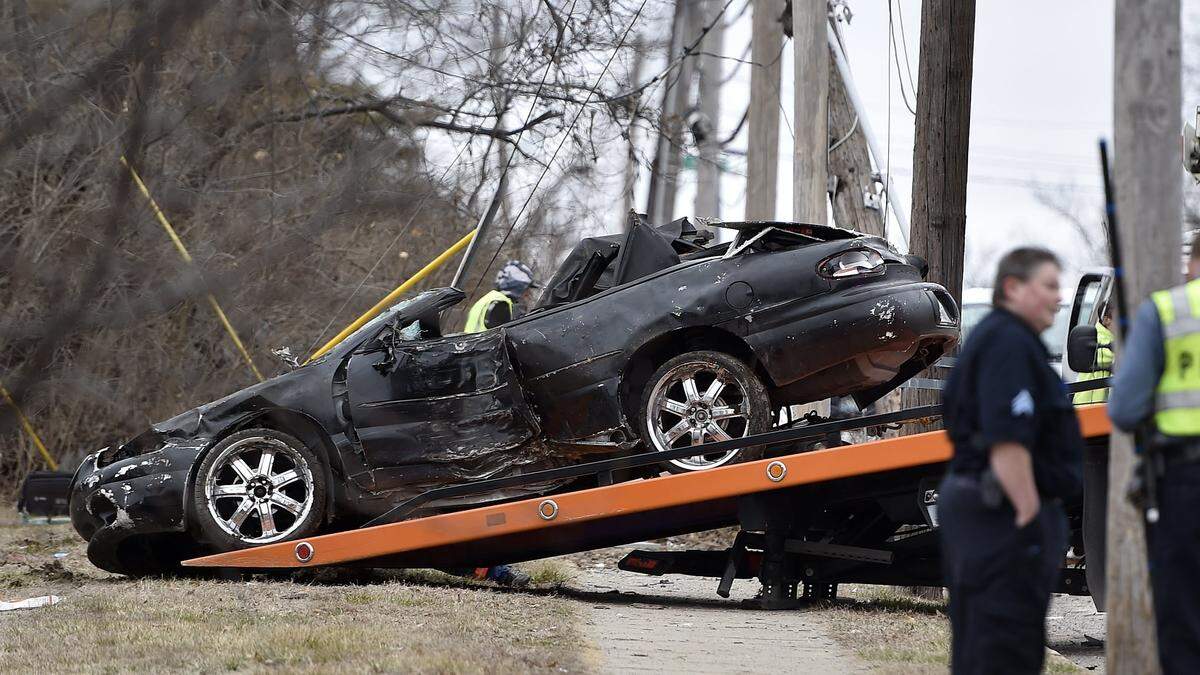
On June 7, in one of Kansas City’s latest deadly crashes, the driver of a speeding Chevrolet Silverado headed northbound on Troost Avenue near 83rd Terrace swerved and plowed into the driver’s side of a GMC Terrain turning south onto Troost, killing the driver, LaShan Townsend-Gunnels, a 52-year-old mother and grandmother.
Townsend-Gunnels had just dropped off a grandson at a summer day camp when she was hit. She died seven days later after her husband, Glenn Gunnels, made the difficult decision to take his wife of 24 years off life support. She became the 48th person to die in traffic crashes on Kansas City’s streets.
.JPG "image000000 (4).JPG")
Kansas City police said that as of late June, they were still investigating the case, but there have been no arrests or charges.
For Gunnels, the dangers of Kansas City streets are all around him. On his way to take his grandson to an eye doctor appointment, he noticed another wreck. Three cars abandoned near 87th Street and Raytown Road — one hit a tree and two others were left in ditches near the road, he said.
He said he often sees drivers speeding well above the limit. The driver who hit his wife was traveling around 80 to 90 miles per hour on a road where the speed limit is 40, he said.
“I just feel like there should be more enforcement of it,” Gunnels said. “People are driving too fast and there’s no repercussions.”
While the declining numbers of citations can’t be blamed entirely for the increase in traffic deaths, many traffic safety experts believe that enforcement is one of the key tools to deter bad driving behaviors that lead to traffic crashes and deaths.
“We have been talking very loudly for the need for traffic enforcement because we know it works,” said Pam Shadel Fischer, senior director of external engagement for the Governors Highway Safety Association.
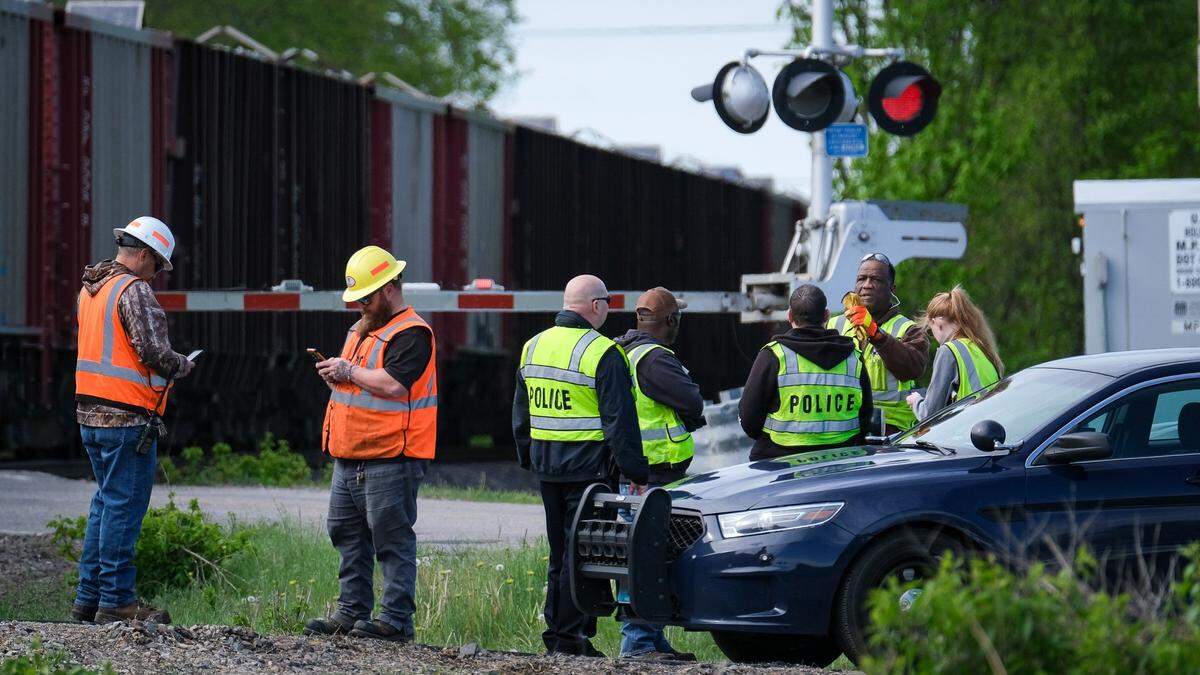
Police blame the declining enforcement on staffing shortages.
“Make no mistake about it we do realize the community wants enforcement of speeds and safety on our roadways and even though staff is down, and the numbers of car stops are down, that doesn’t mean we don’t make the best use of the resources we have and conduct traffic enforcement when able,” said Sgt. Phillip DiMartino with the Kansas City Police Department. “We hear the community’s concerns and we work hard to address them.”
But police data shows the enforcement declines have gone on longer than the staffing problems.
Fewer officers, declining enforcement
Police could not explain the reasons for that decline other than to say it was a staffing issue, and that existing officers were being asked handle additional tasks. Staffing over the last few years has affected all reaches of the agency, DiMartino said.
He said there had been no policy changes about car stops and officers’ ability or direction to do so.
As of January, the police department’s traffic division had just 72% of the officers budgeted. The division, which includes the traffic enforcement and traffic investigations units, had 52 officers, but should have 71, according to numbers provided by DiMartino.
The traffic division’s staffing problems first appeared in 2018, when it had 65 of 71 officers. The last time the traffic division was nearly fully staffed was in July 2020, when it had 73 of its allotted 74 officers. Since then, staffing has declined rapidly.
As staffing has gone down, police said the number of tasks their traffic officers have been asked to handle has gone up.
“In recent years, the traffic enforcement officers have been tasked with helping patrol officers with accident reports,” DiMartino said. “That leads to the primary members who would otherwise be conducting speed enforcement to be otherwise occupied.”
Besides fatal and serious injury crashes, the traffic division is also tasked with responding to less serious crashes, as well as to homicides and Operation 100s to block streets. The officers are handling additional responsibilities too, including traffic control for things like the Chiefs parades and games, Westport and other entertainment districts on weekends and dignitary escorts.
“Obviously when you have a shortage and then you have all the other additional responsibilities, you’re going to have less enforcement,” Sgt. Jonathan Rivers, a supervisor with the Kansas City Police Department’s accident investigation unit.
But Kansas City police maintain they’re still actively involved in traffic enforcement efforts. To illustrate that, DiMartino highlighted some recent enforcement efforts publicized by police on social media.
One Sunday night in April, teams of officers using tire deflating devices broke up dangerous sideshows that popped up across the city, said one tweet on X, formerly known as Twitter. Officers, who deployed 39 of the devices successfully, issued 27 traffic citations and made five arrests on outstanding warrants.
In May, police tweeted they would be “out and about” in Kansas City on a First Friday “dedicated to keeping you safe and our roadways free from dangerous driving.”
Motorcycle officers conducted seat belt enforcement across the city on May 15, stopping 215 vehicles and issuing 194 seat belt tickets and 72 other citations.
The following Friday, police tweeted they were continuing to have a presence in the entertainment districts with the goal of reducing dangerous traffic issues like street racing and illegal ATV and off-road vehicles on the streets. The previous weekend, police issued 130 tickets and responded to 29 calls. Officers made arrests, towed vehicles and recovered a gun from a suspected impaired driver.
Kansas City Mayor Quinton Lucas said in a recent interview that one of their biggest focuses is to ensure the city is addressing traffic issues with the police traffic division.
“We are trying to make sure that we have enough police officers to write these tickets to get the citations that are necessary,” Lucas said. “I think as you see more staffing, then we’ll probably see citations return to the levels that existed before.”
The city council in March passed a $2.3 billion budget that included pay raises for police officers and a 30% increase in starting salaries from $50,000 up to $65,000. Since then, Kansas City police have seen a significant increase in the number of police officer applicants, said Officer Alayna Gonzalez, a Kansas City police spokesperson.
Lucas also thinks the possible return of red-light and speed monitoring cameras could be a part of the solution, noting he believes the biggest need is to get people to slow down.
“I don’t think we exclusively want enforcement to be our solution and guide, but I think that there are also many other ways that we can try to ensure that we come to a better solution long term,” Lucas said.
Could 2024 be the deadliest year?
The deadliest year for traffic deaths in Kansas City came in 2020, with 103 deaths.
Last year, there were 102 persons killed, finishing just shy of tying the record.
With this year’s number of deaths outpacing last year’s, there is concern that 2024 could shatter those numbers, becoming the deadliest year on Kansas City’s streets.
While the main causes of the increase in traffic deaths are high speeds, seat belt use and impairment, often it’s a combination of all three, Rivers said.
“We have very few (fatality crashes) where someone’s been wearing their seat belt and has not been impaired,” he said.
About 90% of this year’s traffic deaths are people who died not wearing seat belts in vehicles that require them, Kansas City police said recently on X.
But seat belt usage is not the only problem. Speed is too.
“We’re seeing excess speeds,” Rivers said. “We worked several fatality crashes where speeds have been well over 100 miles per hour in a 35 mph zone.”
Drivers are not just flooring it on area highways. They are barreling down city streets too, including along main arteries like Martin Luther King Jr. and Van Brunt boulevards. Even residential streets aren’t safe from drivers traveling too fast.
“We’ve seen high speeds in neighborhoods, maybe not the hundred, but definitely the 70s and 80s,” Rivers said.
Speeding has been up nationwide since the 2020 pandemic and protests, said both Rivers and Fischer. Fewer cars on the road, they said, gave drivers the green light to go faster.
Concerns over virus transmission amid the pandemic and police brutality in the wake of the George Floyd murder and protests caused some shifts in enforcement and policing policy, they said. There were efforts to reallocate funds from police departments to non-policing forms of public safety and community support services. Some police agencies changed the way they handle traffic enforcement, such as cutting traffic stops for low-level offenses.
Although Rivers mentioned the protests, he said they did not affect the way Kansas City police enforce traffic laws.
The decline in enforcement is not just in Kansas City, said Fischer, the traffic safety expert with the Governors Highway Safety Association. It’s happened across the nation.
“We’ve certainly seen a decrease in traffic enforcement since the onset of the pandemic, coupled with the murder of George Floyd,” Fischer said.
Word got out to the public that police were pulling back enforcement and with a drop in the number of people out on the roads, drivers engaged in more unsafe behavior, Fischer said. That risky behavior hasn’t abated, and in some cases has gotten worse.
Nationally, traffic deaths soared up to 39,007 in 2020, up 7.3%, from the previous year. In 2021, traffic deaths rose another 10.8% to 43,230, according to National Highway Traffic Safety data.
Since then, the number of deaths nationwide has declined to an estimated 40,990 last year. But in Kansas City, although 2021 deaths dropped below the 2020 peak, they’ve risen every year since.
For Kansas City to see the number of fatal traffic crashes slow, Rivers believes, it will ultimately come down to people realizing they can’t drive however they want.
“There seems to be just a general decline of I would say civility in the city where people just seem to think they can drive however they’re going to drive,” Rivers said.
It’s a problem that’s personal for police officers, who, Rivers said, are “tired of knocking on people’s doors and telling family members that someone has died in a collision that was totally preventable.”
“We see a lot of young people that die. It’s needless. It’s senseless,” Rivers added.
Unsafe roads, unjust enforcement
Some experts point out that making roads safer is not just about more enforcement; it’s about better, more equitable enforcement.
“A person should not be pulled over, you know, because of the color of their skin or the type of vehicle,” Fischer said. “A person should be stopped by a traffic enforcement official if they’re engaging in risky driving behavior.”
When looking at enforcement, it’s important to look at the type, said Allie Preston, senior policy analyst for Criminal Justice Reform at American Progress.
There are stops done for legitimate safety purposes, like speeding, swerving in and out of lanes or other sorts of behavior that pose an imminent threat to other drivers, Preston said.
But evidence from across the country shows that officers are prioritizing low-level traffic violations that have nothing to do with traffic safety. Instead, police are too often targeting drivers for such things as having items dangling from rear view mirrors, brake lights out or problems with license plate or car registry, Preston said.
Officers use pretextual stops to speculatively investigate matters unrelated to motorists’ driving and traffic safety, Preston said.
The practice of pretextual stopping, and the way traffic is enforced in general, “leads to really, really harmful outcomes particularly for Black and brown drivers,” Preston said.
“There’s significant evidence that shows that Blacks and Latinos are more likely, when compared to their white driving counterparts, to be pulled over for a low-level traffic violation, and they’re also more likely to be searched once the stop takes place,” Preston said. “But interesting, these are the same drivers that are less likely than their white counterparts to actually be caught with any sort of contraband like weapons or drugs.”
Despite that, Black and brown drivers are pulled over at higher rates because of racial profiling, Preston said. To address this, cities like Fayetteville, North Carolina, Philadelphia, Oakland and San Francisco have adopted policies to reduce stops for minor infractions.
In 2021, the Kansas City city council eliminated jaywalking to reform city laws that were disproportionately applied to people of color. They also removed penalties for operating a vehicle, bicycle or “electric micro-mobility devices” like rentable scooters with dirty tires, and removed language allowing police to inspect bicycles — doing away with the use of such laws for pretextual stops.
Preston also noted that most unsafe roads tend to be concentrated in Black and low income communities, because of generations of disinvestment in the infrastructure.
“So Black communities area really taking the burden of unsafe roads and unjust enforcement,” Preston said.
That can been seen here in Kansas City. A study for Kansas City’s Vision Zero initiative, which aims to eliminate traffic fatalities and serious injuries by 2030, found that Black people were twice as likely to be killed in traffic crashes in Kansas City as white people.
Is Vision Zero enough?
Michael Kelley, policy director for the advocacy group BikeWalkKC, favors investments in safer streets over enforcement and citations.
“When we’re talking about this idea of what makes safer streets, enforcement is not what’s going to help us. It really has to be an emphasis on building safer streets and taking steps to make it harder for people to speed and engage in other forms of reckless behavior on the front end,” Kelley said.
“More tickets does not equate to safer streets,” Kelley added. “If we want safer streets, we have to build them. We can’t enforce our way to a safer transportation system, especially when it comes to serving pedestrians, cyclists, people with disabilities and transit riders.”
Kansas City has focused on investing in projects to make streets safer with the Vision Zero initiative, announcing at a recent press conference that the city has dedicated $4 million to the initiative, up from $1 million last year. The city currently has 300 Vision Zero projects completed or underway. It also touts having more than 30 miles of lanes that protect people on bikes, scooters, foot or other modes of mobility from traffic.
But some city leaders and experts wonder whether the effort is enough.
“With this $4 million dollar investment, I think Kansas City is off to a great start, but we have quite a ways to go,” said Mayor Pro-Tem Ryana Parks-Shaw, whose district has three of Kansas City’s five most dangerous intersections. “Unfortunately with the fatalities that we are seeing in our city, we need to make a significantly more investment than this $4 million.”
Kelley, an advocate for investing in features like road diets, which intentionally narrow streets and reallocate that space for widened sidewalks, parking or protected bike lanes, sees Vision Zero as progress. But he said that while the $4 million the city has allocated toward Vision Zero is a big jump in funding, it still isn’t enough to help the city reach the 2030 goal of eliminating all deaths.
“It’s really important to understand when we’re talking about traffic fatalities and serious injuries, it is not something that is equally felt,” Kelley said. “It disproportionately harms Black Kansas Citians, it disproportionately harms lower income earning Kansas Citians. The funding that we’re beginning to allocate for Vision Zero, the city’s efforts to eliminate traffic fatalities, is a good step in the right direction, but it is not nearly enough.”
Councilman Eric Bunch said while the $4 million isn’t enough to change the entire future of transportation in Kansas City, it can be used to go after the city’s high injury network.
“We know the streets that are the most dangerous, let’s go make the fixes there that we know will have a direct impact on safety,” he said.
“But I still believe that the lowest hanging fruit is going to be some basic traffic calming and road diets and engineering and is where the city has the most chance of success, especially in an environment where we don’t control the police department,” said Bunch, referring to the fact that Kansas City is the only major city that lacks control over its own police department.
Bunch said one thing he made clear when Vision Zero was adopted was that the plan to make streets safe cannot be overreliant on enforcement, and even automated enforcement must ensure that cameras are not placed where they disproportionately affect some communities.
“We know that enforcement is fraught,” Bunch said. “We know that traffic enforcement, whether it is intentional or not, disproportionately affects people of color.”
“If the idea is that we’re trying to punish people for reckless behavior, then tickets are gonna do that, but they’re not gonna make our streets safer in the process,” Kelley said.
But to other traffic experts, including Fischer with the Governors Highway Safety Association, enforcement is still vital to getting traffic deaths down.
“High visibility enforcement where motorists see officers in marked vehicles on the roadway absolutely is shown to deter risky driving behaviors,” Fischer said.
For all, whether they’re advocating for more enforcement or more investment in making streets safe, the goal is the same.
“The real reason is because we don’t want to see the number of people we have right now dying on our streets,” Lucas said.
The Star’s Eric Adler, Andrea Klick and Nathan Pilling provided information for this story.
This story was originally published July 7, 2024 at 6:00 AM.