Olathe schools to pay $259K legal fees over former board candidate’s free speech claim
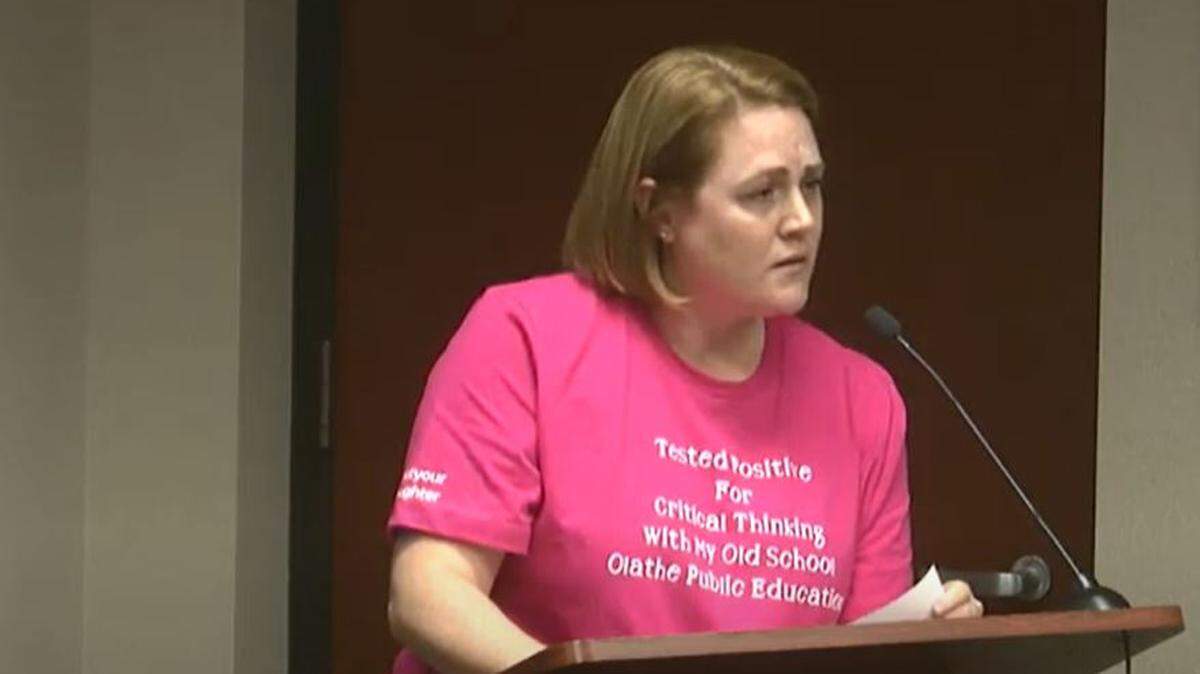
A judge has ordered the Olathe school district to pay more than $259,000 in former school board candidate Jennifer Gilmore’s attorney fees, in her lawsuit over being removed from a board meeting.
That’s on top of the $472,000 in legal fees the district has spent on the case. Gilmore, a conservative candidate who unsuccessfully ran twice for the school board, filed the federal lawsuit after she was kicked out of a meeting in January 2022 for accusing a former opponent of “buying” her seat.
Last summer, U.S. District Court Judge Holly Teeter threw out most claims brought by Gilmore. But the judge allowed Gilmore’s primary claim to stand, saying that a reasonable jury could conclude her First Amendment rights were violated because she was blocked from speaking due to the views she expressed.
And days before this past November election, a jury did just that, ruling in favor of Gilmore, saying she was prevented from speaking because then-board president Joe Beveridge did not like her views.
Gilmore lost her race for the at-large board seat, with 43.4% of votes. Will Babbit won with 56.5%. Beveridge, who had held the seat, did not seek reelection.
The judge had previously denied Gilmore’s request to pursue damages against the district and school board, so her win in court did not come with a monetary award. The jury awarded her $1 in nominal damages, designed to acknowledge that she was deprived of a federal right.
And the jury did not find that punitive damages should be assessed against Beveridge. In order to find that Beveridge should pay damages to Gilmore, the jury would have needed to agree there was proof he acted with evil motive or intent, or reckless indifference to Gilmore’s rights, according to court documents.
“This ruling should encourage other attorneys to take these kinds of First Amendment cases where no actual damages are claimed in order to vindicate the First Amendment and may it discourage government entities from using tax payer dollars, in this case over $650,000, to punish their political adversaries,” Gilmore’s attorney, Linus Baker, said in an email. “This ruling benefits all citizens from government oppression of free speech.”
After the jury’s decision, Gilmore fought for a higher dollar amount in her legal fees to be covered. The district pushed for a lower amount, partly arguing that Gilmore only saw “limited success” in her case, since most of her claims were dismissed or abandoned.
The judge wrote, “The Court finds that Plaintiff vindicated an important right worthy of fees but her requested fees should be slightly reduced based on some billing issues and on her scattershot approach to parts of the litigation,” finding that $259,000 was reasonable.
The lawsuit stemmed from Gilmore’s first attempt at winning a school board seat, in the fall of 2021, when she campaigned against mask mandates and critical race theory as part of a conservative slate. She lost to Julie Steele in a close race that was called days after election night.
After the loss, Gilmore spoke at a board meeting where she accused Steele’s father, Jim Randall, of lying and buying her board seat. Beveridge cut her off during her comments and called for Gilmore to be removed. Randall is also Beveridge’s father-in-law.
The school board’s public comment rules at the time stated that the board will not hear “personal attacks, or rude or defamatory remarks of any kind about any employee or student of the School District or any person connected with the School District.”
The policy also allowed the board president to interrupt statements that were disruptive or “not germane to the business activities of the board.”
The board adopted a new policy in April 2022, months after Gilmore filed her suit, which still includes a requirement that topics be “germane to the business of the board.” But board rules no longer include the provision about personal attacks or defamatory remarks.
This story was originally published April 8, 2024 at 11:37 AM.