Crossroads Royals stadium would take $33 million worth of properties off the tax rolls
Reality Check is a Star series holding those in power to account and shining a light on their decisions. Have a suggestion for a future story? Email realitycheck@kcstar.com.
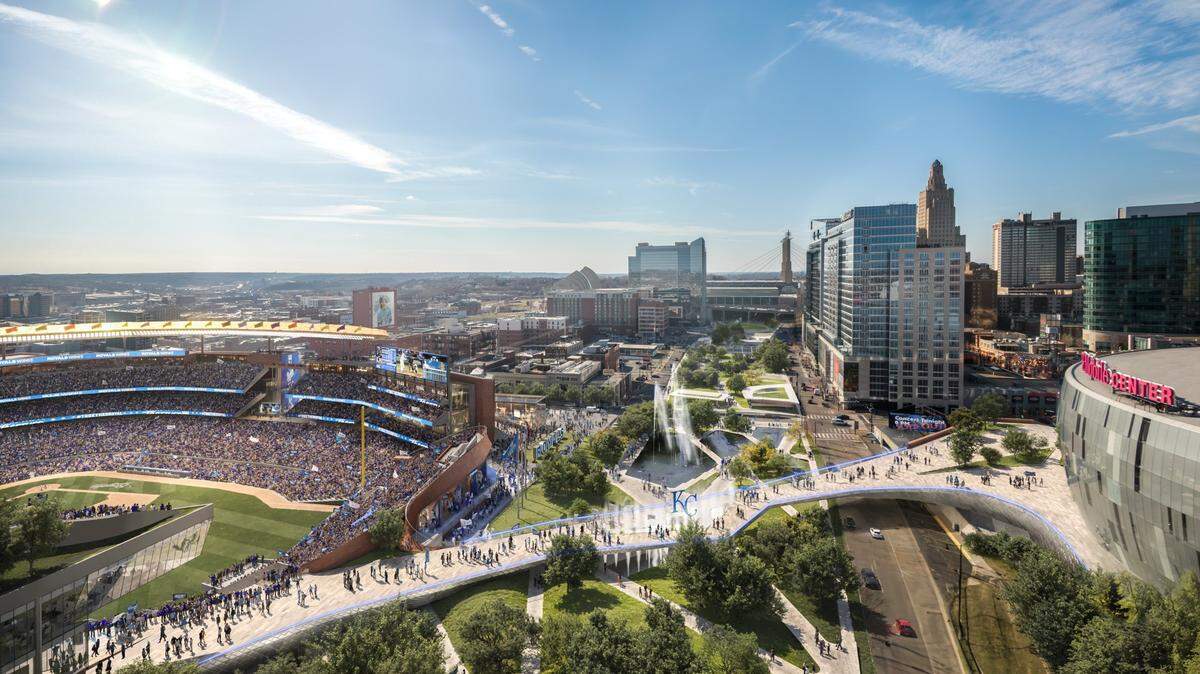
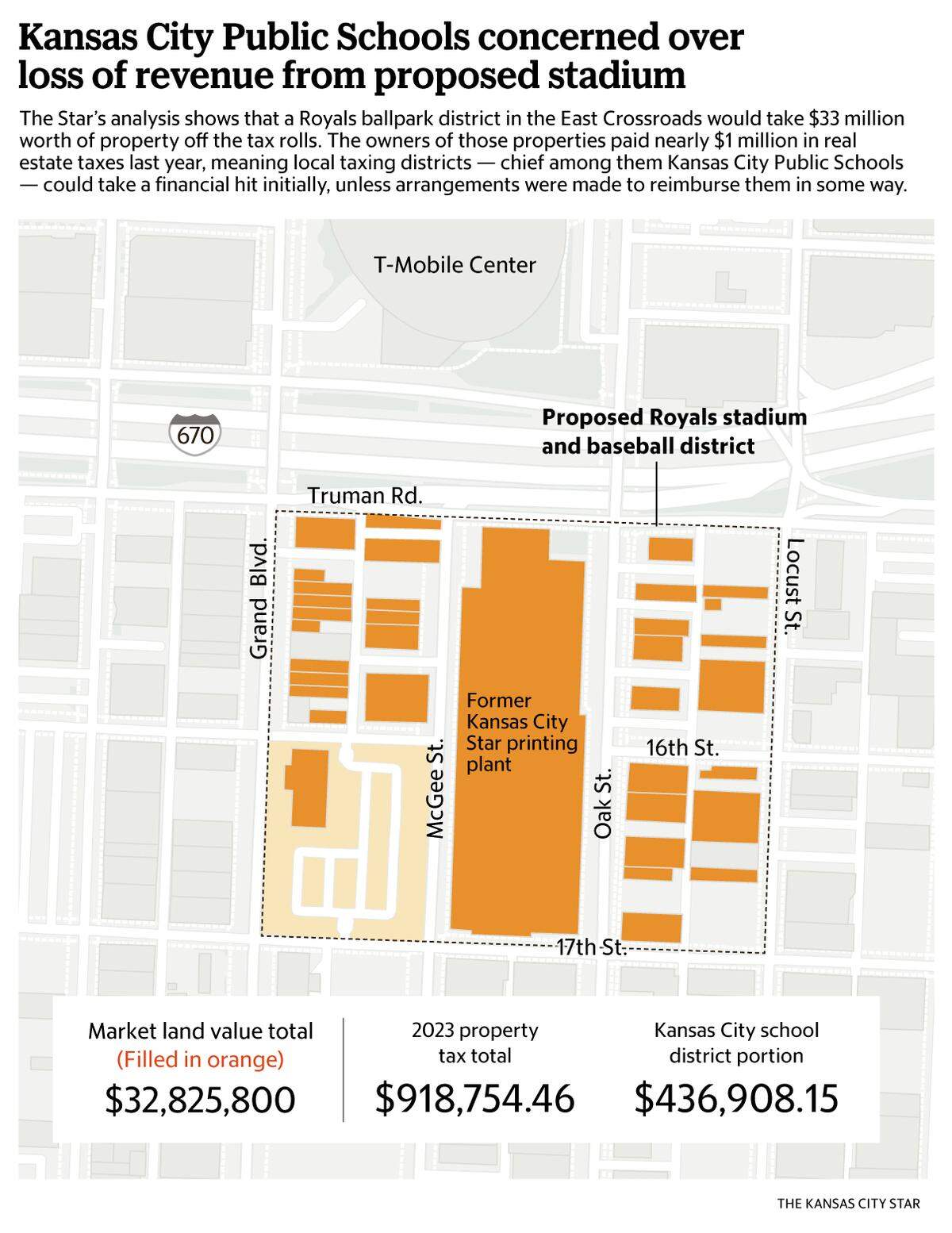
Properties valued at nearly $33 million would be demolished and taken off the tax rolls if a Royals ballpark is built in the East Crossroads, county real estate records show.
The owners of those properties paid nearly $1 million in real estate taxes last year, meaning local taxing districts — chief among them Kansas City Public Schools — could take a financial hit initially, unless arrangements were made to reimburse them in some way.
That’s because at least four of those six city blocks would be county-owned and not subject to property taxes, as the county-owned stadium would be built on top of that land.
It’s too early to tell what kind of tax impact there would be on the remaining two blocks that renderings show would house the team offices, a hotel and other commercial development.
Those dollar figures are based on The Star’s review of real estate assessment records and tax payment receipts for the 38 real estate parcels that are in the footprint of the proposed stadium and baseball district that the team said will be built if Jackson County voters approve a stadiums sales tax on April 2 and other financing is secured.: Truman Road to 17th Street, Grand Boulevard to Locust Street.
Officials at Kansas City Public Schools had similar findings from their own analysis and want assurances that they won’t lose an important stream of income that those properties now provide the district.
Of the $919,000 in property taxes that the owners of those parcels paid by the Dec. 31 deadline, more than half went to KCPS.
Assuming the ballpark stood for decades, the loss to the district would be in the tens of millions over time. And district officials stressed that the annual amount would potentially be much more than it is now, since some of the properties in the area are getting a discount on their bills from tax abatements and exemptions.
Chief among the properties benefiting from abatement is the former Kansas City Star printing plant building at 1601 McGee St., which has been taxed at a discounted rate since it was built in the mid-2000s and is not set to return to full value until 2030.
An entire block immediately west of the now-vacant Star Press Pavilion is tax-exempt entirely, except for a small amount paid to support the KC Streetcar district, records show. That property is owned by the Leawood-based United Methodist Church of the Resurrection — now re-branded as simply Resurrection.
“As our community explores the possibility of a project as significant as a new publicly-funded downtown stadium, it is imperative that the impact of this on children in this community, and the places they attend school, are seriously considered,” the district said in a prepared statement.
“KCPS has had contact with leadership from the Royals and plan to continue negotiations with the expectation that an agreement be in place before the vote in April. In considering the site location of the East Crossroads, Kansas City Public Schools must be held harmless on current and future potential revenues in the downtown baseball stadium footprint.”
The district went on to say that the loss of revenue from the properties in the ballpark district footprint “could have an adverse impact on necessary personnel and other supports we have in place for students.”
Royals owner supports schools
A team spokesman said Royals majority owner John Sherman has been “an enormous supporter of urban education.”
In a statement, the team recognized its “long-standing partnership with the Kansas City Missouri School District with support at the Urban Youth Academy, scholarships, and other enhancements for teachers and students.”
“We look forward to enhancing those efforts by incorporating and advancing District priorities as part of our ongoing CBA discussions,” the team said.
The Royals announced on Feb. 13 the organization’s selection of the East Crossroads site and the team’s plan to buy all six blocks and deed to the county the land that would be needed for the stadium.
The county already owns the Truman Sports Complex where the Royals have played their games since Kauffman Stadium (then known as Royals Stadium) opened in 1973.
At that news conference, Brooks Sherman, the Royals’ president of business operations, declined to discuss whether the team would seek the city’s help in forcing owners to sell through condemnation if they were reluctant to do so voluntarily.
He said the team would work hard to broker fair deals with property owners.
“I’ll double down on what Brooks said,” added Sarah Tourville, a Royals executive vice president. “We anticipate a mutually agreeable situation with each of those property owners.”
The Royals and team supporters have said that any loss in tax revenue at the Crossroads site would be offset by the economic activity that a new stadium would generate across the metro area. In addition to millions of dollars paid wages for construction workers, the stadium is expected to boost spending at downtown hotels, restaurants and other businesses, for instance.
“The district will spur inclusive growth and job creation, uplift the community and foster a more equitable and prosperous Kansas City,” Tourville said at the news conference. “This is much more than a ballpark. This is an investment in our community, an investment that will provide economic growth 365 days a year.”
Question 1 on the April ballot asks Jackson County voters whether they want to repeal and replace the current 3/8th-cent stadiums sales tax for the sports complex with a new 3/8-cent tax lasting 40 years to support the Royals and Chiefs.
The Chiefs announced Wednesday an $800 million renovation of Arrowhead Stadium and added attractions to the sports complex if the ballot issue is approved and Kauffman Stadium is demolished.
Chiefs owner Clark Hunt said his family would spend $300 million of that, with the rest to come from taxpayers.
The Royals have said they will spend well in excess of $1 billion on their estimated $2 billion project.
But as of Thursday afternoon, the county did not have signed leases with either team outlining how much up front public financing would come from Jackson County, nor how much would come from Kansas City or the state of Missouri.
The teams had said leases would be public by March 1.
Gov. Mike Parson said recently that there is no money in this year’s proposed budget to fund the stadium projects.
Kansas City officials have not yet disclosed how they plan to aid in construction of a downtown ballpark.
This story was originally published March 1, 2024 at 6:00 AM.