
Will Evergy’s time-based rates save money for KC area customers? Here’s what we know
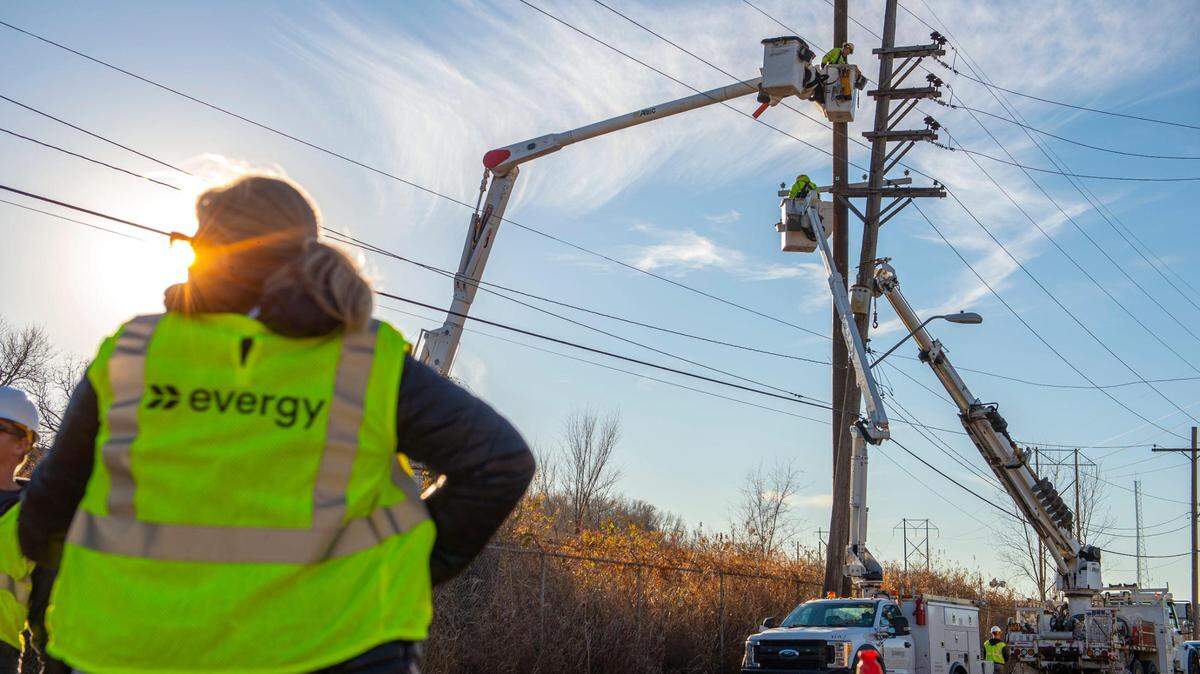
Evergy’s rollout of new electricity rates that vary depending on the time of day has already begun.
And starting Oct. 1, all Kansas City area electric customers on the Missouri side of the metro will be switched onto one of the utility giant’s four new rate plans.
The big takeaway: All four plans charge a premium for electricity used between 4 p.m. and 8 p.m. on weekdays. And they all offer some discounts on electricity used between midnight and 6 a.m. every day.
In general, time-of-use rates are intended to reduce the strain on power grids by reducing the amount of electricity customers use during peak hours.
A study commissioned by Evergy predicts that the majority of its Missouri customers, including members of marginalized groups like seniors and low-income customers, will see similar or lower electric bills as a result of the change.
But studies from other states show that the impact of time-of-use rates varies by customer — and may disadvantage some members of these groups.
Evergy did not comment on The Star’s observations about other utilities’ time-of-use programs.
“Evergy has not claimed that people will see significant savings with the time-of-use rates,” company spokesperson Gina Penzig told The Star. “Evergy would prefer to keep time-of-use rates voluntary.”
While the company initially proposed a time-of-use rate program with an option for customers to opt out, state regulators removed this option in their rate decision earlier this year.
Here’s a look at how other time-of-use programs have affected customers’ bills and energy usage around the country.
How widespread are time-based electricity rates in the U.S.?
Time-of-use rates aren’t a new concept. They fall under the umbrella of “demand response” programs, which adjust the cost of electricity regularly in order to influence customers’ behavior.
In 2021, over 10 million residential electricity customers around the country used them, according to data from the U.S. Energy Information Administration. However, they aren’t very common yet in the Kansas City region: Only around 61,000 customers in Kansas and 98,000 in Missouri participated in these programs in 2021.
Nationwide, residential customers received incentives in the form of electric bill savings totaling over $293 million in 2021 — around $28.76 per customer.
In Missouri, residential customers received around $21.45 per person. In Kansas, data wasn’t available in 2021 on how much customers received.
However, time-of-use rates don’t guarantee savings. Increased rates during peak times may cancel out these incentives, meaning these savings don’t necessarily reflect an overall decrease in customers’ electric bills.
How have time-of-use rates worked elsewhere?
Time-of-use rate programs’ impact on customers can vary widely. Several studies suggest that these rates may actually increase the burden of energy bills on low-income and otherwise marginalized customers.
A 2020 study in the journal Nature Energy found that some time-of-use rate plans led to higher bills and worse health outcomes for seniors and people with disabilities than for their able-bodied counterparts.
“Policies are needed to ensure that demand-side response does not increase hardships for vulnerable groups,” the study concluded. These policies include targeted pilot programs and careful analysis of how these groups’ electricity bills may change.
A 2016 opt-in pilot program in California found that “(time-of-use) rates unequivocally increased summer utility bills for almost all customers.” Low-income customers in hot climate zones were especially impacted, paying $20-$40 more per month for electricity than those who did not participate in the program.
“On an annual basis, about 40% of (these) customers experienced bill increases, about 50% saw bill changes of less than +/- $3, and about 10% saw bill decreases,” the study read.
Do time-of-use rates cause people to change their electricity use patterns?
It’s difficult to know exactly how Missouri’s new time-of-use rates will play out in practice. While Evergy commissioned a study on the new rates’ potential impact, it could not predict how customers may change their energy use patterns once the rates go into practice.
Studies have found that some customers do adjust when they use electricity to avoid peak times under time-of-use systems — but this isn’t always to their advantage.
A 2020 study in the journal Sustainable Cities and Society found that while some customers shifted their electricity use to fall outside of peak hours, this actually created a higher peak usage level at other times.
This negates the larger purpose of these rates, which is to reduce strain on the power grid.
“We find that dynamic pricing effectively shifts the residential peak away from the time of overall peak load across the electricity system, but can have the adverse impact of making the residential peak higher,” the study’s authors wrote.
Other customers find it harder to adjust their behavior.
A 2017 study by the American Council for an Energy-Efficient Economy concluded that low-income customers may be less able to adapt to fluctuations in electricity prices, potentially leading to higher bills.
A 2016 study by the nonprofit Rocky Mountain Institute, which supports renewable energy development, concluded that the design of time-of-use rates has a significant impact on their success. Some programs they studied didn’t impact peak-time energy usage at all, while others reduced it by as much as 50%.
Can I opt out of Evergy’s upcoming time-of-use rates?
Evergy’s new time-of-use program is mandatory in Missouri. While customers have a choice between four different rate plans, all of them contain peak-time surge pricing and overnight discounts.
The company is still offering one optional time-of-use plan to its Kansas customers.
Hover over a color on the graph below to see the estimated cost of electricity on a particular rate plan during different times of the day, week and year.
Most time-of-use programs The Star reviewed were opt-in, meaning customers had to choose to join them. And among those plans that customers are placed on automatically, most have an opt-out option.
Evergy actually proposed an opt-out option for its western Missouri customers when it first pitched this rate change to the state’s Public Service Commission, which regulates many privately owned utilities.
But the commission decided not to allow Evergy customers to opt out of time-of-use rates — despite allowing this option soon afterwards for Ameren customers on the eastern side of the state. Regulators did not respond to The Star’s requests for comment last month on the decision.
“Evergy has been mandated by the state commission to move all residential customers to time based rates,” Penzig said. “But with the four rate plans our Missouri customers can have at least have some choice on a rate plan that best works for their home.”
Do you have more questions about local utilities in the Kansas City area? Ask the Service Journalism team at kcq@kcstar.com.
This story was originally published August 23, 2023 at 5:00 AM.
.jpg)