Downtown KC could feel up to 11 degrees hotter. Check out new heat island map
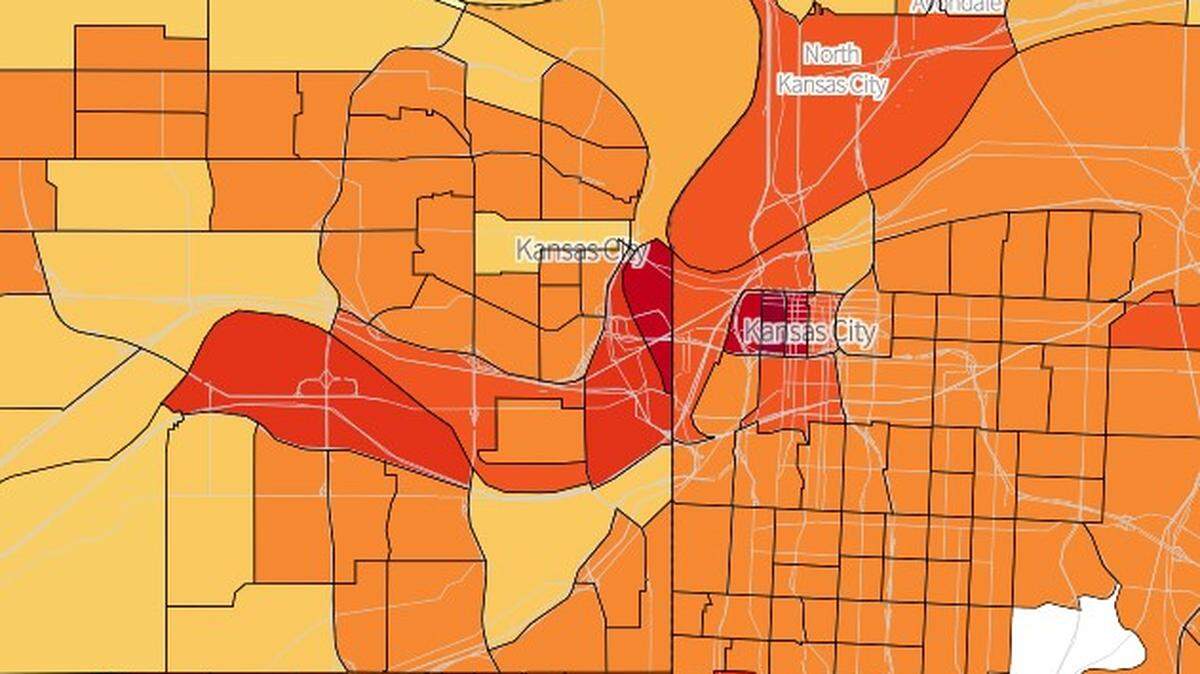
As temperatures soar in the Kansas City metro, some areas will feel more than 10 degrees hotter because of the heat island effect, according to a new analysis by Climate Central.
While weather extremes are expected to continue because of climate change, ways to address the heat island effect are relatively simple.
The study by Climate Central, a climate communications nonprofit, looked at 44 cities to understand the impact of the heat island effect, which makes outdoor temperatures feel even warmer. Areas with more buildings and less greenery absorb and re-emit heat.
Factors influencing the heat island effect include tree cover, permeable surfaces and building height and density, according to Jen Brady, a senior data analyst at Climate Central. Researchers looked at the land cover within census tracts to calculate the heat island effect. The numbers were modeled on the built and natural environments of a particular area, not on temperature readings. The group concluded that 41 million residents across the country face at least an 8-degrees temperature difference.
About 783,000 people in the metro experience at least an additional eight degrees as a result of the heat island effect, exposing them to health risks and higher utility costs, according to Climate Central.
The heat island effect was most pronounced in downtown Kansas City, from 6th to 15th streets and Broadway to Main. In that census tract, the temperature felt 11.17 degrees warmer, according to the study. The metro averaged 7.7 degrees of additional heat.
Brady said she was surprised by the study’s findings because she thought some areas would clock in at only a couple of degrees.
“Everyone kind of was four or five, really five or above,” she said. “And so it kind of showed that everyone has this little additional factor sitting on top of, especially this summer with a pretty high boost baseline temperature to start with.”
The area with the lowest heat island effect — 5.26 degrees — was a swath of Wyandotte County that runs along the Missouri River.
Brady said climate change is increasing the baseline temperatures everywhere, but there is “a hopeful side” to the heat island effect.
“We have solutions that can actually be implemented at a neighborhood level,” she said.
Tom Jacobs, director of environmental programs for the Mid-America Regional Council, said the top thing that can be done is to plant more trees.
“Trees can dramatically reduce urban heat islands and at the same time, provide all kinds of other benefits around air quality and water quality and walkability,” Jacobs said.
Municipalities including Kansas City have began to implement more aggressive tree planting and maintenance projects.
Bridging the Gap planted 650 trees in the organization’s past fiscal year, which ended April 30, said executive director Kristin Riott. Most of those were on public right of ways. The group gave away another 450 for planting on private land.
Another option is to paint rooftops white so sunlight is reflected instead of absorbed or to create rooftop gardens.
Stream restoration is another strategy since bodies of water act like “an urban air conditioner,” Jacobs said.
Other changes take place at the city planning level.
“As we think about how nature is embedded in the way a city is planned and designed and built and managed, it creates a variety of opportunities to again reduce our urban heat island,” Jacobs said. “So that’s from a skinnier street or a smaller parking lot or the way that landscaping is planned and managed around the community.”
MARC is working with Evergy on a proposal to invest in heat island mitigation measures in neighborhoods adjacent to Independence Avenue. If the plan is approved, the project would launch next year.
Jacobs said a lot of activity is happening when it comes to resilient infrastructure.
“In those kinds of conversations, the sorts of solutions that we’re talking about tend to arise and then designers work to figure out how to put the pieces together so that we have the functionality we need, the public safety that we need, the resilience that we need, energy conservation and heat island mitigation that we need,” Jacobs said.
Johnson and Wyandotte counties will be collecting heat island data on Aug. 12. The counties are 300 recruiting volunteers to put sensors on their cars and record temperature and humidity information three times that day, said Johnson County’s sustainability manager Brian Alferman.
“This will give us data that will inform how we deploy resources in the future,” Alferman said.
It will also help officials develop a heat action plan, Alferman said, because this problem is only going to get worse and put some populations at risk for heat related illnesses.
A public map with the data will be released in the fall.
Triple-digit highs are expected through Saturday in the Kansas City area, according to the National Weather Service. It called the heat in the coming days a “very unusual event” and warned that there will be little to no cooling overnight.
A list of cooling centers, where the public can access air conditioned spaces, can be found here.