
Kansas City riverfront cleanup is now in the hands, uh, mouths of these new workers
A herd of 70 goats and sheep will be hanging out along a stretch of the Missouri River for about four weeks, chewing up overgrown weeds and invasive plants.
Their visit to Kansas City, which began Saturday, is thanks to an ordinance unanimously approved by the City Council this month.
The port authority of Kansas City, or Port KC, pushed for the new law. The animals will be located between the Town of Kansas pedestrian bridge to the west and the Heart of America Bridge to the east.
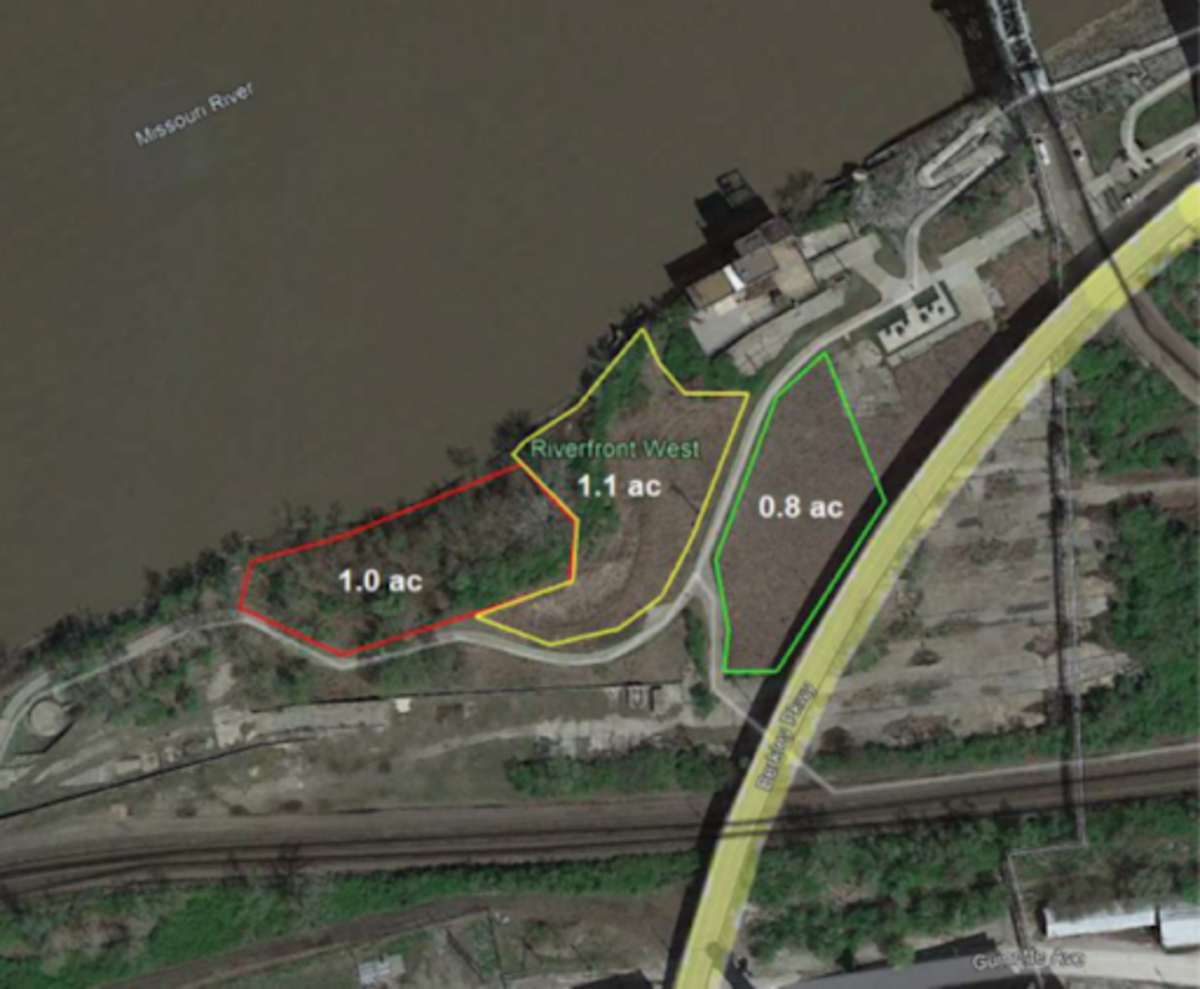
Starting east of the Town of Kansas bridge, the animals will graze in areas of roughly three quarters to one acre, according to Margaret Chamas, the project manager for Port KC’s effort. They’ll cover about three acres total by moving to a new section of land every three to five days. This way they don’t get hungry and try to escape the fencing. Or, in contrast, they won’t spend more time wandering than eating in a larger area.
Some of the land on the riverfront is steep with treacherous rocks and some “is very, very, very dense brush and weeds,” Chamas said. Goats and sheep can often handle difficult terrain better than people or machinery, and they offer a vegetation management alternative to human labor, chemicals or burning.
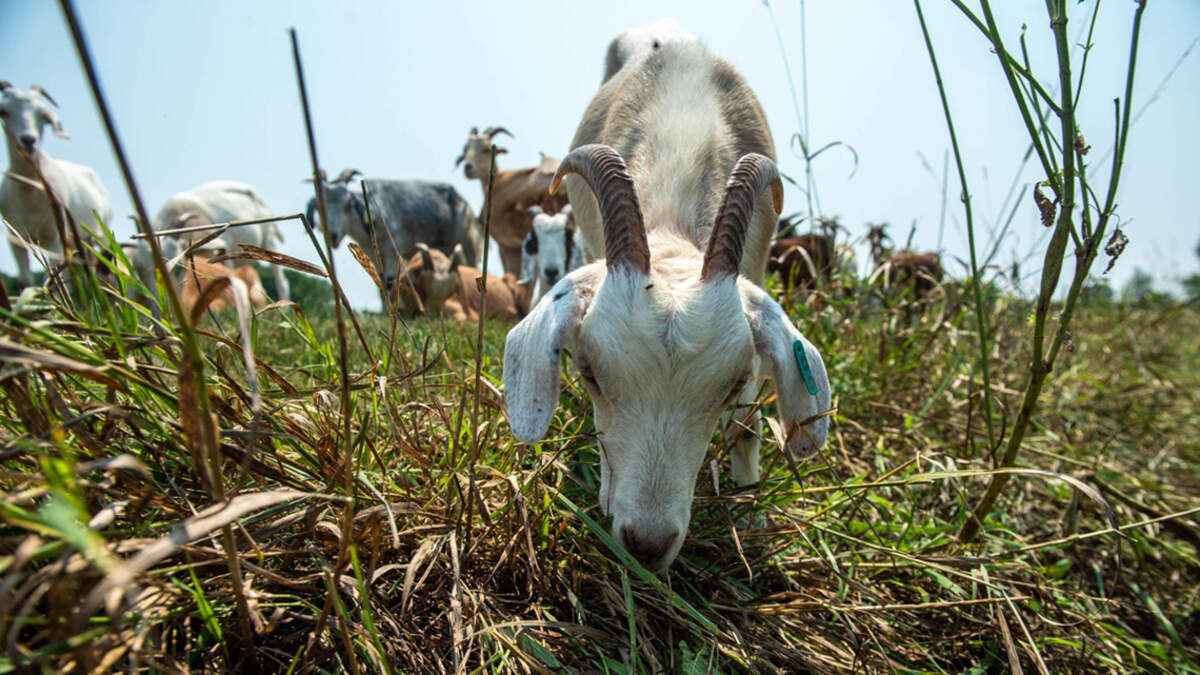
Goats on the Go is supplying the goats and sheep for the project. The company has a growing group of affiliate businesses that provide grazing services around the country.
Chamas used to own the Goats on the Go KC North affiliate, but recently sold the business. Current owner Elizabeth Parker explained that goats are transported in a livestock trailer to the grazing location and then contained on site by portable solar-powered electric net fencing.
Kansas City joins a growing trend of using goats to manage invasive species.
Lenexa started using goats to manage invasive plants in Sar-Ko-Par Trails Park a few years ago. Lawrence and Webster Groves, outside of St. Louis, tried using goats in the summer of 2021.
This month, Wichita is piloting the use of 130 goats to clear five acres of brush in a city park.
Kansas City had prohibited keeping livestock within 200 feet of a building used by humans. The only way around it was an appeal to the Property Maintenance Appeals Board. The new law creates a formal application process.
“The City recognizes that livestock may be used for an environmentally-friendly means of vegetation management and brush clearing” and wants to create an avenue for people to apply to use animals for this purpose, according to the ordinance.
The director of neighborhood services will review applications and approve or deny the temporary use of livestock for up to 30 days, with the chance to renew for an additional 30 days. An application is available on the city’s website.
Two Port KC attorneys, Brian Rabineau and Megan Elder, worked with the city to rewrite the ordinance, according to Meredith Hoenes, the organization’s communication director.
“We hope this encourages other people,” she said. “We’re hoping it kind of ignites a domino effect.”
Hoenes said the cost to bring in goats for Port KC’s project is $3,000.
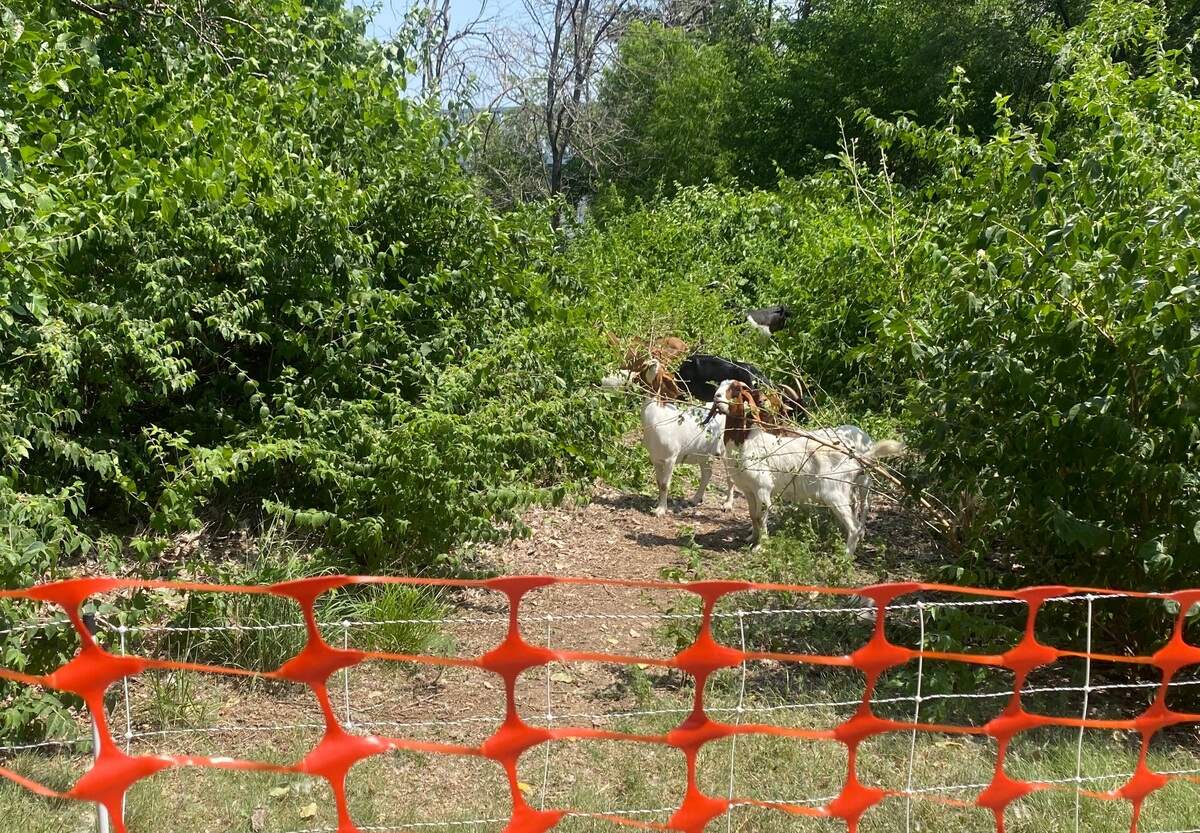
The cost to use goats for vegetation management, though, depends on a number of factors such as vegetation density and size of the area.
Angela Sokolowski, invasive species coordinator at Missouri Department of Conservation, said goats are “a good tool to have in the toolbox” when it comes to vegetation and invasive species management. They can do a lot of initial defoliation before turning to other approaches like mowing, fire or herbicides.
Repeat treatments are needed with invasive species, Sokolowski said. “You can repeatedly use goats, kind of like you would repeatedly use mowers … It’s not a one and done.”
The city of Lawrence learned about the need for repeat treatments when it used about 50 goats to clear out invasive honeysuckle in an acre of Prairie Park as a trial in 2021.
“The actual clearing part looked great. They did feed on the vegetation, knocked everything back,” said Tyler Fike, Lawrence’s horticulture and forestry manager.
But the following year, the invasive honeysuckle grew back quickly and the city chose not to bring back the goats.
Fike knew the plants would regenerate to some degree. “We just didn’t see that it was really cost effective for the results that it produced,” he said.
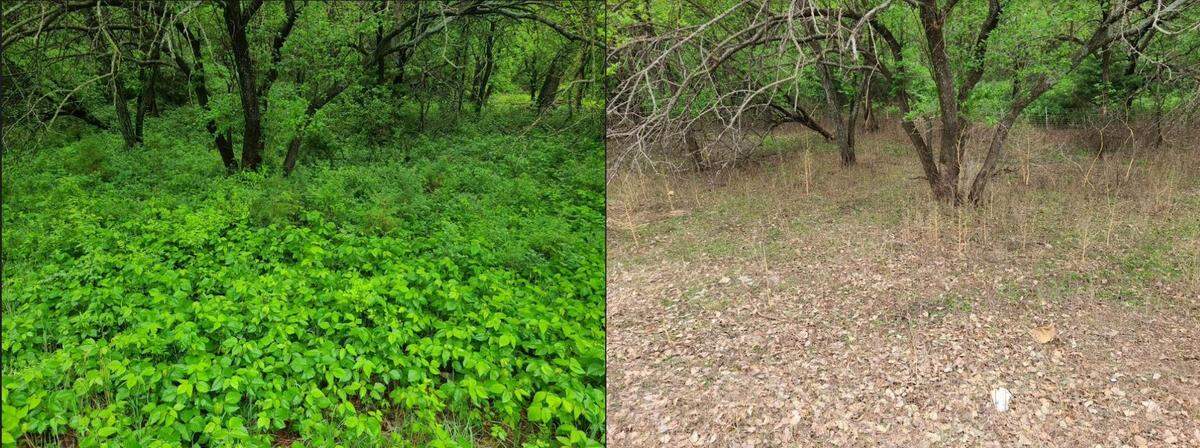
Along Kansas City’s riverfront, Chamas said that the sheep and goats will create a big visual impact, because the vegetation will transform from “tremendously thick and nasty” to very clean.
Some of it will grow back by the end of the summer, Chamas said. But unless there is a lot of rain, the improvement should last through the end of the growing season.
This story was originally published June 24, 2023 at 5:30 AM.