‘Did you do it in Spanish?’ Hispanic KCK firefighter reveals 30 years of discrimination
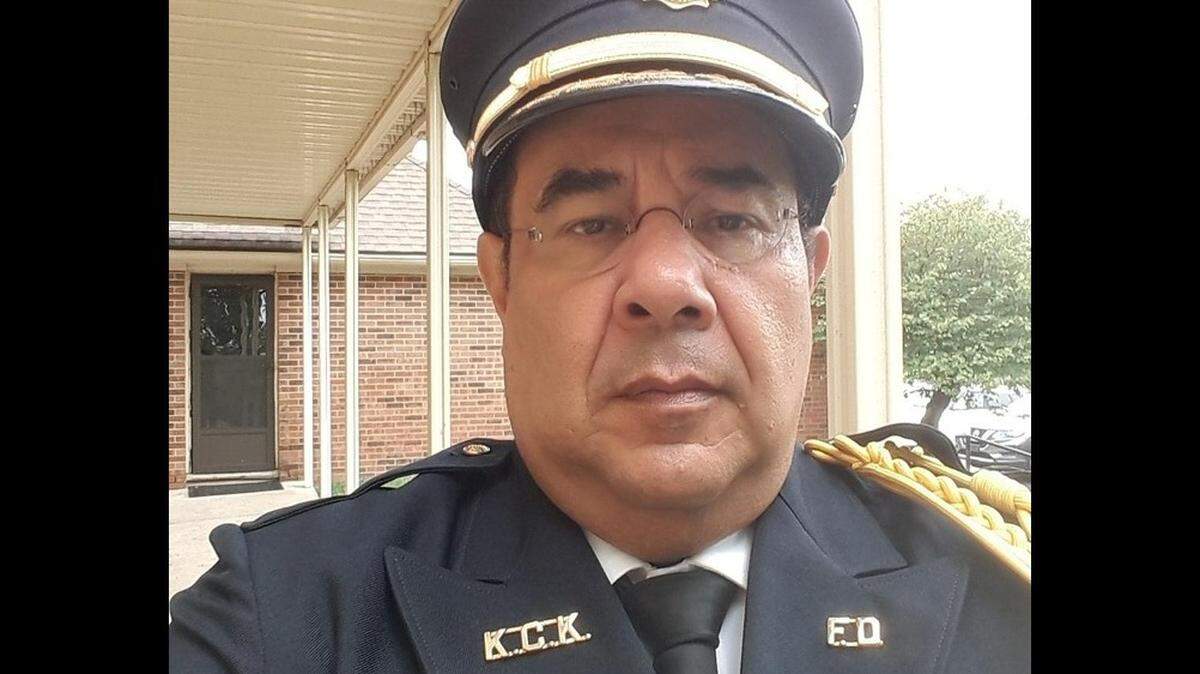
A Kansas City, Kansas, firefighter says senior officials repeatedly passed over him for promotions and subjected him to racist comments on account of his Hispanic heritage during his 30-year career.
Carlos Pacheco joined the Kansas City, Kansas, Fire Department in 1992 and later captained the Argentine fire station, serving its predominantly Hispanic residents for over 13 years. His attorney says he was kept working in that fire station years longer than other captains would have been, because he is Hispanic.
During that time, he faced discrimination from high-ranking fire officials, filing multiple complaints that were ignored and settled out of court last year for an undisclosed amount of money, according to a civil petition and mediation statement provided by his attorneys.
Now in his 60s, Pacheco has recently retired. He developed a serious shoulder injury that left him unable to hop in and out of a fire truck. Pacheco and his attorneys contend that had he been promoted to chief, he would be able to continue working.
Pacheco was one of, if not the most, senior captains on the force, his attorney Jake Miller said.
Pacheco had hoped to reveal in court many allegations of unfair treatment but, because of the state’s statute of limitations, most were thrown out, Miller said.
“Finally, he just said I’m fed up and I don’t want young Hispanic kids to continue getting passed over like I was. I want to file a complaint to do something about it,” Miller said.
“If I were Mr. Pacheco, after his case and dealing with what he had to go through, I’d move out of Wyandotte County,” he said. “I wouldn’t want to deal with it knowing the way my county government treated me.”
The Unified Government declined to comment on the case and said they value “diversity, equity and inclusion,” and are working to “reinforce this commitment.”
‘Did you do it in Spanish?’
When Pacheco came to the United States from Mexico in 1985, he dreamed of being a firefighter.
“Its important to give back to the community that accepted you,” he said of joining the Kansas City, Kansas, Fire Department.
Pacheco was one of five Hispanic people hired, alongside 28 white firefighters and 18 Black firefighters, he said.
In 1992, he started work at fire station 14 of the department’s 18 stations, where he was the only Hispanic person.
“Everybody would laugh and go I don’t understand what you’re saying,” he said, referring to his accent.
“The first time it’s funny. The second time it’s annoying. The third it’s harassment... but that’s common in the fire department.”
Fourteen years after joining, Pacheco was promoted to captain, according to legal filings obtained by The Star.
Unlike other captains, Pacheco did not serve throughout the department’s other stations even to temporarily fill in for a colleague. He remained in the Argentine neighborhood.
“That’s very rare,” Pacheco said.
His attorneys suggest Pacheco’s time at the station was extended due to his ethnicity, restricting access to other opportunities in the department.
By 2010, Pacheco applied for a promotion as search and rescue captain, where he would be making $250 more each month. Despite his four years in leadership, he was passed over for a white colleague still six months into their probation as a captain.
About seven years later, Pacheco hoped to become district chief, now known as acting battalion chief. He had been asked for the first time to “ride out his title” or attempt to fulfill the responsibilities of the new role by completing a computer-related task, which would test his competency.
He successfully completed the assignment in three minutes, despite having few opportunities to learn about the department’s computer system, he said.
“I saw people who were there for around two years who would get asked to do this,” he said. “They gave some people all the experience and people like me none.”
Then, during an annual inspection of the Argentine fire house in October 2019, Pacheco asked Fire Chief Michael Callahan and Deputy Chief Jack Andrade about opportunities to act as a battalion chief.
But Callahan was dismissive, according to Pacheco’s complaint, insisting that the shift operations chief decided on the position, even when it only needs to be filled temporarily.
In his 13 years as captain, Pacheco was consistently denied the opportunity to serve as an interim chief, alongside at least eight other minority captains, the documents said.
When Pacheco mentioned how quickly he had completed the battalion chief test despite never being asked to fill the role, Callahan asked:
“Did you do it in Spanish?”
The question gave the “implication that the only way Pacheco could do his job was if it was done in Spanish,” according to legal filings.
“It was embarrassing,” the legal filings said. “The respect that all fire chiefs demand was lost that day.”
Pacheco responded in the moment: “No chief. I could have probably done it in four different languages but it was all done in English.”
Callahan, who resigned from the fire department last week, denied this in a Friday evening phone call, calling Pacheco’s account inaccurate. He also said Pacheco did not score high enough to earn the chief role and was sick both times he had been asked to fill in.
“I’m also bilingual. I speak Spanish fluently,” Callahan said. “There was no racial animus there. That’s completely and utterly false.”
“I promoted the highest ranking Hispanic and highest ranking African American in the department. So if I wanted to be racially discriminatory, odds are I wouldn’t have done that.”
Delayed test benefits white firefighters
Callahan also delayed the deadline for the next test by about three years, documents said, allowing more colleagues, who were white, to qualify. All applicants needed at least five years of experience to apply, according to a labor relations contract.
“I didn’t sign that contract,” Callahan said to Pacheco at the Argentine fire station, according to legal filings. “Until a lawyer makes me, I will hold the test.”
The white colleagues who applied had already been given opportunities to act as a battalion chief, unlike Pacheco, giving them an unfair advantage, legal filings said.
In his response Friday, Callahan said the labor relations contract allowed the test to be given within a three year span. He also said the test was delayed “only a couple months” to give “more qualified applicants the opportunity to apply.”
If Callahan had not delayed the deadline for the test, about seven white captains, including a deputy chief, would not have been promoted. Two white captains were also allowed to take the test while on medical leave, which was an opportunity denied from at least two minority captains, according to legal filings.
“It’s obvious what’s happening. You can’t say all these minority people aren’t smart enough,” Pacheco said.
According to Pacheco, only about two firefighters had been promoted within the system to chief throughout his 30 year career.
“It’s institutionalized discriminatory practice,” he said.
Complaints ignored
Pacheco filed a human resources complaint against Callahan the morning after he asked whether the captain completed the task in Spanish.
“The Deputy Chief told me that Callahan is not racist. But I said that’s not for him to decide,” Pacheco said.
Then, he did not hear back for weeks.
Pacheco filed a follow-up complaint with the Unified Government of Wyandotte County’s human resources department on Dec. 18, 2019.
He did not hear back from them either.
An HR investigation proved fruitless, and by May 4, 2020, the period allowing Pacheco to file a complaint on the incident was dwindling. So he tried again, submitting his concerns to the Kansas Human Rights Commission.
Pacheco was provided the right to sue on Aug. 20, 2021, but the case was dismissed by September.
At the time, Pacheco had injured his shoulder on the job. Doctors told him that he couldn’t lift over 20 pounds, which is a requirement as a captain. Despite his over 30 years of experience, the department recommended he take on an entry-level position inputting data for the ambulance.
The case alleges that Pacheco could continue in a senior role had he been given the battalion chief position, since it does not require employees to jump in and out of the firetruck.
Each shift would have paid $120, which could have allowed Pacheco to support his wife and two young boys, had he been promoted to battalion chief.
“I would never allow my sons to be in the fire department because I know there’s no way for them to advance being Hispanic,” Pacheco said.
During the mediation, Pacheco said, the Unified Government referred to Callahan’s comment toward him as a joke and referred to Deputy Chief Jack Andrade’s Hispanic heritage as reason for why the department could not be racist.
The final settlement, Pacheco said, was for less than $10,000.
“I just wanted them to say that they did wrong,” Pacheco said. “I only wanted an apology.”
Racism in the fire department
The case of Carlos Pacheco comes to light as concerns over racism and discriminatory treatment in the Kansas City, Kansas, Fire Department boil over.
A 20-year veteran of the fire department, Leejamahl A. Washington sued the department in January for disparate treatment based on his race.
The lawsuit contends Washington had received harsher punishments than his white colleagues for “petty offenses.” His human resources complaints were ignored, court documents said.
The discrimination grew “increasingly worse” after Washington testified in a civil trial for Jyan Harris, another Black firefighter who accused the local government of discrimination and retaliation.
For Harris, raising complaints about racism led to his termination, according to a 2018 lawsuit.
The Unified Government accused Harris of receiving pay for working a shift with the fire department on several days in 2014 and 2015 when he also was receiving pay for work in a youth summer camp, which court documents referred to as “double dipping.”
Harris alleged the investigation into his pay was pretext for firing him after complaints of the Unified Government retaliating and discriminating against him in 2013 and 2016 surfaced.
A federal jury found that the Unified Government had discriminated against Harris and awarded him more than $2.4 million in April 2021. More than 14 months later, Harris had yet to receive the money or be reinstated as a firefighter, which had been agreed upon in the settlement.
The case continued to drag on until May 3, when the Unified Government submitted a motion to pay slightly less than $1.5 million, according to court documents. The settlement promised that Harris would be employed again with the department, but not as a firefighter.
As of Friday evening, Harris had yet to receive his settlement.
This story was originally published April 22, 2023 at 6:00 AM.