
A tiny green beetle is killing KC trees. How cities are fighting back, what you can do
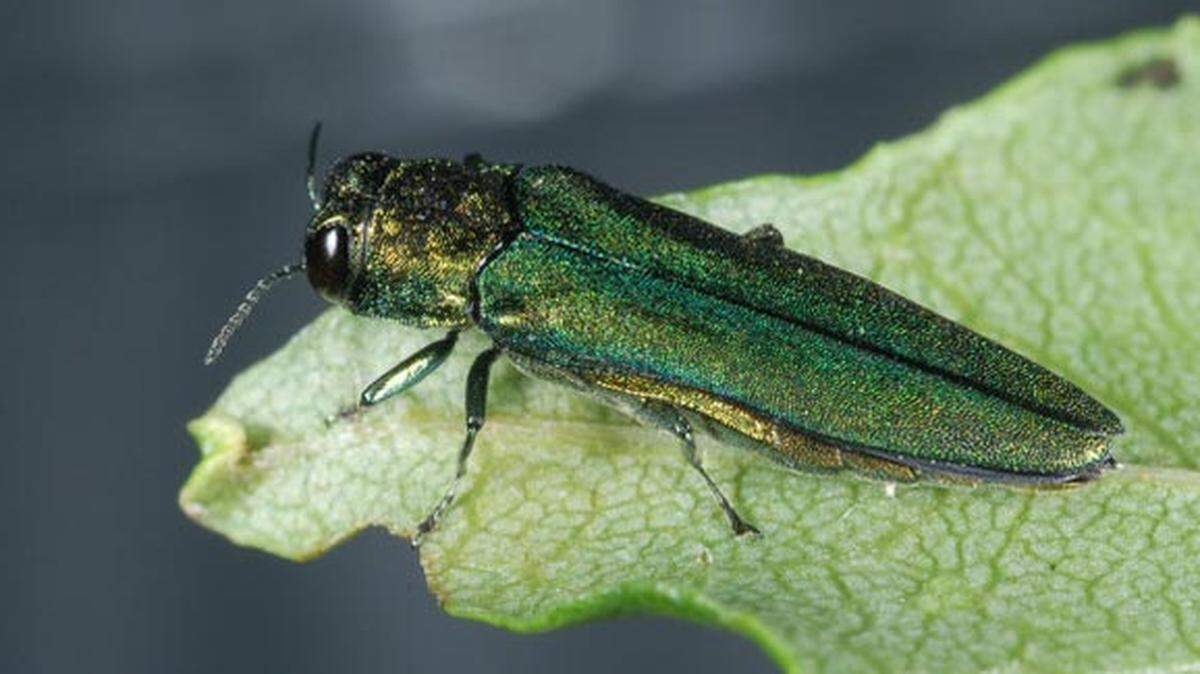
A tiny green beetle is causing big problems for the Kansas City area’s trees. The emerald ash borer, an invasive species from Asia first spotted in the U.S. over 20 years ago, is responsible for the destruction of countless ash trees across the nation.
And according to the U.S. Department of Agriculture, the insect is present in both Kansas and Missouri.
Now, some local municipalities are fighting back. The city of Overland Park recently launched a street tree removal program that aims to replace impacted ash trees with new species. Other municipalities in the area are also keeping an eye on ash trees that may be impacted.
The city of Kansas City estimates that the greater nine-county metro area is home to around 4.6 million ash trees. Here’s what to know about keeping your ash trees healthy, and what to do if you see signs of the emerald ash borer.
How does Overland Park’s ash tree program work?
Residents of 12 neighborhoods in Overland Park will see their local ash trees removed this spring. Here’s a collection of maps that show exactly where trees will be removed.
The program, which launched last week, only applies to ash trees on city-owned land — usually within 11 feet of the curb. That means if you have an ash tree on part of your property not owned by the city that you think may be impacted, you will have to hire a private company to get it removed.
Overland Park has pledged to replant one tree for every ash tree removed, according to the program’s web page. The trees along your street will likely be the same species, while other streets in your neighborhood may receive different varieties of trees. At this time, you can’t put in a request for what type of tree you want.
“It’s not going to be a specific one that you get to pick,” city spokesperson Meg Ralph told The Star. “We really can’t handle tracking those (requests) on this scale.”
The new trees will be selected by the city’s forester and will be one of these approved varieties. The removed ash trees will be processed into mulch at a local composting facility.
Is the emerald ash borer in other Kansas City communities?
Yes. This invasive insect was first spotted in Kansas City, Kansas in 2012. The city of Olathe also advises residents to either remove, replace or treat ash trees with pesticides. However, treatment can be expensive at around $120 per tree per year.
The city of Kansas City, Missouri advises residents not to plant new ash trees on their property, as they may become targets of this insect. There are an estimated 20,000 ash trees on public land within city limits, in addition to around 400,000 on private land.
Kansas City also has three dropoff facilities that can properly treat ash tree waste like fallen branches, foliage and lumber. Residents can drop off ash tree brush for free on Saturdays at the following sites:
11660 North Main Street
1815 North Chouteau Trafficway
10301 Raytown Road
What should I do if I suspect my ash trees are impacted?
Emerald ash borers eat the delicate inner bark of ash trees, damaging their ability to circulate water and nutrients. The beetles also lay their eggs in crevices in the bark. Common symptoms of ash borer infestation include twisting trails, small holes and splits in the surface of the bark.
Eventually, trees impacted by the emerald ash borer will stop producing leaves on their outer branches and ultimately die. This can increase the risk of the tree dropping branches or falling during extreme weather events, posing a danger to civilians.
If ash trees outside your home are within 11 feet of the curb, they may be on city property. If this is the case, you can call 311 in Kansas City or contact your local parks department to see if city crews can remove or treat the tree.
If the ash tree is on your property, it is your responsibility. Kansas City, Kansas advises four possible avenues that homeowners and landlords can take:
Do nothing. However, letting your ash trees die can pose safety risks as they are more likely to fall.
Chemically treat ash trees. Some insecticides can help kill emerald ash borers. However, this process puts chemicals into the environment that may impact other native species.
Replace ash trees with other trees. This can be expensive, but will help remove ash trees before they pose safety risks and will help maintain your local tree canopy.
Remove ash trees without replacing them. This can remove ash trees before they pose safety risks, but will also reduce the tree canopy in your area.
Do you have more questions about invasive species in Kansas City? Ask the service journalism team at kcq@kcstar.com.
.jpg)