Kansas City gives ride-hailing transit another go with launch of RideKC Iris next week
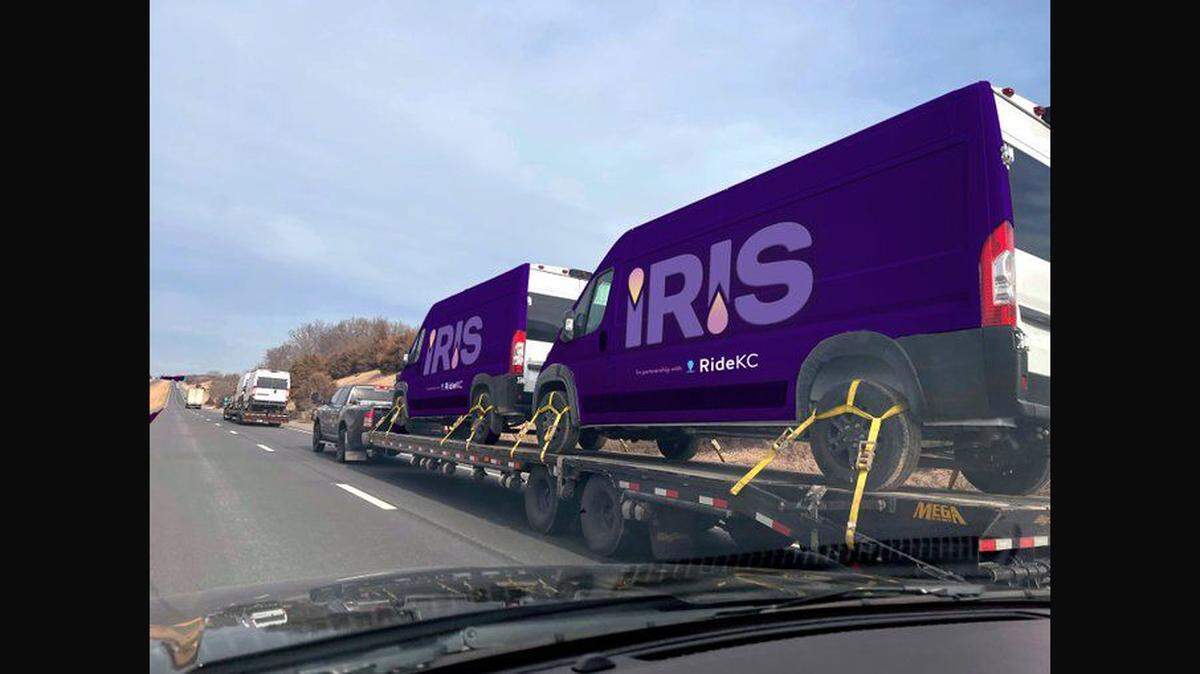
Starting next week, the next time you hail a ride in Kansas City, Missouri, you will have a another choice besides Lyft and Uber.
Kansas City and the Kansas City Area Transportation Authority will launch RideKC Iris next week, a new on-demand transit service that will focus first on the northland before being rolled out citywide.
A KCATA spokeswoman on Friday referred questions to the city. A city spokeswoman declined to comment Monday about the service, saying the city planned to hold a news conference on Tuesday.
The city is funding the program and contracting with the KCATA to manage the on-demand service, according to presentation slides on the service provided by the city. The city receives 80% of the revenue while the KCATA receives 20%.
People can schedule their trips by on a cellphone app, on a website and on the phone. The app was advising that the service begins March 15 and runs 24 hours a day, seven days a week.
RideKC Iris uses bus stops and flex stops for the majority of its pick-up and drop-off points. People will never have to travel more than 1/4 of a mile to a stop, according to information in the presentation.
It will also provide point-to-point service to Kansas City International Airport and special event zones.
The initial service area will be the northland, which has been broken up into zones. Each zone is connected to an existing transit hub.
Fares will vary depending on the trip. Here’s the break down:
- Stop-to-stop trips within a zone is $3.
- Stop-to-hub trips are free.
- Zone-to-zone trips are $4.
- Trips to KCI are $10.
Fares are paid in the app, via ride credits or in the vehicle. Wheelchair lift ramp and bike storage can be requested.
While the first phase of the rollout focuses on the northland, the city expects to expand the service to the Martin Luther King Jr. Boulevard in time for the NFL Draft, which will be in Kansas City in late April.
Citywide coverage will be offered sometime between May 1 and July 1, according to the presentation.
Ride-hailing transit service in Kansas City isn’t new. In March 2016, the KCATA conducted a year-long pilot program with Bridj of Boston and the Ford Motor Co. called RideKC: Bridj.
The service, which was limited in its service area, failed to attract riders, serving fewer than 1,500 people, according to a Wired story.
Many of the riders didn’t use the app beyond the first 10 free rides, according to a survey conducted six months Transportation Sustainability Research Center at the University of California, Berkley.
Of those who signed up, most said the service didn’t go where they wanted, 76%, or when they needed, 31%, according to the survey.