Reparations in KC? 7 Black, Indigenous, white Kansas Citians share what it means to them
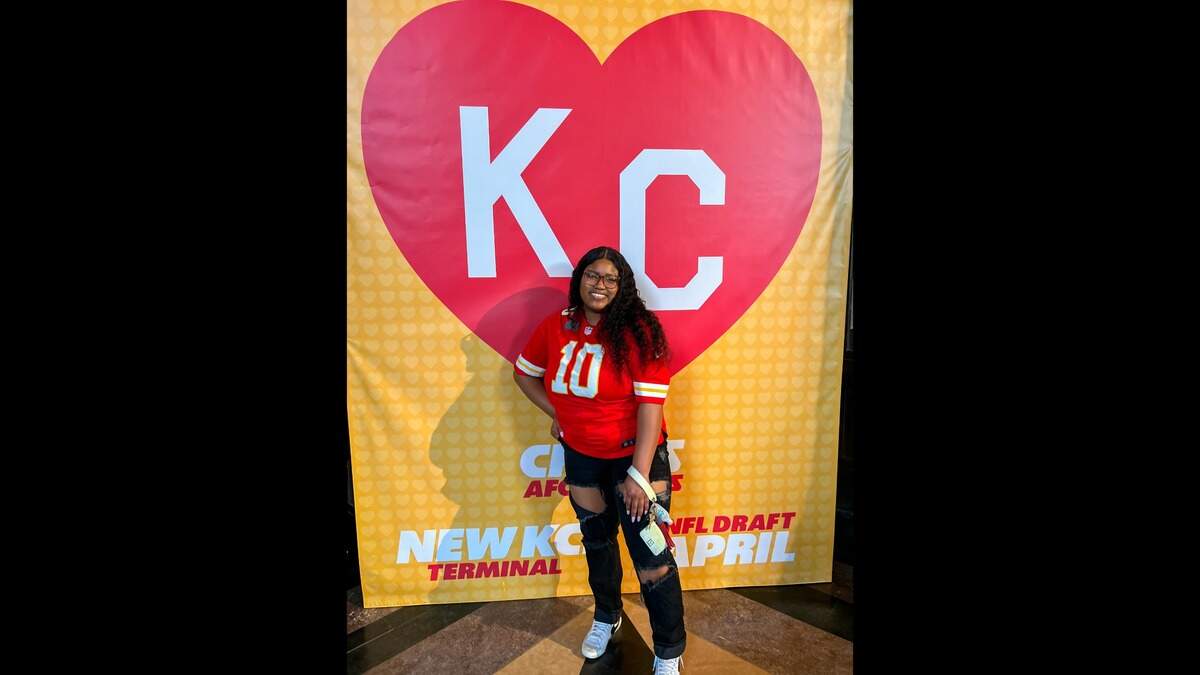
Decades before Nicole Price earned her PhD, bought a home in Kansas City’s Northland and owned a business, her family was robbed.
Their property on the corner of a Mississippi cotton plantation was stolen from them by white landowners. Her ancestors couldn’t read. They weren’t allowed to go to court to try to get it back. So they were forced to pick up and move elsewhere.
“What would my current wealth category look like if I had acres of land in Mississippi that had been passed down to me that I still get to drive by today?” Price asked from her Kansas City home, a pile of books stacked beside her: “Post Traumatic Slave Syndrome,” “The 1619 Project,” “The Sum of Us” and “Stamped from the Beginning.”
Price, 46, now owns a leadership development company and was introduced to the idea of race-related reparations after working for more than a decade in diversity and inclusion. She prefers to say “repair harm” instead of the more politically-loaded word “reparations.”
But whatever she calls it, Price believes it is well past due.
And she’s not alone. A movement for Black reparations is underway in Kansas City.
The Kansas City Council voted earlier this year to form a 13-member group to study reparations proposals and submit a final report in about 18 months. The legislation cites the city’s historical actions supporting slavery and segregation, which led to disparities in health, wealth, homeownership, justice and education today.
Other cities across the country have already established slavery reparations. But Kansas City would still be among the early adopters.
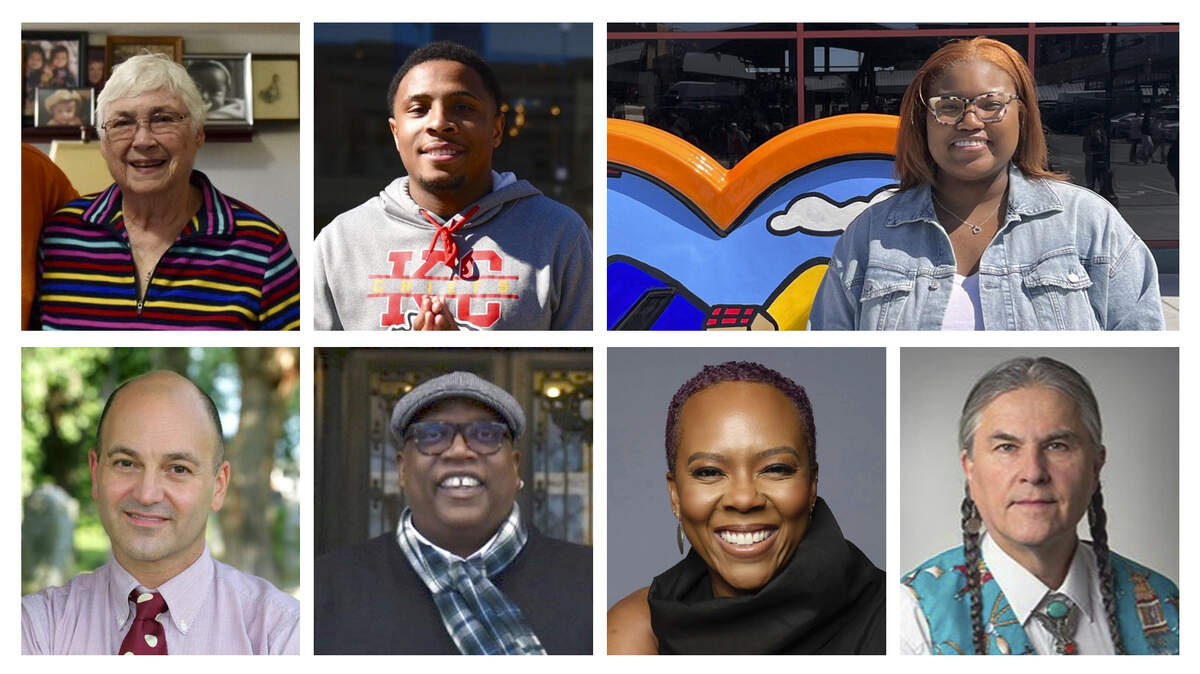
This Black History Month, The Star interviewed seven Kansas Citians — Black, white and Native American — to understand how they view the prospect of reparations.
The newspaper also published earlier this month a non-scientific survey asking readers what they thought. More than 100 people responded.
What Kansas Citians think
Responses to the survey were evenly split between those in favor of some form of Black repair and those opposed.
About three-quarters of the respondents were white.
Among those against reparations, many said they feared creating further racial divide in a city where redlining and white flight left lasting ruptures between Black and white communities.
Many echoed the sentiments of a white man in Northeast Kansas City.
“The civil war ended over 150 years ago. No one is still alive from that time,” the man wrote. “Since then we’ve had affirmative action, a Black President and an array of civil rights laws passed. I believe there is no right for any reparations.”
About half a dozen respondents were Native American. Most said they wanted reparations to include the indigenous community.
Responses in favor of reparations came from Black and white readers in Kansas City and Johnson County. A few white respondents who said their own ancestors owned slaves said they supported reparations.
“It is our duty. We could show the nation a better example of how to behave when harm has been caused,” said one white Johnson County reader. “I want my children to grow up in a world where we repair and restore what previous generations have poisoned.”
Some suggested reparations take the form of land, homeownership and down payment assistance, medical attention for generational trauma, tax breaks, scholarships, access to better health care and more investment in Black-owned businesses.
Several Black respondents who said they are descendants of people who were enslaved also suggested cash.
“We built this country. Literally built this country. And what do we get?” wrote one Black woman from south Kansas City.
“Killed and wrongfully convicted . . . Our children cheated out of an education? Why is education not a right? Our ancestors built this country for free.
“Damn right we deserve reparations,” she wrote. “And a PUBLIC APOLOGY!”
‘Stop doing the harm’
Price was raised just one block east of Troost Avenue, on the predominantly Black side of Kansas City’s racial dividing line, made through redlining and blockbusting.
“Our neighborhood was wonderful,” she said. “And then crack cocaine happened.”
Price was studying for a world history exam the day officers kicked down the unlocked door. They threw Price to the floor and turned over the house, she recalled.
At 15, she could tell they were in the wrong house as soon as they came inside. After the police left a few hours later, they offered nothing but an empty apology. Her mom had to pay for the door to be fixed.
After graduating from Lincoln College Preparatory Academy, Price spent her early career as a chemical engineer. She and her husband bought a home in a neighborhood that previously had a rule preventing white homeowners from selling to Black people.
The rule is unenforceable now, but that didn’t mean the racism was gone.
When Price was looking at the house, a white neighbor across the street told the real estate agent that Price couldn’t afford it. At school, a girl in her son’s class asked if his parents sold drugs. Price can’t remember how many times she’s been stopped by Northland police and not ticketed.
She hears some people say they’re against reparations because they don’t want a handout. But she asks what happens if someone runs into their car. By law there needs to be insurance to repair that harm. Sometimes the payout isn’t fair, sometimes it’s more than fair. The same goes for reparations, she said.
“We understand repair. It’s only when skin is black, that we act like we don’t get it,” Price said.
“In every single industry, in the entire United States of America, because of the color of my skin, my people are more likely to be at the bottom for every outcome that’s positive and at the top for every outcome that’s negative,” she said.
As leaders take the first steps toward studying reparations in Kansas City, Price has three recommendations for them, from good to better to best.
Good: “Stop doing the harm. You’re not going to repair it. Just stop breaking my leg every day.”
Better: “We need some legislation that forces people to do the right thing … Legislation is the easiest thing to change, actually, we make it difficult. The hardest thing to do is to get people to be empathetic enough to say, what would I want to happen if it were me?”
Best: “Just write the checks,” she said. And write them until “the impacts of race and racism go away.”
Building financial literacy
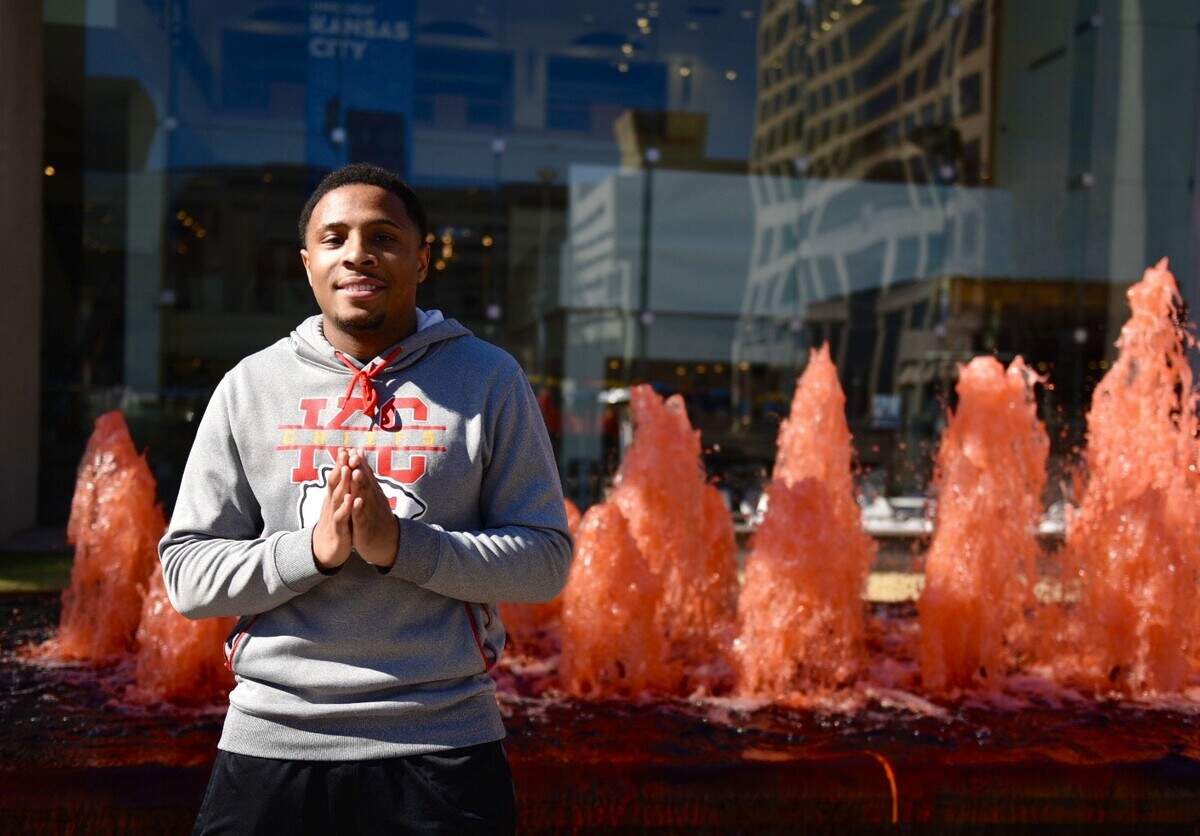
There was a time when Henry Mincey III had put zero thought into Black reparations.
But then, a few years ago, he found himself captivated by a video on YouTube.
The video, posted by Black history author and publisher Claud Anderson, opened Mincey’s eyes to truths he didn’t learn at school in Kansas City.
How the unpaid labor of Black slaves, like his great, great, great, great grandmother Liddie Thurman in Arkansas, laid the foundation for capitalism in the U.S.
He was captivated by ideas about how wealth is owed to Black Americans. How reparations are possible.
“If you ask me what racism is, its when one particular group holds wealth, or disproportionate amounts of wealth and power, over another group,” Mincey said. “They use that power, the resources and that wealth to marginalize, exploit and subordinate the weaker groups.”
Mincey, 27, is no stranger to being smart about money. He has a degree in accounting.
But as a staff accountant for Kansas City Public Schools, he has never lived in a home owned by his immediate family. The only dollar signs attached to his name are student loans from his education at Missouri Western State University.
He knows what a huge asset financial literacy is. That’s why Mincey seeks out mentors to show him how he can someday invest, run his own business and own land.
But Mincey said it’s hard to find mentors who look like him.
His best case scenario for reparations? Money and grants to put toward assets like land, real estate and businesses and zero-interest loans.
And well-staffed, state-of-the-art institutions for building knowledge around financial literacy and business.
‘If I could look back and say, ‘Hey, Black Kansas Citians, we own a little bit more now,’ that would definitely be something I can be ecstatic about,” he said.
A lifetime of learning
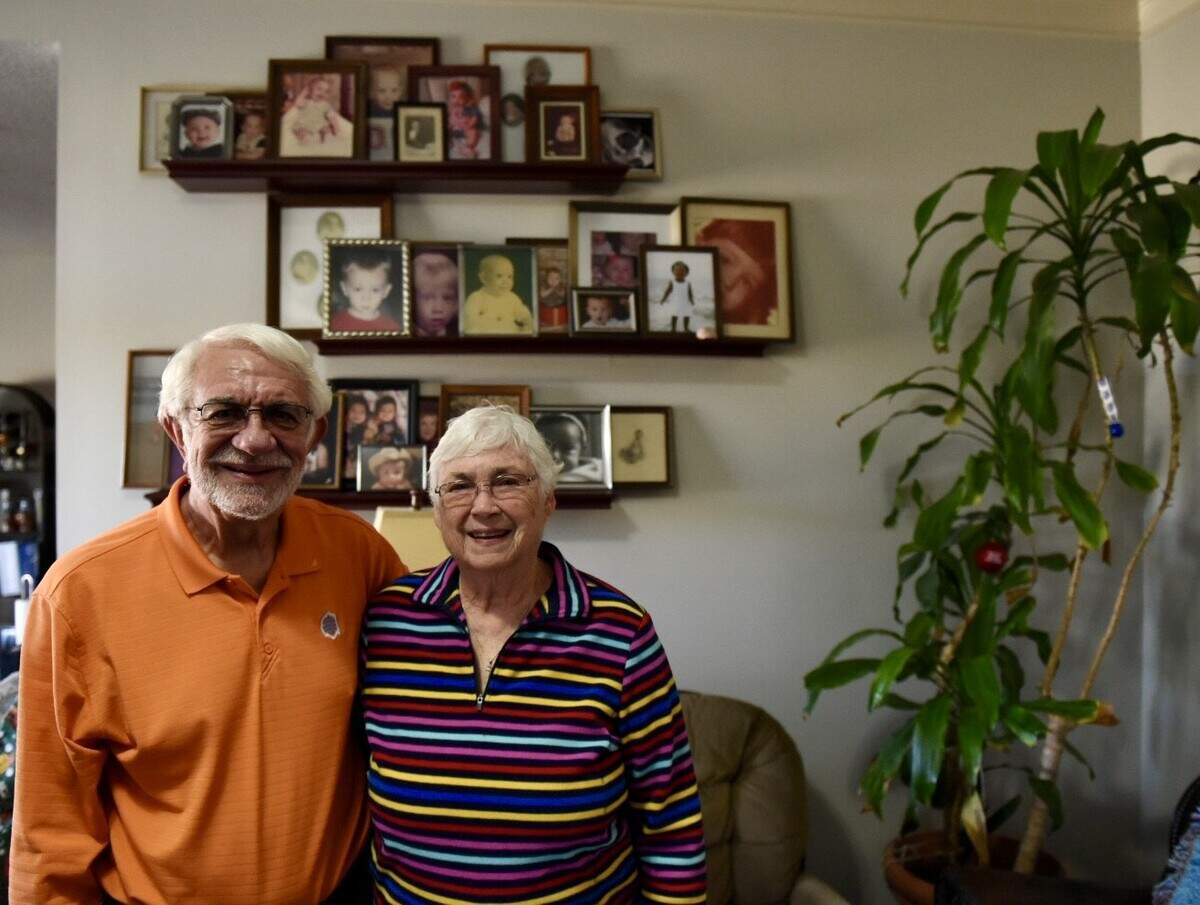
At first, Kathy Ruzicka’s reaction to reparations was similar to that of many white people: Slavery was a long time ago.
But seven years ago, she welcomed a Black granddaughter into her life.
Ruzicka, a retired high school English teacher and parent educator living in the Northland, wanted to learn more about the Black experience in America. She read works by Isabel Wilkerson and Nikole Hannah-Jones. She was shocked to learn racism wasn’t “taken care of back in the 60s.”
Just recently she learned about the generational harm developer J.C. Nichols caused by bringing redlining, the systematic discrimination of Black people in housing and homeownership, to Kansas City and beyond.
In the years since, Ruzicka’s family has grown to include more grandchildren who are Black and brown. As a result, she has had difficult and uncomfortable conversations with family members.
Times have changed in her 80 years on Earth, but she likes to learn and grow. Change won’t happen without people willing to listen.
She’s made a mental list of solutions, too: More money for under-funded school districts, the elimination of the cash bail system, funding for Black doula programs, free childcare and free college, accessible mental health care and money to help fix up homes.
Despite all her ideas, Ruzicka says it should ultimately be up to an all-Black commission to say what’s best.
“I just pray that more people learn and understand what’s going on,” she said.
She’s spent a lifetime doing just that. And every day she looks forward to learning more.
Take the acres, leave the mule
Khyra Curtain first learned about reparations in middle school.
In St. Louis County her teachers, most of whom were people of color, taught that reparations were both needed and deserved, but not guaranteed. It’s an opinion she now shares.
But Curtain, a senior and president of the African American Student Union at the University of Missouri-Kansas City, believes reparations are more complicated than just handing someone cash.
“I honestly think it should be in another form other than money because honestly money comes and goes,” she said.
“Like if somebody bullies you, and they offer you like, $20. It’s like, why would I want your $20?”
Curtain thinks about reparations through her grandparents’ eyes, and in the context of history. The harm handed down from slavery continues today.
Her grandfather tells stories of his upbringing in Jackson, Mississippi, in the Jim Crow era. Curtain still senses his fear of white people and police. There are certain places he doesn’t want to go. He worries when she checks her phone while riding in the passenger seat in the car, fearing he’ll be pulled over by police.
And there are broken promises.
On Jan. 16, 1865, Union General William Tecumseh Sherman promised 40 acres and a mule to enslaved people who were freed in the war.
But after President Abraham Lincoln was assassinated, that order was overturned by President Andrew Johnson.
Curtain said she can do without the mule, but she would gladly take the land. She could build a house or a business.
“Like, this is yours. You can do whatever you want with it. You can sell it, you can build … on it and then rent it. I feel like land would be pretty substantial, honestly.”
If it is going to happen, Curtain wants it to happen soon.
“The longer they (take to) do it is kind of like a slap in the face,” she said. “(People) want to sit here and debate when it’s no debate.”
An appeal to remember Native Americans
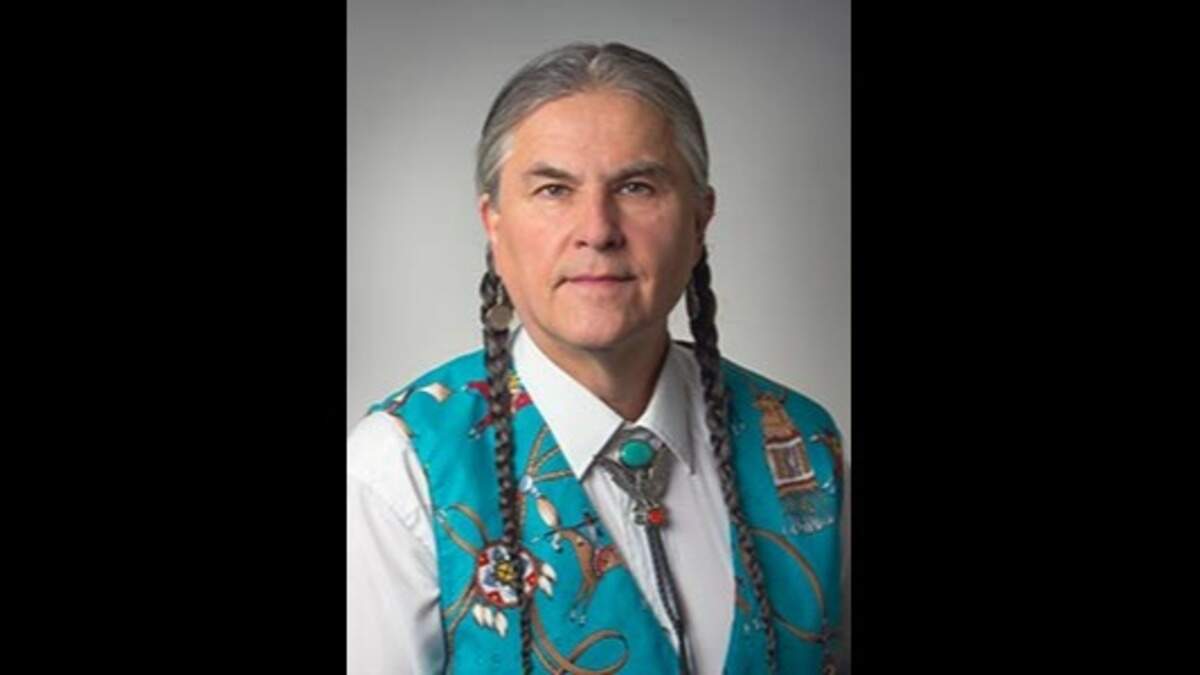
Robert Prue says in the discussion of reparations it’s important not to forget Native Americans like the Kansa, or Kaw, nation, whose land in Kansas City was stolen by white settlers.
“Anything the city does really needs to take into consideration the dispossession of the indigenous people who were here prior to it being Kansas City,” said Prue, a member of the Rosebud Sioux Tribe, who sits on the board of directors for the Kansas City Indian Center.
As a professor at the University of Missouri-Kansas City School of Social Work, Prue teaches social and economic justice. And he says Black reparations, while deserved, should be available only to descendants of enslaved people — not those whose ancestors came to America after slavery was abolished.
If reparations do move forward, he thinks they will take time. His tribe is still in a legal battle with the federal government to regain some of the sacred land stolen from them.
Prue guesses that any attempt to offer reparations will be put under the microscope of anti-discrimination laws.
“It’s a huge, hugely complicated issue, he said.
“I think there’s a lot of good intentions, but I don’t see a pathway forward, at least civilly,” he said. “I think any pathway forward that involved cash reparations to people are going to really intensify a lot of the grievance of a large swath of very disenfranchised poor white, rural America.”
%20(2_fitted.jpeg "David Jackson (4) (2_fitted.jpeg")
Examining African ancestry
David Jackson’s DNA traces his ancestry to Africa.
But only 2%. He identifies as white.
That’s why he believes reparations need to be more about reforming culture and institutions to better serve minority populations rather than directly paying those who can prove lineage to people who were enslaved.
Jackson, 54, is a longtime local historian and genealogist who discovered through research when he was 11 that his great great grandfather, Arthur Jackson, was a slave who later married a white woman — a truth that family lore failed to pass down to him.
When Jackson hears people oppose reparations using the argument that they don’t own slaves themselves, he says: “That’s true, yeah, hello. But you live in a society and operate under systems that continually even through 1999, for me, have had roadblocks to Black Kansas Citians. So let’s not push that under the carpet.”
His family also has its own history of contributing to segregation. His grandparents used to live in Midtown, but were part of the white flight movement to suburban communities like Raytown in the 1960s. They sold their home through the builder so they wouldn’t be marked as one of those white families that sold their house to a Black family.
“That’s my family. I’m not proud of it, but I’m not covering it up, either. It is part of our history,” he said. “And, you know, if people don’t know about it, they need to.”
Jackson said proving ancestry as a requirement for reparations could prove tricky. Going through genealogy libraries can take hundreds of hours, especially because records that identified enslaved people were separate from those of slave owners.
DNA is a faster option to prove family lines lead back to Africa, but he is a living example that this can prove complicated.
‘Check Cashing Day’
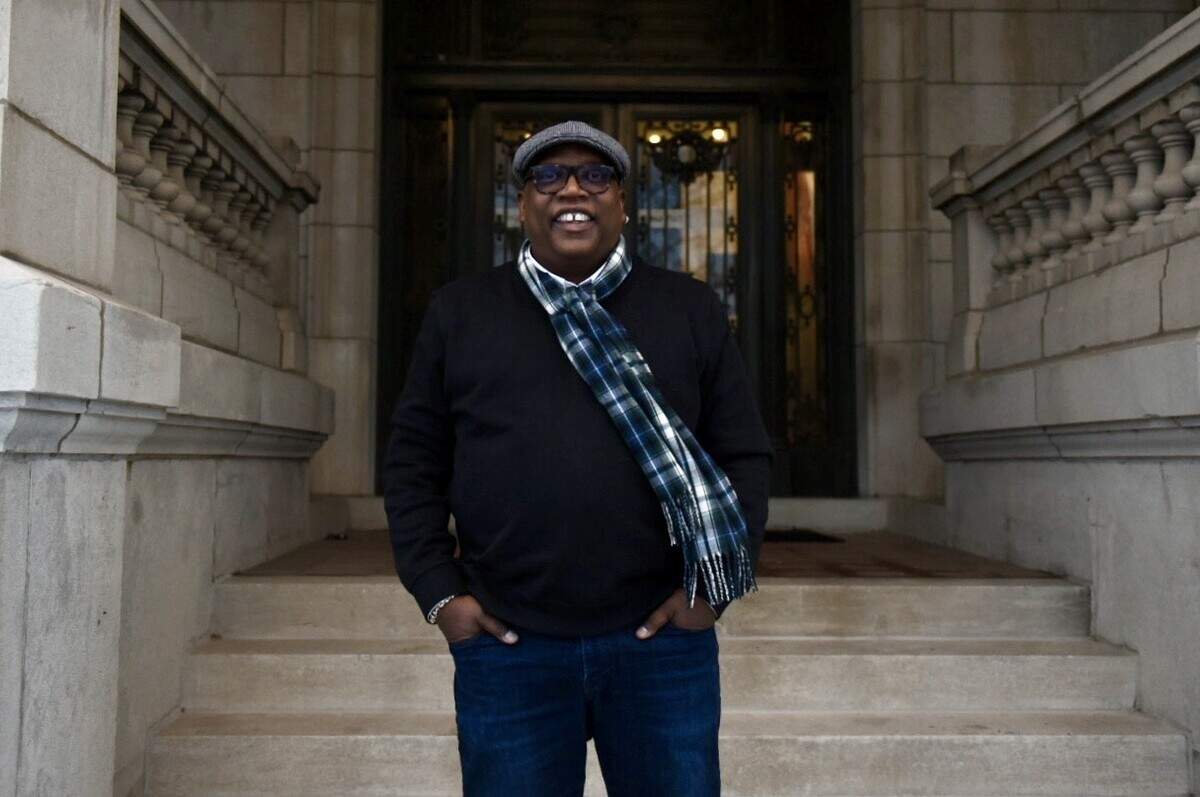
The color of freedom is green. Glenn North has no doubt about that.
But repair to Black Americans extends well beyond money, he said.
The local poet, historian and self-proclaimed “memory worker,” currently employed at the Kansas City Museum, believes the path to reparations in Kansas City lies in data and in the arts, but also with the support of the white community, because he doesn’t see the conversation going away.
“The genocide and forced removal of First Nations and slavery are America’s original sin. And until we deal with it, every 20 years there’s gonna be rebellions, there’s gonna be this ongoing conversation,” he said. “You can’t fix what you won’t face.”
He wants to see a true racial reckoning: recognition by the white community of slavery and the atrocities that continued long after. From there, he hopes to see widespread attempts to shrink the remaining inequities.
“I know it sounds naive, but I would be really happy if I lived in a world where it was widely understood and agreed upon that this was wrong and this was an injustice, and that the injustices weren’t limited to slavery. Until such time, we’ll take the cash,” he added with a laugh.
North, 56, believes part of the white community’s resistance to topics like reparations is tied to an unwillingness to face the painful history of their white ancestors.
That’s why he says it’s crucial for white Kansas Citians who have learned about and understand the country’s cruel past to put in the work of educating other white people on racism. The past and the future must be connected, he said.
In 2013, on the 50th Anniversary of the March on Washington with Martin Luther King Jr., North penned a poem called Check Cashing Day with jazz saxophonist Bobby Watson.
The poem, inspired by King’s “I Have a Dream” speech, ended this way:
“So listen up, Uncle Sam,
here we stand,
with this 150 year-old check
in our tired black hands.
There’s nothing left to talk about
nothing left to say
but ‘Cough it up, America,
it’s Check Cashing Day!’”
This story was originally published February 22, 2023 at 5:00 AM.