‘He was the mayor’: Broderick Crawford, beloved Wyandotte County activist, dies at 61
_fitted.jpeg "Broderick Crawford")
As a young teen in the 70’s, Broderick Crawford didn’t understand his mother.
He’d return to the family’s two-story home on 12th and Richmond Avenue at the end of the school day and find the house overrun with kids he didn’t know and adults he wasn’t related to. Some were wayward travelers: single women with nowhere to go, kids with nowhere to eat, or families from their local church in need of a temporary home.
“How come you got all these people living with us? We’ll never have any rooms to ourselves. We have to share with everybody!” he told his mother, Beverly Crawford.
“I would tell him son, I understand that I can’t help everybody,” she said. “I just am not someone who can see another person put out on the street. I just can’t.”
She never expected for him to follow her lead.
Over the next 40 years Broderick Crawford worked as an infectious disease specialist and prolific Kansas City, Kansas activist. He became widely known for his leadership in the New Bethel Church, where he created programs focused on improving the health of community members.
Throughout his career, Crawford served over 25 committees and task forces across the Kansas City area, each focused on improving access to services ranging from housing to food and transportation. In his home of Wyandotte County, he served as executive director, and in 2019 was elected president, of the New Bethel Church Community Development Corporation. He raised funds for health initiatives, organized efforts to improve COVID-19 vaccination rates and worked to connect underserved communities to health care.
Crawford became a staunch advocate for equitable COVID testing in the early days of the pandemic, speaking out against the lack of testing sites in Wyandotte and even arranging a few in church parking lots and community colleges around Kansas City, Kansas. In June of 2020 he told The Star about his personal experience with the virus as part of an effort to persuade others to take the disease seriously.
He also worked to restore the Jersey Creek Trail, a beloved path in his childhood neighborhood of Douglas-Sumner that had fallen into disrepair as many families migrated to Grandview or Johnson County.
Crawford died at the age of 61 on Nov. 27 in Kansas City, Kansas.
“Everybody in KCK liked to tease him that he was the mayor,” according to Matt Kleinmann, who met Crawford through the Dotte Agency, a Kansas City, Kansas public health group.
“He used his voice to demand better. From our elected officials, from our city government, and from each other.”
The doctor
Crawford was born on June 20 of 1961, the oldest of Beverly Crawford’s seven children. She was only 19 years old at the time.
Broderick Crawford would occasionally care for his mother, nursing her back to health as she suffered from severe back pain and underwent multiple surgeries for pre-existing health conditions. Whenever she felt ill, he would come to her bedside and feel her forehead for warmth. Band-aids, gauze or a thermometer were always within his reach, in the hopes it would take away her pain.
She remembers that he started bringing home library books on the human body and strange diseases by the age of 12.
“He thought he was the doctor,” Beverly Crawford said.
He would rush to the scene of his siblings’ bicycle accidents as if he were an EMT. At 15, he even attempted to repair skin torn from his brother’s leg, despite actual doctors needing to use about 19 stitches.
“If anyone got hurt he was always the one who wanted to tell them how to fix it,” Beverly Crawford said.
And someone was always hurt. Their house was teeming with children, not only Broderick and his six siblings, but other families Beverly Crawford had met during her time working as a caregiver, a nurse’s aide and a daycare worker. Everyone got along, she said, but everything from food on the dinner table to space in the bedroom was shared, turning the Crawford’s bustling family of nine into a community-wide coalition.
“Everybody always went to Broderick if they had any kind of issue,” she said.
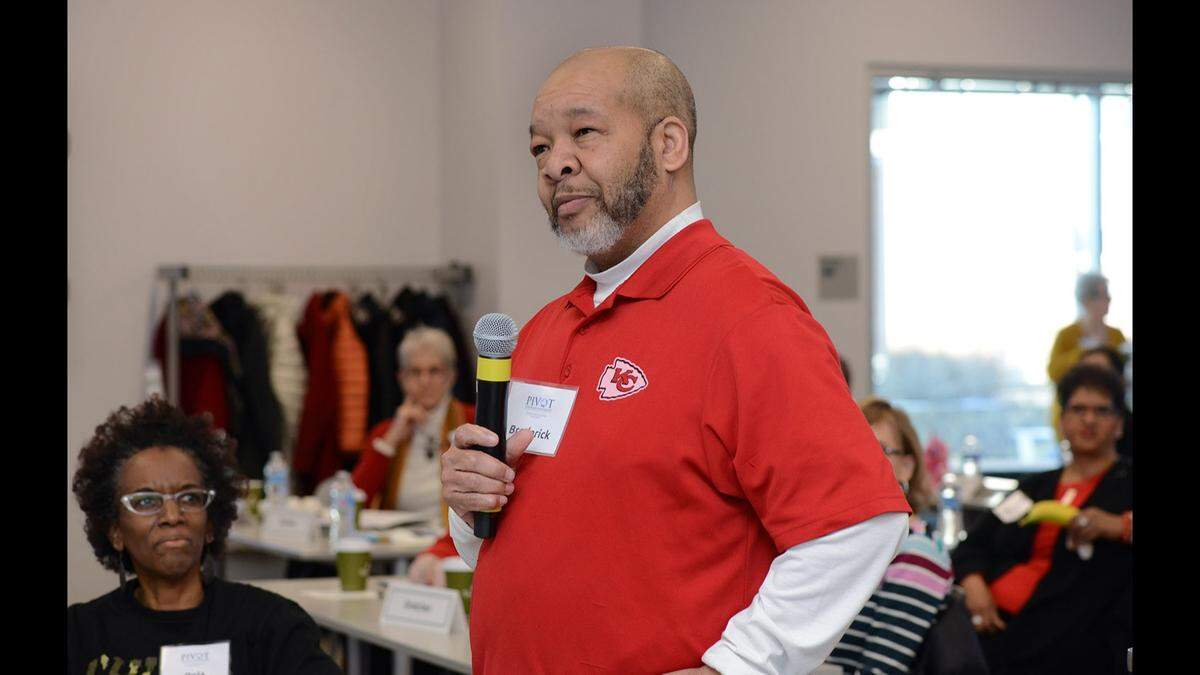
In 1985, he used his passion for medicine to graduate from the University of Kansas and pursue a career as an infectious disease specialist at the University of Kansas Medical Center. After five years of working as a supervisor at the KU clinic, he took on a similar role in Saint Luke’s Health System, where he focused on connecting community members with hospital services.
The work sparked an interest in health equity. He co-founded Wyandotte County’s Health Equity Task Force and serve on a number of boards ranging from the area’s Health Assessment Steering Committee to organizations like Latino Health for All and Wyco Sexual Assault Prevention.
His world had expanded. Neither medicine nor work at any one clinic was enough to care for the community that raised him. His mother sensed the shift in Broderick as she helped him deliver supplies for a food program he’d initiated at their local church.
“He had a quality about him that I had not seen before in his earlier years,” she said. “It wasn’t just an interest in medicine, but in people as a whole.”
Commitment to service
His son, Broderick Crawford Jr, recognized that his dad was special.
At 12-years-old, he remembers his father walking him through Brush Creek as part of a fundraiser to fight cancer. The crowds overwhelmed the young teen, but not his father.
“Dad was able to flow with so many different people from different walks of life,” Broderick Crawford Jr. said.
He’d watch him start every conversation the same way: “Praise God from whom all blessings flow.” It was Broderick Crawford’s plea to look at the brighter side of life, his son said.
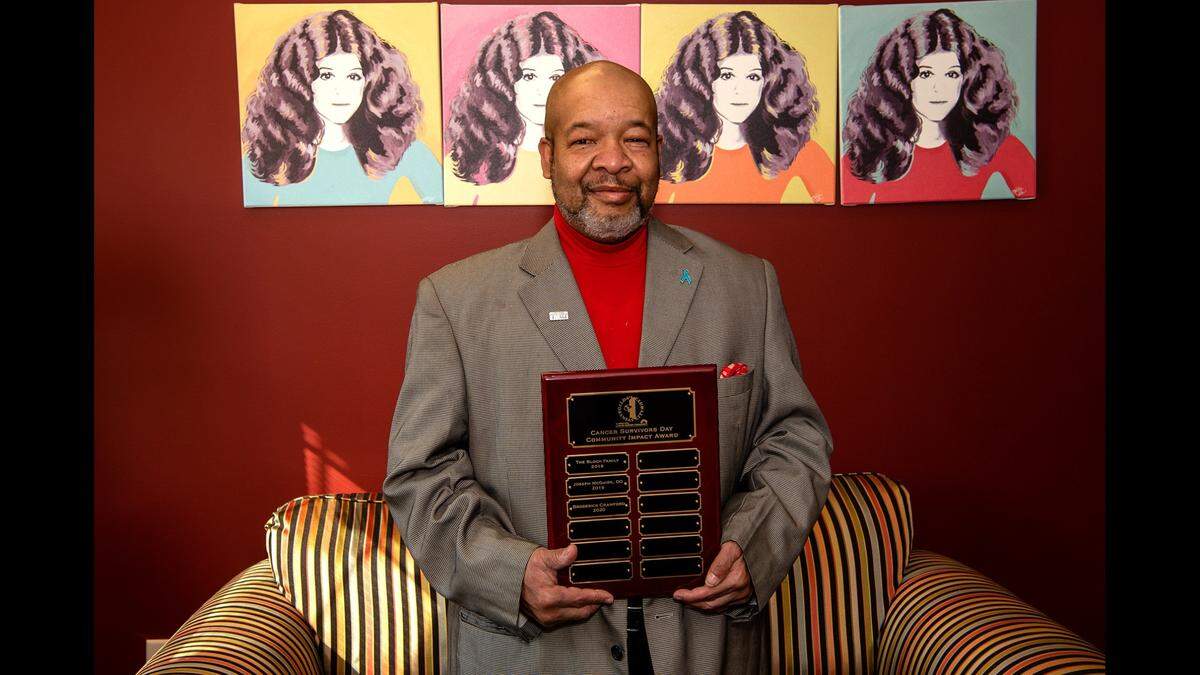
But during COVID-19 that brighter side became more difficult to find. As his community grappled with a public health crisis, Crawford sprung into action, distributing fliers and posters around quarantine guidelines and bringing community members together for COVID tests and vaccine drives.
“I was a very big vaccine skeptic,” his son said. “It’s laughable now but then we weren’t laughing about it.”
He would come to his father with statistics and conspiracies, but instead of arguing, Broderick Crawford offered him reports from the Centers for Disease Control and Prevention and medical journals.
“Don’t just take anybody’s word for it, actually do your own research and come to a conclusion within yourself,” he remembers hearing his father say.
He saw his father have the same conversation with countless members of the community. Many of them were either unable to afford a doctor or skeptical of medical intervention. Yet, they trusted Broderick Crawford to provide guidance.
In the days following his father’s death on Nov. 27, Broderick Crawford Jr. found himself reflecting on his father’s passion for service.
He remembered asking his father why he cared so deeply for those in the community. Broderick Crawford smiled at the question, his son recalled, contemplating the same compassion that drove Beverly Crawford to open her home to people in need.
Just like her, Broderick Crawford would explain that it was harder to do nothing at all, knowing there were people who could use the help.
This story was originally published December 9, 2022 at 7:00 AM.