‘They were selfless’: Stair climb in KC on Sunday honors firefighters killed on 9/11
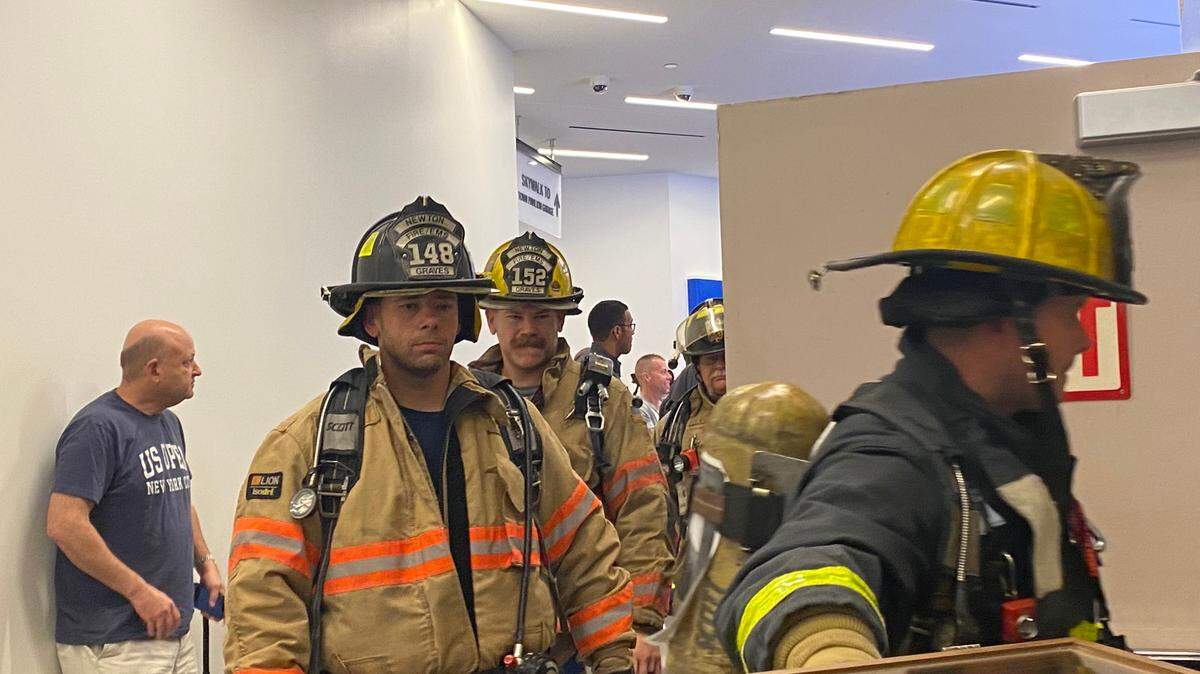
After touching a rusted piece of steel from the World Trade Center, firefighters from Kansas and Missouri hauled themselves, their gear and their will up 110 flights of stairs Sunday morning in downtown Kansas City, a tribute to the hundreds New York City firefighters who were killed 21 years ago in the worst terrorist attack in history.
The 343 firefighters climbed up the stairwell of the Town Pavilion building, each one carrying about 75 pounds of gear and a photo of a firefighter who died while responding to the twin towers on Sept. 11, 2001, after two jet airlines slammed into the iconic skyscrapers on a cloudless Tuesday morning.
“There’s a lot of people that were lost that day and it’s just kind of crazy what happened and how it happened,” said James Wilson, 38, who works for the Johnson County, Missouri, Fire Protection District. “There’s a lot of families who lost their dads, uncles, brothers.”
The Kansas City 9/11 Memorial Stair Climb marks the ninth year firefighters climbed the stairwell of the Town Pavilion. The tradition goes back to 2011 but was postponed the last two years due to the COVID-19 pandemic.
The firefighters hailed from departments in Kansas City; Kansas City, Kansas; and as far as Wichita.
The climb started just before 9 a.m. Inside the lobby of the Town Pavilion hung a giant poster with pictures of all 343 firefighters who died. Every firefighter Sunday climbed 110 stories — the number of floors in both towers.
In order to climb 110 floors, the firefighters had to ascend most of the 35-story building’s floors several times. few times of the Town Pavilion stairwell. They were allowed to take breaks. The stairwell is humid, and with all their equipment, each firefighter’s internal body temperature can reach around 104 degrees. Sweat dripped down their faces. It takes about one to two hours depending on the person.
Kevin Joles, the public information officer for the Kansas City 9/11 Memorial Stair Climb, was working for the Southern Platte Fire Protection District 21 years ago. He’d just finished his shift and got home when he started watching news coverage of the attacks.
He knew first responders would die that day. He just did not know how many. He thinks about how hot the towers were as they burned before they ultimately went crumbling to the ground in an avalanche of metal, concrete and toxic fumes.
“There was no training for that,” said Joles, who is now the Division Chief of the Emergency Medical Services Division in Lawrence. “They were selfless.”
This story was originally published September 11, 2022 at 12:08 PM.