
Johnson County approves less strict set of regulations for solar power facilities
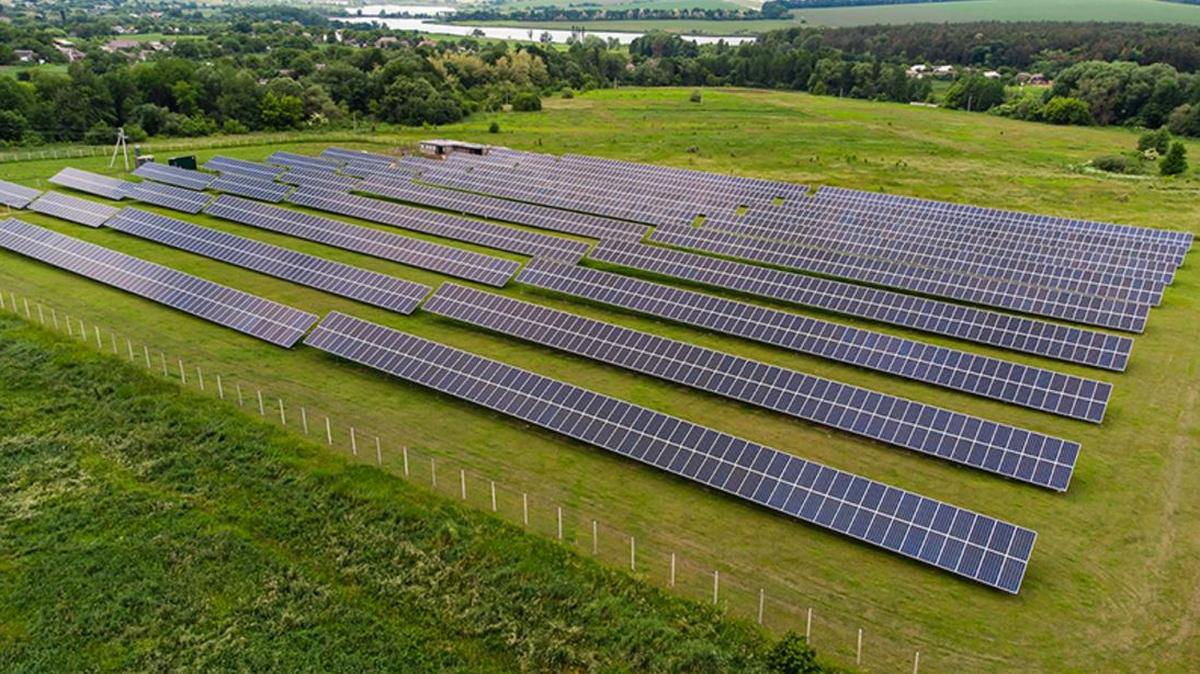
At a special meeting Monday, the Johnson County Board of County Commissioners approved a set of regulations for solar energy facilities that was less strict than those recommended by the county planning commission.
Commissioners met to discuss the planning commission’s latest recommendations for regulating a utility-scale solar energy generating facility that it submitted on May 10.
The board voted 6-1 to adopt regulations that commissioners suggested in April and not the recommendations that the planning commission made in May. Commissioner Charlotte O’Hara was the only commissioner opposed.
The board went against the planning commission’s recommendation to cap the maximum acreage for facilities to 1,000 and approved a 2,000-acre maximum instead.
It also voted to keep the original proposal that any solar facility be one and a half miles from a city border instead of the planning commission’s suggested two mile requirement.
The board also approved a 25-year term for conditional use permits with an automatic five-year extension if the project is still compliant, instead of the 20-year term the planning commission recommended.
The solar panels will still be required to take up just 70% of the project space to ensure the retention of vegetation and open space, stormwater management and space for wildlife corridors.
Future solar projects
Johnson County has been considering changing regulations to allow for the utility-scale solar facilities since 2021.
In 2020, Florida-based energy company NextEra Energy proposed the West Gardner Solar Project that it says would supply 320 megawatts of energy. The company’s website says it hopes to begin project operations by the end of 2024 if the county and state approve their plans.
The board of commissioners clarified that even though it made regulations, each solar project application will still go before the Johnson County zoning board to be reviewed and voted on individually. The board also said that the regulation rules are the minimum measurements for solar facilities, and could be smaller and farther from cities and buildings.
Karen Miller, senior planner for Johnson County, said that the goal is to use fields that already exist to minimize the number of trees cut down.
O’Hara was joined by many members of the public with concerns that solar facilities would hinder the development of Johnson County cities.
Commissioner Becky Fast noted that urban counties like Los Angeles County, Maricopa County and Clark County have functioning solar farms in their counties alongside large cities.
Public opinion mixed
Dozens of Johnson County residents spoke with mixed opinions. Some urged the commissioners to push for renewable energy and approve solar development without too many restrictions.
Advocates were mostly concerned about climate change, and said that solar energy would help move the county away from dependence on fossil fuels.
“Solar energy is an important part of the solution to releasing our dependence on fossil fuels,” Johnson County resident Mary O’Leary said.
Those against the regulations accused the board of commissioners of not listening to public input and encouraged the board to use regulations the planning commission suggested.
“We stand to lose the character of our land,” Said Eudora resident Pam Ferguson.
Because the facilities are so large and can last for decades, county officials said they must carefully consider the impact on development and growth of cities and the preservation of open space and rural character.
This story was originally published June 6, 2022 at 8:32 PM.