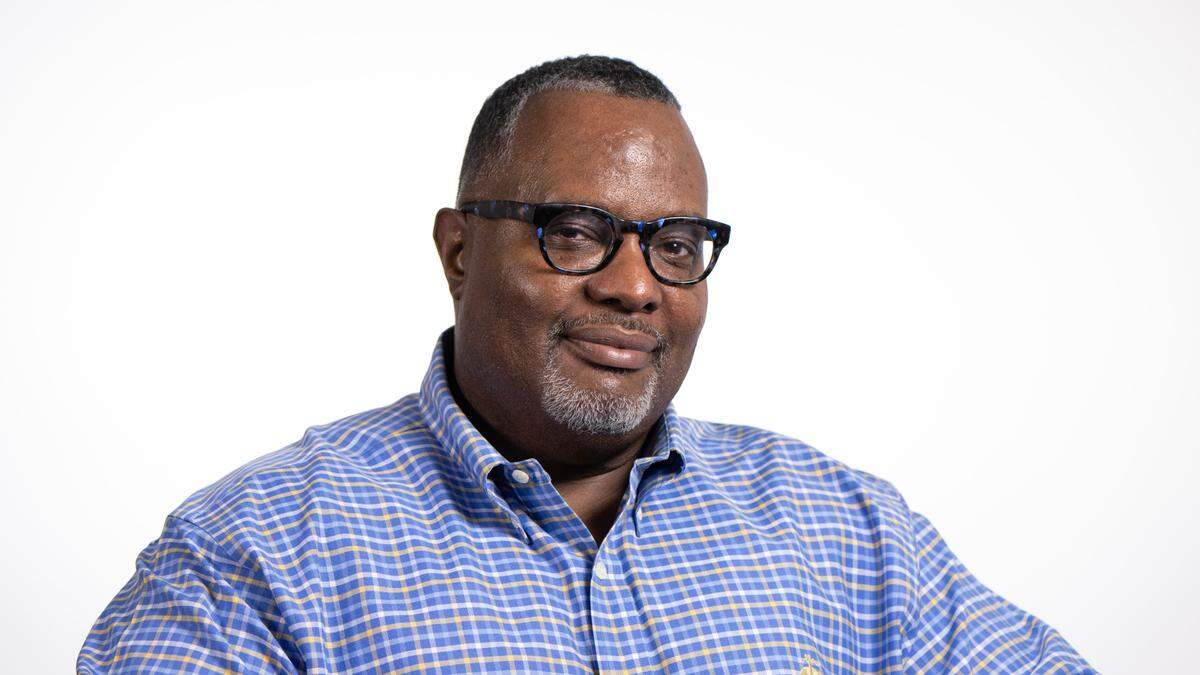
Mayor Lucas wants turn as police board leader, so ‘people of Kansas City have a voice’
Mayor Quinton Lucas has petitioned his fellow members of the Kansas City Board of Police Commissioners to include him in the rotation to serve a term as president.
The operations of the police department are governed by a five-member board, with Missouri’s governor appointing four members. The fifth seat is designated for the mayor. Commissioners serve as board officers on a rotating basis.
Because of mayors’ time constraints, they usually do not serve as police board president.
In a letter to the board, Lucas said commissioners had made great strides in approving a police budget that calls for pay raises and hiring more officers and 911 call takers. And his schedule, he said, offers him the flexibility to be added to the rotation as president.
“I think it’s just the right thing to do to make sure that the people of Kansas City have a voice,” Lucas said. “I look at this in a friendly way, in terms of, it’s important that we work together and it’s important that the different voices are heard.”
Mark Tolbert currently serves as the police board president. Tolbert’s term as president began last year and concludes in 2023.
“I was asked to be the chairman and so I would imagine that it’s up to the board as to which member of the board that they want to make chairman and I don’t think the mayor gets any preference because he’s the mayor,” Tolbert said. “But he gets to be in that rotation because he’s a member of the board.”
Cathy Dean, who is listed as the police board’s vice president, would typically be next in line to serve as president. Dean could not be reached for comment.
Another board member, Don Wagner, has previously served as police board president.
The governance structure, unlike virtually any other in the nation, is a remnant of the Pendergast era in the 1920s and ‘30s when the state took control of the police department in the wake of extreme municipal corruption.
The origin goes back even further, and once included state control of the St. Louis department as well. It is rooted in a system that dates back to the Civil War when a Missouri governor sympathetic to the Confederacy sought to keep pro-Union St. Louis from controlling weaponry that could possibly aid the Union.
Over the years, countless Kansas City policymakers and activists have sought local control of the police, criticizing the existing setup as one that lacks proper citizen oversight.
Lucas said he would like to be selected as board president when Tolbert’s term as president concludes.
“The purpose of my letter was to say, ‘deal me into the game’ and for some reason mayors have not been dealt into the game for a while,” he said. “This mayor wants to be and I think it’s only fair.”
Lucas noted it is not unprecedented that the Kansas City mayor could serve as police board president. For a four-month period, U.S. Rep. Emanuel Cleaver served as police board president while he was Kansas City mayor.
Cleaver recently told The Star that he was never officially president of the board of police commissioners.
When he was mayor, commissioners at one point were without a board president. So the governor asked Cleaver to step in temporarily until they could find a replacement.
Asked if he believes from experience that Kansas City’s mayor should be able to become president, Cleaver said: “It’s a complicated thing. I’d rather stay out of it.”
Mark Funkhouser, who served as Kansas City mayor from 2007 to 2011, said he thought the mayor should be included in the rotation.
“If there’s going to be a board of police commissioners then the mayor of the city should be its president,” Funkhouser said in an email to The Star.
Having the mayor serve as police board president would offer a different perspective and help foster relationships between the police department and city leaders, said Stacey Daniels-Young, who served on the police board from 1995 to 2005, including a term as president.
The board president has the privilege of setting the monthly meeting agendas or appointing special commissions or task forces to study various policing issues.
At Lucas’s request, the police board last year agreed to modify its monthly meeting to focus on violent crime with detailed reporting on homicides and non-fatal shootings.
However, Lucas’s relationship with police officials and fellow board members has been at times strained.
The board of police commissioners filed a lawsuit in 2021 when the City Council led by Lucas voted to cut this year’s police budget back to 20% of the city’s general fund, the minimum required by Missouri law.
The savings of $42.3 million would have been reallocated to a “Community Services and Prevention Fund.”
A Jackson County judge ruled that the council overstepped its authority and violated state law by doing so.
As board president, Lucas said he would promote more transparency and have a more robust discussion on policing and criminal justice.
In addition, Lucas said he would continue to work actively with the Department of Justice and the police department’s philanthropic partners.
“It’s important for us to try to build a closer connection between the police department and City Hall,” he said. “There’s no reason that there needs to be separate silos when we’re trying to address the same issue each day.”
This story was originally published May 11, 2022 at 5:00 AM.