On The Vine: We need to care about Manuel Guzman

I want to pull the curtain back a little.
Not all the thoughts here are fully baked. It may get messy, but it’s worth exploring. So stick with me.
Fourteen-year-old Manuel J. Guzman was stabbed in a middle school bathroom this week. He died at the hospital. We don’t know who Manuel was. We don’t know the student who stabbed him. We don’t know why he was stabbed. We know he was murdered.
We know that’s not supposed to happen.
When the news of “an aggravated assault” initially came from police — that’s the jargon they used — we didn’t know how many people may have been injured, we didn’t know if any were students, we didn’t know how pervasive the threat.
We knew it was Northeast Middle School; Kansas City Public Schools — “inner city.”
We know how many people read the stories we write, we have to. It helps inform what we cover — and how we cover it. Until the news came that Manuel had died from his injuries, the stories earlier in the day barely registered with readers.
I found myself asking why. Why didn’t people seem to care that a teenager was stabbed in a school bathroom.
Last month a student in Olathe brought a gun to school and shot an administrator and a resource officer. He too was shot. I’m attempting to avoid a false equivalence here, no one died. That story, however was massive. The differences are clear, yet the results they led me to are confounding:
- The Olathe student had a gun
- Manuel was stabbed
- Olathe is an overwhelmingly white suburban city
- Northeast Middle School is in the urban core
- The Olathe student himself was black
- Manuel Guzman was Hispanic
- The Olathe student shot two adults
- Manuel was stabbed by another student
- The Olathe student survived and no one was killed
- Manuel died.
I don’t know, do we not care about Manuel Guzman as much?
Around the block
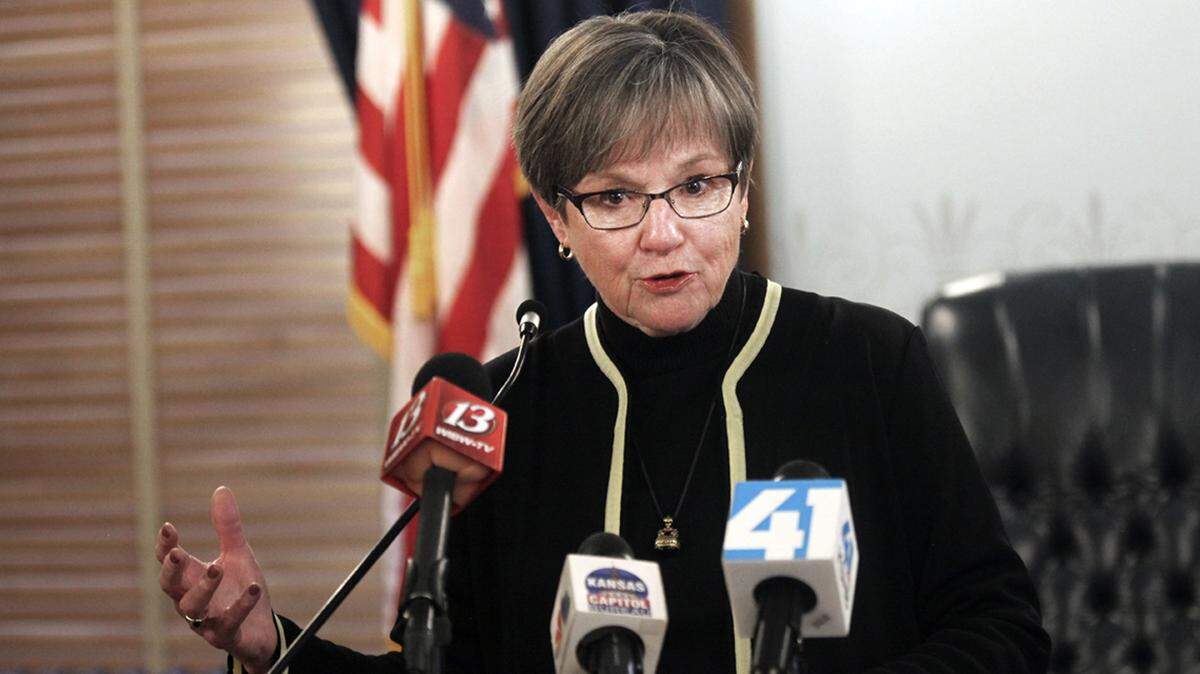
‘A slap in the face’: Will Kelly’s move against sanctuary cities cost her KCK support?
Earlier this week, Kansas Gov. Laura Kelly signed a bill blocking key components of Wyandotte County’s “Safe and Welcoming” ordinance. The ordinance, which advocates have pushed for five years, would have made way for county residents who don’t have a photo identification to obtain one.
It also ensured that Kansas City, Kansas/Wyandotte County resources would not be used to enforce federal immigration law.
The Star’s Katie Bernard and Aaron Torres wrote about the what Kelly’s decision means:
Kelly signed the bill despite strong Democratic opposition and charges that the measure, proposed by her likely November opponent Republican Attorney General Derek Schmidt, was primarily a campaign tactic. Schmidt was silent in 2020 when Roeland Park and Lawrence passed similar ordinances.
The bill passed with a with a veto-proof Republican supermajority, although House Republicans couldn’t afford to lose a single vote.
Kelly indicated last month she was unlikely to sign the bill, citing her support for local control...
Kelly’s decision was met with immediate outrage from Wyandotte County activists. Marcus Winn, a community organizer with the Metro Organization for Racial and Economic Equity called the decision “a failure of leadership,” “political cowardice,” and a “moral betrayal.”
The bill, he said, violated the values of Kansans and put families at risk.
“It’s clear that there are Kansas political leaders from both parties guided more by personal ambition than the common good of our state,” Winn said. “Moving forward, we plan to remind all our elected officials, regardless of party or position, that they work for the people and hold them accountable.”
More from The Star...
‘Long time coming’: Keith Carnes welcomed by family, supporters in KC after prison release
For Keith Carnes, three extra days in prison was three too many
Kansas City considers turning hotel near Grandview into apartments for the homeless
Politics and race, not ethics, driving case against St. Louis prosecutor Kim Gardner
Kansas City’s BLK + BRWN bookstore launches GoFundMe for help recovering from cyber attack
Cori Smith, the owner of independent bookstore BLK + BRWN, is fighting to recover after the bookstore — dedicated to amplifying voices of Black and brown authors and creators — was the target of a cyber attack.
Anna Spoerre writes for The Star that Smith said her bookstore’s website was hacked on March 15. In short, the whole site was all but wiped clean after the hacker ransomed it for bitcoin. The hacker, who had access to Smith’s business email, bank account information and cards, then tried to buy other domains while keeping Smith’s domain hostage until this past Thursday.
Smith is asking for donations to go toward the following:
- A new website platform
- Time spent rebuilding and developing the website
- Loss of wages during the time the website being down and orders were canceled
- Cybersecurity software
- Consultations for website development, cyber security and ongoing website surveillance
Smith said the hack won’t stop her from continuing her mission with the support of the community.
Farrah Mina previously profiled Smith for The Star ahead of BLK + BRWN’s opening on Juneteenth:
“It felt very important and intentional to bring awareness about Black queerness and brown queerness and Black liberation,” Smith said. “June to me is a month about freedom for all of those reasons.”
Before running the bookstore full time, Smith was the program director at Justice in the Schools, a project offering free legal services to students and families in the Kansas City and Hickman Mills school districts.
Her fixation with books began at West Wyandotte Library in Kansas City, Kansas, where she spent long hours with her mom and brother from a young age. There, she checked out books about the civil rights movement, read about Black liberation and pored over activists’ biographies.
“I always was surrounded by Black and brown literature. And so I always was just very interested in Black books, Black authors, stories about people that look like me. And so that’s kind of been steadfast throughout my life,” Smith said.
Beyond the block

Black Tesla employees describe a culture of racism: ‘I was at my breaking point’
Since Tesla CEO Elon Musk has maneuvered a choke hold on the news by offering a multi-billion dollar bid to take over Twitter, one of the world’s most important and influential platforms, let’s revisit this LA Times story about racism in Tesla’s factories.
Margot Roosevelt and Russ Mitchell wrote in March for The Times:
A single mother was excited to land a job at Tesla. About three years in, she was fired, she said, after complaining that Black workers were frequently called the N-word on the assembly line.
A former refinery worker couldn’t wait to get into green energy. She said she soon found herself and other Black workers assigned to the most arduous tasks in a corner of the factory co-workers called “the plantation.”
An Army veteran was promoted to a fleet manager job. He said he was fired after he complained that his boss called him and two Black co-workers “monkeys.”
In interviews with The Times, three Black former employees described how jobs at the pioneering automaker devolved into personal nightmares due to a pattern of rampant racism and harassment at Tesla’s Fremont, Calif., factory.
Read this while you’re here...
‘If given a chance to speak, we’ll take it’: inside the lives of Native American women
Who Owns American Fashion? Ralph Lauren Undertakes a Mission to Highlight the Black Contribution
Want to improve student achievement? Hire a Black principal.
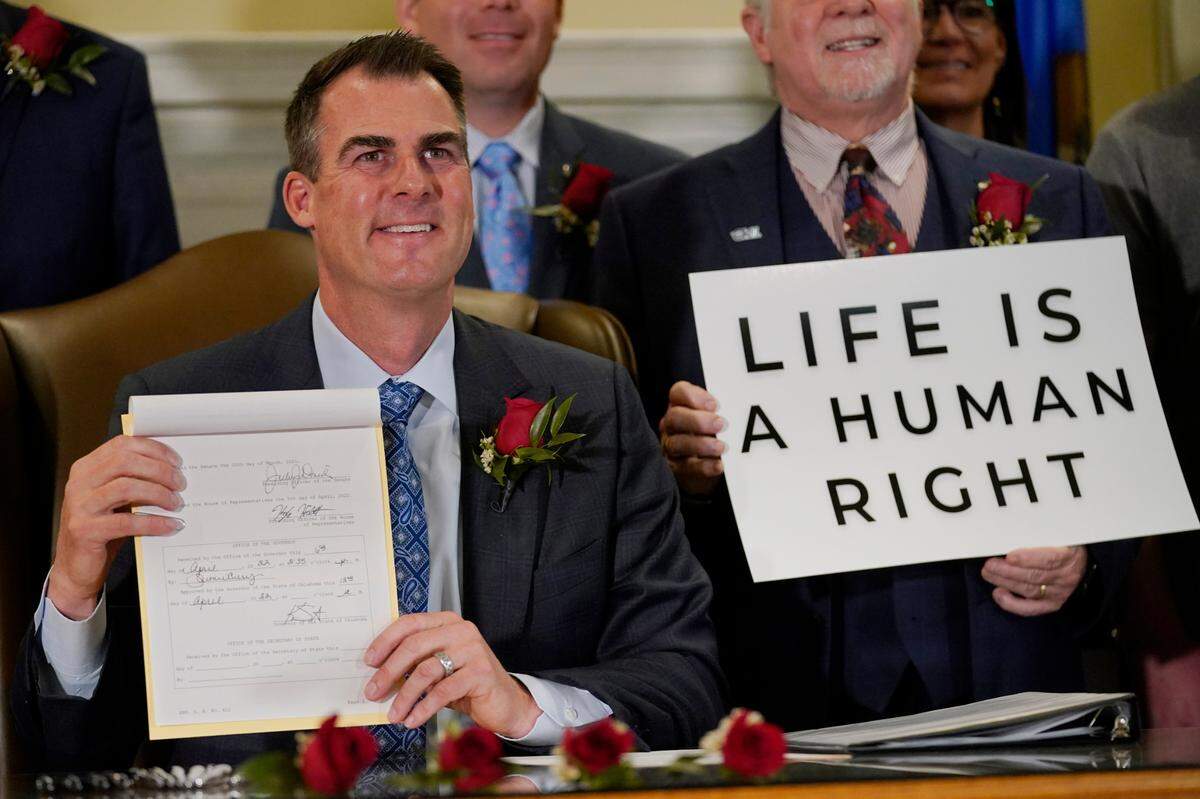
Oklahoma governor signs bill to make abortion illegal
Sean Murphy reports for The Associated Press:
Oklahoma Gov. Kevin Stitt signed a bill into law on Tuesday that makes it a felony to perform an abortion, punishable by up to 10 years in prison, as part of an aggressive push in Republican-led states across the country to scale back abortion rights.
The bill, which takes effect 90 days after the Legislature adjourns next month, makes an exception only for an abortion performed to save the life of the mother. Abortion rights advocates say the bill signed by the GOP governor is certain to face a legal challenge.
Its passage comes as the conservative U.S. Supreme Court considers ratcheting back abortion rights that have been in place for nearly 50 years.
“We want to outlaw abortion in the state of Oklahoma,” Stitt said during a signing ceremony for the bill, flanked by anti-abortion lawmakers, clergy and students. “I promised Oklahomans that I would sign every pro-life bill that hits my desk, and that’s what we’re doing here today.”
For the culture
Here’s some culture happenings commandeering space in my brain this week...
How ‘Everything Everywhere All At Once’ stars found heart in the surreal action sci-fi of the year
Michelle Yeoh has a new leading role and a new motto: No more turning the other cheek
The tension between fear and relief in Jerrod Carmichael’s new special, ‘Rothaniel’
Sammy Davis Jr. Drama Starring Elijah Kelley From Lee Daniels Lands at Hulu
Take care
Did someone forward this newsletter to you? You can sign-up here. If you’d prefer to unsubscribe from this newsletter, you can do so at any time using the “Unsubscribe” link at the bottom of this message.
This story was originally published April 14, 2022 at 2:08 PM.